

The 24-hour rule helps you avoid impulsive spending by making you wait a full day before buying something. This pause allows your emotions to settle and gives you time to evaluate if the purchase is truly needed. It helps you recognize emotional triggers like boredom or stress that often lead to overspending. By practicing this rule, you can develop better money habits and control your spending. If you keep going, you’ll discover strategies to strengthen your financial discipline even further.

Get smart everyday buys delivered free with Prime
- Fast, free delivery on millions of items
- Prime Video, Amazon Music and more included
- Member-only deals all year
Key Takeaways
- Waiting 24 hours creates a buffer to assess if the purchase is truly necessary or just an emotional impulse.
- The rule helps reduce spontaneous spending driven by boredom, stress, or excitement.
- It encourages mindful reflection on whether the purchase aligns with financial goals and values.
- Implementing the rule builds better habits of emotional awareness and impulse control over time.
- It supports healthier financial decision-making by promoting deliberate and rational spending.
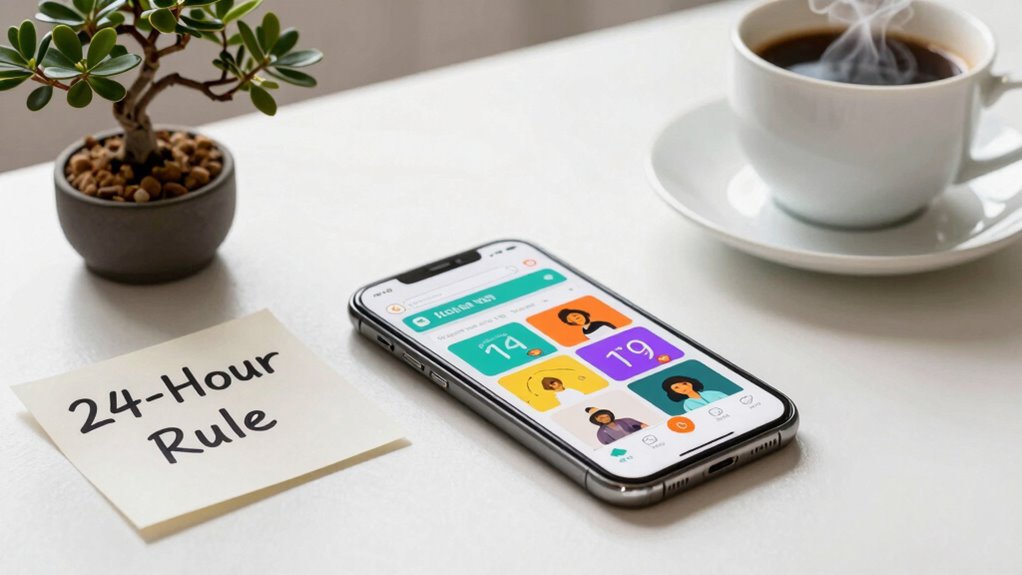
If you’ve ever made an impulsive purchase driven by emotions rather than reason, you’re not alone. Many people fall into the trap of buying things they don’t really need because their feelings take over, often leading to regret and financial strain. That’s where the 24-hour rule can make a real difference. It’s a simple yet powerful strategy to help you practice mindful budgeting and strengthen your impulse control. The idea is straightforward: when you feel the urge to buy something impulsively, you wait 24 hours before making the purchase. During this time, you can evaluate whether you truly need or want the item, or if your emotions are just pushing you to buy out of boredom, stress, or excitement.
Pause for 24 hours before impulsive purchases to assess true needs and avoid emotional spending.
This pause gives your emotions time to settle, allowing you to approach the decision with a clearer mind. Often, the initial urge diminishes after a day, revealing whether the purchase is genuinely necessary or just a fleeting craving. By implementing this rule consistently, you train yourself to pause and consider your spending habits, fostering a more mindful approach to your money. It’s not about denying yourself outright but about creating space between impulse and action. This space can be critical for practicing impulse control, which is often the missing link in impulsive spending. Developing this skill can also help you recognize the emotional triggers that lead to impulsive purchases and address them more effectively. Additionally, understanding the importance of mindful decision-making can further support your efforts to develop healthier financial habits.
Over time, the 24-hour rule helps you develop better habits of mindful budgeting. Instead of reacting impulsively to every emotional trigger, you learn to prioritize your financial goals and values. It encourages you to ask questions like: Do I really need this? How will I feel about this purchase tomorrow? Will this purchase bring me closer to my financial goals? These questions help you step back from the emotional rush and see your spending in a more rational light. Incorporating financial literacy into your routine can also help you make more informed choices and avoid unnecessary expenses. Recognizing the importance of emotional awareness can further enhance your ability to manage impulsive tendencies and develop healthier habits.
Moreover, this rule can save you a lot of money over the long run. Many impulse buys are small but add up quickly, draining your finances without you realizing it. By giving yourself a day to reflect, you reduce the likelihood of unnecessary expenses and increase your control over your financial future. It’s about making intentional choices, not impulsive ones. As you practice this habit, you’ll find that your ability to manage your money improves, and emotional spending becomes less of a problem. The 24-hour rule isn’t just about saving money; it’s a way to build a healthier relationship with your finances and yourself.
budgeting journal for mindful spending
As an affiliate, we earn on qualifying purchases.
As an affiliate, we earn on qualifying purchases.
Frequently Asked Questions
How Long Should I Wait Before Making Major Purchases?
You should wait at least 24 hours before making major purchases. This pause helps you practice budget planning and gives you time to evaluate if the expense aligns with your financial discipline. By delaying your decision, you prevent impulsive spending driven by emotions. This simple step encourages mindful spending, keeps your financial goals on track, and guarantees that your major purchases are thoughtful and necessary rather than impulsive.
Can the 24-Hour Rule Help With Impulsive Online Shopping?
Absolutely, the 24-hour rule can be your secret weapon against impulsive online shopping. When emotional triggers hit, you’re more likely to succumb to shopping impulsivity. By pausing and waiting a day, you give yourself space to reassess whether the purchase is truly needed or just a fleeting desire. This delay helps you regain control, making mindful choices instead of impulsive splurges, ultimately saving you money and reducing buyer’s remorse.
What if I Still Want the Item After 24 Hours?
If you still want the item after 24 hours, trust your impulse control and emotional resilience to make a rational choice. Take a moment to evaluate whether it’s a genuine need or just an emotional urge. If your desire persists, go ahead, but make certain it aligns with your budget and values. This approach strengthens your ability to resist impulsive spending and build healthier financial habits over time.
Does the Rule Apply to Recurring Subscriptions or Memberships?
Yes, the 24-hour rule applies to recurring subscriptions and memberships. It helps you avoid subscription fatigue and membership guilt by giving you time to evaluate whether you truly need or want the service. When considering renewal, wait 24 hours to see if your feelings change. This pause prevents impulsive renewals and encourages mindful spending, ensuring you only keep subscriptions that genuinely add value to your life.
How Can I Resist the Urge During Stressful Moments?
When stress hits, you might feel the urge to splurge. To resist, try mindful breathing—inhale slowly and focus on your breath to calm your mind. You could also practice emotional journaling, writing down your feelings to process stress. For example, Sarah used these techniques during tough days, preventing impulsive buys. These methods help you pause, gain clarity, and regain control over emotional spending.
impulse control spending planner
As an affiliate, we earn on qualifying purchases.
As an affiliate, we earn on qualifying purchases.
Conclusion
Imagine your impulse to buy something new as a storm cloud gathering overhead. The 24-hour rule acts like a calm breeze, dispersing that storm before it releases costly rain. Studies show that delaying purchases reduces impulsive spending by nearly 60%. Next time you feel that rush of emotion pushing you toward a purchase, pause for a day. You’ll find that, like clear skies after a storm, your better judgment will shine through, saving you money and stress.
As an affiliate, we earn on qualifying purchases.
As an affiliate, we earn on qualifying purchases.
Evergreen bestsellers Picks
bestsellers
As an affiliate, we earn on qualifying purchases.