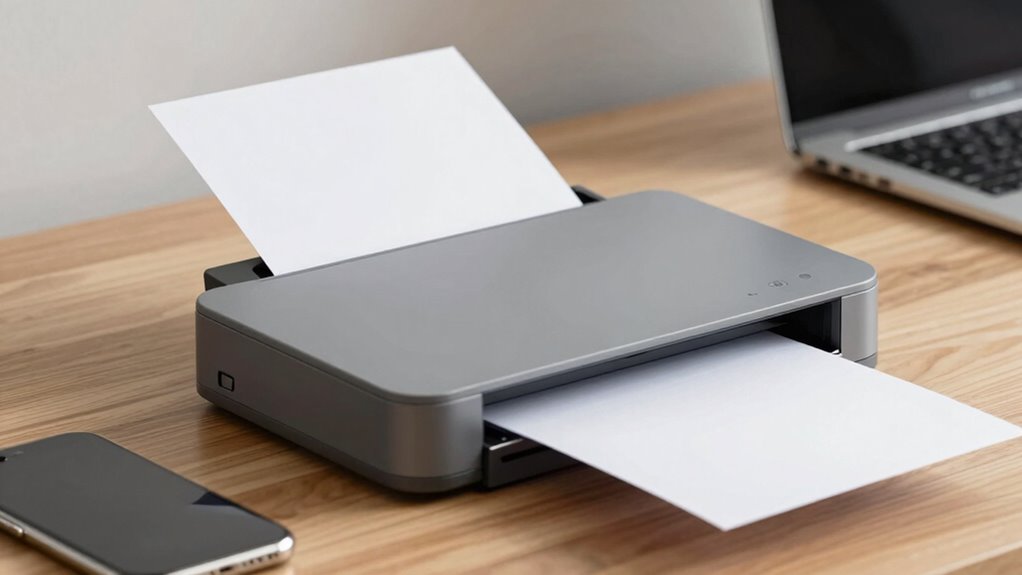

When choosing a document scanner, focus on core functions that boost productivity, like essential scanning speed and wireless connectivity, and skip unnecessary bells and whistles. Assess your typical workload to match the scanner’s capacity, and consider whether features like an automatic document feeder are worth the extra cost based on your volume. Also, make sure it works well with your existing systems to avoid future hassles. If you want tips on selecting the best fit, keep exploring the details.

Get smart everyday buys delivered free with Prime
- Fast, free delivery on millions of items
- Prime Video, Amazon Music and more included
- Member-only deals all year
Key Takeaways
- Focus on core functions that improve workflow, avoiding unnecessary features that don’t enhance productivity.
- Assess your scanning volume to select a model with appropriate capacity and avoid paying for unused capacity.
- Determine if an Automatic Document Feeder (ADF) is necessary based on your typical document volume.
- Ensure compatibility with existing systems to prevent additional costs or technical issues.
- Prioritize wireless connectivity for direct scanning to devices and cloud storage, reducing setup and transfer times.
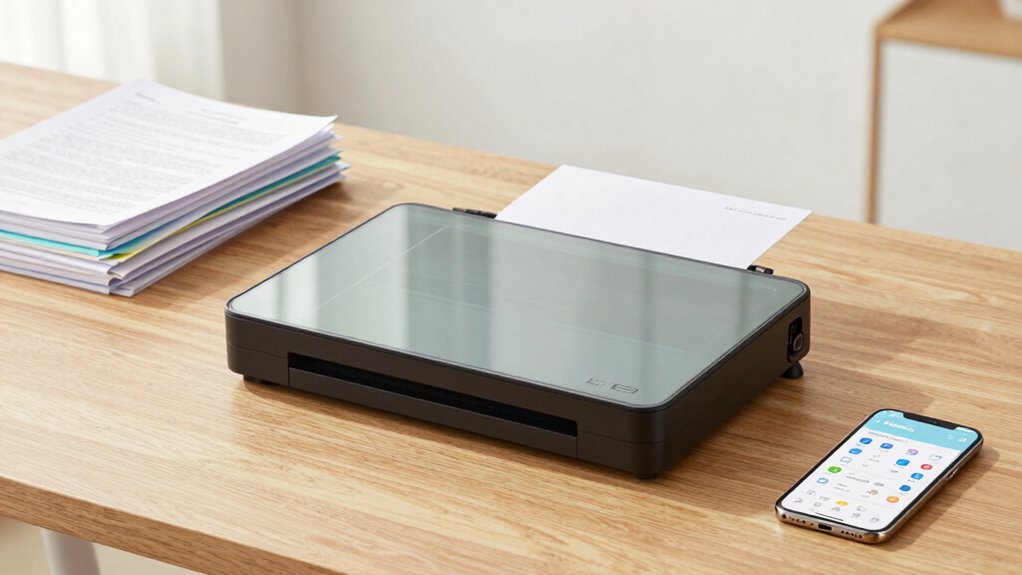
Choosing the right document scanner can notably streamline your workflow and improve your organization. When you’re shopping, it’s easy to get caught up in all the bells and whistles that manufacturers tout. But not every feature is necessary for your needs. To avoid paying for extras you’ll never use, focus on the core functions that truly boost your productivity. For example, wireless connectivity is a useful feature if you want to scan documents directly to your devices without the clutter of cables. It allows you to send files straight to your laptop, tablet, or cloud storage, making your process more seamless and less time-consuming. If you work in a busy environment with multiple users, wireless connectivity can considerably cut down on setup and transfer times, so you don’t have to worry about connecting and disconnecting cords constantly.
Next, think about whether you need an automatic document feeder (ADF). This feature can save you hours if you’re scanning large volumes of paper. Instead of feeding each page manually, the ADF allows you to load a stack of documents and let the scanner do the work. This is especially helpful if you frequently handle multi-page documents, receipts, or forms. However, if your scanning needs are minimal—say, occasional digitizing of a few pages—an ADF might be unnecessary, and a simpler, flatbed scanner could suffice. By understanding your typical workload, you can avoid paying extra for an ADF that you won’t fully utilize. Additionally, considering the scanning capacity can help you choose a model that matches your volume without overspending. Incorporating traditional techniques and modern features can help you make a balanced decision that aligns with your specific needs. Moreover, evaluating the compatibility of the scanner with your existing systems ensures smooth integration and reduces setup frustrations. Being aware of your expected workload can further refine your choice, ensuring you select a model that handles your scanning volume efficiently.
Products Worth Considering

LG UltraGear 27-Inch QHD OLED Gaming Monitor, 240Hz, 0.03ms, G-SYNC Compatible, FreeSync Premium Pro, HDMI 2.1

Logitech MX Keys S Wireless Keyboard, Graphite
Logitech MX Mechanical Wireless Illuminated Keyboard, Tactile Quiet, Graphite
As an affiliate, we earn on qualifying purchases.
Frequently Asked Questions
What Is the Best Budget-Friendly Document Scanner?
The best budget-friendly document scanner for you offers solid paper storage options and reliable OCR accuracy. Look for models like the Canon imageFORMULA P-215 or the Epson WorkForce ES-50, which balance affordability with performance. These scanners easily handle various document sizes, store scanned files efficiently, and provide accurate text recognition, making them ideal choices without paying for unnecessary features.
How Important Is Scanner Speed for Personal Use?
Scanner speed is quite important for personal use if you’re handling many documents regularly. Faster scanners with higher scanning resolution save you time and guarantee clear, detailed images. If you frequently scan large batches or need quick results, prioritize a device with higher document capacity and faster throughput. However, if you only scan occasionally, a slower model with decent resolution might suffice, helping you avoid paying for unnecessary speed features.
Do Scanners Require Regular Maintenance or Updates?
Scanners do require regular maintenance and updates to keep them functioning smoothly. You should regularly check for software updates, as they often include bug fixes and improved features. Hardware maintenance, like cleaning the scanner glass and rollers, prevents jams and guarantees clear scans. Neglecting these tasks can lead to poorer image quality and hardware issues, so make it a habit to perform routine software updates and hardware upkeep for peak performance.
Can a Scanner Handle Multiple File Formats?
Can a scanner handle multiple file formats? Absolutely. Think of your scanner as a chameleon, adapting effortlessly to various needs. It offers great format versatility and file compatibility, allowing you to scan directly into PDFs, JPEGs, TIFFs, and more. This flexibility saves time and increases efficiency, ensuring you can work seamlessly across different platforms and projects without worrying about format limitations.
Is Wireless Connectivity Essential for a Home Scanner?
Wireless connectivity isn’t essential for a home scanner, but it offers valuable wireless flexibility. If you prefer to scan directly to your devices or cloud services without cables, look for models with robust connectivity options like Wi-Fi or Bluetooth. This way, you can easily transfer files, save time, and keep your workspace clutter-free. Consider your scanning habits and device compatibility to decide if wireless features are worth the additional investment.
Conclusion
Choosing the right document scanner is about clarity—cutting through the noise of unnecessary features and focusing on what truly matters. By understanding your needs and evaluating options carefully, you avoid paying for bells and whistles you’ll never use. Remember, a good scanner isn’t just about tech specs; it’s about making your life easier, smoother, and more efficient. So, pick wisely, and let your scanner be the quiet hero in your workflow, not just another gadget to clutter your desk.