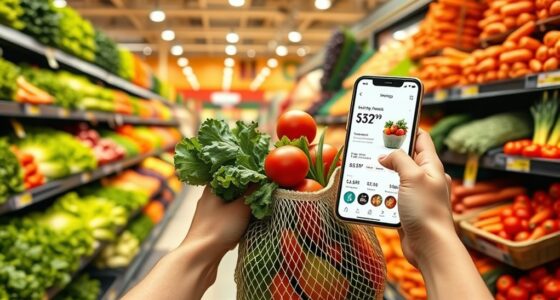
Many busy professionals repeatedly make the mistake of not planning meals ahead, leading to impulsive grocery buys and overspending. You might forget what’s already in your pantry, causing duplicate purchases and waste. Relying on last-minute shopping increases costs and stress. Using meal planning and grocery apps can help you stay organized, control your budget, and reduce waste. Stick around to discover how simple routines can transform your grocery habits for good.

Get smart everyday buys delivered free with Prime
- Fast, free delivery on millions of items
- Prime Video, Amazon Music and more included
- Member-only deals all year
Key Takeaways
- Skipping meal planning leads to impulsive purchases and overspending on unnecessary items.
- Relying on last-minute shopping without a list causes duplicate purchases and waste.
- Not using grocery apps to track expenses results in unawareness of spending habits.
- Ignoring routine grocery routines increases last-minute trips and spontaneous, costly buys.
- Failing to leverage tools for price comparison and alerts leads to missed savings opportunities.

Balancing a busy schedule often leads professionals to overlook their grocery spending, resulting in unnecessary expenses. When life gets hectic, it’s easy to grab whatever’s quick or convenient without thinking about the bigger picture. This often means you end up buying more than you need, wasting money on impulse purchases, or forgetting what’s already in your pantry. To break this cycle, you need to get smarter about how you plan your meals and manage your grocery shopping habits.
Meal planning is a game-changer. Instead of heading to the store without a clear idea of what you need, take a little time each week to plan your meals. When you know what you’re going to cook, you can make precise shopping lists, which helps cut down on impulse buys. Meal planning also keeps you focused, so you’re less likely to buy extra snacks or processed foods that jack up your bill. Plus, knowing what ingredients you already have saves you from buying duplicates, reducing waste and saving money. Incorporating cost-saving strategies can further optimize your grocery budget and make your planning more effective.
Meal planning reduces impulse buys, saves money, and helps avoid duplicate ingredients.
Grocery apps are another essential tool for busy professionals. These apps can help you create shopping lists, track your grocery budget, and even find deals or discounts at local stores. Many grocery apps sync with your calendar or meal plans, so you get reminders about what to buy and when to buy it. They also allow you to compare prices across stores, helping you find the best deals and stick to your budget. With notifications and real-time updates, you’re less likely to forget items or make unnecessary trips to the store, saving both time and money. Additionally, understanding tax law changes can help you identify potential savings or deductions related to grocery expenses, especially if you’re managing a business or claiming deductions. Incorporating digital tools into your routine can also streamline your shopping process and make it more efficient.
The key is consistency. Make it a habit to use meal planning and grocery apps together. When you plan your meals ahead and rely on these apps to organize your shopping, you gain control over your spending. This approach minimizes last-minute trips and reduces the temptation to buy convenience foods that often cost more. Over time, you’ll notice your grocery bills becoming more manageable, and you’ll waste less food and money.
The mistake many busy professionals make is neglecting planning altogether, thinking they’ll just wing it each week. But that often leads to excess spending and stress. Instead, embrace simple meal planning routines and leverage grocery apps to streamline your shopping and keep your budget in check. With these tools, you’ll spend smarter, save more, and enjoy a more organized, less hectic grocery experience.
As an affiliate, we earn on qualifying purchases.
Frequently Asked Questions
How Can I Track My Grocery Spending Effectively?
To track your grocery spending effectively, start by creating a detailed shopping list based on your meal planning for the week. As you shop, record every purchase, either manually or with budgeting apps. Review your expenses regularly to identify patterns and adjust your habits. This approach helps you stay within your budget, minimizes impulse buys, and guarantees you’re spending wisely on essentials, making your grocery budget more manageable.
What Are Quick Meal Prep Ideas for Busy Weeks?
To save time during busy weeks, focus on quick meal prep ideas like batch cooking and using meal portioning. Prepare large batches of staples such as rice, roasted vegetables, or grilled chicken, then store them using effective storage techniques like airtight containers. This way, you can mix and match ingredients for different meals, saving you time and money while ensuring healthy, ready-to-eat options throughout the week.
How Do I Choose Healthier Options on a Budget?
Sure, because who doesn’t love choosing between kale and chips on a budget? To pick healthier options, stock up on healthy snacks like nuts and fruit, and hunt for budget-friendly recipes that pack a punch without draining your wallet. Use store brands, buy in bulk, and plan your meals to avoid impulsive splurges. That way, you stay healthy and save money—because your wallet deserves a break too!
Are There Apps to Help Manage Grocery Shopping?
Yes, multiple apps can help you manage grocery shopping through meal planning and shopping list management. Apps like AnyList, Paprika, and Mealime let you organize recipes, create shopping lists, and plan meals efficiently. They sync across devices, making it easy to stay on track. Using these tools, you can save money, reduce waste, and guarantee you buy healthier options that fit your budget, all while streamlining your shopping process.
How Often Should I Review My Grocery Budget?
You should review your grocery budget weekly to stay on track. Regular check-ins allow you to refine your meal planning and adjust your shopping list based on what’s working or not. By keeping a close eye on expenses, you prevent overspending and guarantee your budget aligns with your goals. Making this a routine helps you stay organized and mindful, turning grocery shopping into a smooth, stress-free part of your week.
As an affiliate, we earn on qualifying purchases.
Conclusion
If you keep falling into the same grocery budgeting trap, you’re practically throwing money into a black hole that swallows your paycheck in seconds. That mistake might be costing you thousands a year—more than a luxury vacation or a new car! Break the cycle now, or keep watching your hard-earned cash vanish into the abyss. Take control, plan smarter, and make your grocery budget work for you—not against you. Your wallet will thank you!
As an affiliate, we earn on qualifying purchases.
As an affiliate, we earn on qualifying purchases.
Columbus Day / Indigenous Peoples' Day Picks
long weekend sales
As an affiliate, we earn on qualifying purchases.