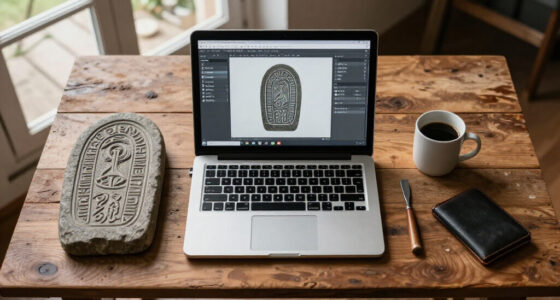

🔍 Read the full analysis: AI And Interactivity In Art: Behind The Scenes Of 'Lot 87 — The Varos Evening Sale' on ThorstenMeyerAI.com
TL;DR
‘Lot 87 — The Varos Evening Sale’ used innovative AI and custom coding to create an immersive, interactive art environment. This case study reveals the technical and creative processes behind the transformation.
‘Lot 87 — The Varos Evening Sale’ has been reimagined as an immersive, interactive art experience through advanced AI-driven coding techniques. This transformation was achieved by integrating custom scripts and dynamic digital elements that elevate viewer engagement, making it a standout example of modern technological innovation in cultural settings. The project, developed by Thorsten Meyer, highlights how creative design combined with technical mastery can redefine traditional art and auction environments, as detailed in the original analysis.
The project involved converting a standard auction room into an interactive space where viewers can explore beyond conventional boundaries. For more on innovative art environments, see this detailed case study. Behind the scenes, meticulous planning and technical execution were essential. Custom scripts enabled real-time interactions, allowing viewers to influence visual elements and navigate through layered digital environments seamlessly. The designers focused on maintaining an intuitive user experience while pushing the limits of interactivity, blending artistic intent with technological precision.
According to Thorsten Meyer, the process began with a clear conceptual framework that prioritized viewer engagement. Developers then crafted dynamic scripts that responded to user inputs, creating a responsive environment that felt alive and organic. The integration of AI tools facilitated complex interactions, such as adaptive visual responses and personalized viewer pathways, which contributed to the immersive atmosphere. The final setup was tested extensively to ensure stability and intuitive flow, resulting in a cohesive experience that harmonized technical complexity with aesthetic appeal.
AI and Interactivity in Art: Behind the Scenes of Lot 87 — The Varos Evening Sale
A traditional auction room was reimagined as a responsive digital environment. AI-assisted development, custom scripts, and rigorous testing turned passive viewing into an immersive journey shaped by each participant.
From static room to living system
The experience extends beyond the boundaries of a conventional sale. Every layer was designed to preserve artistic intent while allowing the digital environment to react, adapt, and guide exploration.
Viewer signals
Interaction triggers capture choices and movement, giving the experience an immediate source of human input.
Adaptive responses
AI-supported logic interprets inputs and helps generate visual reactions and personalized pathways in real time.
Layered environments
Custom scripts coordinate transitions, visual states, and navigational cues so complexity feels natural to the viewer.
The production pipeline
A clear conceptual framework came first. Design, code, AI behavior, and testing were then connected into one disciplined development loop.
Define intent
Establish the artistic concept and prioritize meaningful viewer engagement.
Map inputs
Identify actions that can influence visuals, transitions, and navigation.
Build scripts
Code triggers and environmental changes into a responsive system.
Add AI logic
Create adaptive responses and differentiated viewer pathways.
Test the flow
Refine stability, responsiveness, clarity, and aesthetic cohesion.
What interactivity changes
The defining shift is not simply digital presentation. It is the move from a fixed sequence to an environment that can respond differently to different people.
| Capability | Static Display | Lot 87 Model |
|---|---|---|
| Real-time visual response | ✗ Fixed | ✓ Adaptive |
| Personalized pathway | ✗ Linear | ✓ Variable |
| Viewer influence | ~ Limited | ✓ Integral |
| Environmental change | ✗ Predetermined | ✓ Trigger-based |
| Ongoing evolution | ~ Curated updates | ✓ Extensible system |
Complexity must feel effortless
Visual responses, triggers, and navigation were repeatedly tested so technical depth would not burden the participant.
How far can the system scale?
Performance with larger audiences, long-term maintenance, and adaptation across venues still require further testing.
A reusable model for cultural spaces
The techniques demonstrated by Lot 87 could extend to galleries, museums, performances, and other cultural settings. Each implementation would still need tailored interaction design, technical planning, and testing.
How was AI integrated?
It supported dynamic visual responses and personalized routes based on viewer input.
What did custom scripts control?
Interaction triggers, visual states, environmental changes, and seamless transitions.
What remains challenging?
Real-time stability, intuitive interfaces, maintenance, and reliable scaling across venues.
Why does it matter?
It shows how art can become participatory, personal, and responsive without losing aesthetic coherence.
Artistic intent becomes audience experience
Innovative Use of AI and Coding in Cultural Spaces
This project exemplifies how AI and custom coding can elevate traditional cultural experiences, making them more engaging and accessible. The use of interactivity not only enhances viewer participation but also pushes the boundaries of how art and technology intersect. As a case study, it offers valuable insights for designers, technologists, and cultural institutions aiming to innovate within their own spaces. The success of ‘Lot 87’ demonstrates that integrating advanced digital techniques can create memorable, participatory environments that resonate with contemporary audiences.
As an affiliate, we earn on qualifying purchases.
Evolution of Interactive Art and Tech Integration
Over recent years, the art world has increasingly embraced digital and interactive elements, driven by advancements in AI and coding. Previous projects have experimented with virtual reality, augmented reality, and immersive installations, but ‘Lot 87’ stands out for its seamless integration of custom scripts that respond dynamically to viewers. This development reflects a broader trend toward blending artistic expression with technological innovation, aiming to create more engaging, personalized experiences. The project builds on prior efforts to democratize art engagement, making it more participatory and technologically sophisticated than traditional static displays.
As an affiliate, we earn on qualifying purchases.
Technical Challenges and Future Scalability
While the project showcases impressive technical innovation, details remain unclear regarding the specific challenges faced during development and how easily these techniques can be scaled or adapted to other settings. It is not yet confirmed how the system performs under different conditions or with larger audiences. Additionally, questions about long-term stability, maintenance, and potential for further customization are still open, as the project is relatively recent and ongoing developments are expected.
custom scripting software for art installations
As an affiliate, we earn on qualifying purchases.
As an affiliate, we earn on qualifying purchases.
Next Steps and Broader Adoption of Interactive Techniques
Moving forward, developers and cultural institutions may explore expanding these interactive frameworks to other venues or projects. Further research and testing are likely to address current limitations, and new tools may emerge to simplify implementation. The success of ‘Lot 87’ could inspire broader adoption of AI-driven interactivity in art spaces, encouraging more immersive and participatory experiences across the cultural sector. Future updates from Thorsten Meyer and collaborators will likely detail technical enhancements and new applications.
immersive art experience technology
As an affiliate, we earn on qualifying purchases.
As an affiliate, we earn on qualifying purchases.
Key Questions
How did the project integrate AI into the interactive experience?
The project used AI to enable dynamic responses to viewer interactions, allowing visual elements to adapt in real-time based on user inputs, creating a personalized and immersive environment.
What kinds of custom scripts were used in the development?
Developers crafted scripts that controlled visual responses, interaction triggers, and real-time environmental changes, ensuring a seamless and intuitive user experience.
Can this technology be applied to other cultural or artistic projects?
Yes, the techniques demonstrated in ‘Lot 87’ are adaptable and could be integrated into other cultural settings, though each project may require tailored development based on specific goals and environments.
What are the main technical challenges faced during development?
Challenges included ensuring system stability under real-time interactions, designing intuitive user interfaces, and integrating AI responses smoothly within the digital environment.
Will this approach change how art is experienced in the future?
It has the potential to significantly influence future art experiences by making them more interactive, personalized, and technologically integrated, expanding the possibilities for artists and curators alike.
Source: ThorstenMeyerAI.com