

This guide shows you how to select financial planning books suited to beginners, arrange them into a reading order that builds skills progressively, and turn each book’s lessons into actual changes in your finances. By the end, you will have read three to five foundational books, extracted a personal action list from each, and completed at least the first round of money-management basics: a working budget, an emergency fund plan, and an investing account or plan. This guide is for people with little to no formal financial education who want a structured, self-directed path rather than random book recommendations. The setup takes a few hours; expect two to six months to finish the reading and apply it, reading roughly one book every three to five weeks.

Get smart everyday buys delivered free with Prime
- Fast, free delivery on millions of items
- Prime Video, Amazon Music and more included
- Member-only deals all year
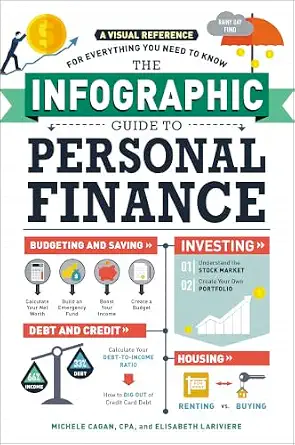
The Infographic Guide to Personal Finance: A Visual Reference for Everything You Need to Know
- ✔ Format: Illustrated infographic guide
- ✔ Audience: Beginners, especially visual learners
- ✔ Topics Covered: Budgeting, saving, credit, investing basics, insurance

Personal Finance For Dummies
- ✔ Format: Comprehensive text guide
- ✔ Audience: Adult beginners at any life stage
- ✔ Topics Covered: Budgeting, debt, investing, insurance, retirement, major purchases

Financial Literacy for Young Adults Simplified
- ✔ Format: Simplified beginner guide
- ✔ Audience: Teens, students, and young adults
- ✔ Topics Covered: Money management, saving, investing fundamentals
Difficulty: Beginner | Time: 2-4 hours to set up; 2-6 months to complete the reading plan
What You’ll Need
Tools & Materials:
- A notebook or note-taking app for capturing actions from each book
- Access to a library card, bookstore account, or e-book/audiobook subscription
- Your recent bank and credit card statements (2-3 months) for exercises
- A spreadsheet app or paper budget worksheet
Knowledge:
- Basic arithmetic for budgeting exercises
- Familiarity with your own income and monthly expenses (or willingness to gather them)
You do not need any finance background. Books written for beginners define their terms. Do not buy more than one or two books at the start — borrowing first prevents the common trap of stockpiling unread books and feeling behind before you begin.
The Infographic Guide to Personal Finance: A Visual Reference for Everything You Need to Know
Where most personal finance books ask you to wade through paragraphs of explanation, this one leads with charts, diagrams, and visual layouts that let you absorb a concept in seconds. Topics like budgeting, credit scores, insurance, and investing fundamentals are broken into visual blocks rather than chapters of dense prose. For readers who glaze over at financial jargon, this format removes the biggest barrier to actually finishing a money book.The tradeoff is depth. Compared with Personal Finance For Dummies, which walks through scenarios and decision frameworks in detail, the infographic approach favors breadth and clarity over nuance. You will understand what a Roth IRA is, but not get an extended discussion of how to prioritize it against other goals. It also works better as a reference you flip through than a curriculum you follow start to finish.This pick makes the most sense as either a first taste of personal finance or a companion volume alongside a deeper text. If you have already read a conventional money book and still feel confused, the visual reframing here often makes concepts finally click.
Pros:
- Infographic format makes concepts fast and intuitive to grasp
- Broad coverage of core personal finance topics in one compact volume
- Excellent quick-reference book to revisit later
- Low intimidation factor for complete beginners
Cons:
- Limited depth on complex topics like investing strategy and taxes
- Not structured as a step-by-step financial plan
- Visuals can feel sparse for readers who prefer narrative explanations
Best for: Visual learners and anyone intimidated by text-heavy finance books
Not ideal for: Readers who want detailed strategies and step-by-step financial planning
Bottom line: The fastest, friendliest on-ramp to financial literacy — just pair it with a deeper book if you want a full plan.
“The fastest, friendliest on-ramp to financial literacy — just pair it with a deeper book if you want a full plan.”
Personal Finance For Dummies
This is the most complete option in our lineup, and that is why it earns the top spot. The For Dummies franchise formula — plain language, logical progression, and self-contained chapters — is well suited to a subject where beginners often don’t even know what questions to ask. It moves from budgeting and debt through investing, insurance, retirement accounts, and major life purchases, so a single purchase covers essentially the whole financial lifecycle.Compared with Financial Literacy for Young Adults Simplified, this book skews toward a broader and older audience: it handles mortgages, college savings, and retirement planning that a young-adult-focused guide largely skips. And compared with the Infographic Guide, it sacrifices speed for substance — you will spend more time reading, but you will come away with actual decision frameworks rather than just awareness.The honest drawback is stamina. It is long, and some chapters will not apply to your current life stage, which can make the middle sections feel like a slog. We recommend treating it as a reference you work through selectively rather than a straight cover-to-cover read. For beginners who want one book that can serve them for a decade, this option stands out for sheer coverage.
Pros:
- Widest topic coverage of the three, from budgeting to retirement planning
- Plain-language explanations with minimal jargon
- Organized so you can skip to relevant chapters
- Stays useful long after your first read
Cons:
- Long enough to intimidate true beginners
- Some sections will not apply to every reader’s life stage
- Less engaging than visual or conversational alternatives
Best for: Beginners who want a comprehensive, long-lasting reference across all life stages
Not ideal for: Impatient readers or young adults who only need first-job fundamentals
Bottom line: If you buy only one financial planning book as a beginner, this comprehensive reference gives you the most lasting value.
“If you buy only one financial planning book as a beginner, this comprehensive reference gives you the most lasting value.”
Financial Literacy for Young Adults Simplified
Of the three, this book has the narrowest but most targeted audience, and that focus is its strength. It is written for readers facing their first salary, first apartment, and first investment account — people who need to know how to budget a paycheck, build an emergency fund, and start investing early, without chapters on mortgages or estate planning getting in the way. The simplified framing means a teenager or new graduate can move from confused to confident in a single weekend read.The comparisons are telling. Against Personal Finance For Dummies, it reads faster and feels more relevant to a 20-year-old, but it will not carry you through later financial decisions — many readers will outgrow it within a few years. Against the Infographic Guide, it offers more narrative guidance and actionable steps, though it lacks the at-a-glance visual clarity that makes that book so skimmable.Its weakness is that simplified is doing real work in the title. Complex topics are necessarily compressed, and readers wanting rigorous treatment of investing or taxes should plan to graduate to a fuller guide afterward. As a confident first step for a young adult, though, this model is better suited to the job than either alternative.
Pros:
- Directly addresses first-job money situations like first budgets and paychecks
- Quick, accessible read that builds momentum and confidence
- Covers managing, saving, and investing in one simplified path
- Tone and examples resonate with a younger audience
Cons:
- Content will be outgrown as financial life gets more complex
- Light on topics like homeownership, insurance depth, and retirement strategy
- Less rigorous than a comprehensive reference guide
Best for: Teens, students, and new graduates starting their financial lives
Not ideal for: Established adults or readers wanting advanced, long-term planning detail
Bottom line: The ideal first money book for a young adult, with the understanding that it is a starting point rather than a lifelong reference.
“The ideal first money book for a young adult, with the understanding that it is a starting point rather than a lifelong reference.”
As an Amazon Associate we earn from qualifying purchases.
Before You Start
Two cautions before you spend money. First, avoid books that promise quick wealth, trading secrets, or guaranteed returns; reputable beginner books teach patience, saving, and diversified investing, not shortcuts. Check that any book you choose was published or updated within the last ten years so that tax figures, account types, and rules reflect current reality. Second, decide now that you will act while you read, not after. The most common failure mode with financial books is finishing several of them without changing a single behavior. The steps below are built to prevent that.
Step-by-Step Instructions
Step 1: Define your starting point and top two money goals
Write down, in one page or less: your monthly take-home income, your fixed expenses (rent, utilities, insurance, minimum debt payments), and your current savings and debt totals. Then write two specific goals, such as “build a $5,000 emergency fund” or “pay off $8,000 in credit card debt.” This snapshot tells you which books matter most for you — a person deep in debt needs a different first book than a person who is debt-free and ready to invest.
Tip: Pull the numbers from actual statements rather than memory. Most people underestimate spending by 20-30% when guessing.
Check: You have one page with income, expenses, savings, debt, and two written goals.
Step 2: Build a shortlist of four to six beginner books across the core topics
Select books covering these four areas, one book per area: (1) money mindset and budgeting basics, (2) debt payoff and cash-flow management, (3) general financial planning across life stages (insurance, retirement, big purchases), and (4) index-fund investing fundamentals. Well-regarded beginner options frequently recommended by financial educators include The Total Money Makeover by Dave Ramsey for debt and budgeting, I Will Teach You to Be Rich by Ramit Sethi for automated finances, The Simple Path to Wealth by JL Collins for investing basics, Get Good with Money by Tiffany Aliche for whole-picture planning, and The Index Card by Helaine Olen and Harold Pollack for a short rules-based overview. Verify each book’s publication date and read the table of contents and reviews before adding it — the goal is fit, not a fixed list.
Tip: Use your library’s catalog or a subscription e-book service first. Borrowing lets you test a book for a chapter before committing.
Check: You have a written shortlist of 4-6 titles, each mapped to one core topic area.
Step 3: Arrange the shortlist into a reading order based on your situation
Order your shortlist so each book builds on the last. If you have high-interest debt or no budget, start with the budgeting/debt book. If your budget already works, start with the general planning book, then the investing book. A typical beginner sequence is: budgeting and mindset first, whole-picture planning second, investing third, with the debt book inserted first if debt is your dominant problem. Write the final order on paper with a target completion month next to each title.
Tip: Do not read two books on the same topic back to back. Authors disagree on tactics (for example, debt payoff order), and stacking them creates paralysis.
Check: Your shortlist is sequenced with a completion date beside each book.
Step 4: Read book one with a two-column notes system
Set a fixed reading time — 30 minutes, four days a week works for most people. As you read, keep notes in two columns: left column for ideas worth remembering, right column for actions you could take this week. Only capture actions that apply to your one-page snapshot from step 1. At the end of each chapter, pick no more than two actions from the right column and schedule them. If a chapter contains exercises (most beginner budgeting books include them), do them with your real numbers.
Tip: Audiobooks work for commutes, but keep a voice memo or note app open to capture actions immediately — you will not remember them at chapter’s end.
Check: By the final chapter you have a right column with at least five completed or scheduled actions, not just highlights.
Step 5: Implement the foundation actions before starting book two
Pause the reading plan and complete the core actions almost every beginner book recommends: build a written monthly budget, set up automatic transfers on payday so saving happens before spending, open or fund an emergency savings account with a target amount (commonly 3-6 months of essential expenses), and check whether your employer offers a retirement plan with matching contributions — if so, contribute at least enough to get the full match. These four actions deliver most of the value from the entire reading plan.
Tip: Start the automatic transfer small if needed — even $25 per payday builds the habit. The automation matters more than the amount at this stage.
Check: Your budget is written, one automatic transfer has run at least once, the emergency account exists with a stated target, and your match status is known.
Step 6: Read the remaining books, adjusting your plan as you go
Continue through your sequenced shortlist using the same two-column system, implementing two actions per chapter as you go. Expect the general planning book to add insurance and retirement specifics, and the investing book to add account types (workplace plans, IRAs or their local equivalent) and index-fund basics. When two books give conflicting advice, default to the more conservative option — for example, lower-fee funds and slower debt strategies — and note the conflict to research later. If a book stops producing new actions by its third chapter, set it aside and move to the next on your list; you have outgrown it.
Tip: Take notes on numbers specific to your country (retirement account rules, tax advantages). US-published books dominate this genre; verify the account types exist where you live before acting on them.
Check: Each finished book has produced scheduled or completed actions, and your original one-page snapshot has been updated at least twice with new balances.
Step 7: Review your progress and set the next learning target
When you finish the shortlist, compare your current one-page snapshot to the original from step 1. Note what changed: emergency fund balance, debt total, retirement contributions, net worth. Then choose one focused follow-up topic where you are weakest — retirement planning, taxes, insurance, or investing specifics — and select one intermediate book for it, using the same process. Schedule a six-month calendar reminder to update your snapshot again.
Check: You can state, in numbers, how your finances changed between start and finish, and one follow-up book is chosen or borrowed.
Common Mistakes to Avoid
- Buying five or six books at once and reading none of them — Borrow or buy only the first book on your list. Purchase only books you finish and want to keep as references.
- Reading passively — highlighting without acting — Use the two-column notes system from step 4 and require two scheduled actions per chapter. If a chapter produces zero actions, ask whether the book still fits your situation.
- Following one author’s tactics as universal rules — Read across at least three authors. When advice conflicts, note it and choose the more conservative option until you can verify which fits your country and circumstances.
- Acting on outdated numbers (tax rules, contribution limits) — Check publication and update dates before starting each book, and confirm current limits on an official government or regulator website rather than trusting figures printed in a book.
Troubleshooting
Problem: You cannot finish a book — it is boring, repetitive, or over your head
Solution: Switch formats first: try the audiobook or a different author on the same topic. If the topic itself is beyond your current stage (for example, an investing book while you have no budget), move it to the end of your sequence rather than abandoning it.
Problem: Two books give directly contradictory advice, such as paying off smallest debt first versus highest interest first
Solution: Either approach works; the difference is modest. Choose the one you will actually stick with — smallest-debt-first builds motivation, highest-interest-first saves money — and stop researching the debate.
Problem: The book’s advice does not match your country’s accounts or tax system
Solution: Extract the principles (automation, diversification, low fees, emergency buffer) and map them to local equivalents using your bank, employer plan documents, or your country’s financial regulator website.
Problem: You lose momentum midway through the plan
Solution: Shrink the commitment rather than stopping: drop to one chapter a week and review your completed action list to see progress. Restarting the reading habit is easier when the actions already taken are visible.
What Success Looks Like
You have completed this guide successfully when all of the following are true: you have finished at least three beginner books across the four core topic areas; your two-column notes exist for each; a written budget, an automated transfer, an emergency fund with a stated target, and a known employer-match status are all in place; your one-page snapshot has been updated and shows measurable change from the original; and one follow-up intermediate book has been chosen for your weakest area. If your finances look no different from step 1 despite finished books, re-run step 5 — the reading plan is only successful when the actions are done.
Next Steps
With the foundations running automatically, move into one depth topic per quarter rather than reading broadly. Good intermediate targets include a dedicated retirement planning book, a tax-efficient investing book, or a book on insurance and estate documents. Update your one-page snapshot every six months and after any income change, job change, or major purchase. If your situation becomes complex — self-employment income, stock compensation, dependents with special needs, or significant assets — bring your notes and snapshot to a fee-only fiduciary financial adviser; your organized records will make that consultation far cheaper and more useful. Repeat the full book-selection process from step 2 whenever a major life change shifts your goals.
Frequently Asked Questions
How many financial books do I actually need to read as a beginner?
Three to five is enough to cover budgeting, debt, planning, and investing fundamentals. Beyond that, returns diminish sharply. Most of the value comes from implementing the common core — a budget, automation, an emergency fund, and low-cost diversified investing — not from reading more variations of the same advice.
Should I read the newest edition of each book?
Prefer a recent edition or update, because account rules, tax figures, and contribution limits change. However, the core principles in classic beginner books hold for decades. Read a recent edition, but treat every specific number in any book as provisional and verify current limits on an official website before acting.
Are audiobooks acceptable, or do I need to read print?
Audiobooks work well for concepts and motivation but poorly for exercises and tables. Use audio for your commute, and keep a notes app open to capture actions. For books with worksheets — most budgeting books — pair the audio with a borrowed print or e-book copy for the exercises.
Which book should I read first if I have credit card debt?
Start with a debt-focused book such as The Total Money Makeover, because high-interest debt undermines every other plan. Pause the reading sequence until a payoff plan is written and your first automated payment toward the debt has run, then continue with the budgeting and planning titles.
Do books written for US readers work elsewhere?
The principles transfer; the account names and tax details do not. Apply the concepts — automation, emergency savings, low-fee diversified funds — using your own country’s retirement accounts and tax-advantaged options. Check your national financial regulator’s website for the local equivalents of the accounts a US book describes.
Fall Picks
fall essentials
As an affiliate, we earn on qualifying purchases.