Beginners comparing The Index Card by Helaine Olen and Harold Pollack with Get Good with Money by Tiffany Aliche are choosing between two different ways into personal finance. One compresses its advice into a small set of memorable rules; the other takes readers through a broader process for managing money and working toward financial stability. That difference matters more than which book has the longer list of tips: a reader who needs a clear starting point may benefit from brevity, while someone who wants help connecting budgeting, debt, saving, and investing may prefer a more involved guide.

Personal Finance For Dummies
- ✔ ASIN: 1394207549
- ✔ Format: Not specified
- ✔ Stated audience: Not specified
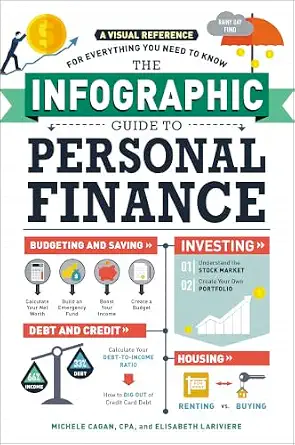
The Infographic Guide to Personal Finance: A Visual Reference for Everything You Need to Know
- ✔ ASIN: 1507204663
- ✔ Format: Infographic guide
- ✔ Stated audience: Personal-finance learners

Financial Literacy for Young Adults Simplified
- ✔ ASIN: B0C9SHJZS9
- ✔ Format: Not specified
- ✔ Stated audience: Young adults
The Index Card is the stronger first read for someone who wants a concise framework and expects to apply it independently. Get Good with Money is a better fit for readers who want structured exercises and attention to the habits and circumstances behind their finances. Neither book replaces individualized tax, investment, or legal advice. The comparison below looks at practical guidance, accessibility, coverage, and value so readers can choose the kind of instruction they are most likely to use.
At a Glance
| Criteria | The Index Card | Get Good with Money | Winner |
|---|---|---|---|
| Approach | Compact set of general rules, framed around a single index card | Broad personal finance system organized around financial stability | Depends |
| Beginner accessibility | Short and easy to finish; assumes readers can turn principles into actions | Approachable, with more explanation and guided reflection | A |
| Budgeting and cash flow | Useful high-level direction, with less step-by-step planning | More hands-on support for examining habits and organizing money | B |
| Debt guidance | Clear general principles without a personalized payoff plan | More room to address debt as part of a wider financial plan | B |
| Saving and investing | Concise guidance focused on broad, established practices | Covers saving and investing within a broader sequence of money goals | B |
| Structure and exercises | Mostly explanatory reading; little workbook-style follow-through | More structured guidance and activities to help readers apply ideas | B |
| Value for different readers | Strong value for readers who want a brief framework | More useful for readers who will work through the additional material | Depends |
Personal Finance For Dummies
For readers starting with a wide question—“What should I understand about personal finance?”—Personal Finance For Dummies looks like the most natural first stop in this comparison. Its title signals general personal-finance coverage and a beginner-friendly approach, giving it broader apparent reach than Financial Literacy for Young Adults Simplified, which is explicitly aimed at younger readers. That makes it the lineup’s best overall choice on positioning alone.There is a substantial qualification: the available product details provide no description beyond the title. We cannot verify how it handles budgeting, debt, saving, investing, or longer-term planning, nor whether it offers exercises or a particular teaching structure. The infographic book gives us a more concrete format promise, and the young-adult title names a clearer set of subject areas. So this pick is strongest for readers who want a broadly framed starting point, but they should check the contents before expecting coverage of a particular planning task.Compared with the other two, this option appears less tailored to a specific age group or visual learning preference. That flexibility is useful if we want a general introduction, though it gives us fewer clues about the exact reading experience. Choose it for its broad beginner signal; skip it if you need confirmed step-by-step instruction on a specific topic before buying.
Pros:
- Title positions it as a general personal-finance resource
- Beginner-oriented framing is apparent from the title
- May suit readers who want a broad starting point
- Not explicitly restricted to a youth audience or visual format
Cons:
- No product description or topic list was supplied
- Teaching format and level of detail cannot be confirmed
- Readers must inspect contents to verify specific planning coverage
Best for: New adult readers seeking a broadly framed introduction to personal finance, provided the contents match their learning goals.
Not ideal for: Readers who need verified coverage of a particular topic, visual explanations, or a guide specifically written for young adults.
Bottom line: Our broadest apparent starting point, as long as its table of contents confirms the subjects a beginner needs.
“Our broadest apparent starting point, as long as its table of contents confirms the subjects a beginner needs.”
The Infographic Guide to Personal Finance: A Visual Reference for Everything You Need to Know
When a page of financial terminology feels harder to approach than the concepts themselves, The Infographic Guide to Personal Finance offers the most clearly differentiated format in this lineup. It presents information as infographics and is described as a visual reference for personal-finance topics. That gives beginners a way to scan ideas and connect them visually, while Personal Finance For Dummies has no supplied details about its teaching format.The tradeoff is that a reference-style visual guide may not provide the sustained sequence some beginners want. If we are trying to build a plan from the ground up, we may prefer a book that walks through decisions in order, explains how one choice affects another, and gives room for practice. The description does not tell us whether this title provides that depth. Nor does “everything you need to know” establish that every planning topic is covered in detail.Compared with Financial Literacy for Young Adults Simplified, this book’s strongest signal is its visual presentation rather than its target age or named subjects. It is therefore the better fit for readers who learn by seeing summaries and diagrams, while the young-adult guide gives a clearer audience and topic promise. Pick this for visual orientation and quick reference; look elsewhere if you need confirmed worksheets, a chapter-by-chapter curriculum, or detailed instruction on a specific financial decision.
Pros:
- Infographic format offers a distinct visual learning approach
- Described as a reference for personal-finance concepts
- May help readers scan and revisit ideas
- Format distinguishes it from the other broadly or age-targeted titles
Cons:
- Description does not confirm how much step-by-step instruction it provides
- Specific topics and level of detail are not listed
- Visual reference format may not suit readers who prefer a traditional course
Best for: Beginners who prefer visual summaries and infographic-style explanations when encountering personal-finance concepts.
Not ideal for: Readers seeking a verified sequential curriculum, extensive practice activities, or confirmed depth on a particular planning topic.
Bottom line: The clearest pick for visual learners, though beginners wanting a structured course should verify its depth first.
“The clearest pick for visual learners, though beginners wanting a structured course should verify its depth first.”
Financial Literacy for Young Adults Simplified
Some beginners do not need a general reference first; they need a guide that speaks to the stage of life they are in. Financial Literacy for Young Adults Simplified is the most audience-specific choice here, and its description names three practical areas: managing money, saving, and investing. That makes its subject promise more explicit than the one supplied for Personal Finance For Dummies, whose details stop at the title.This focus also narrows the fit. Older beginners may find the youth framing less relevant, and the provided description does not say whether the book covers other planning needs or how deeply it treats its named topics. The infographic title has a clearer learning-format promise; this one has a clearer audience and topic promise. We should not assume that “simplified” means worksheets, detailed examples, or a particular sequence, because those details were not provided.For a young adult building basic money habits, the combination of audience and stated subject areas makes this the strongest targeted option. Readers who want a general reference across a wider range of personal-finance questions may prefer the broader apparent positioning of Personal Finance For Dummies, while visual learners may lean toward the infographic guide. Choose this when age relevance and practical basics matter most; check the contents if you need a detailed plan or coverage beyond managing, saving, and investing.
Pros:
- Explicitly written for young adults
- Description names money management, saving, and investing
- Simplified positioning may appeal to readers seeking an accessible entry point
- Provides a clearer topic promise than the sparse description for Personal Finance For Dummies
Cons:
- Audience focus may be less relevant to older beginners
- No format or chapter structure was supplied
- Depth and coverage beyond the named topics are not confirmed
Best for: Young adults who want an accessible introduction to managing money, saving, and investing.
Not ideal for: Older readers who want a broadly targeted reference, or anyone needing confirmed detailed coverage beyond the named basics.
Bottom line: Our best targeted fit for young adult beginners, with scope and teaching detail to verify in the contents.
“Our best targeted fit for young adult beginners, with scope and teaching detail to verify in the contents.”
As an Amazon Associate we earn from qualifying purchases.
Key Differences
The sharpest difference is the amount of guidance between learning a principle and putting it to work. The Index Card makes a small set of ideas easier to remember, which can help a beginner avoid getting lost in competing rules and financial jargon. Its brevity is a real advantage for readers who want orientation before taking action. The tradeoff is that a broad rule may not tell someone exactly how to change a monthly budget, decide which debt to address first, or build a routine they can sustain.
Get Good with Money spends more time on the parts of money management that interact: cash flow, debt, saving, investing, and personal habits. That breadth gives readers more support when several financial concerns need attention at once. It also asks for more time and follow-through. A reader who only wants a handful of dependable starting principles may find its larger scope unnecessary, while one who wants prompts and a more deliberate process may find the extra detail worth it.
For most beginners, the decision should come down to how much structure they need. Choose The Index Card if concise guidance will help you start and you are comfortable making your own action plan. Choose Get Good with Money if you want to work through connected money challenges with more explanation. If money decisions involve complex taxes, legal issues, or significant investment choices, use either book as general education and seek qualified advice for those decisions.
Detailed Comparison
Approach and scope (moderate difference)
The Index Card wins on compression: its central idea is that readers can use a concise group of sound rules instead of chasing every new financial tip. Get Good with Money covers a wider path toward financial stability, linking everyday choices to larger goals. This is a moderate, preference-based gap. The short framework is easier to keep in mind; the broader system gives more context when a reader has several priorities to sort out.
Accessibility for a complete beginner (The Index Card wins — minor)
The Index Card has the edge for readers who want an approachable, relatively quick introduction. Its compact format lowers the effort needed to get started, though readers must translate general guidance into personal steps. Get Good with Money remains accessible but expects more attention as it develops its broader framework. The gap is minor to moderate: choose A for a quick orientation, B if extra explanation makes financial topics easier to act on.
Budgeting and cash flow (Get Good with Money wins — moderate)
Get Good with Money wins because it gives budgeting and money habits more room within an overall plan. That can help a beginner connect spending decisions with savings and future goals. The Index Card offers useful principles, but its concise approach leaves more of the planning work to the reader. This is a moderate difference for anyone whose main question is where the money goes each month; it matters less to readers who already have a workable budget.
Debt guidance (Get Good with Money wins — moderate)
Get Good with Money is the stronger choice for readers who want debt considered as part of a wider financial picture. More space for connected goals can make it easier to think through repayment alongside cash flow and saving. The Index Card is better as a source of general principles than as a detailed debt action plan. The gap is moderate, especially for readers juggling balances or rebuilding financial stability; neither book should be mistaken for tailored credit or debt counseling.
Saving and investing (Get Good with Money wins — minor)
Get Good with Money wins narrowly for readers who want saving and investing included in a larger sequence of financial goals. The Index Card offers a concise set of broad directions that may be enough for readers who want a simple starting framework. The difference is minor for a beginner who needs basic orientation, but more relevant when the challenge is deciding how savings fit alongside debt, expenses, and longer-term plans. Neither book provides personalized portfolio advice.
Structure and follow-through (Get Good with Money wins — major)
Get Good with Money wins for readers who benefit from a guided process and activities that prompt them to examine their situation. The Index Card is more of a concise read than a workbook, so readers need to create their own reminders and next steps. This is a major practical difference for people who know the basics but have trouble turning them into habits. Self-directed readers may prefer A’s lighter format.
Value for the time and money (minor difference)
The better value depends on whether the additional structure in Get Good with Money will be used. If a reader wants a short set of rules and will take action independently, The Index Card offers a more efficient first purchase. If a reader needs sustained guidance across several areas, B’s added scope can justify paying more, if its edition costs more where they shop. The value gap is minor in general and becomes meaningful only when the extra material solves a real need.
The Index Card: Pros and Cons
Pros:
- Concise framework is easy to revisit
- Good low-friction entry point for readers overwhelmed by financial advice
- Useful general principles without requiring a workbook approach
Cons:
- Less step-by-step support for budgeting and debt decisions
- Readers must turn broad principles into their own action plan
- May not provide enough depth for several financial challenges at once
Get Good with Money: Pros and Cons
Pros:
- Broader coverage connects everyday money management with larger goals
- More guidance for readers who want a structured process
- Useful for people working on several financial habits or priorities together
Cons:
- Requires more reading time and follow-through
- Its wider scope may be more than a reader seeking a quick primer needs
- More guidance still cannot account for every reader’s personal financial or tax situation
Who Should Choose What
Choose The Index Card if:
- You want a short, memorable foundation before exploring more detailed finance material.
- You already manage your budget reasonably well and mainly want clear general principles.
- You prefer to decide your own next steps instead of completing guided activities.
Choose Get Good with Money if:
- You want a broader plan for connecting budgeting, debt, saving, and investing.
- You benefit from prompts and structured guidance to turn reading into action.
- Several money habits or goals feel connected, and you want one book to address them together.
Skip both if: You need advice tailored to complex taxes, legal matters, insolvency, or a specific investment portfolio; consult a qualified professional for those decisions.
Value for Money
Price alone does not settle this comparison. A shorter book such as The Index Card is better value when a reader wants orientation, can apply general principles independently, and would leave a larger guide unfinished. Get Good with Money can justify a higher price when its wider coverage and guided exercises address problems the reader is actively trying to solve. Compare the editions available to you, since prices vary, and pay more only when you expect to use the extra structure. For a beginner who needs help organizing several parts of their finances, that additional guidance is more likely to earn its cost; for someone seeking a compact introduction, A is the more economical fit.
Final Verdict
For most beginners who want a book they can use to build a practical, connected money routine, Get Good with Money is the stronger single choice. Its broader structure better serves readers who need to address budgeting, debt, saving, and investing as related decisions. Choose The Index Card instead if you want a fast, clear foundation and are comfortable turning general rules into your own plan. The biggest deciding factor is how much help you need moving from principles to actions: if you need a guided process, pick B; if you need a concise starting point, pick A.
Frequently Asked Questions
Which book is better for someone who has never managed a budget?
Get Good with Money is the better fit if you want more structure for examining habits and organizing your finances. The Index Card is a useful shorter introduction, but it leaves more of the budgeting process to you.
Is The Index Card enough to start investing?
It can introduce broad investing principles, but a general finance book is not a personalized investment plan. Your goals, time horizon, taxes, and tolerance for risk affect what choices fit.
Should I read both books?
You can, but most beginners do not need both at once. Start with The Index Card if you want a concise overview; start with Get Good with Money if you need a guided plan. Add the other later if you want the format or depth it offers.
Is the more detailed book worth paying more for?
Pay more for Get Good with Money when its extra guidance addresses active goals and you will work through it. If you only want a few general principles, The Index Card is likely the better value.