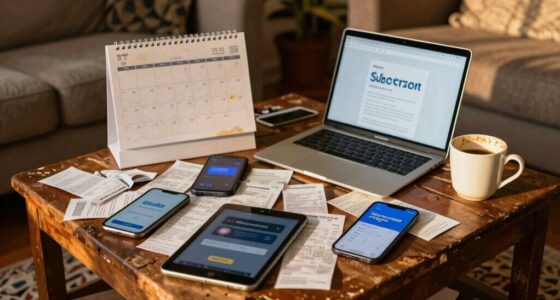
To create a personal budget from scratch, start by listing all your income sources and tracking your net income each month. Then, categorize your expenses into fixed costs like rent and variable costs such as groceries. Prioritize paying off high-interest debt and set aside savings for emergencies and future goals. Regularly review your spending, make adjustments, and stay consistent. Keep going to discover how you can fine-tune your budget for better financial health.

Get smart everyday buys delivered free with Prime
- Fast, free delivery on millions of items
- Prime Video, Amazon Music and more included
- Member-only deals all year
Key Takeaways
- List all income sources and track net income consistently to establish your budget foundation.
- Categorize expenses into fixed and variable costs for clear cash flow management.
- Allocate specific amounts toward debt repayment, prioritizing high-interest debts for faster payoff.
- Set aside funds for savings and investments, automating transfers to reinforce discipline.
- Review and adjust your budget monthly, identifying areas to cut discretionary expenses and optimize fixed costs.

Creating a personal budget is an essential step toward achieving financial stability and reaching your goals. To start, you need to assess your income thoroughly. List all sources, including your salary, freelance work, rental income, side hustles, and passive income from investments or dividends. Use your net income—what you take home after taxes and deductions—as the foundation for your budget. Tracking this income consistently, ideally every month, helps ensure accuracy and gives you a clear picture of what you have to work with. This ongoing assessment allows you to make informed decisions about where your money goes. Understanding your income sources is crucial for an accurate budget. Recognizing the importance of consistency in tracking your finances can lead to better financial habits and more reliable planning.
Next, categorize your expenses into fixed and variable costs. Fixed expenses stay the same each month, like rent or mortgage payments, insurance premiums, and loan repayments. These are your priority because they are essential. Variable expenses fluctuate, such as groceries, dining out, entertainment, and transportation. Recognizing these helps you identify areas where you can make adjustments. For example, if you notice your dining out costs are high, you can cut back to boost savings or pay down debt. Proper categorization makes it easier to anticipate cash flow and plan for both regular expenses and unexpected costs.
Incorporating debt repayment into your budget is crucial. Allocate specific amounts toward reducing your debts each month, prioritizing high-interest loans or credit cards for faster payoff. Recognize how debt-related stress impacts your well-being, and aim to manage it proactively. Tracking these payments within your budget helps prevent the accumulation of new debt and keeps you focused on your financial goals. Adjust your spending habits if needed to stay on track, balancing immediate needs with long-term debt reduction. Developing a debt repayment plan, such as the avalanche or snowball method, can further support your efforts.
Savings and investments are vital components. Set aside funds for emergencies, retirement, and other future goals. Creating separate categories within your budget—like an emergency fund or savings for large purchases—makes progress measurable. Automating transfers to savings accounts can reinforce discipline and ensure consistent contributions. Regularly review your savings plan and increase contributions whenever possible. Additionally, consider including investment contributions to grow your wealth over time, aligning your money management with your long-term objectives. Understanding the different types of savings accounts and investment vehicles can help optimize your growth.
Tracking your expenses is an ongoing process. Use digital tools, apps, spreadsheets, or even a journal to record every purchase and income. Monthly reviews help compare your actual spending against your budgeted amounts, highlighting areas for adjustment. Cut discretionary expenses such as entertainment or dining out first, then reassess fixed costs for potential savings. Even small cost reductions add up over time, strengthening your financial position. Staying disciplined in your tracking habits ensures you remain aware of your financial health and can make timely adjustments.
Choose a budgeting method that suits your style, whether it’s zero-based budgeting, where every dollar is assigned, or pay-yourself-first, where savings come before expenses. Regularly revisit your approach and adjust as your circumstances change. Incorporating all key components—income, fixed and variable expenses, debt repayment, savings, sinking funds for irregular expenses, and miscellaneous funds for surprises—ensures your budget is comprehensive. By following these steps, you’ll develop a clear, disciplined plan to manage your money effectively and reach your financial goals. Building a financial plan that adapts over time is essential for long-term success.
As an affiliate, we earn on qualifying purchases.
Frequently Asked Questions
How Often Should I Review and Adjust My Budget?
You should review and adjust your budget at least once a month. Regular checks help you stay on track with your financial goals and catch any unexpected expenses early. If your income or expenses change markedly, update your budget immediately. Be flexible and proactive, making adjustments as needed to ensure you’re saving, spending wisely, and maintaining financial stability. Consistent reviews keep you accountable and in control of your finances.
What Tools Are Best for Tracking Expenses?
For tracking expenses, you should consider tools that make money management manageable and memorable. Mobile apps like Mint and YNAB are fantastic because they simplify scanning receipts, syncing bank accounts, and sorting spending. Spreadsheets offer a more hands-on approach if you prefer precision and personalization. Digital or paper, choose tools that suit your style, stay consistent, and help you see where every dollar goes with clarity and confidence.
How Can I Save Money on Irregular Income?
You can save money on irregular income by setting aside a flexible emergency fund that covers months with lower earnings. Prioritize essential expenses first, then allocate any extra income to savings. Track your income and expenses diligently, adjusting your budget as needed. Consider automating savings when possible, and avoid unnecessary spending during months of higher income. This approach helps you build financial stability despite income fluctuations.
What Should I Do if I Overspend?
If you overspend, first acknowledge it without guilt. Reassess your budget and identify where you can cut back, especially on non-essential expenses. Create a plan to cover the overspent amount, perhaps by temporarily reducing spending in other areas or saving from future income. Track your expenses diligently and set realistic limits moving forward to prevent future overspending and keep your finances on track.
How Do I Prioritize Debt Repayment Within My Budget?
Think of your debt repayment as the captain steering your financial ship. To prioritize effectively, list your debts from highest to lowest interest rates, then allocate extra funds to the most costly ones first—like a strategist in a chess game. Make minimum payments on all others, ensuring each debt moves toward settlement. This focused approach keeps your finances sailing smoothly and helps you conquer debt faster.
As an affiliate, we earn on qualifying purchases.
Conclusion
Now that you’ve built your budget from scratch, you might feel empowered or overwhelmed. But remember, a budget isn’t just numbers—it’s your financial blueprint. Like a map guiding you through unknown territory, it helps you avoid debt and reach your goals. So, embrace the process, stay flexible, and watch your financial confidence grow. Because in the end, managing your money isn’t just about tracking expenses—it’s about shaping your future.
As an affiliate, we earn on qualifying purchases.
As an affiliate, we earn on qualifying purchases.
Halloween Picks
halloween
As an affiliate, we earn on qualifying purchases.