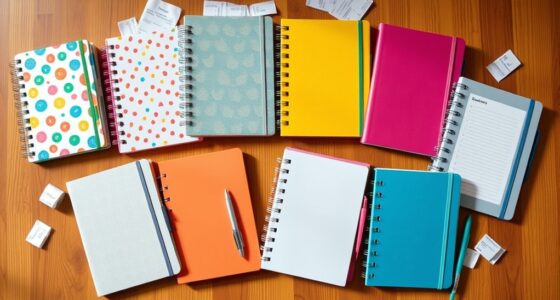

A good budgeting planner for personal finance does more than record spending — it turns scattered transactions into a monthly plan you can actually follow. After comparing 15 popular options, the Clever Fox Budget Planner stands out as the best overall pick for its large-format monthly layout, thick paper, and goal-setting pages that work for both beginners and experienced budgeters. If cash-envelope-style organization matters most, the Soligt planner with 12 built-in pockets is the strongest alternative, while the Clever Fox Biweekly planner suits anyone paid every two weeks. The main tradeoff in this category is between dated planners (structured but wasted if you start late) and undated ones (flexible but requiring more discipline), plus size: big B5/A4 spreads are easier to write in, while A5 notebooks travel better. Read on for the full breakdown of layouts, paper quality, and which planner fits your money style.

Get smart everyday buys delivered free with Prime
- Fast, free delivery on millions of items
- Prime Video, Amazon Music and more included
- Member-only deals all year
Key Takeaways
- Undated planners dominate this lineup because they let you start any month without wasting pages — but the dated 2026 planner only makes sense if you commit to a full calendar year.
- Size is the biggest practical difference: large-format options like the Clever Fox and HAUTOCO give room for detailed tracking, while A5 picks like the Snootion and And Per Se trade writing space for portability.
- The Soligt‘s 12 storage pockets set it apart — it’s the only pick that doubles as a receipt and bill organizer, which matters for tax records and expense disputes.
- The biweekly Clever Fox is the only planner built around a twice-a-month paycheck cycle, a meaningful advantage over monthly-only layouts for a large share of buyers.
- Purpose-built picks like Her Money Era go beyond tracking into debt payoff and wealth-building exercises — better for goal-driven users, overkill for those who just want to log expenses.


| budgeting planners for personal finance | Binding | Brand | Format | Color |
|---|---|---|---|---|
| B5 Monthly Budget Planner and | Double spiral, lay-flat | — | — | — |
| Budget Planner A5 Undated Expe | Twin-wire metal, lay-flat | — | Undated organizer | — |
| Kamoy Budget Planner and Expen | Coil binding | Kamoy | — | Green |
| Clever Fox Budget Planner | — | Clever Fox | — | Brown |
| Taja Undated Budget Planner wi | — | Taja | Undated monthly planner | Pink |
| TREES Undated 12-Month Budget | Twin-wire, 180° lay-flat | TREES | Undated 12-month planner | Black |
| 2026 Budget Planner and Monthl | Spiral coil | Hadley Designs | Dated monthly planner with bill organizer | Pastel |
| Budget Planner | Coil | Kamoy | Dated 14-month budget planner | — |
| HAUTOCO Hardcover Monthly Bill | Double-wire spiral | HAUTOCO | — | — |
| Soligt Undated Monthly Budget | Spiral bound | — | Undated monthly budget planner | — |
| Taja Undated Budget Planner an | — | Taja | Undated monthly planner | A. Wildflowers |
| Clever Fox Biweekly Budget Pla | Lay-flat | Clever Fox | — | — |
| Snootion Undated Budget Planne | Metal twin-wire, lay-flat | Snootion | — | Silver |
| And Per Se A5 Undated Budget P | — | — | — | Forest green |
| Her Money Era: A Budget Planne | — | — | Structured habit-based layouts with motivational prompts | — |
More Details on Our Top Picks
B5 Monthly Budget Planner and Expense Tracker Notebook
Among the planners in this lineup, this B5 notebook earns the top spot because it covers the fullest range of tracking sections — budget, expenses, debt, bills, and savings — while still including the accessories most competitors treat as afterthoughts. The waterproof PVC cover is a genuine advantage over the paper-covered Clever Fox Budget Planner if your planner rides around in a bag or gets splashed at the coffee table. Monthly tabs and label stickers mean you can find March’s bills without flipping through every page, something the undated Kamoy Budget Planner doesn’t offer as clearly. The tradeoff is size: at B5, it’s bigger than the A5 floral expense tracker, so it’s a desk-and-tote planner rather than a purse companion. The lack of a stated page count also makes it harder to gauge how long it will last a heavy tracker.
Pros:- Covers budget, expenses, debt, bills, and savings in one book
- Waterproof PVC cover and 100 GSM paper survive daily handling
- Double spiral binding lays flat for easier writing
- Tabs, stickers, pen holder, and pocket included out of the box
Cons:- B5 size is less portable than compact A5 alternatives
- Page count isn’t specified, so lifespan for heavy users is unclear
Best for: Hands-on budgeters who want every category — debt, bills, savings — pre-structured in one durable, tabbed notebook
Not ideal for: Anyone who wants a grab-and-go daily expense log — B5 is too large for a jacket pocket or small bag
- Size:B5 (7.3 × 10.15 in)
- Cover:Waterproof PVC
- Paper:100 GSM
- Binding:Double spiral, lay-flat
- Trackers:Monthly budget, expenses, debt, bills, savings
- Extras:Monthly tabs, label stickers, ribbon bookmark, pen holder, elastic band, inner pocket, user guide
Our verdict“The most complete and accessorized option here — buy it if you want one planner that handles every corner of your finances at a desk or in a tote.”
Budget Planner A5 Undated Expense Tracker with Floral Design
This A5 tracker is the one to grab when portability matters more than page count. At roughly 8.5 by 5.8 inches and a light 0.2 kg, it slips into a bag far more easily than the 8.3 × 11-inch Clever Fox planner, which really lives on a desk. The 100 gsm paper holds up against gel pens and highlighters without ghosting, and the twin-wire metal binding with elastic closure gives it a sturdier feel than you’d expect from a flexible PP cover. The catch is capacity: 50 sheets means a dedicated daily logger will burn through it well before a year is out, and the floral cover is a style commitment not everyone wants to carry into a meeting. There’s also no yearly calendar structure, so long-horizon planners should look elsewhere.
Pros:- Undated layout works no matter when you start
- Thick 100 gsm paper resists ink bleed-through
- Genuinely compact and lightweight for on-the-go tracking
- PP cover, elastic closure, and inner pocket protect contents
Cons:- Only 100 pages — heavy users will need a replacement quickly
- Floral design won’t appeal to all buyers or settings
- No dated yearly sections for forward planning
Best for: Students and commuters who track spending on the go and want a light, undated book that fits a backpack side pocket
Not ideal for: Daily expense loggers who write several entries a day — 50 sheets will run out within months
- Format:Undated organizer
- Paper Size:A5
- Dimensions:8.5 × 5.8 in
- Pages:100 pages (50 sheets)
- Paper Weight:100 gsm
- Cover:Flexible PP
- Binding:Twin-wire metal, lay-flat
- Extras:Inner pocket, elastic closure
Our verdict“The best choice if your budget planner needs to travel with you daily, as long as you’re a light-to-moderate logger.”
Kamoy Budget Planner and Expense Tracker, B5
The Kamoy occupies a smart middle position: same B5 working size as my top pick but with metal corner protectors that address the most common failure point on coil-bound planners — dog-eared, peeling corners. Like the Clever Fox planner it’s undated and 12 months long, but Kamoy skips premium trimmings like vegan leather and a receipt pocket in favor of simple durability. The undated monthly structure covers income, expenses, bills, savings goals, and debt, which is the core toolkit; compared with the A5 floral tracker, you get more writing real estate per page for listing transactions. The downside is that it ships with essentially no accessories — no stickers, bookmarks, or guidebook — so first-time budgeters may feel a bit unguided, and there are no tabs for quick month navigation.
Pros:- Full tracker set: income, expenses, bills, savings goals, debt
- Undated 12-month format lets you start any month
- Metal corner protectors extend the cover’s life
- Coil binding makes page flipping and writing easy
Cons:- No included guidebook, stickers, or bookmarks
- No tabbed month dividers for quick navigation
Best for: Anyone who wants a straightforward, resilient 12-month tracker and doesn’t care about stickers or styling extras
Not ideal for: Budgeting beginners who want a guidebook and step-by-step instructions — this planner assumes you know your method
- Brand:Kamoy
- Size:B5 (7.2 × 10 in)
- Duration:12 months, undated
- Trackers:Income, expenses, bills, savings goals, debt
- Binding:Coil binding
- Durability:Metal corner protectors
- Color:Green
Our verdict“A no-frills, built-to-last option for people with an established budgeting routine who just need the pages.”
Clever Fox Budget Planner, 12-Month Monthly Bill Tracker, 8.3 x 11 in, Brown
If budgeting has become a serious monthly ritual for you, the Clever Fox is the most premium-feeling planner in this batch: vegan leather cover, 120 gsm paper (the thickest here), and a genuinely deep tracker system with 8 savings trackers and 12 debt trackers — more granular than the single debt section in the Kamoy or the B5 notebook. Add three bookmarks, a receipt pocket, a pen holder, and a user guide, and it’s clear this is designed for someone managing multiple sinking funds and payoff timelines at once. All that capability comes with weight and bulk: at 0.74 kg and letter-size dimensions, it’s far less portable than the A5 floral tracker, and the unspecified binding means you can’t confirm it lays flat before ordering. This is a desk planner, full stop.
Pros:- 8 savings and 12 debt trackers for multi-goal planning
- Thickest paper in the lineup at 120 gsm
- Vegan leather cover with premium accessories included
- Monthly calendars plus full tracker suite and user guide
Cons:- Large, heavy format limits portability
- Binding type is unspecified, so lay-flat behavior is unverified
Best for: Detail-oriented budgeters juggling multiple savings funds and debt payoff plans who work at a desk
Not ideal for: Anyone tracking on the couch or on a train — at 8.3 × 11 inches and 0.74 kg, it’s the least portable option here
- Brand:Clever Fox
- Planning Period:12 months, undated
- Size:8.3 × 11 in
- Paper:120 gsm
- Cover:Vegan leather
- Trackers:Budget, bills, expenses, 8 savings trackers, 12 debt trackers
- Accessories:Pen holder, elastic band, 3 bookmarks, receipt pocket, stickers, user guide
- Weight:0.74 kg
- Color:Brown
Our verdict“The most powerful planner here for complex finances — buy it if you manage many goals at once and don’t need to carry it anywhere.”
Taja Undated Budget Planner with Expense Tracker, 6.9 × 9.9 in
The Taja is the friendliest entry point in this roundup because it pairs its tracking pages with a budgeting guidebook — something the Kamoy planner omits entirely — plus three sticker sheets that make the habit feel approachable rather than like accounting homework. Its size sits neatly between the compact A5 floral tracker and the oversized Clever Fox, so it works at a desk or in a medium tote. Coverage spans income, expenses, savings, bills, debt, and financial goals, which is as complete as the premium options minus their multi-tracker depth. Tradeoffs: you must hand-write every date on the monthly pages, there’s no tabbed navigation, and paper weight isn’t specified — fountain pen users should test a corner page first. Compared with Clever Fox, you give up paper quality and accessory count in exchange for guidance and a friendlier footprint.
Pros:- Guidebook teaches budgeting basics alongside the pages
- Tracks income, expenses, savings, bills, debt, and goals
- Middleweight size is portable yet roomy
- Three sticker sheets and dual-sided pocket add engagement
Cons:- Every date must be handwritten on undated pages
- Paper weight unspecified, so ink performance is a gamble
Best for: First-time budgeters who want built-in guidance, structure, and a little fun while building the tracking habit
Not ideal for: Experienced budgeters who want premium paper, tabs, and deep multi-goal trackers — this is deliberately simpler
- Brand:Taja
- Model:T010
- Dimensions:6.9 × 9.9 in
- Format:Undated monthly planner
- Trackers:Income, expenses, savings, bills, debt, financial goals
- Includes:Budgeting guidebook, 3 sticker sheets
- Features:Elastic band, dual-sided pocket
- Color:Pink
Our verdict“The best starting point if you’re new to budgeting and want a planner that teaches as well as tracks.”
TREES Undated 12-Month Budget Planner
At 5.5 x 8.5 inches, this is the smallest planner in this batch, and that size is its whole argument. Compared with the HAUTOCO tracker at 10.78 x 8 inches, the TREES slips into a purse or work bag without a second thought, which matters if budgeting happens on the go rather than at a desk. The 180° lay-flat twin-wire binding makes one-handed entries realistic — a small thing that separates it from stiffer compacts like the Hadley Designs organizer. Its tracking scope covers income, bills, savings, and debt in one slim notebook, and the undated pages mean no wasted months if life gets busy.
The tradeoff is capacity: there’s no stated page count, and the compact format limits how much line-by-line expense detail fits per month compared with larger options like the Soligt.
Pros:- Genuinely portable 5.5 x 8.5 inch size for on-the-go entries
- 180° lay-flat binding allows comfortable one-handed writing
- Undated 12-month format prevents wasted pages
- Covers income, expenses, bills, savings, and debt in one place
Cons:- No stated page count makes capacity hard to judge before buying
- Limited writing space per month compared with larger planners
Best for: Commuters and travelers who want a grab-and-go planner that fits a small bag
Not ideal for: Anyone logging dozens of transactions per month — the compact pages fill up fast
- Brand:TREES
- Format:Undated 12-month planner
- Dimensions:5.5 x 8.5 inches
- Binding:Twin-wire, 180° lay-flat
- Extras:Elastic band, double-sided pocket, three sticker sheets
- Color:Black
Our verdict“This pick makes the most sense for buyers who value portability over deep expense logging.”
2026 Budget Planner and Monthly Bill Organizer
Where most planners in this lineup aim at people who already know their cash flow, the Hadley Designs organizer leans into approachability. The pastel styling and included sticker sheet lower the intimidation factor for first-time budgeters, and the layout still covers the essentials: expenses, bills, income, savings goals, and debt payoff tracking, plus monthly reviews that prompt reflection. Compared with the TREES planner, it’s slightly wider at 5.8 x 8.3 inches and its dated 2026 structure provides the external discipline that beginners often need — a defined start, a defined rhythm.
The flip side of that structure is inflexibility: start mid-year and months go unused. And unlike the Kamoy’s 14-month span, this one runs a standard calendar year, so there’s no bonus buffer period.
Pros:- Dedicated trackers for expenses, bills, savings, and debt payoff
- Monthly review sections build reflection into the routine
- Friendly pastel design and stickers motivate consistent use
- Spiral binding and compact size keep it easy to use daily
Cons:- Dated format wastes pages for late starters
- Single pastel colorway with no alternative styling
Best for: Budgeting newcomers who want structure, encouragement, and a low-pressure entry point
Not ideal for: Anyone starting mid-year or wanting a multi-year system — the dated 2026 format wastes pages
- Brand:Hadley Designs
- Model year:2026
- Format:Dated monthly planner with bill organizer
- Dimensions:5.8 x 8.3 inches
- Binding:Spiral coil
- Extras:Sticker sheet
- Color:Pastel
Our verdict“This model is better suited to first-timers who want a gentle, structured introduction than to experienced budgeters.”
Budget Planner – Monthly Budget Book with Expense Tracker (5.8″ x 8.2″)
The Kamoy’s pitch is aesthetic as much as functional: a pink cover with gold lettering that looks intentional on a desk or pulled from a tote. But the substance holds up too. The layout moves through monthly budget pages, four expense-tracking sheets per month, a summary, and a notes section — a rhythm that keeps totals honest without overwhelming. Its standout structural advantage is the 14-month coverage, which beats both the Hadley Designs 12-month format and gives a buffer for late starts or year-end rollovers. Compared with the TREES planner, it trades a little binding refinement for a fuller tracking structure.
The single pink-and-gold style is the obvious limitation — there’s no alternative for buyers who prefer neutral tones. And once the 14 months end, the book is finished; unlike undated options such as the Soligt, there’s no way to extend it.
Pros:- 14-month coverage outlasts standard 12-month planners
- Complete monthly structure with expense sheets, summaries, and notes
- Elegant pink and gold design feels premium
- Compact A5 size with sturdy coil binding travels well
Cons:- Single color/style option only
- Fixed duration means buying a replacement after 14 months
- No digital companion or app integration
Best for: Buyers who want a polished, giftable planner with longer-than-average coverage and a complete monthly structure
Not ideal for: Minimalists or anyone wanting neutral styling — the pink-and-gold look is the only option
- Brand:Kamoy
- Format:Dated 14-month budget planner
- Dimensions:5.8 x 8.2 inches (A5)
- Binding:Coil
- Layout:Monthly pages, 4 expense sheets, summary, notes
- Style:Pink with gold lettering
Our verdict“This option stands out for style-conscious budgeters who want full monthly structure and a few extra months of runway.”
HAUTOCO Hardcover Monthly Bill Tracker Notebook, 10.78 x 8 in, Deep Purple
This is the workhorse of the batch. With 120 pages and 3,000 entry lines, the HAUTOCO absorbs far more transaction volume than any compact option here — the TREES or Kamoy would fill a month’s pages in what this notebook handles across dozens of accounts. It’s aimed at household or small-business bill management, with dedicated sections for due dates, amounts paid, and unpaid balances, and it’s dressed accordingly: a PU leather hardcover, 100 gsm paper that resists ink bleed, an elastic band, pen loop, bookmarks, and two pockets. The double-wire spiral lays flat for long sessions at a desk.
That 10.78 x 8-inch footprint is the honest drawback — this is a desk tool, not a companion for the coffee run. And the printed 2025–2027 calendar pages give it a soft shelf life the truly undated planners avoid.
Pros:- 3,000 entry lines handle very high transaction volume
- Thick 100 gsm paper resists bleed-through from fountain or gel pens
- PU leather hardcover with pen loop, bookmarks, and two pockets
- Dedicated due-date, paid, and unpaid-balance columns
Cons:- Large format sacrifices portability entirely
- Printed 2025–2027 calendar pages limit long-term reuse
Best for: Households or small businesses tracking many accounts and heavy monthly bill volume
Not ideal for: Anyone wanting a portable planner — at 10.78 x 8 inches and 1.23 pounds, it stays home
- Brand:HAUTOCO
- Dimensions:10.78 x 8 inches
- Pages:120
- Entry lines:3,000
- Paper weight:100 gsm
- Cover:PU leather hardcover
- Binding:Double-wire spiral
- Calendar pages:2025–2027
- Extras:Elastic band, pen loop, bookmarks, 2 pockets
Our verdict“This pick makes the most sense for high-volume bill trackers who work at a desk and need durability over portability.”
Soligt Undated Monthly Budget Planner with 12 Pockets
The Soligt solves a problem most planners ignore: where the paper goes. Twelve storage pockets — one per month — mean bills, receipts, and statements live alongside their corresponding budget pages, which the Hadley Designs and Kamoy simply can’t offer with their flat, pocket-less layouts. Compared with the HAUTOCO’s two pockets, this is a full monthly filing system built into a budget book. The pages themselves are customizable and cover income, expenses, savings, debt payoff, bills, and goals, and the colored month tabs make flipping to the right month fast. The 9.25 x 6.81-inch size sits between the portables and the desk-bound HAUTOCO, and the hardcover plus 100 gsm paper give it real durability.
The bulk those pockets add is the tradeoff — it’s thicker and heavier than a slim option like the TREES, so it’s better left in one place than carried daily.
Pros:- 12 monthly pockets store bills and receipts in context
- Undated, customizable pages track income through debt payoff
- Colored month tabs enable quick navigation
- Durable hardcover and 100 gsm paper feel built to last a year
Cons:- Pocket-filled spine makes it noticeably bulkier than slim planners
- Mid-size format is less portable than compact A5 options
Best for: Paper-heavy households that need receipts and bills filed by month alongside their budget
Not ideal for: Minimalists who rarely handle paper — the pockets add bulk without payoff
- Format:Undated monthly budget planner
- Pockets:12
- Dimensions:9.25 x 6.81 inches
- Cover:Hardcover
- Binding:Spiral bound
- Paper:100 gsm
- Extras:Colored sticker month tabs
Our verdict“This option stands out for buyers whose budgeting depends on keeping physical paperwork organized month by month.”
Taja Undated Budget Planner and Monthly Bill Organizer
Of the two Taja planners in this roundup, this one stands out as the friendliest entry point for someone writing their first budget. Where the Taja 6.9 × 9.9 in Expense Tracker leans harder into detail, this version keeps things approachable with monthly pages covering income, expenses, savings goals, debts, and bill due dates without overwhelming a newcomer. The included budgeting guidebook does a lot of the hand-holding that the Clever Fox Biweekly planner assumes you don’t need, and three sticker sheets make the whole exercise feel less like accounting homework. The tradeoff is control: because pages are undated, you’ll write in every date yourself, and anyone who wants deep weekly granularity will find the monthly spreads thin compared with Clever Fox’s biweekly layout.
Pros:- Covers income, expenses, savings goals, debts, and bill payments in one monthly layout
- Included guidebook teaches budgeting basics rather than assuming prior knowledge
- Elastic closure and dual-sided pocket keep stickers, receipts, and papers together
- Undated pages mean zero wasted months if you start mid-year
Cons:- Every date must be handwritten, which gets tedious if you fall behind
- Monthly-only structure lacks the weekly detail of biweekly or daily trackers
Best for: First-time budgeters who want guidance, stickers, and a low-pressure monthly format in one box
Not ideal for: Detail-driven planners who need weekly or biweekly expense breakdowns — the monthly-only spreads will feel shallow
- Brand:Taja
- Model:T010-P
- Format:Undated monthly planner
- Tracking:Income, expenses, savings, debts, bills
- Includes:Budget guidebook, 3 sticker sheets, dual-sided pocket
- Closure:Elastic band
- Color:A. Wildflowers
- Target audience:Adults
Our verdict“A sensible first planner for budgeting beginners who want structure and encouragement bundled together.”
Clever Fox Biweekly Budget Planner, Mint Green, A5
This is the only planner in the lineup built around biweekly spreads, and that single design choice changes everything for anyone paid every two weeks. Instead of stretching one monthly budget across awkward half-months, you plan each paycheck, note its bills, and track spending against it — something the Taja Undated Budget Planner and its monthly pages simply can’t replicate. Build quality also pulls it ahead of the Snootion A5: 120 gsm paper outclasses Snootion’s 100 gsm for fountain-pen users, and the faux-leather hardcover with lay-flat binding feels like a premium tool. The accessories — pen loop, three bookmarks, receipt pocket — are practical rather than decorative. The cost of all this structure is density; the pages demand more time per sitting than simpler monthly planners, and the one-year duration means rebuying annually.
Pros:- Biweekly spreads match paycheck cycles better than any monthly-only planner here
- 120 gsm paper resists bleed-through better than the 100 gsm used by Snootion and And Per Se
- Hardcover with lay-flat binding, pen loop, three bookmarks, and receipt pocket
- Includes goal-setting, debt, savings, and net worth pages beyond basic tracking
Cons:- Twelve-month duration means an annual repurchase
- Heavier and more involved than simple monthly organizers like the Taja
Best for: Biweekly-paid workers who budget paycheck-to-paycheck and want premium paper and binding
Not ideal for: Minimalists who just want a quick monthly snapshot — the biweekly spreads demand more frequent engagement
- Brand:Clever Fox
- Size:A5 (5.8 x 8.3 inches)
- Duration:12 months, undated
- Schedule:Biweekly spreads
- Cover:Faux leather hardcover
- Paper:120 gsm, ruled
- Binding:Lay-flat
- Features:Pen loop, elastic band, 3 bookmarks, receipt pocket, stickers, user guide
- Weight:0.43 kg
Our verdict“The pick for anyone whose budget runs on a two-week paycheck rhythm and who wants a durable, well-equipped tool for it.”
Snootion Undated Budget Planner, 12-Month Finance Organizer, A5, Silver
Where the Clever Fox Biweekly justifies a premium with its hardcover and 120 gsm paper, the Snootion delivers the core budgeting workflow for less: goals, savings, debt, daily expenses, and monthly reviews, all in a portable A5 frame. The twin-wire lay-flat binding is genuinely useful — the page stays open flat on a desk, which cheaper glue-bound notebooks in this roundup can’t promise. Its 100 gsm paper matches the And Per Se planner and handles most gel pens fine, though heavy fountain ink may ghost where Clever Fox wouldn’t. What you give up is polish: there’s no pen loop, no receipt pocket, no stickers, and no guidebook. This is a plain, functional tracker for people who already know what they’re doing and don’t want to pay for accessories they won’t use.
Pros:- Full workflow covered: goals, savings, debt, daily expenses, and monthly reviews
- Twin-wire binding keeps pages flat for comfortable desk writing
- 100 gsm paper reduces ink bleed-through for everyday pens
- Undated start means no wasted pages when life interrupts a streak
Cons:- Bare-bones package with no pen loop, pocket, or guidebook
- One-year lifespan requires replacement sooner than 16-month options like And Per Se
Best for: Budget-savvy buyers who want a complete 12-month tracking system without paying for premium extras
Not ideal for: Anyone who wants a guided, accessory-rich experience — there’s no pen loop, pocket, or instructional guide here
- Brand:Snootion
- Model:snpl-0324
- Size:8.6 x 5.9 inches (A5)
- Paper weight:100 gsm
- Duration:12 months, undated
- Binding:Metal twin-wire, lay-flat
- Color:Silver
- Target audience:Adults
Our verdict“The smart no-frills choice for experienced budgeters who value function over extras.”
And Per Se A5 Undated Budget Planner, Forest Green
Sixteen months instead of twelve is the quiet advantage here — that’s four extra months before you’re shopping for a replacement, which matters if you start mid-year or simply don’t want the annual rebuy that the Clever Fox Biweekly and Snootion planners impose. Each month packs a calendar, a budget plan, and four dedicated expense tracker pages, so it splits the difference between Snootion’s lean layout and Clever Fox’s dense biweekly grind. The accessory set — pen loop, pocket, two bookmarks — matches what pricier planners offer. Two caveats hold it back from a higher slot: the 100 gsm paper is only average, and the cover material is described vaguely as faux leather or fabric, so buyers can’t be certain what will arrive. It’s a strong middle-of-the-road option rather than a category leader.
Pros:- 16-month duration outlasts the 12-month Clever Fox and Snootion planners
- Four expense tracker pages per month allow finer-grained logging than monthly-only layouts
- Six debt trackers and four savings trackers suit multi-goal households
- Pen loop, pocket, and two bookmarks included at a mid-range spec
Cons:- Cover material listed ambiguously as faux leather or fabric
- 100 gsm paper is adequate but not premium for heavy-ink writers
Best for: Planners who want extra runway and monthly expense detail without committing to a biweekly system
Not ideal for: Buyers who care about cover material and paper feel — the vague materials spec and average paper weight may disappoint
- Size:A5 (5.7 × 8 in)
- Duration:16 undated months
- Paper weight:100 gsm
- Cover:Faux leather/fabric
- Color:Forest green
- Monthly layout:Calendar, budget plan, and 4 expense tracker pages
- Trackers:4 savings trackers, 6 debt trackers
- Accessories:Elastic pen loop, pocket, 2 bookmarks
Our verdict“A solid all-rounder for anyone who wants more than a year of budgeting in a single book.”
Her Money Era: A Budget Planner for Women to Save Money, Pay Off Debt & Build Wealth
Every other planner in this roundup is a neutral grid of numbers; Her Money Era is the only one that treats budgeting as a habit-building project. Its motivational prompts and wealth-building framing push users toward consistent weekly engagement in a way the Taja Undated planner’s straightforward monthly pages don’t attempt. Debt payoff and savings sections are clearly laid out, and the tone does real work for anyone who finds traditional finance tools intimidating or dry. The tradeoff is rigidity: compared with the Snootion or And Per Se, there’s limited room for custom categories or extended notes, so freelancers with irregular income streams or households with unusual expense buckets may feel boxed in. It’s also the only entry here with no published spec sheet, so size and paper quality are a gamble until it arrives.
Pros:- Motivational prompts turn budgeting into a repeatable habit rather than a chore
- Content specifically addresses debt payoff and wealth-building milestones
- Clean, organized layouts that don’t overwhelm finance newcomers
Cons:- Limited space for custom categories or extensive note-taking
- No published specs on size, paper weight, or duration, so physical quality is unverified
Best for: Women building a first consistent money routine who want motivation built into the page layout
Not ideal for: Freelancers or complex households needing flexible custom categories and generous note space
- Product type:Budgeting planner for women
- Focus areas:Saving, debt repayment, wealth building
- Tracking:Income, expenses, debt repayment, wealth goals
- Format:Structured habit-based layouts with motivational prompts
- Target audience:Women building financial confidence
- Paper weight:Not specified by manufacturer
Our verdict“Choose this if momentum and mindset matter as much as the math; skip it if you need a flexible, spec-heavy tracker.”

How We Picked
I evaluated each planner against the criteria that actually change the day-to-day experience of budgeting: layout clarity (whether the monthly pages guide you through a full budget cycle or just leave blank grids), paper quality (thin pages bleed with gel pens, which ruins a planner fast), size and portability, dated versus undated formats, and extra structure like savings goal pages, debt trackers, and storage pockets. Durability mattered too — hardcovers, lay-flat bindings, and elastic closures separate planners that survive a year in a bag from ones that fall apart by spring.
The ranking rewards versatility first: the top picks work for a first-time budgeter and a seasoned one alike, while more specialized options — biweekly layouts, gendered designs, pocket-based organizers — were slotted where their specific strengths outweigh their narrower appeal. Cheaper softcover notebooks weren’t penalized for price alone, but they had to justify themselves with genuinely useful layouts rather than thin paper and generic grids.
Factors to Consider When Choosing Budgeting Planners For Personal Finance
Before picking a planner, it helps to understand what separates a tool you’ll still use in month six from one that gets abandoned by February. These are the factors that most often make or break the purchase.Dated vs. Undated: The Decision Most Buyers Get Wrong
An undated planner sounds like the safe choice, and for most people it is — you can start mid-month, skip a chaotic month without guilt, and pick the planner back up without wasted pages. The catch is that undated formats require you to fill in every date yourself, and that small friction is enough to derail inconsistent budgeters. A dated 2026 planner does the calendar work for you and creates a gentle deadline pressure that keeps people accountable, but buy one in April and you’ve lost a quarter of its value. My rule of thumb: if you’ve failed at budgeting before because of inconsistency, a dated planner’s structure helps; if you’re confident but irregular in your timing, go undated. Neither format is inherently better — the mistake is choosing based on the product photo rather than your own habits.
Size and Layout: Match the Planner to Where You’ll Use It
A large-format planner (roughly 8 × 11 inches) gives you full-width monthly spreads, room for itemized expenses, and enough space to write without cramming — but it lives on a desk, not in a tote. A5 planners fit in a work bag or car console, which makes daily expense logging realistic; the tradeoff is smaller lines that get cramped if you track many transactions per day. A common mistake is buying the big beautiful spread and then never opening it because it stays home. Think honestly about when you’ll record spending: right at the register means small and portable, weekly at the kitchen table means go big. The best layout in the wrong size becomes a bad planner.
Monthly vs. Biweekly: Your Paycheck Should Decide
Most planners organize by calendar month, but if you’re paid every two weeks, your cash arrives on a rhythm that doesn’t match the page — two months a year you’ll get three paychecks, and monthly budget pages have no place to put them. A biweekly layout maps each paycheck to its own set of bills and spending money, which eliminates the mental math that derails many budgeters. If you’re paid monthly or semimonthly on fixed dates, a standard monthly planner is simpler and there’s no reason to pay for biweekly structure. This is one of the most overlooked purchase factors, and it explains why nearly identical-looking planners can work completely differently for two different buyers.
Paper Quality and Binding: The Specs Nobody Checks Until It’s Too Late
Thin paper is the number-one complaint in this category, and it matters more than it sounds: most budgeters use gel pens or fine-liners, and bleed-through and ghosting make both sides of a page unpleasant to use. Look for paper weight around 120 gsm if you can find it listed, and be skeptical of unlisted weights on the cheapest options. Binding is the other hidden factor — lay-flat spiral or sewn bindings let you write across the full spread, while glued spines on hardcovers sometimes fight you at the gutter. An elastic closure and a back pocket for receipts are small features that meaningfully extend a planner’s usable life. These details rarely show up in product photos, so read descriptions carefully.
Tracking Depth: Simple Logging vs. Full Financial System
There’s a real spectrum here, and buying the wrong end of it is a common mistake. A minimal expense tracker — income, bills, spending — is honest and sustainable for people who just want visibility into where money goes. A full financial workbook adds savings goals, debt payoff schedules, net worth snapshots, and reflection prompts, which is powerful if you’re working toward something specific but overwhelming if you’re starting from zero. Beginners frequently buy the most elaborate planner on the shelf, feel behind by week two, and quit. Start one level simpler than you think you need; you can always upgrade to a deeper system once basic tracking is a habit.
Extras That Earn Their Keep (and Ones That Don’t)
Two add-ons consistently prove useful: storage pockets for receipts and bills, which support the envelope-budgeting method and keep tax documentation in one place, and sticky notes or bookmarks for flagging the current month. Sticker sheets, inspirational quotes, and heavily themed designs are more polarinating — some users find them motivating, others find they age poorly over a twelve-month commitment. Consider resale and longevity too: a neutral, professional-looking planner is easier to use openly at work than one with bold graphics. Pay for structure and paper, not decoration.
Frequently Asked Questions
Should I choose a dated 2026 planner or an undated one if I’m starting mid-year?
If you’re starting anytime after January, an undated planner is almost always the better call because a dated one leaves you paying full price for a third of a year of blank pages. Undated picks like the Clever Fox, Taja, and TREES options let you begin on any month and restart after a skipped month without waste — which matters because most people who fail at budgeting fail at consistency, not at math. The one exception is accountability: some budgeters genuinely benefit from the commitment device of printed dates, since a dated page that goes unfilled creates visible pressure to keep up. If that psychological push works on you and you’re starting near the new year, dated is fine. Otherwise, undated gives you the same layouts with more flexibility per dollar.
Is a biweekly budget planner worth it if I’m paid every two weeks?
Yes — for biweekly earners, the layout difference is bigger than it sounds. A monthly planner forces you to mentally split two (or occasionally three) paychecks across a calendar month, and those three-paycheck months are exactly where most monthly budgets break down. A biweekly planner like the Clever Fox Biweekly assigns each paycheck its own bills and spending allocation, so every dollar has a home the day it arrives. If you’re paid monthly or semimonthly on fixed dates, skip biweekly formats entirely — the extra structure becomes busywork. The honest tradeoff is that biweekly layouts are less common, so you have fewer design and size choices compared with the large monthly-planner market.
The differences show up in three places: paper weight, binding, and layout design. Budget notebooks often use thin paper that ghosts and bleeds with gel pens, while better planners use thicker stock that handles ink cleanly on both sides. A lay-flat binding lets you actually use the full monthly spread; glued bindings fight you at the center crease. The biggest gap, though, is layout quality — premium planners walk you through a full budget cycle (plan, track, review, adjust) with pre-printed categories and summary pages, while cheap ones often give you blank grids and assume you already know what to do. If you’re a confident budgeter who just needs space to write, the cheap notebook is genuinely fine. If you want the planner to teach and enforce a system, the premium options earn their price.
Do I need a planner with pockets for receipts if I budget digitally too?
Pockets like the Soligt’s 12 monthly sleeves are more useful than most people expect, even alongside an app. Receipts still matter for disputing charges, tracking cash spending, and tax-deductible expenses, and a designated physical slot keeps them from becoming a shoebox problem at year-end. If you run a small business, do gig work, or track deductible expenses, pocket storage turns the planner into a lightweight records system rather than just a tracker. If you’re purely digital — card payments, app logging, minimal cash — the pockets add bulk you’ll never use, and a slimmer planner will serve you better. Match the feature to your paper trail, not to the product photo.
Can a specialized planner like a women-focused or debt-payoff one actually help, or is it just marketing?
It depends entirely on whether the specialized content matches a goal you already have. Planners like Her Money Era include debt payoff schedules, savings challenges, and wealth-building exercises that go well beyond expense logging — genuinely useful if debt elimination or net worth growth is your primary objective, and pure filler if you just want to see where your money goes. The same logic applies to any themed planner: the psychology and motivation pages help some users build the habit and feel like noise to others. One caution — heavily themed planners are harder to use in shared or professional settings, so consider where you’ll actually open it. Buy the specialization when it matches a stated goal, skip it when it’s decoration.
Conclusion
For most people tracking everyday personal finances, the Clever Fox Budget Planner is the best overall choice — its large pages, durable build, and complete monthly workflow handle everything from bill tracking to savings goals without feeling overwhelming. For best value, the Kamoy B5 and the B5 Monthly Budget Planner deliver full-featured monthly layouts and solid paper at a lower commitment, ideal if you’re not yet sure budgeting will stick. On the premium end, the HAUTOCO hardcover and the Soligt with its 12 receipt pockets justify their step up through build quality and organization features you’ll use all year.
For beginners, the Taja undated planners are the gentlest entry point — simple layouts, no wasted pages if you skip a month, and enough structure to learn the habit. Biweekly earners should go straight to the Clever Fox Biweekly, since it’s the only layout in this lineup that matches a twice-monthly paycheck. And for goal-driven budgeters focused on debt payoff or wealth building, Her Money Era offers the coaching-style structure the others lack. Whatever you pick, the planner that wins is the one you’ll still be opening in six months — so choose for your habits, not the prettiest cover.