
📊 Full opportunity report: The SSD Squeeze: Why Storage Joined the Party on ThorstenMeyerAI.com — validation score, market gap, and execution plan.
TL;DR
Storage, especially SSDs, is experiencing a significant price surge in 2026 due to supply shortages caused by AI-driven demand and wafer competition. Industry leaders are prioritizing high-margin enterprise products, limiting supply for other markets.
Storage prices have surged in 2026, with enterprise SSD contract prices jumping over 50% in a single quarter, and consumer drives doubling or tripling in cost. This development reflects a supply squeeze driven by AI demand and wafer competition among major manufacturers, making storage more expensive for both enterprise and consumer markets.
For most of the last decade, storage was one of the most affordable components in computing, with terabyte SSDs costing as little as $120–150 in 2024. However, by early 2026, enterprise SSD contract prices have increased by roughly 53–58%, and retail SSD prices have doubled or tripled, with some consumer drives now costing over $300 for 2TB models.
This price escalation is primarily due to a shortage of NAND flash memory, caused by two main factors: first, wafer competition among major memory manufacturers like Samsung, SK Hynix, and Micron, who are prioritizing high-margin HBM and enterprise DRAM over NAND production; second, AI’s insatiable storage demands, which require massive amounts of high-performance NAND for training and inference, including vector databases and model caching. As a result, production capacity is limited, and manufacturers are deliberately restricting wafer output to maintain high margins, with some firms saying their NAND supply is only 55–60% of demand.
The SSD squeeze: storage joined the party
Storage was the last cheap thing in computing. Not anymore — a 2TB NVMe that was $120–150 in 2024 now lists at $300–480. And this time flash isn’t only collateral damage: AI eats storage directly.
both ways
Flash got hit twice — once as collateral sharing fabs with HBM, once directly as AI inference turned fast storage into something it consumes by the petabyte. That second force won’t fade; it grows with every model, every RAG pipeline, every cache that must live somewhere fast. Buy what you need now; favor TLC with DRAM cache, don’t overpay for Gen 5, watch for counterfeits. Relief isn’t forecast before late 2027. When the cheapest component in computing has a two-year waitlist, “commodity” no longer fits. Next: The High-End PC & Workstation Tax.
Why the Storage Shortage Matters for Consumers and Industry
The surge in storage prices impacts a broad range of users, from enterprise data centers to everyday consumers. Enterprise buyers face higher costs for critical infrastructure, while consumers see increased prices for SSDs and even hard drives. The supply constraints may also slow down the deployment of new AI applications and limit the growth of data-intensive services, highlighting a fundamental shift in the cost structure of digital storage. This situation underscores the importance of strategic planning for buyers and raises questions about how long the supply restrictions will persist.
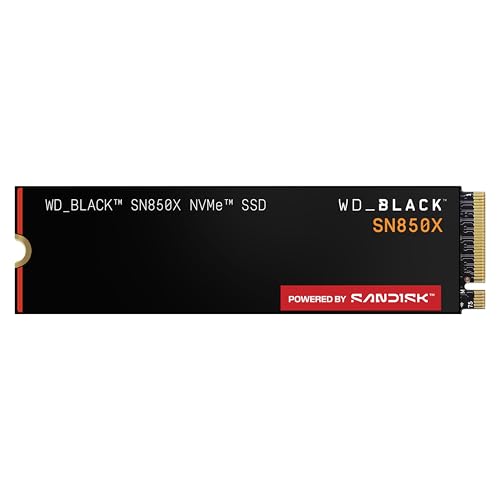
WD_BLACK SN850X 2TB NVMe SSD – M.2 2280, Up to 7,300 MB/s Read speeds, Up to 6,300 MB/s write speeds, Gaming Expansion, High Performance Internal Solid State Drive – WDS200T2X0E
- Maximum Read Speed: Up to 7,300 MB/s
- Maximum Write Speed: Up to 6,300 MB/s
- Storage Capacity: Up to 8TB options available
As an affiliate, we earn on qualifying purchases.
As an affiliate, we earn on qualifying purchases.
The Evolving Market Dynamics Behind the Storage Squeeze
Over the past decade, NAND flash memory prices steadily declined, making storage affordable for most users. However, in early 2026, a combination of increased AI demand and wafer competition has reversed this trend. Major memory manufacturers have scaled back wafer targets, citing profitability and market discipline, while AI’s rapid adoption has created a structural demand for high-capacity, high-performance NAND. Historically, building new fabs takes two to three years, meaning supply cannot quickly catch up to demand, further exacerbating shortages. This pattern mirrors earlier shortages in DRAM, but the current situation is intensified by AI’s unique storage needs.
“Our NAND wafer targets have been adjusted to align with market conditions and demand, ensuring sustainable profitability.”
— Samsung spokesperson

Sturdy M.2 NVMe 2280 2260 2242 2240 2230 SSD Card Case – 24 Slot Organizer
- High Capacity Storage: Holds 24 M.2 SSDs
- Water-Resistant & Shockproof: Made of durable PP plastic
- Organized Interior Design: 24 precise card slots with EVA padding
As an affiliate, we earn on qualifying purchases.
As an affiliate, we earn on qualifying purchases.
Unclear Duration and Extent of the Storage Shortage
It is not yet clear how long the supply constraints will last or if new fabs will be accelerated to meet demand. Industry insiders suggest shortages could persist into 2027, but the exact timeline remains uncertain. Additionally, how much of the current price increase is due to pure shortage versus deliberate market discipline is still debated among analysts.

SANDISK 2TB Extreme Portable SSD (Old Model) – Up to 1050MB/s, USB-C, USB 3.2 Gen 2, IP65 Water and Dust Resistance, Updated Firmware – External Solid State Drive – SDSSDE61-2T00-G25
- High-speed NVMe Performance: Up to 1050MB/s read, 1000MB/s write
- Durable and Water-resistant: IP65 rated, 3-meter drop protection
- Portable and Secure: Includes carabiner loop for attachment
As an affiliate, we earn on qualifying purchases.
As an affiliate, we earn on qualifying purchases.
Expected Industry Responses and Market Adjustments
Manufacturers are likely to continue prioritizing high-margin enterprise products, with new fab projects possibly delayed further due to capital constraints. Buyers should prepare for sustained high prices and consider strategic stockpiling of critical storage. Monitoring industry announcements about capacity expansion and technological innovations will be essential, as will assessing how AI’s evolving storage demands influence the market in the coming months.
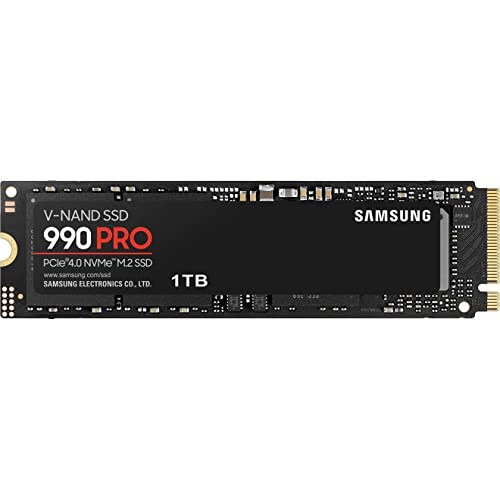
Samsung SSD 990 PRO 1TB, PCIe 4.0 M.2 2280, Up to 7,450 MB/s
- Speed Boost: Up to 7,450 MB/s read speed
- Enhanced IOPS: Up to 1550K IOPS performance
- Power Efficiency: 50% better performance per watt
As an affiliate, we earn on qualifying purchases.
As an affiliate, we earn on qualifying purchases.
Key Questions
Why are SSD prices rising so rapidly in 2026?
Prices are increasing due to a supply shortage caused by wafer competition among major manufacturers and AI-driven demand for large amounts of high-performance NAND storage.
Will the storage shortage last long?
It is uncertain; most industry experts suggest shortages could persist into 2027, as new fabs take years to come online and demand remains high.
How does AI specifically impact storage prices?
AI requires massive amounts of NAND for training, inference, and caching, creating a structural demand that outpaces current supply, especially as AI workloads become more storage-intensive.
Should consumers wait for prices to drop?
Waiting may lead to higher costs, as current shortages are driven by structural demand and deliberate supply restrictions. Buyers are advised to purchase only what they need now.
Are new fabs being built to address the shortage?
While some new fabs are planned, the lead time for capacity expansion is typically two to three years, and current industry focus remains on high-margin products, which may delay relief.
Source: ThorstenMeyerAI.com