The best dividend investing books explain more than how to find high yields: they help readers weigh income, dividend growth, business quality, and risk. My best overall pick is The Strategic Dividend Investor for its broad focus on dividend strategy, while Shareholder Yield stands out for readers who want to look beyond cash dividends and Dividend Stocks For Dummies offers a more accessible starting point. The main tradeoff is between introductory guidance and more specialized frameworks, some of which may rely on ambitious income or return claims. A book can clarify an approach, but it cannot guarantee results or replace checking current company data. Read on for the full breakdown and help matching a book to your experience and goals.

Get smart everyday buys delivered free with Prime
- Fast, free delivery on millions of items
- Prime Video, Amazon Music and more included
- Member-only deals all year
Key Takeaways
- The Strategic Dividend Investor is the broadest strategy-led choice in this lineup; Shareholder Yield is more narrowly focused on measuring returns through dividends, buybacks, and debt reduction.
- Several titles are aimed at beginners, but their overlap means readers may get more from choosing one accessible guide and then adding a book with a distinct framework.
- Books centered on dividend growth emphasize rising payouts over time, while income-focused titles put more attention on cash flow and retirement planning; those are related but not interchangeable goals.
- High-yield and double-digit-return claims in some titles call for extra scrutiny: a book’s stated target is not a dependable outcome, and a high yield can signal higher risk.
- REIT Investing for Beginners fills a specific niche by focusing on real estate investment trusts, making it a complement to broad dividend guides rather than a substitute for one.
| Dividend Investing for Beginners: Build Your Dividend Strategy, Buy Dividend Stocks Easily, and Achieve Lifelong Passive Income |  | Best for Building a First Dividend Plan | Subject: Dividend investing | Intended audience: Beginner investors | Primary focus: Developing a dividend strategy | VIEW LATEST PRICE | See Our Full Breakdown |
| REIT Investing for Beginners: How to Invest in Real Estate Without Owning Property |  | Best for Dividend Investors Curious About REITs | Subject: REIT investing | Investment type: Real estate investment trusts | Intended audience: Beginners | VIEW LATEST PRICE | See Our Full Breakdown |
| Dividend Growth Machine: How to Supercharge Your Investment Returns with Dividend Stocks |  | Best for a Growth-Oriented Dividend Lens | Subject: Dividend investing | Investment focus: Dividend stocks | Stated approach: Using dividend stocks to pursue investment growth | VIEW LATEST PRICE | See Our Full Breakdown |
| Shareholder Yield: A Better Approach to Dividend Investing |  | Best for Broadening Beyond Dividends Alone | Subject: Shareholder yield and dividend investing | Stated approach: Shareholder yield as an approach to dividend investing | Intended audience: Not specified | VIEW LATEST PRICE | See Our Full Breakdown |
| The Strategic Dividend Investor | 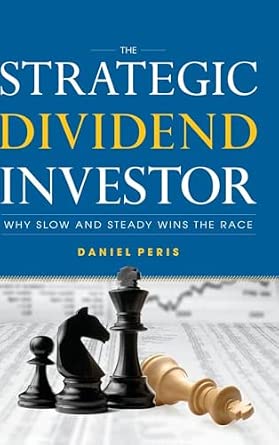 | Best for a Strategy-First Approach | Subject: Strategic dividend investing | Stated focus: A strategic approach to dividend investing | Intended audience: Not specified | VIEW LATEST PRICE | See Our Full Breakdown |
| Dividend Stocks For Dummies |  | Best for a Structured Beginner Introduction | Title: Dividend Stocks For Dummies | ASIN: 0470466014 | Series: For Dummies | VIEW LATEST PRICE | See Our Full Breakdown |
| Dividend Investing for Beginners |  | Best for Plain-Language Learning | Title: Dividend Investing for Beginners | ASIN: B0FM47669W | Subject: Dividend investing | VIEW LATEST PRICE | See Our Full Breakdown |
| The Case for Dividend Growth: Investing in a Post-Crisis World |  | Best for the Dividend-Growth Thesis | Title: The Case for Dividend Growth: Investing in a Post-Crisis World | ASIN: 1642933562 | Subject: Dividend investing | VIEW LATEST PRICE | See Our Full Breakdown |
| How to Retire on Dividends: Earn a Safe 8% and Leave Your Principal Intact |  | Best for Retirement-Income Planning | Title: How to Retire on Dividends: Earn a Safe 8% and Leave Your Principal Intact | ASIN: B07Z428NNL | Subject: Dividend investing | VIEW LATEST PRICE | See Our Full Breakdown |
| Dividend Investing: Dependable Income to Navigate All Market Environments |  | Best for Market-Environment Framing | Title: Dividend Investing: Dependable Income to Navigate All Market Environments | ASIN: 1804090468 | Subject: Dividend investing | VIEW LATEST PRICE | See Our Full Breakdown |
| Get Rich with Dividends: A Proven System for Earning Double-Digit Returns |  | Best for a Systematic Return-Seeking Approach | Format: Book | Investment focus: Dividend investing | Approach: A system for pursuing double-digit returns | VIEW LATEST PRICE | See Our Full Breakdown |
| Dividend Investing Made Easy |  | Best for a Low-Complexity Starting Point | Title: Dividend Investing Made Easy | Investment focus: Dividend investing | Stated approach: Easy-access presentation indicated by the title | VIEW LATEST PRICE | See Our Full Breakdown |
| Dividend Growth Investing: Get a Steady 8% Per Year Even in a Zero Interest Rate World |  | Best for Retirement-Income Idea Exploration | Investment focus: Dividend growth investing | Stated income context: Retirement income in a low-interest-rate environment | Featured investments: 13 | VIEW LATEST PRICE | See Our Full Breakdown |
| The Little Book of Big Dividends: A Safe Formula for Guaranteed Returns |  | Best for a Compact-Sounding Dividend Strategy | Investment focus: Dividend investing | Stated approach: A formula for pursuing returns | Format positioning: “Little Book” title suggests a compact treatment | VIEW LATEST PRICE | See Our Full Breakdown |
| Get Rich with Dividends: A Proven System for Earning Double-Digit Returns |  | Best for Comparing Editions or Listings | Investment focus: Dividend investing | Stated approach: A system for pursuing double-digit returns | Return framing: Double-digit returns are presented as a goal, not a guarantee | VIEW LATEST PRICE | See Our Full Breakdown |
| dividend investing book | ASIN | Subject | Format |
|---|---|---|---|
| Dividend Investing for Beginne | — | Dividend investing | Book |
| REIT Investing for Beginners: | — | REIT investing | Book |
| Dividend Growth Machine: How t | B07YNZZZTN | Dividend investing | Book |
| Shareholder Yield: A Better Ap | 0988679965 | Shareholder yield and dividend investing | Book |
| The Strategic Dividend Investo | 0071769609 | Strategic dividend investing | Book |
| Dividend Stocks For Dummies | 0470466014 | Dividend investing | — |
| Dividend Investing for Beginne | B0FM47669W | Dividend investing | — |
| The Case for Dividend Growth: | 1642933562 | Dividend investing | — |
| How to Retire on Dividends: Ea | B07Z428NNL | Dividend investing | — |
| Dividend Investing: Dependable | 1804090468 | Dividend investing | — |
| Get Rich with Dividends: A Pro | 1119985552 | — | Book |
| Dividend Investing Made Easy | B07F91X77J | — | Not provided |
| Dividend Growth Investing: Get | B08TQHTM9L | — | — |
| The Little Book of Big Dividen | 0470567996 | — | — |
| Get Rich with Dividends: A Pro | 1118994132 | — | Not provided |
More Details on Our Top Picks
Dividend Investing for Beginners: Build Your Dividend Strategy, Buy Dividend Stocks Easily, and Achieve Lifelong Passive Income
This is the clearest starting point in this group for a reader who wants a basic framework before choosing dividend stocks. Its stated focus is practical: developing a dividend strategy, buying stocks, and using distributions to pursue passive income. That makes it a more direct beginner entry than Shareholder Yield: A Better Approach to Dividend Investing, which centers on a narrower analytical concept. The tradeoff is that the available description does not establish how much depth the book gives to company analysis, portfolio construction, or dividend risks. I would choose it to orient a new investor, not as a substitute for detailed research or a broad investing education. Its income focus also calls for a realistic mindset: dividends are not guaranteed, and a strategy needs to account for business and payout risk.
Pros:- Explicitly aimed at beginner investors
- Focuses on building a dividend strategy rather than only defining dividend terminology
- Connects dividend stocks with the goal of generating passive income
Cons:- Available product information does not establish the depth of its stock-selection or risk-analysis guidance
- Its passive-income framing may not suit readers looking for a broader total-return approach
Best for: New investors who want an introductory roadmap for forming a dividend strategy and buying dividend stocks.
Not ideal for: Experienced investors seeking documented valuation methods, advanced portfolio analysis, or detailed evidence about the book’s coverage.
- Subject:Dividend investing
- Intended audience:Beginner investors
- Primary focus:Developing a dividend strategy
- Stock focus:Buying dividend stocks
- Income goal:Passive income through dividend stocks
- Format:Book
Our verdict“Choose this as an introductory guide if you want a beginner-oriented plan for dividend stocks and passive-income goals.”
REIT Investing for Beginners: How to Invest in Real Estate Without Owning Property
This guide takes a distinct route into income investing: real estate investment trusts let readers explore property exposure without buying or managing a building. That makes it a useful niche companion to Dividend Investing for Beginners, which is described as a broader guide to dividend stocks and strategy. The focus is beginner-friendly, but REITs have their own business models and risks, so this book is most relevant to readers who specifically want to learn about that sector. The title promotes inflation protection and consistent 9% dividends, yet the supplied description provides no support for that yield claim. I would not treat a stated yield as a dependable outcome; payouts and market values can change. Readers wanting a general dividend portfolio guide may find the REIT emphasis too narrow.
Pros:- Introduces real estate investing through REITs rather than direct property ownership
- Aimed at beginner investors
- Offers a focused alternative to general dividend-stock guides
Cons:- The promoted consistent 9% dividend claim is not substantiated by the supplied product information
- Its REIT-only emphasis may leave readers wanting broader dividend-stock coverage
- The available description does not establish how thoroughly it explains REIT-specific risks
Best for: Beginners interested in adding publicly traded real estate exposure to an income-focused portfolio without owning physical property.
Not ideal for: Readers seeking a broad guide to dividend stocks across industries or a substantiated promise of a fixed, dependable yield.
- Subject:REIT investing
- Investment type:Real estate investment trusts
- Intended audience:Beginners
- Ownership approach:Real estate exposure without owning physical property
- Promoted dividend yield:9% (claim not substantiated in the supplied description)
- Format:Book
Our verdict“Pick this if your main interest is learning about REITs, but do not buy it on the assumption that a 9% payout is assured.”
Dividend Growth Machine: How to Supercharge Your Investment Returns with Dividend Stocks
The title signals a growth-oriented take on dividend stocks, making this a possible fit for readers who want to connect income investing with investment growth rather than focus on yield alone. That framing differs from The Strategic Dividend Investor, whose supplied description points broadly to strategic dividend investing, and from REIT Investing for Beginners, which concentrates on one asset type. The limitation is the sparse product information: beyond its stated subject, there are no details about methods, audience, examples, or risk treatment. I would rank it as a thematic choice, not a proven technical manual. Readers should be prepared to evaluate the book’s actual approach to growth and payout sustainability rather than infer that its title guarantees stronger returns. It may also be less suitable for someone seeking a clearly beginner-labeled introduction.
Pros:- Explicitly focuses on dividend stocks
- Frames dividends alongside investment growth
- Offers a different emphasis from REIT-specific or purely strategic dividend guides
Cons:- The supplied description gives no details about its methods or depth
- The title’s return-oriented language does not establish that results can be achieved
- Its intended audience and treatment of dividend risks are not specified
Best for: Dividend investors who want a growth-focused perspective on using dividend stocks as part of an investment-return strategy.
Not ideal for: Readers who need confirmed beginner instruction, detailed coverage claims, or evidence that a particular return outcome is achievable.
- Subject:Dividend investing
- Investment focus:Dividend stocks
- Stated approach:Using dividend stocks to pursue investment growth
- Intended audience:Not specified
- Format:Book
- ASIN:B07YNZZZTN
Our verdict“Consider this for a growth-minded dividend perspective, while checking whether its actual depth matches your experience and research needs.”
Shareholder Yield: A Better Approach to Dividend Investing
This is the most concept-specific pick here: it centers on shareholder yield as an approach to dividend investing. That focus can appeal to readers who want to examine shareholder distributions more broadly than the dividend-only framing of Dividend Investing for Beginners. It is also less of a sector guide than REIT Investing for Beginners, so its appeal rests on the investing framework rather than a particular asset class. The supplied description does not explain which measures or methods the book teaches, though, and it does not identify an experience level. I would favor it for readers already comfortable with basic dividend concepts who want to explore a different lens, rather than for someone needing a step-by-step introduction. Its narrow topic may also be less useful as a standalone guide to building a complete portfolio.
Pros:- Provides a distinct shareholder-yield focus within dividend investing
- Offers a different lens from books centered on buying dividend stocks or REITs
- May suit readers looking to expand beyond dividend payments as a single measure
Cons:- The supplied description does not define the methods or metrics covered
- No intended experience level is provided
- Its focused subject may not cover the full process of building a dividend portfolio
Best for: Investors familiar with dividend basics who want to explore shareholder yield as a broader framework for evaluating distributions.
Not ideal for: Complete beginners looking for an established step-by-step strategy or readers seeking a broad guide to portfolio construction.
- Subject:Shareholder yield and dividend investing
- Stated approach:Shareholder yield as an approach to dividend investing
- Intended audience:Not specified
- Format:Book
- ISBN:0988679965
- ASIN:0988679965
Our verdict“Choose this if you already know dividend basics and want a focused exploration of shareholder yield rather than a general beginner guide.”
The Strategic Dividend Investor
Among these five, this title has the broadest strategy-first positioning: the supplied description identifies it as a book about strategic dividend investing, without narrowing it to beginner instruction, REITs, or shareholder yield. That makes it a natural contrast with Shareholder Yield: A Better Approach to Dividend Investing, which is explicitly built around one framework, and with Dividend Growth Machine, whose title emphasizes growth. The broad positioning is also the main uncertainty: the product information does not spell out its methods, intended reader, or coverage of risk and portfolio design. I would shortlist it for someone seeking a general strategic perspective, but not assume it supplies a complete curriculum. Buyers who need clearly described beginner steps may be better served by Dividend Investing for Beginners.
Pros:- Explicitly addresses strategic dividend investing
- Has broader stated scope than the REIT-focused guide
- Provides a strategy-oriented alternative to the growth emphasis of Dividend Growth Machine
Cons:- The supplied description does not detail its investing methods or topics
- No intended experience level is specified
- Available information does not establish how thoroughly it covers risks or portfolio construction
Best for: Readers who want a general, strategy-oriented book on dividend investing rather than a guide limited to REITs or one analytical concept.
Not ideal for: First-time investors who need verified step-by-step instruction, or readers who want detailed coverage claims before choosing.
- Subject:Strategic dividend investing
- Stated focus:A strategic approach to dividend investing
- Intended audience:Not specified
- Format:Book
- ISBN:0071769609
- ASIN:0071769609
Our verdict“This is the broad strategy-oriented choice, but readers needing confirmed beginner guidance should favor the explicitly beginner-focused option.”
Dividend Stocks For Dummies
Dividend Stocks For Dummies is the clearest fit for readers who want a dividend-focused starting point presented under a familiar beginner-oriented series. That makes it a more natural first step than The Case for Dividend Growth, whose framing is aimed at readers already interested in the case for a particular strategy. Its focused subject also gives it a tighter match than broad personal-finance guides for someone specifically learning about dividend stocks.
The tradeoff is that the supplied details confirm the audience and topic, but not the book’s chapter coverage, examples, or investing framework. Readers seeking a distinct advanced method or evidence for a specific income target may need another title alongside it. I’d choose it for an approachable introduction, not as a stand-alone basis for investment decisions.
Pros:- The For Dummies series positioning signals an accessible entry point for newcomers.
- The subject is specifically dividend stocks rather than investing in general.
- Its beginner focus makes it a more approachable starting choice than The Case for Dividend Growth.
Cons:- Available product details do not identify its methods, examples, or level of technical depth.
- Readers seeking a focused argument for dividend growth may prefer The Case for Dividend Growth.
- The description does not establish whether it addresses portfolio risks or changing market conditions.
Best for: New investors who want a dividend-specific introduction in a familiar, beginner-oriented format.
Not ideal for: Experienced investors seeking advanced portfolio methods, detailed evidence, or a clearly specified income strategy.
- Title:Dividend Stocks For Dummies
- ASIN:0470466014
- Series:For Dummies
- Subject:Dividend investing
- Investment focus:Dividend stocks
- Stated audience:Beginners
Our verdict“Choose this if you want a dividend-focused introduction with a beginner-friendly framing rather than a specialized strategy book.”
Dividend Investing for Beginners
Dividend Investing for Beginners stands out for its explicit promise of an easy-to-understand introduction, pitched as simple enough for a fifth grader. That makes it the most directly plain-language choice here, while Dividend Stocks For Dummies offers the alternative of a familiar beginner-series framing. Readers who feel intimidated by investing terminology may value the simplicity more than a technical treatment.
That accessibility is also the tradeoff: the product details do not show how much depth, practical guidance, or risk discussion the book provides. Its title and description establish an introductory aim, but not a specific portfolio system or coverage of different market conditions like Dividend Investing: Dependable Income to Navigate All Market Environments. I’d treat it as a low-barrier starting point, not proof that dividend investing itself is simple or risk-free.
Pros:- The description clearly prioritizes accessibility for beginners.
- The fifth-grade readability comparison signals an effort to limit jargon.
- Its straightforward introductory aim complements more strategy-focused titles in the roundup.
Cons:- Available details do not specify the book’s investing framework or practical examples.
- An emphasis on simplicity may leave experienced readers wanting greater analytical depth.
- The description does not establish how thoroughly it covers risk or market changes.
Best for: First-time investors who want dividend concepts explained in unusually plain, approachable language.
Not ideal for: Readers who already know investing basics or want documented methods, detailed analysis, and advanced portfolio guidance.
- Title:Dividend Investing for Beginners
- ASIN:B0FM47669W
- Subject:Dividend investing
- Stated audience:Beginners
- Stated approach:Accessible, easy-to-understand introduction
- Readability description:Presented as simple enough for a fifth grader to understand
Our verdict“Pick this for a plain-language first introduction, but look elsewhere for established investing knowledge or a detailed strategy.”
The Case for Dividend Growth: Investing in a Post-Crisis World
The Case for Dividend Growth is the most thesis-oriented option in this group: its title frames the book as an argument for dividend growth investing in a post-crisis world, rather than a general first lesson. That gives it a different purpose from Dividend Stocks For Dummies, which is positioned for beginners, and from How to Retire on Dividends, which centers on retirement income and a stated return target. Readers who want to examine why dividend growth might fit a changed economic backdrop have a clear reason to choose it.
The limitation is equally clear: the available description does not spell out its evidence, methods, or intended experience level. It may be less useful as a step-by-step guide for someone who first needs basic dividend concepts. I’d place it ahead of introductory titles only for readers specifically seeking the dividend-growth case, not broad investing instruction.
Pros:- Its dividend-growth focus gives it a distinct strategic angle.
- The post-crisis framing signals attention to a particular market and economic backdrop.
- It complements introductory titles by addressing the case for a specific dividend approach.
Cons:- Available details do not describe the evidence or investing methods used.
- The description does not establish that it teaches basic dividend concepts.
- It is less directly matched to retirement-income planning than How to Retire on Dividends.
Best for: Investors who understand basic stock investing and want a focused discussion of dividend growth in a post-crisis setting.
Not ideal for: Newcomers seeking plain-language fundamentals or retirees looking mainly for a practical income plan.
- Title:The Case for Dividend Growth: Investing in a Post-Crisis World
- ASIN:1642933562
- Subject:Dividend investing
- Strategy focus:Dividend growth investing
- Context:Post-crisis world
- Presentation:Case for dividend growth
Our verdict“Choose this when you want an argument centered on dividend growth, rather than beginner lessons or a retirement-income plan.”
How to Retire on Dividends: Earn a Safe 8% and Leave Your Principal Intact
How to Retire on Dividends speaks directly to readers thinking about dividend income in retirement, with a stated aim of preserving principal. That makes it more retirement-specific than Dividend Stocks For Dummies and more focused on an income goal than The Case for Dividend Growth. The title’s 8% target may attract readers comparing income approaches, but the supplied description provides no support for treating that figure as a dependable or safe outcome.
That claim is the main tradeoff, not a reason to assume the strategy works. The available details also omit author, format, and the methods used to address risk, which makes it hard to judge how the book supports its promise. I’d read it as a retirement-income perspective to scrutinize alongside more general dividend education, not as a guarantee or a complete retirement plan.
Pros:- It addresses retirement income directly rather than dividend investing in the abstract.
- The stated principal-preservation aim gives the book a distinct planning angle.
- Its income focus contrasts with the dividend-growth thesis in The Case for Dividend Growth.
Cons:- The 8% target is not substantiated in the available product description.
- Available details do not identify the author, format, or supporting methodology.
- The description does not establish how risks to income or principal are handled.
Best for: Retirement planners exploring dividend income and wanting to examine a strategy framed around preserving principal.
Not ideal for: Readers who need substantiated return expectations, full retirement-planning guidance, or a clearly documented investing method.
- Title:How to Retire on Dividends: Earn a Safe 8% and Leave Your Principal Intact
- ASIN:B07Z428NNL
- Subject:Dividend investing
- Planning focus:Retirement income
- Stated principal aim:Preserve principal
- Title-stated return target:8%
Our verdict“Consider it for a retirement-income perspective, but do not treat its stated 8% target as a supported or guaranteed result.”
Dividend Investing: Dependable Income to Navigate All Market Environments
Dividend Investing: Dependable Income to Navigate All Market Environments is the strongest match for readers focused on how dividend income relates to changing market conditions. Its broad market-environment framing sets it apart from The Case for Dividend Growth, which is specifically positioned around a post-crisis argument for dividend growth, and from How to Retire on Dividends, which centers on retirement and a stated 8% target. This makes it the more general pick for exploring dividends across different conditions.
The description, however, does not identify the methods, examples, or risks discussed, so the title’s promise of dependable income should not be mistaken for a guarantee. Readers seeking a clearly beginner-level explanation may find Dividend Investing for Beginners a better fit, based on its explicit plain-language positioning. I’d choose this for its market-wide perspective, while recognizing that the available details do not establish its depth.
Pros:- The stated focus spans different market environments.
- It centers on dependable dividend income rather than only dividend growth or retirement.
- Its broad framing distinguishes it from the post-crisis focus of The Case for Dividend Growth.
Cons:- Available details do not specify the book’s methods, examples, or intended audience level.
- The dependable-income framing does not establish that income is guaranteed.
- It is less explicitly beginner-oriented than Dividend Investing for Beginners.
Best for: Investors who want a dividend-income book framed around multiple market environments rather than one life stage or strategy thesis.
Not ideal for: First-time investors needing an explicitly simple introduction or buyers seeking a substantiated return promise and detailed method.
- Title:Dividend Investing: Dependable Income to Navigate All Market Environments
- ASIN:1804090468
- Subject:Dividend investing
- Income focus:Dependable income
- Market focus:All market environments
- Stated approach:Dividend income across changing market conditions
Our verdict“Choose this for a broad market-environment perspective on dividend income, not for a proven income guarantee or clearly specified beginner course.”
Get Rich with Dividends: A Proven System for Earning Double-Digit Returns
This book’s clearest distinction is its promise of a defined system for pursuing double-digit returns through dividend investing. That framing may suit readers who want a repeatable process rather than a general introduction; compared with Dividend Investing Made Easy, it signals a more ambitious return target and a strategy-led approach. The title’s return promise should be read as an aim, not a dependable outcome: dividends and share prices can fall, and no method can remove investment risk. The supplied information does not describe the system’s screening rules, risk controls, or level of detail, so readers wanting a verifiable step-by-step method may need more information before choosing it. I’d place it ahead of broad introductory options for goal-focused readers, but behind books with a clearly stated investing scope if they value detail they can evaluate in advance.
Pros:- Presents dividend investing as a system rather than only a source of general information.
- Makes its return-seeking objective explicit, helping readers judge whether its approach fits their goals.
- Its focused title may appeal to investors looking for an ambitious strategy rather than a basic introduction.
Cons:- The supplied description gives no detail about the system’s rules, risk controls, or supporting evidence.
- The double-digit return framing may encourage unrealistic expectations if readers mistake a goal for a guarantee.
Best for: Investors who already understand basic dividend concepts and want a book framed around a defined process for pursuing higher returns.
Not ideal for: New investors seeking a clearly documented curriculum, or anyone treating double-digit returns as guaranteed.
- Format:Book
- Investment focus:Dividend investing
- Approach:A system for pursuing double-digit returns
- Return framing:Double-digit returns are presented as a goal, not a guarantee
- ASIN:1119985552
- Specific holdings listed:Not provided
Our verdict“Choose this if you want a dividend strategy framed around pursuing higher returns and are prepared to scrutinize its claims.”
Dividend Investing Made Easy
The title makes this the most approachable-sounding choice in this group: Dividend Investing Made Easy signals a low-complexity entry point, while Get Rich with Dividends puts a stronger emphasis on pursuing ambitious returns. That difference matters for readers who would rather build basic familiarity than begin with a return target. Still, the supplied product information offers no description of its lessons, audience, format, or investing methods, so the promise of simplicity cannot be confirmed from the details available. I’d treat it as a possible starting read, not a substitute for a well-specified guide to evaluating dividend sustainability or portfolio risk. Readers comparing beginner options in the wider roundup may prefer a title with a stated scope if they want to know exactly what they’ll learn before buying.
Pros:- Its title clearly signals an accessible, low-complexity approach.
- May be a gentler entry point than a book centered on pursuing double-digit returns.
- The focused subject keeps the reader’s attention on dividend investing.
Cons:- No description is available to verify the book’s actual level, structure, or teaching approach.
- The supplied details do not establish whether it covers dividend safety, diversification, or portfolio risks.
Best for: First-time dividend investors seeking a title that signals a straightforward introduction before moving on to more specialized strategies.
Not ideal for: Readers who need confirmed details on the book’s curriculum, investment framework, or treatment of risk before choosing.
- Title:Dividend Investing Made Easy
- Investment focus:Dividend investing
- Stated approach:Easy-access presentation indicated by the title
- Format:Not provided
- Specific methods:Not provided
- ASIN:B07F91X77J
Our verdict“Consider this as a possible first read if an approachable title matters more to you than a documented curriculum.”
Dividend Growth Investing: Get a Steady 8% Per Year Even in a Zero Interest Rate World
This guide is the most specific about both audience and investment mix: it targets retirement income and features 13 stocks, REITs, MLPs, and CEFs. That range gives readers more than ordinary dividend stocks to examine, unlike the broader but less clearly scoped Dividend Investing Made Easy. The tradeoff is added complexity: REITs, MLPs, and closed-end funds can have risks and structures that income-focused beginners may not recognize. Its stated 8% annual income or return framing should not be treated as assured, and the supplied details do not explain how the featured investments were selected or whether the list is updated. I’d use it to explore income-producing categories and retirement ideas, not as a ready-made portfolio or a promise of steady results.
Pros:- Focuses directly on retirement income in a low-interest-rate setting.
- Includes 13 featured investments spanning stocks, REITs, MLPs, and CEFs.
- Introduces several income-focused investment types beyond conventional dividend stocks.
Cons:- The advertised 8% figure is not a guaranteed outcome and may create unrealistic expectations.
- The mix of investment structures can add complexity and requires readers to examine distinct risks.
- The supplied information does not explain selection criteria or how current the featured investments are.
Best for: Retirement-minded investors who want to explore dividend growth alongside REITs, MLPs, and closed-end funds for income ideas.
Not ideal for: Beginning investors seeking a simple stock-only guide, or readers who require guaranteed income or fully described selection criteria.
- Investment focus:Dividend growth investing
- Stated income context:Retirement income in a low-interest-rate environment
- Featured investments:13
- Investment types:Stocks, REITs, MLPs, and CEFs
- Return framing:8% per year stated in the title; not guaranteed
- ASIN:B08TQHTM9L
Our verdict“Pick this to explore a varied set of retirement-income investments, but treat its 8% framing as a claim to examine rather than a plan to rely on.”
The Little Book of Big Dividends: A Safe Formula for Guaranteed Returns
The “Little Book” title suggests a compact treatment, making this a plausible pick for readers who want a focused dividend read rather than a broad investing reference. Its “safe formula” and “guaranteed returns” wording is also its biggest caution: dividends and investment returns are never guaranteed, so buyers should treat that language as marketing rather than a promise. Compared with Dividend Growth Investing: Get a Steady 8% Per Year Even in a Zero Interest Rate World, this title does not specify a retirement-income setting or particular investment types. That leaves its scope hard to judge from the available details. I’d favor it only if a concise, general strategy is what you’re seeking and you can inspect the book’s actual methods; readers wanting transparent holdings, risk discussion, or a documented framework have little to evaluate here.
Pros:- The title signals a focused dividend strategy rather than a broad survey of investing.
- Its compact-book positioning may appeal to readers who prefer a narrower read.
- Addresses dividend investing directly, keeping the subject aligned with income-oriented investors.
Cons:- The guaranteed-returns language overstates what dividend investing can promise.
- The supplied description provides no details about its formula, evidence, or risk controls.
- Its stated scope and target reader are less specific than the retirement-income guide in this group.
Best for: Readers who prefer a short, focused-sounding book on dividend strategy and are willing to verify its approach before relying on it.
Not ideal for: Investors seeking guaranteed returns, documented investment selections, or a clearly described retirement-income framework.
- Investment focus:Dividend investing
- Stated approach:A formula for pursuing returns
- Format positioning:“Little Book” title suggests a compact treatment
- Return claim:Guaranteed returns stated in the title; not a dependable promise
- Specific holdings listed:Not provided
- ASIN:0470567996
Our verdict“Consider it only if you want a focused dividend-strategy read and do not interpret its guaranteed-returns wording literally.”
Get Rich with Dividends: A Proven System for Earning Double-Digit Returns
This listing shares its title and double-digit-return framing with Get Rich with Dividends: A Proven System for Earning Double-Digit Returns (ASIN 1119985552), so the supplied information gives no clear basis for treating it as a different investing approach. Its role here is chiefly useful for readers comparing listings or editions, not for buyers choosing between distinct dividend strategies. Like the other version, it presents a systematic, return-seeking pitch rather than a stated retirement-income focus such as Dividend Growth Investing. The key limitation is that no format, edition details, system rules, or risk discussion are provided for this ASIN. I’d check the listing and edition information before choosing between the two; the ambitious return language should be read as an objective, never as a dependable result.
Pros:- Clearly identifies dividend investing and a system-oriented approach as its subject.
- The return-seeking focus may appeal to readers looking beyond introductory material.
- Provides a distinct ASIN for buyers comparing the similarly titled listing.
Cons:- The supplied information does not establish how this listing differs from ASIN 1119985552.
- No format, edition, system details, or risk controls are specified.
- Double-digit return language can set unrealistic expectations if read as a promise.
Best for: Readers comparing listings for the similarly titled Get Rich with Dividends book who want to confirm which edition or format they are considering.
Not ideal for: Buyers seeking a clearly differentiated strategy, confirmed edition details, or guaranteed double-digit returns.
- Investment focus:Dividend investing
- Stated approach:A system for pursuing double-digit returns
- Return framing:Double-digit returns are presented as a goal, not a guarantee
- Format:Not provided
- Edition details:Not provided
- ASIN:1118994132
Our verdict“Choose this listing only after confirming its edition or format against the other similarly titled entry, and treat the return target cautiously.”

How We Picked
I compared these 15 listed entries by the investing problem each title appears to address: learning the basics, building a dividend-growth approach, evaluating total shareholder returns, planning income, or focusing on REITs. I gave more weight to books that offer a distinct, usable framework than to titles that cover similar beginner material. I also treated claims about safe yields, guaranteed returns, or double-digit performance cautiously; a title’s promise is not proof that the approach can deliver those results.
The ranking logic prioritizes breadth and decision usefulness for a general reader, then gives specialized books their place when they serve a clear need. Beginner accessibility, strategy focus, and the ability to complement other books all matter, but no one book suits every investor. The list includes Get Rich with Dividends: A Proven System for Earning Double-Digit Returns twice, so the duplicate is counted as a listed entry rather than treated as a separate investing approach.
| dividend investing book | Subject | Format |
|---|---|---|
| Dividend Investing for Beginne | Dividend investing | Book |
| REIT Investing for Beginners: | REIT investing | Book |
| Dividend Growth Machine: How t | Dividend investing | Book |
| Shareholder Yield: A Better Ap | Shareholder yield and dividend investing | Book |
| The Strategic Dividend Investo | Strategic dividend investing | Book |
| Dividend Stocks For Dummies | Dividend investing | — |
| Dividend Investing for Beginne | Dividend investing | — |
| The Case for Dividend Growth: | Dividend investing | — |
| How to Retire on Dividends: Ea | Dividend investing | — |
| Dividend Investing: Dependable | Dividend investing | — |
| Get Rich with Dividends: A Pro | — | Book |
| Dividend Investing Made Easy | — | Not provided |
| Dividend Growth Investing: Get | — | — |
| The Little Book of Big Dividen | — | — |
| Get Rich with Dividends: A Pro | — | Not provided |
Factors to Consider When Choosing Dividend Investing Books
Choose a dividend investing book by the decision you need help making, not by the size of the income or return promised in its title. These broader checks can help you get useful guidance without treating a book as a substitute for research.
Match the book to your actual income goal
Decide whether you want current cash distributions, a growing income stream, or overall portfolio growth before choosing a guide. A retirement-income book may emphasize spending from dividends, while a dividend-growth book may focus on companies that raise payouts over time. Those approaches can overlap, but a growing payout does not necessarily provide the most income today. Likewise, a high current yield does not automatically make a stock suitable for long-term income. Write down your time horizon and whether you expect to reinvest dividends or spend them. That simple distinction helps prevent choosing a book whose central method does not fit your plan.
Separate yield from dividend safety
A quoted yield is only one part of an income investment’s profile, and a very high yield can reflect a falling share price or concern about the company’s ability to maintain its payout. Look for explanations of earnings, cash flow, payout ratios, debt, and the business risks behind distributions. Do not treat the word “safe” in a title as a guarantee that income will continue. A useful framework should discuss what can cause a dividend cut and how an investor might respond. Readers comparing income-focused books should favor risk analysis over a single target yield. This reduces the chance of mistaking a large payout for a reliable one.
Check whether the strategy measures total returns
Dividend income is only one component of an investment’s result; share-price changes, taxes, and reinvestment also affect what an investor keeps. Some strategies focus on dividends alone, while shareholder-yield approaches also account for buybacks and changes in debt. That broader lens can help when comparing companies that return capital in different ways. It does not make every buyback beneficial or eliminate the need to study business quality. Before committing to a framework, ask whether it compares income with total return and explains the limits of each measure. This is especially useful if you are choosing between a dividend-only method and a broader capital-return approach.
Treat performance promises as claims to examine
Titles advertising guaranteed returns, a specific annual yield, or double-digit performance should prompt questions rather than set expectations. Results vary with company performance, purchase price, market conditions, taxes, and the investor’s time horizon. Check whether a book explains assumptions, downside scenarios, and periods when its approach may lag. A strategy described as dependable across market environments still faces market and business risk. Prefer methods that show how to evaluate evidence and adapt when conditions change. The goal is to learn a repeatable decision process, not to assume a printed target is attainable.
Choose beginner coverage without paying twice for the same lesson
Several books in this lineup are explicitly aimed at beginners, so buying multiple introductions may repeat explanations of dividends, stock selection, and basic portfolio setup. Start with one guide whose terminology and pace suit you, then add a more specialized book only after identifying a knowledge gap. For example, a REIT-focused title addresses property-related income structures that a general guide may not cover in depth. Readers who already understand basic stock analysis may gain more from shareholder yield or dividend-growth frameworks than from another introduction. Skim the table of contents and sample pages when available to judge depth and clarity. A focused second book usually adds more than collecting several similar starting points.
Match the book’s time frame and examples to your needs
Dividend strategies are shaped by interest rates, tax rules, market valuations, and company conditions, all of which can change. A book’s core principles may remain useful even when particular examples or market assumptions grow dated. Look for guidance that teaches how to evaluate a company rather than relying only on a fixed list of stocks or past conditions. If you invest across countries or accounts with different tax treatment, check whether the book’s examples apply to your situation. A focused book can still be valuable, but it may need to be paired with current sources for data and regulations. This distinction helps you judge what to learn from a book and what to verify before acting.
Frequently Asked Questions
Which book should I start with if I have never invested in dividend stocks?
Start with an accessible general guide such as Dividend Stocks For Dummies or one of the titles specifically aimed at dividend investing beginners. Choose based on which book’s sample pages and contents explain the basics most clearly to you. You do not need to read every introductory title in the list; several appear to serve overlapping needs. After learning how dividends, yields, and payout sustainability work, move to a book focused on the strategy you want to follow. Use current company filings and market data alongside the book rather than treating its examples as current recommendations.
Is a book promising an 8% yield or double-digit returns a good choice for retirement income?
A target in a title should not be treated as a reliable retirement-income forecast. Actual income and returns depend on investment choices, market conditions, business performance, taxes, and the timing of withdrawals. Read such a book only if it explains its assumptions and discusses how payouts can fall or returns can disappoint. Compare its approach with a broader income framework that emphasizes diversification and the ability of businesses to support distributions. If you need a retirement plan, test the assumptions against your own spending needs rather than relying on a headline figure.
Should I choose a dividend-growth book or an income-focused book?
Choose based on when and how you expect to use the money. A dividend-growth approach emphasizes companies that may increase payouts over time, which can suit investors building future income and reinvesting distributions. An income-focused book is more directly relevant if you need cash flow now, though high income can come with greater risk or slower growth. Compare the books’ treatment of dividend cuts, inflation, and the tradeoff between current yield and future payout growth. Some readers benefit from one primary strategy book and a second that explains the alternative.
Does a REIT investing book replace a general dividend investing book?
Usually not. A REIT-focused guide can explain the structure and particular considerations of real estate investment trusts, but it is aimed at a narrower part of the market. A general dividend book can provide a wider framework for comparing income stocks and portfolio approaches. If REITs are a meaningful part of your plan, use the specialist book as a complement and compare its advice with broader principles of risk and diversification. If you are still learning basic investing concepts, begin with a general guide before adding the REIT material.
Are two books with similar beginner titles worth buying together?
Not automatically. Titles such as Dividend Investing for Beginners and other beginner-focused guides may cover similar groundwork, so check their contents for distinct methods or topics before buying both. One well-matched introduction may be enough to learn key terms and basic screening ideas. Use a second book when it adds a clear new angle, such as REITs, shareholder yield, or retirement cash flow. The list also repeats Get Rich with Dividends: A Proven System for Earning Double-Digit Returns, so that repeated listing should not be mistaken for a separate strategy or a reason to buy two copies.
Conclusion
For most readers seeking one broad starting point, I recommend The Strategic Dividend Investor as the best overall choice because it is positioned around strategy rather than a single income target. For value-minded readers, the best value is a single beginner-oriented title that clearly explains the fundamentals; I would avoid buying several books that repeat introductory material. My best pick for beginners is Dividend Stocks For Dummies, while Shareholder Yield is the best premium-style choice for readers seeking a more specialized framework that looks beyond dividends alone. Choose REIT Investing for Beginners for a focused real estate income interest, and choose a dividend-growth or retirement-income title only when its time horizon matches your needs. Treat promised yields and returns as claims to investigate, then pair any book with current research before making investment decisions.