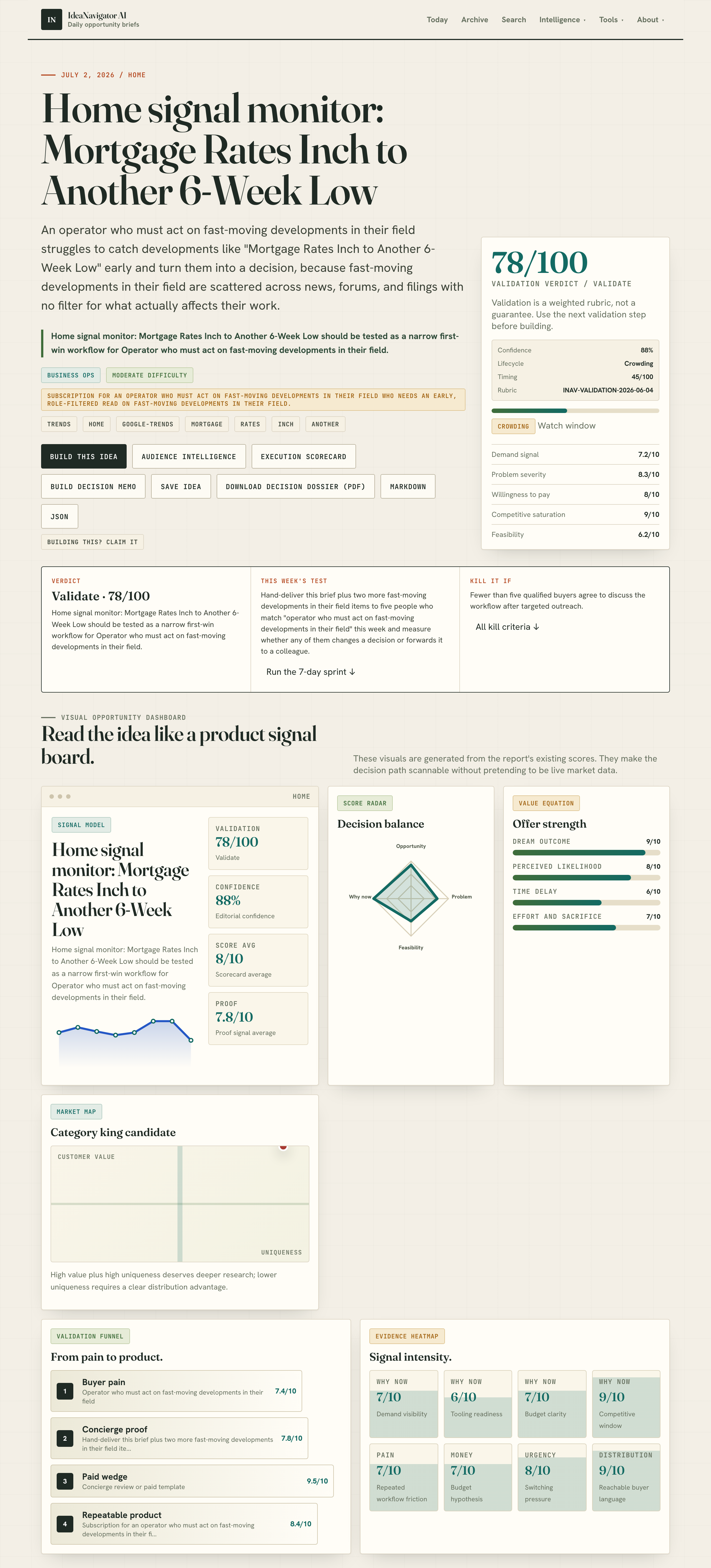
📊 Full opportunity report: Home signal monitor: Mortgage Rates Inch to Another 6-Week Low on IdeaNavigator AI — validation score, market gap, and execution plan.

Get smart everyday buys delivered free with Prime
- Fast, free delivery on millions of items
- Prime Video, Amazon Music and more included
- Member-only deals all year
TL;DR
Mortgage rates have decreased to a six-week low, marking a notable market movement. This development could influence borrowing costs and housing market activity in the near term.
Mortgage rates have declined to their lowest point in six weeks, according to recent market data, impacting potential homebuyers and lenders. This development signals a possible change in the housing market and borrowing environment, making it a key update for those involved in real estate and finance.
Market data indicates that the average 30-year fixed mortgage rate has decreased to approximately 6.10%, marking a decline from earlier in the month and reaching the lowest level since early February. Experts attribute this movement to recent shifts in bond yields and broader economic signals, though specific causes are still being analyzed.
Financial analysts note that the decline is modest but significant, as mortgage rates tend to influence home affordability and buyer activity. The recent decrease follows a period of volatility in the bond markets, with yields fluctuating amid economic uncertainty and monetary policy adjustments.
Mortgage lenders and real estate professionals are monitoring these developments closely, as lower borrowing costs could stimulate increased home buying activity, although the full impact remains uncertain amid ongoing economic debates and inflation concerns.
Implications for Housing Market and Borrowing Costs
The decline in mortgage rates to a six-week low could lead to increased homebuyer interest and higher mortgage applications, potentially boosting housing market activity. For consumers, lower rates may improve affordability, encouraging more to consider purchasing homes or refinancing existing loans. However, whether this trend persists depends on broader economic factors and future bond market movements.
For lenders and policymakers, these rate shifts highlight the importance of monitoring financial conditions, as they can influence economic growth, inflation, and housing affordability. The real estate sector remains attentive to whether this decline signals a sustained trend or a temporary fluctuation.
Products Worth Considering

Dell UltraSharp U2724DE 27-Inch WQHD IPS Black Monitor

Dell UltraSharp U2424H 24-Inch FHD Monitor

Dell 32 Plus 4K Monitor S3225QS, 31.5-Inch VA, 120Hz, FreeSync Premium
As an affiliate, we earn on qualifying purchases.
Recent Trends and Market Influences on Mortgage Rates
Over the past few months, mortgage rates have experienced volatility amid changing economic indicators, inflation levels, and Federal Reserve policies. After reaching peaks in late 2023, rates have shown signs of stabilization, with recent declines driven by falling bond yields and investor sentiment. Historically, mortgage rates tend to follow the direction of long-term interest rates, which are influenced by economic growth prospects and monetary policy decisions.
Market analysts have noted that the recent rate decrease aligns with broader financial market movements, including declines in Treasury yields and shifts in investor risk appetite. While the trend is promising for borrowers, experts caution that rates could fluctuate further as economic data continues to evolve and policy responses are adjusted.
Factors Influencing Future Mortgage Rate Movements
It is not yet clear whether the current decline in mortgage rates will continue or if rates will stabilize at this level. Economic indicators, Federal Reserve policies, and bond market dynamics remain volatile, making future rate movements uncertain.
Monitoring Economic Data and Policy Announcements
Market participants will closely watch upcoming economic reports, inflation data, and Federal Reserve statements to gauge whether mortgage rates will remain low or rebound. Analysts expect further fluctuations, with the potential for rates to either stabilize or decline further depending on these factors.
Key Questions
What caused mortgage rates to decline to a six-week low?
The decline is primarily attributed to falling bond yields and shifts in investor sentiment, influenced by economic data and monetary policy expectations.
How might this rate change affect homebuyers?
Lower mortgage rates can improve affordability, potentially increasing home purchase activity and refinancing options for existing homeowners.
Is this decline expected to continue?
The future direction of mortgage rates depends on economic indicators, Federal Reserve policies, and bond market trends, making continued declines uncertain.
What should lenders and buyers watch for next?
They should monitor upcoming economic reports, inflation trends, and Federal Reserve statements to anticipate future rate movements.
Source: IdeaNavigator AI