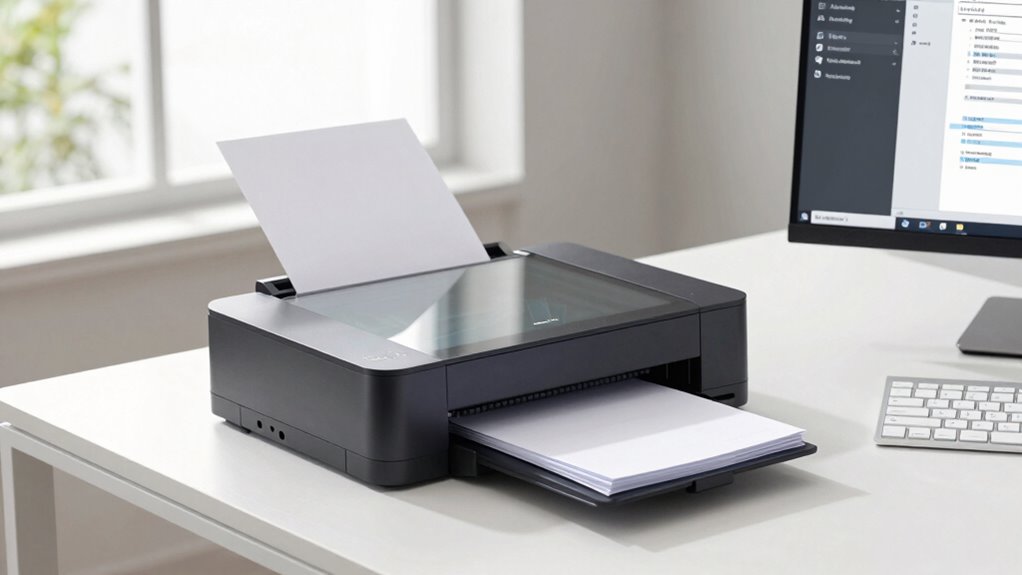

To make your document scanner work better from day one, regularly calibrate it and keep the paper feed system clean and aligned. Proper calibration ensures color accuracy, sharpness, and consistency, while maintaining the feed system prevents jams, skewing, and misfeeds. Using quality paper, guides, and cleaning rollers keeps scans uniform and clear. Following these setup rules now safeguards performance and reduces issues later—keep going to discover even more tips for peak scanning.
Listen free for 30 days with Audible
Thousands of audiobooks and originals — cancel anytime.
As an affiliate, we earn on qualifying purchases.
Key Takeaways
- Perform regular scanner calibration to ensure color accuracy, sharpness, and consistent performance from the start.
- Properly align and clean paper feeds to prevent jams, skewing, and ensure smooth document intake.
- Use correct paper guides and trays to match paper size and type, reducing misfeeds and scan errors.
- Maintain the scanner by cleaning rollers and sensors regularly to sustain optimal image quality.
- Follow a routine setup that combines calibration and paper feed optimization for reliable, high-quality scans.
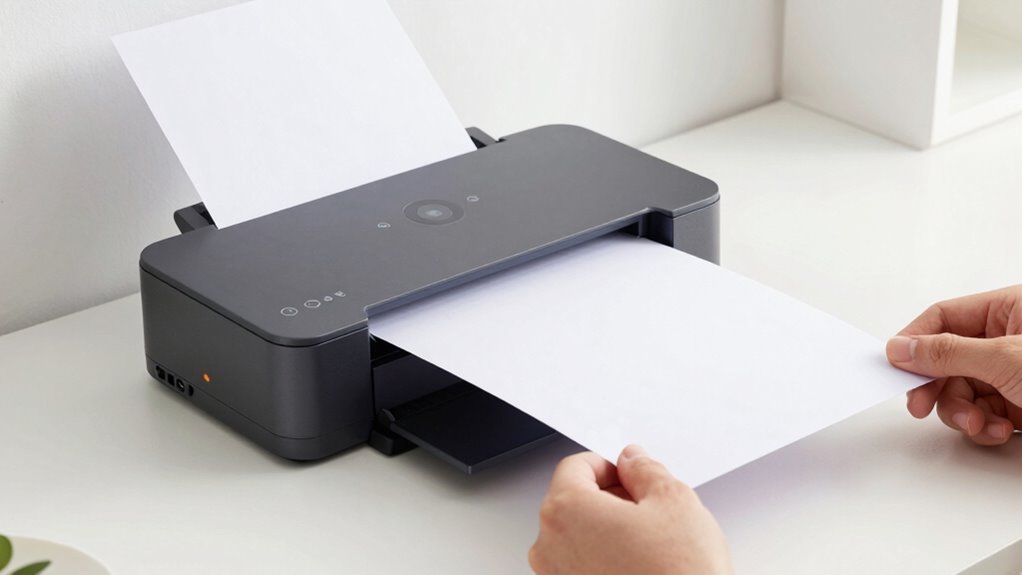
Are you getting the most out of your document scanner? If not, there’s a simple setup rule that can dramatically improve its performance from day one. It all starts with proper scanner calibration and paper feed optimization. These two steps are often overlooked but are vital for ensuring crisp, accurate scans every time you hit the button.
First, focus on scanner calibration. This process aligns the scanner’s sensors and light sources, making sure that colors, contrast, and text clarity are spot on. Many scanners include an automatic calibration feature, but it’s wise to perform manual calibration periodically, especially if you notice color inconsistencies or blurred images. Proper calibration reduces errors, minimizes the need for rescans, and extends your scanner’s lifespan. It’s a quick step that pays off by delivering sharper images and more precise data extraction, which is essential if you’re scanning documents for OCR or digital archiving. Regular calibration also helps maintain consistency over time, especially when working with multiple devices or when environmental conditions change.
Regular manual calibration ensures color accuracy, sharper images, and longer scanner lifespan for optimal scanning results.
Next, prioritize paper feed optimization. The paper feed mechanism is the gateway for smooth scans, so you want to make sure it’s working flawlessly. Start by ensuring your paper is clean, free of wrinkles, and properly aligned before feeding it into the scanner. Use the paper guides to keep sheets straight and centered, preventing skewed or jammed scans. Many scanners have adjustable paper guides—adjust these to match the paper size and type. If your scanner offers adjustable paper trays or rollers, make sure they’re set correctly to minimize paper jams and misfeeds. Regularly cleaning the rollers with a lint-free cloth or special roller cleaner also helps maintain consistent paper feed performance. When the paper feeds smoothly, the scanner can produce more uniform scans with less distortion or skewing. Incorporating regular maintenance routines based on manufacturer recommendations can further prolong the device’s optimal functioning.
Implementing these two steps—scanner calibration and paper feed optimization—creates a strong foundation for better performance. It’s not just about fixing problems; it’s about proactively setting your scanner up for success. When you take the time to calibrate your scanner regularly, you guarantee color accuracy and image clarity. Additionally, understanding the contrast ratio of your scanner or projector can help you choose the right device for your needs and ensure optimal image quality. When you optimize your paper feed, you reduce errors and speed up your workflow. Proper maintenance, including keeping the rollers clean, can also prevent paper jams and extend the life of your device. Together, these practices prevent common issues like skewed images, blurred text, or paper jams, which can slow down your productivity and compromise your results.
Ultimately, this setup rule helps you get consistent, high-quality scans from the very first document you feed into your scanner. It’s a simple, effective way to maximize your device’s potential, saving you time and hassle in the long run. So, make calibration and paper feed optimization a routine—your scanner will thank you, and your work will benefit from professional-level results every time.
document scanner calibration tool
As an affiliate, we earn on qualifying purchases.
As an affiliate, we earn on qualifying purchases.
Frequently Asked Questions
How Often Should I Recalibrate My Document Scanner?
You should recalibrate your scanner every few months or whenever you notice scanning quality issues, like streaks or skewed images. Regular calibration guarantees peak image accuracy and helps maintain scanner longevity. Keep an eye on calibration frequency based on usage—heavy use may require more frequent adjustments. Consistent calibration prevents issues from building up, saves you time, and guarantees your scanner produces the best results every day.
What Is the Ideal Environment for Scanner Setup?
You should set up your scanner in a clean, stable environment with consistent lighting conditions to guarantee ideal performance. Place the scanner on a flat surface, away from direct sunlight or bright lights that can cause glare or shadows. Keep it away from dust and humidity, which can affect scanning accuracy. Proper scanner placement helps prevent misfeeds and improves image quality right from the start.
Can Setup Rules Vary Between Different Scanner Brands?
Did you know that over 60% of scanner users report compatibility issues? Yes, setup rules can vary between brands, affecting how you customize your scanner setup. Each brand might have unique features and requirements, making it crucial to follow specific instructions for maximum performance. By understanding these differences, you guarantee smoother operation and better document quality, tailored to your scanner’s compatibility and your customization needs.
How Do I Troubleshoot Initial Setup Issues?
If you face initial setup issues, start by checking for paper jams, as they often cause errors. Clean the paper path and confirm paper is loaded correctly. Next, verify if your scanner needs a firmware update, which can fix bugs and improve performance. Restart the device after updating. If problems persist, consult the user manual or support for specific troubleshooting steps tailored to your scanner model.
Is There a Recommended Maintenance Routine After Setup?
Don’t let your scanner fall by the wayside. After setup, stick to a routine of checking for software updates regularly and keeping the device clean. Schedule user training sessions to guarantee everyone knows how to operate it efficiently. This way, you’ll keep your scanner running smoothly and avoid hiccups. Think of it as giving your device a tune-up—small, consistent care keeps it performing at its best over time.
As an affiliate, we earn on qualifying purchases.
Conclusion
By following this simple setup rule, you paint a clear path for your scanner to work seamlessly from day one. Imagine your scanner as a trusty assistant, perfectly aligned and ready to capture every detail with precision. When you set it up correctly, it’s like opening a window to a crisp, clear view, where each document flows smoothly. With this visual clarity, your scanning process becomes effortless, turning chaos into order from the very first scan.
As an affiliate, we earn on qualifying purchases.
automatic document scanner calibration
As an affiliate, we earn on qualifying purchases.
As an affiliate, we earn on qualifying purchases.
Fall Picks
fall essentials
As an affiliate, we earn on qualifying purchases.