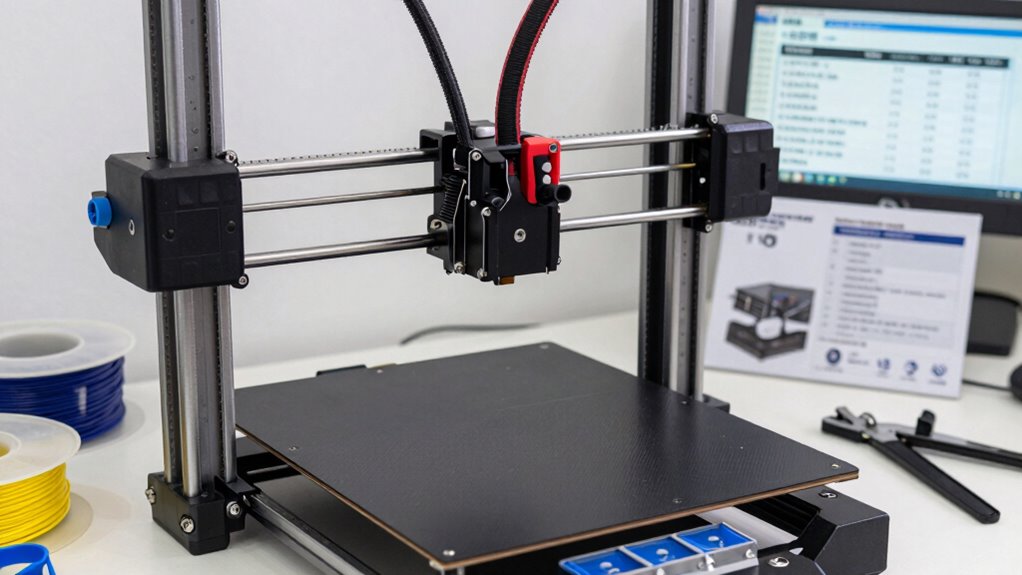
When choosing a 3D printer, focus on essential features like filament compatibility and easy maintenance. Avoid paying for extras such as multi-material printing or high-resolution capabilities if you won’t use them, as they increase costs and complexity. Pick a reliable model that’s simple to calibrate and maintain, ensuring consistent results. Prioritize performance and affordability over unnecessary bells and whistles. If you want to learn how to make smarter choices, you’ll find helpful tips as you continue your search.
Key Takeaways
- Focus on filament compatibility relevant to your projects to avoid unnecessary features for unsupported materials.
- Choose models with simple, reliable components that require minimal maintenance and calibration.
- Prioritize essential features that directly enhance your workflow, skipping advanced capabilities like multi-material printing.
- Read user reviews to identify dependable printers that meet your needs without extra, unused functions.
- Balance cost and performance by selecting a basic, efficient model suited to your primary printing goals.
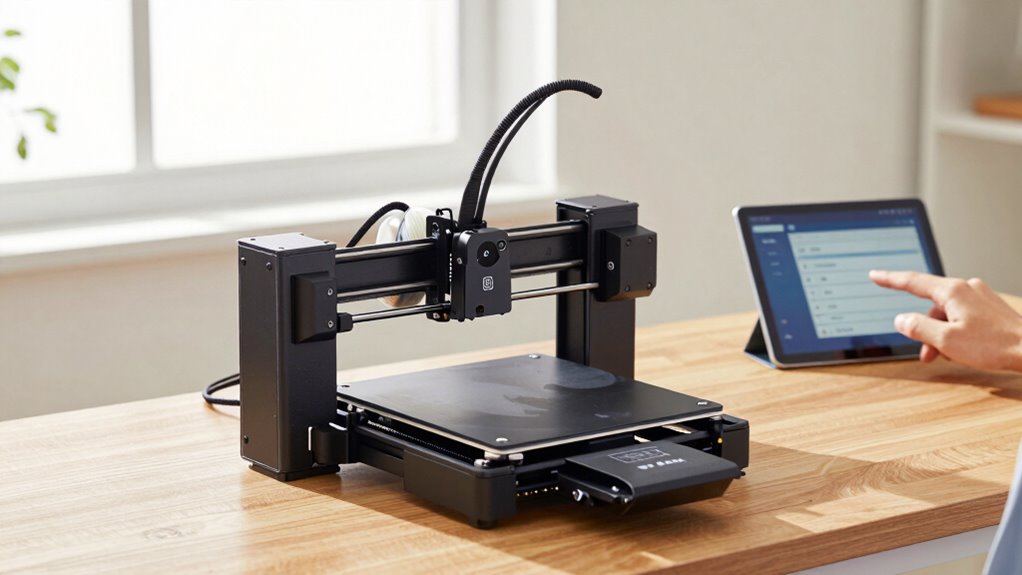
Choosing the right 3D printer can seem overwhelming with so many options available, but understanding your specific needs makes the process much easier. One of the most important factors to take into account is filament compatibility. Different printers work with different types of filament, like PLA, ABS, PETG, or specialty materials such as TPU or nylon. If you plan to create detailed models, or need specific material properties like flexibility or heat resistance, you must ensure the printer supports those filaments. Buying a printer that’s compatible with the filament you use most often prevents frustration and saves you from investing in unnecessary features. Conversely, if you’re just starting out and want to experiment with basic materials, a more straightforward, compatible model will serve you better without extra bells and whistles.
Another key point is printer maintenance. Some features that come with high-end printers—like automatic bed leveling or enclosed chambers—might seem appealing but often require additional upkeep. If you’re new to 3D printing, choosing a model with simple, easy-to-maintain components can save you time and headaches. Avoid paying for hefty features you won’t use if they complicate maintenance routines or require frequent calibration. Instead, prioritize a machine known for reliability and straightforward upkeep. Keeping your printer in good shape involves regular cleaning, proper filament storage, and firmware updates, so selecting a model with accessible parts and clear instructions makes ongoing maintenance more manageable. Additionally, paying attention to ease of calibration can significantly reduce setup time and improve print quality. According to reliability standards, choosing a dependable model can also enhance your overall printing experience by minimizing troubleshooting. It’s also helpful to consider user reviews to gauge how well a printer performs over time. Moreover, understanding the horsepower of electric components in some models can inform you about their power and performance, ensuring you select a machine that meets your printing demands.
Avoid getting distracted by features that don’t align with your goals. For instance, if you’re mainly printing prototypes or basic models, advanced features like multi-material printing or high-resolution capabilities might be unnecessary. These features often come with a higher price tag and increased complexity, which can lead to more maintenance or troubleshooting. Focusing on a printer with filament compatibility and straightforward operation can save you money and frustration. Focus on a printer that balances performance with simplicity, emphasizing filament compatibility and ease of maintenance. This way, you’ll avoid spending on features that won’t improve your workflow or end results.
Ultimately, the best approach is to identify your primary needs and choose a printer that fits without extra, unused features. By paying close attention to filament compatibility and how easy the machine is to maintain, you’ll make smarter, more cost-effective decisions. The goal is to find a model that helps you get consistent, quality prints without overpaying for capabilities you’ll never utilize. Keep your priorities clear, and your perfect 3D printer will be within reach.
affordable 3D printer for beginners
As an affiliate, we earn on qualifying purchases.
As an affiliate, we earn on qualifying purchases.
Frequently Asked Questions
What Is the Average Lifespan of a 3D Printer?
The average lifespan of a 3D printer is about 3 to 5 years, depending on usage and maintenance. You’ll want to contemplate material compatibility because some materials wear out parts faster. Print speed also impacts longevity; faster printing can strain components, reducing lifespan. Proper care, regular upgrades, and choosing a model suited to your needs can extend your printer’s life, ensuring reliable performance over time.
How Loud Are Typical 3D Printers During Operation?
Imagine a quiet forest—now, picture a 3D printer in action. Typical printers produce moderate noise levels, often comparable to a conversation or a vacuum, but some models offer sound mitigation features to reduce that noise. The sound can be a distraction, especially in shared spaces. Choosing a printer with effective sound mitigation helps keep your workspace peaceful while you focus on your creative projects.
Can I Upgrade a Basic 3D Printer Later?
Yes, you can upgrade a basic 3D printer later, but keep in mind the upgrade potential and feature limitations. Many entry-level printers allow for modifications, like adding a heated bed or improving firmware. However, some models have limited upgrade options due to their design or proprietary parts. Before buying, research if your chosen printer supports future upgrades so you won’t face unnecessary restrictions or costs down the line.
What Safety Precautions Are Needed When Using a 3D Printer?
When using a 3D printer, prioritize filament safety by handling materials carefully and avoiding skin contact with fumes. Make certain proper ventilation requirements are met—use your printer in a well-ventilated area or with an air purifier. Always wear safety gear like masks and gloves when necessary, and keep a fire extinguisher nearby. Regularly check for hot surfaces and electrical issues to prevent accidents, guaranteeing a safer 3D printing experience.
How Much Space Does a 3D Printer Require?
Think of your 3D printer as a small workshop—space is crucial. You’ll need enough room for the print bed size, which varies by model, and space to handle filament compatibility and easy access. Ideally, allocate a dedicated spot with at least a foot of clearance on all sides, especially in front for loading and removing prints. This guarantees smooth operation and prevents clutter from hindering your creative flow.
As an affiliate, we earn on qualifying purchases.
Conclusion
So, as you stand on the brink of your 3D printing journey, remember that choosing the right machine isn’t just about features—it’s about understanding what truly matters for your projects. Don’t be swayed by bells and whistles you’ll never need. The real secret lies in finding a balance that keeps your creativity flowing without unnecessary complexity. Are you ready to pick the perfect printer and open endless possibilities? The choice is yours—what will you create next?
As an affiliate, we earn on qualifying purchases.
As an affiliate, we earn on qualifying purchases.