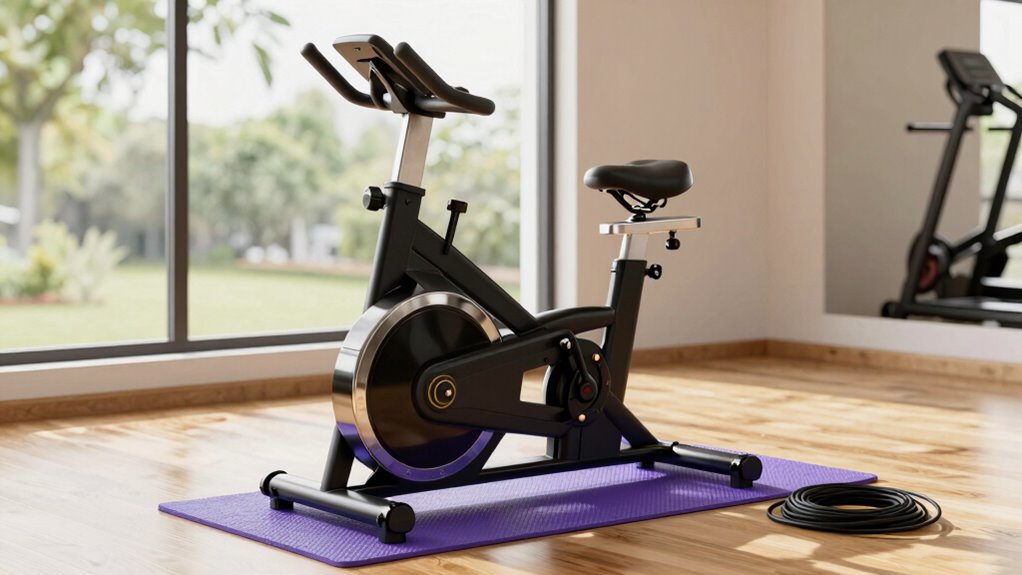

To make your exercise bike work better from day one, you should start by properly adjusting the seat height so your leg is almost fully extended at the pedal’s bottom, with just a slight bend in your knee. Confirm the handlebars are at a comfortable height for a straight back and relaxed shoulders. Check all knobs are tight and align the bike correctly. Maintaining these setup rules helps improve safety, comfort, and performance—and if you keep going, you’ll discover even more tips to optimize your workouts.
Key Takeaways
- Proper seat height ensures comfort and optimal muscle engagement from the start.
- Correct handlebar positioning maintains good posture and reduces strain during initial use.
- Ensuring bike alignment and smooth operation prevents early wear and enhances performance.
- Tightening adjustment knobs securely guarantees safety and consistent setup each session.
- Regularly inspecting and fine-tuning the bike maintains peak functionality from day one.

Setting up your exercise bike correctly is essential for a safe and effective workout. When you focus on proper adjustment techniques, you ensure that your bike fits your body perfectly, which directly impacts your comfort and performance. A proper setup can also prevent common issues like joint strain and discomfort during extended use. The goal is to find a position that minimizes strain and maximizes efficiency, so your muscles work effectively without risking injury or discomfort. To start, ensure the seat height is set correctly. When seated, your leg should be almost fully extended at the bottom of the pedal stroke, with a slight bend in your knee. Adjust the seat height so that you don’t have to stretch or slouch, which can cause unnecessary fatigue or joint strain. Proper seat height is vital for user comfort because it helps maintain good posture and prevents knee pain over extended periods. Additionally, taking a moment to check your bike’s alignment can ensure an optimal fit and smooth operation. Ensuring your bike’s components are properly aligned can also enhance your overall performance and reduce uneven wear on parts. Next, focus on the seat position forward or backward. The saddle should be aligned with your hips, allowing your knee to be directly above the pedal axle when the pedal is at the 3 o’clock position. This alignment promotes smooth pedaling and reduces unnecessary pressure on your knees and hips. Once the seat position is dialed in, move on to handlebar adjustments. The handlebars should be at a height that allows you to keep your back straight and shoulders relaxed. If they’re too low, you might hunch forward, causing neck or back strain; if too high, your posture could become unstable. Adjusting the handlebars to a comfortable height guarantees user comfort and helps you maintain proper form throughout your workout. Remember that these adjustments are not one-time settings; they should be customized each time you ride, especially if your workout intensity or duration changes. Your body may need different support depending on your activity level. Additionally, take a moment to verify that all adjustment knobs are securely tightened before starting your session. Loose adjustments can shift during your workout, compromising safety and comfort. Regularly inspecting your bike for wear and tear and maintaining proper maintenance can also prolong its lifespan and maintain safe operation.
As an affiliate, we earn on qualifying purchases.
Frequently Asked Questions
How Often Should I Recheck the Setup After Initial Adjustment?
You should recheck your bike setup every few weeks to guarantee ideal bike maintenance and user comfort. Regularly inspecting your bike helps catch any loosening or misalignments early. If you notice discomfort or unusual noise, recheck immediately. Consistent adjustments keep the bike performing well and comfortable for your workouts, preventing strain or injury. Making this a routine ensures your exercise bike remains safe, effective, and tailored to your needs.
Does the Setup Vary for Different Bike Models?
Yes, the setup varies for different bike models because each has unique bike ergonomics and adjustment techniques. Imagine you’re locking in your perfect position, but then switching to a different bike—suddenly, everything feels off. That’s because every model requires tailored adjustments. To get the best ride, always consult the manufacturer’s guidelines and fine-tune your bike’s settings accordingly, ensuring comfort and efficiency from the very first use.
Can Improper Setup Cause Long-Term Injury Risks?
Improper setup can definitely cause long-term injury risks if you don’t maintain an ergonomic posture. When your bike isn’t adjusted correctly, you might strain your knees, back, or wrists over time. To prevent injuries, confirm your seat height, handlebar position, and pedal alignment support proper posture. Regularly check and adjust your bike, and listen to your body’s signals, so you stay comfortable and safe during every ride.
What Tools Are Needed for Proper Setup?
To guarantee proper setup, you need a tape measure, adjustable wrenches, and a level for accurate equipment calibration. Focus on bike ergonomics by adjusting the seat height, handlebar position, and pedal alignment. These tools help you fine-tune your exercise bike, preventing discomfort and injury. Proper setup from the start ensures peak performance, comfort, and safety, making your workout more effective and enjoyable.
Should I Seek Professional Help for Setup Adjustments?
Yes, seeking professional help for setup adjustments can be a great idea. A personal trainer or ergonomic assessment expert can guarantee your bike is correctly adjusted to fit your body. This helps prevent injuries, improves comfort, and maximizes workout effectiveness from the start. Professionals can fine-tune seat height, handlebar position, and pedal alignment, giving you a safer, more efficient exercise experience right away.
As an affiliate, we earn on qualifying purchases.
Conclusion
Remember, the setup rule isn’t just about initial adjustments; it’s about setting a foundation for success. When you take the time to properly calibrate your exercise bike from day one, you’re investing in better performance and fewer issues down the line. Think of it like planting a seed—careful preparation nurtures growth. Trust the process, stay consistent, and your efforts will pay off, making every workout more effective and enjoyable.
As an affiliate, we earn on qualifying purchases.
As an affiliate, we earn on qualifying purchases.