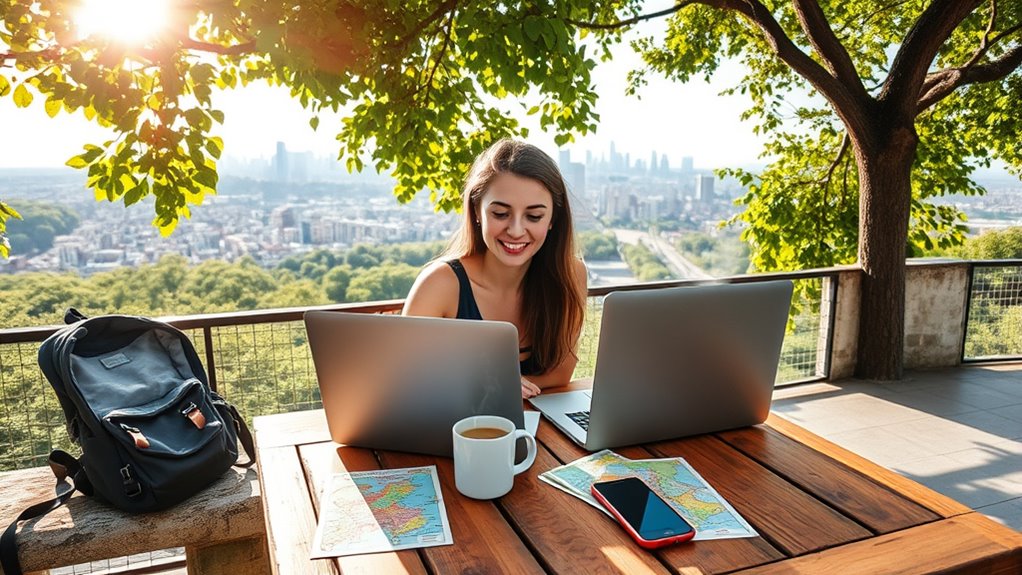

As a digital nomad, you balance work, travel, and finances by setting manageable schedules and choosing cost-effective destinations. You use digital tools to stay productive and connect with communities for support. Prioritizing flexible plans, you enjoy authentic experiences and manage expenses wisely. Ensuring tax compliance and managing finances can be tricky but rewarding. Want to discover more tips on thriving in this adventurous lifestyle? Keep exploring to learn how to make it work seamlessly.
Key Takeaways
- Maintaining a flexible work schedule and leveraging digital tools ensures productivity while traveling.
- Balancing income, expenses, and local costs is essential for financial stability as a digital nomad.
- Regular travel and cultural experiences enrich life, but require planning around visas and legal requirements.
- Community engagement offers support and networking, improving well-being and professional growth on the road.
- Staying compliant with tax and social security laws is vital for sustainable, long-term remote work lifestyles.
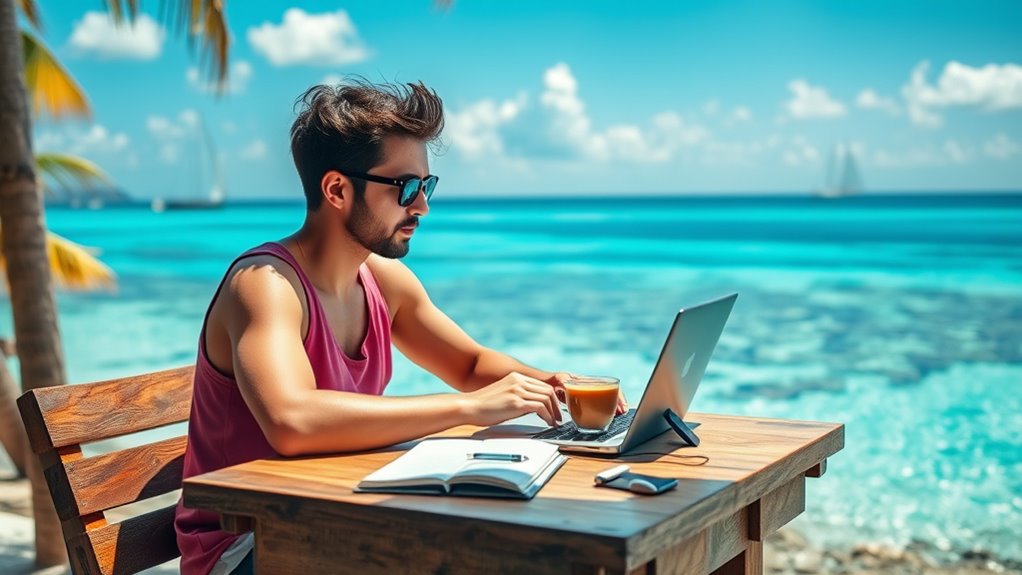
Have you ever wondered what it’s like to work and travel simultaneously? As a digital nomad, that’s your everyday reality. You’re part of a growing community, mainly male, averaging around 36 years old, many of whom come from the United States. You’ve likely invested in higher education—about 90% of your peers have degrees—giving you a solid foundation to pursue diverse remote roles. Whether you’re freelancing or working for a company remotely, your income averages roughly $124,170 a year, giving you financial stability while embracing a flexible lifestyle.
Your workday is often spent in a home office or a cozy café, with 59% of digital nomads working from such spaces. You usually stick to 40 hours or less weekly—70% of your colleagues prefer a manageable schedule—so you can enjoy your adventures without burnout. Your job might involve software development, marketing, or creative design, industries where remote work is common. Thanks to your comfort with technology, nearly 80% of you are early adopters, seamlessly integrating new tools that keep you connected across borders. The integration of smart technologies in everyday life further enhances your ability to work efficiently from anywhere.
Most digital nomads work up to 40 hours weekly from cozy cafes or home offices, balancing work and adventure seamlessly.
Travel is a core part of your life, with nearly half of nomads changing locations every 1-3 weeks. Popular destinations include Thailand, Spain, and parts of the U.S., chosen for their culture, affordability, and lifestyle. Many of you prefer not to own a home, valuing the freedom to move without the burden of property ownership. Cultural immersion matters deeply—you seek authentic experiences, explore local traditions, and connect with communities. Governments are catching on, offering specialized visas that make it easier for you to stay longer and work legally in foreign countries.
Financially, you’re generally earning between $50,000 and $250,000 annually, and most of you report being satisfied with your income. You manage expenses through careful budgeting and cost-effective travel, which helps stretch your earnings. Your contribution to local economies is notable, especially through tourism and entrepreneurship. Governments are increasingly enforcing tax compliance, so you stay within legal boundaries while enjoying your nomadic lifestyle.
Flexibility is your top priority, shaping your work-life balance and travel plans. You indulge in hobbies like hiking, swimming, or running during your free time. Many of you avoid homeownership, preferring the mobility that comes with renting or temporary accommodations. You’re part of vibrant communities—digital nomad groups that provide support, networking, and shared experiences. Some families adopt hybrid lifestyles, combining seasonal travel with remote work, creating opportunities for family bonding and adventure.
Despite challenges like tax and social security compliance, the trend continues upward. Emerging roles powered by AI, efforts to include more women, and rising interest in destinations in the Global South signal a bright future. The number of countries offering specialized visas for digital nomads has increased dramatically, with 64 countries now providing formal pathways. Governments worldwide are racing to adapt policies, offering better infrastructure and visas. As a digital nomad, you’re not just working remotely—you’re part of a movement that’s transforming global talent mobility and cultural exchange, shaping the future of work and travel.

MNN Portable Monitor 15.6inch FHD 1080P USB C HDMI Gaming Ultra-Slim IPS Display w/Smart Cover & Speakers,HDR Plug&Play, External Monitor for Laptop PC Phone Mac (15.6'' 1080P)
Full HD Portable Monitor - MNN 15.6inch portable laptop monitor with 1920*1080 resolution, advanced IPS matte screen support...
As an affiliate, we earn on qualifying purchases.
Frequently Asked Questions
How Do Digital Nomads Find Reliable Internet Worldwide?
You find reliable internet worldwide by researching destinations beforehand, reading reviews, and asking fellow nomads for tips. You also carry backup options like portable hotspots, SIM cards, and VPNs to guarantee connectivity. Checking local cafes, co-working spaces, and accommodations with high-speed Wi-Fi helps. You stay flexible, adapt quickly if internet issues arise, and always have multiple ways to stay connected, so your work never gets interrupted.
What Are the Best Countries for Digital Nomads to Live In?
Think of choosing a country as planting a sturdy tree; you want reliable roots. For digital nomads, countries like Portugal, Thailand, and Spain offer vibrant cultures, affordable living, and good internet. They’re like welcoming harbors in a vast ocean, making your work and travel seamless. These destinations provide a balance of adventure and stability, helping you thrive while exploring new horizons. Your ideal spot awaits, just like a tree finding its perfect soil.
How Do Digital Nomads Manage Healthcare and Insurance?
You should research international health insurance plans tailored for digital nomads, which often cover multiple countries and provide flexibility. You can also consider local health services or travel insurance options for short-term needs. Make sure to verify coverage details, including emergency care and prescription drugs. Keep digital copies of your health records and insurance documents handy, and stay aware of healthcare facilities in your current location for quick access.
What Are Common Challenges Faced by Digital Nomads?
You often face unpredictable challenges that keep you on your toes. From unstable Wi-Fi and time zone chaos to visa hurdles and healthcare surprises, it’s a constant balancing act. You might struggle with loneliness or maintaining routines across borders. Yet, each obstacle pushes you to adapt, learn, and grow. Embrace the uncertainty—it’s part of the adventure, making your journey uniquely rewarding despite the hurdles.
How Can Digital Nomads Build a Sustainable Income Stream?
To build a sustainable income stream, you should diversify your sources of income, such as freelancing, online tutoring, or selling digital products. Focus on developing skills in high-demand areas like tech, marketing, or writing. Consistently network and market yourself through social media and professional platforms. Save a portion of your earnings, and adapt quickly to market changes to make certain of steady cash flow. Keep learning to stay competitive and expand your income opportunities.

KEFEYA Laptop Screen Extender, 14" FHD 1080P IPS Laptop Monitor Extender Dual Screen, Portable Monitor for Laptops 13-17" with USB-C/HDMI Port, Plug n Play for Windows/Mac/Android/Switch/PS5
Increase Efficiency Up to 200 % & Save Time:KEFEYA travel monitor for laptop screen extender supports you to...
As an affiliate, we earn on qualifying purchases.
Conclusion
Living as a digital nomad lets you embrace freedom and adventure, but don’t forget—balancing work, travel, and finances is your anchor. Like a tightrope walker, you must stay steady, mindful of each step, to enjoy the journey without losing your footing. With careful planning and a flexible mindset, you can turn your nomadic dreams into a sustainable reality. So, take the leap—your adventure awaits, but remember, balance is your secret weapon.

VisionOwl Portable Monitor Dual 15.6 Inch 1080P FHD 107% sRGB Foldable Second Screen, USB-C HDMI HDR Stacked Travel Monitor for Laptop MacBook PC PS5 Xbox, VESA Mountable, Built-in Kickstand
Effortless and Secure Installation: The VisionOwl stacked dual-screen monitor supports quick setup for both Windows and macOS. Windows...
As an affiliate, we earn on qualifying purchases.

Ingnok Portable Monitor, Ultra Slim 15.6 Inch FHD IPS Laptop Screen Extender with Adjustable Stand, USB C Compatible, Ideal for Travel and Office
[Ultra-Thin and Portable, Easy to Carry] The Ingnok Portable Monitor is only 0.5 times the thickness of an...
As an affiliate, we earn on qualifying purchases.