If you want easy guest management and remote access, a smart lock is a great choice for rental and vacation properties. It offers keyless entry, temporary codes, and instant control over access, making check-ins smoother. However, if you prioritize simplicity and robust security, traditional deadbolts are more reliable and easier to maintain. Each option has its benefits, and understanding the trade-offs can help you pick the best fit—more details are just ahead.

Get smart everyday buys delivered free — and shop member deals
- Fast, free delivery on millions of items
- Access to Prime Big Deal Days deals on October 6–7
- Prime Video, Amazon Music and more included
Key Takeaways
- Smart locks enable remote access management and temporary codes, ideal for quick guest turnover and property rentals.
- Traditional deadbolts offer proven, reliable physical security with no electronic vulnerabilities, suitable for long-term security.
- Smart locks provide access logs and notifications, enhancing security oversight in rental and vacation properties.
- Deadbolts require minimal maintenance and are more resistant to environmental damage in outdoor settings.
- Combining both lock types offers flexible, secure, and convenient access control tailored to rental property needs.
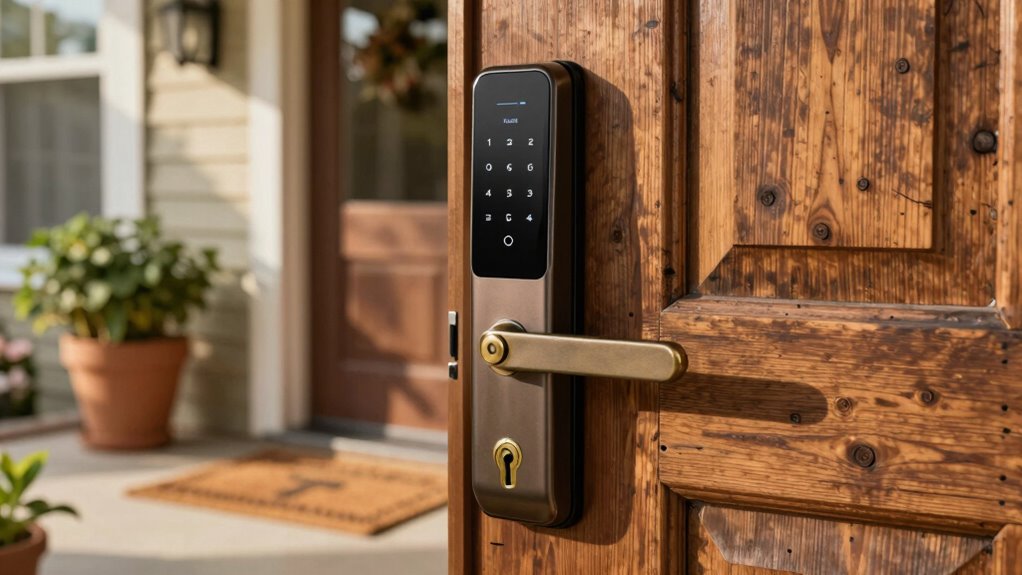
When it comes to securing your home, choosing between a smart lock and a traditional deadbolt can be a tough decision. For rental and vacation properties, this choice becomes even more critical because you want to balance convenience, security, and ease of management. A smart lock offers keypad convenience, allowing you to assign temporary codes for different guests or service providers, eliminating the need to exchange physical keys. This feature makes check-ins smoother and reduces the risk of lost keys or unauthorized access. On the other hand, a traditional deadbolt provides solid physical security, relying on a mechanical lock that’s resistant to hacking or electronic failure. When considering these options, think about the specific needs of your property and your guests.
Smart locks are designed with practicality in mind. The keypad convenience means you don’t need to coordinate key handoffs or worry about guests losing keys during their stay. Instead, you can generate unique access codes that you can revoke instantly if needed, giving you control over who can enter and when. This flexibility is especially valuable for vacation rentals where turnover happens frequently. Plus, many smart locks integrate with smartphone apps, so you can lock or unlock doors remotely, monitor access logs, and receive notifications when someone enters. For rental owners, this offers peace of mind, knowing exactly who accessed the property and when. Additionally, understanding plant properties can be important when selecting lock materials that withstand environmental conditions, ensuring durability over time. Considering the electronic vulnerabilities of smart locks can help you decide if they are suitable for your property’s security needs. Furthermore, evaluating the cost and maintenance involved with smart lock systems can help in making a balanced decision.
It’s also worth noting that environmental factors such as humidity, temperature fluctuations, and exposure to elements can affect the longevity of certain lock types, making material choice crucial for durability. An understanding of security features can further influence your decision, especially when comparing different lock models and their resistance to tampering. However, it’s important to consider physical security. While smart locks are generally robust, they can be vulnerable to electronic failures, hacking, or power outages if not properly protected. Traditional deadbolts, with their mechanical operation, are immune to such electronic risks and often provide a more straightforward, tried-and-true level of physical security. They’re less susceptible to technological vulnerabilities, which can be a significant advantage if you prioritize simplicity and reliability.
In the end, your choice depends on what matters most for your rental or vacation property. If you want maximum convenience, flexible access, and remote management, a smart lock might be the better fit. But if you prefer a straightforward solution with proven physical security, a traditional deadbolt could serve you well. You might even consider combining both, using a smart lock for everyday access and a deadbolt as a backup. Either way, understanding the balance between keypad convenience and physical security will help you make a decision that best protects your property and ensures a smooth experience for your guests.
As an affiliate, we earn on qualifying purchases.
Frequently Asked Questions
How Secure Are Smart Locks Compared to Traditional Deadbolts?
Smart locks are generally secure, but they can be vulnerable to key hacking and lock picking if not properly protected. Traditional deadbolts often resist lock picking better, but they don’t prevent hacking attempts. You should guarantee your smart lock uses strong encryption and update firmware regularly. While both options have risks, smart locks offer convenience, but with added security measures, they can be just as safe as traditional deadbolts.
Can Smart Locks Be Integrated With Existing Home Automation Systems?
Yes, smart locks can be integrated with your existing home automation system. You’ll find many models compatible with popular platforms like Alexa, Google Home, or Apple HomeKit. This allows you to control access remotely, set temporary codes, and enhance security integration. By connecting smart locks to your home automation, you streamline security management, making it convenient to monitor and control access whether you’re at home or away.
What Is the Typical Lifespan of a Smart Lock Battery?
You’ll usually get about 6 months to a year of battery life from a smart lock, depending on usage and features. Good power management can prolong battery life, so turning off unnecessary functions or using low-power modes helps. Regularly checking the battery status guarantees you won’t get locked out unexpectedly. Keep spare batteries handy, especially for rental or vacation properties, to maintain smooth access and security.
Are There Legal Restrictions on Using Smart Locks for Rentals?
Think of legal restrictions like guardrails guiding your rental journey. You need to guarantee legal compliance and adhere to rental regulations when installing smart locks. Many regions require landlord permission or specific security standards. Before upgrading, check local laws and lease agreements to avoid pitfalls. Staying informed helps you navigate the legal landscape smoothly, ensuring your smart lock enhances your property’s security without risking legal trouble.
How Quickly Can I Change Access Permissions With a Smart Lock?
With a smart lock, you can change access permissions almost instantly. You simply use your app to grant or revoke keyless entry, making it perfect for temporary access needs like rentals or vacations. Whether you’re giving a guest a limited time window or removing access after their stay, the process is quick and straightforward, ensuring you maintain control and security without needing physical keys or waiting for locksmiths.
As an affiliate, we earn on qualifying purchases.
Conclusion
Choosing between a smart lock and a traditional deadbolt ultimately depends on your rental or vacation property needs. While some worry that smart locks might be less secure, advanced encryption and remote access actually offer better control and safety. Plus, they make check-ins smoother for guests. So, don’t let the tech scare you—embrace the convenience and security smart locks provide, and give your guests a seamless experience that keeps your property protected and accessible.
As an affiliate, we earn on qualifying purchases.
As an affiliate, we earn on qualifying purchases.
Halloween Picks
halloween
As an affiliate, we earn on qualifying purchases.