
🔍 Read the full analysis: What To Look For In The 9 Best Wi-Fi 7 Routers For 2027 on ThorstenMeyerAI.com

Get smart everyday buys delivered free with Prime
- Fast, free delivery on millions of items
- Prime Video, Amazon Music and more included
- Member-only deals all year
TL;DR
A comparison from ThorstenMeyerAI.com names the TP-Link Archer BE550 its best overall pick, with the ASUS ROG Rapture GT-BE98 Pro aimed at demanding gaming setups and the Archer BE230 at simpler networks. The nine models vary in band configuration and connectivity; the source does not provide prices, test results or a dated 2027 product update, so treat the ranking as a buying guide rather than a performance guarantee.
ThorstenMeyerAI.com ranks nine Wi-Fi 7 routers for different home-network needs, naming the TP-Link Archer BE550 its best overall choice for its tri-band design and mix of wired connections. The comparison also highlights the quad-band ASUS ROG Rapture GT-BE98 Pro for demanding gaming setups and several dual-band models for simpler networks; the original analysis does not establish that any router will deliver a particular speed in a specific home.
The list spans three router categories: dual-band options for straightforward networks, tri-band models for households that may benefit from more wireless capacity, and a quad-band premium option. Alongside the BE550 and GT-BE98 Pro, the nine models are the TP-Link Archer BE230, Archer BE400 and BE600; the ASUS RT-BE82U; and the NETGEAR RS90, RS140 and BE9300. For another Wi-Fi 7 roundup, see these router picks.
The source says its ranking weighs band configuration, wired connectivity and feature set, as well as how much setup and network complexity a router adds. It calls the BE9300 and BE600 alternatives to compare with the BE550, while describing the BE230, BE400, RT-BE82U, RS90 and RS140 as more focused dual-band choices. It does not provide detailed model-by-model port specifications, prices or independent benchmark results.
Its practical advice is to match a router to active client devices, home layout, internet service and wired equipment, rather than selecting by the Wi-Fi 7 label alone. Older wireless devices can connect, according to the source, but do not receive every capability associated with Wi-Fi 7. For home-office considerations, see these Wi-Fi 7 router options. Advertised capabilities are not a promise of real-world results.
The 9 picks
- 1
 ASUS ROG Rapture GT-BE98 Pro Quad-Band WiFi 7 Gaming RouterView on Amazon →
- 2
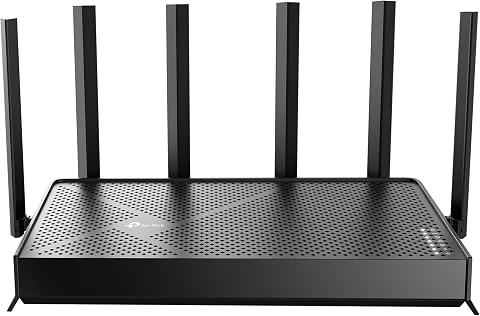 TP-Link Archer BE600 Tri-Band Wi-Fi 7 RouterView on Amazon →
- 3
 NETGEAR Nighthawk BE9300 Tri-Band WiFi 7 RouterView on Amazon →
- 4
 TP-Link Archer BE550 Tri-Band Wi-Fi 7 RouterView on Amazon →
- 5
 NETGEAR Nighthawk RS140 Dual-Band WiFi 7 RouterView on Amazon →
- 6
 ASUS RT-BE82U Dual-Band Wi-Fi 7 RouterView on Amazon →
- 7
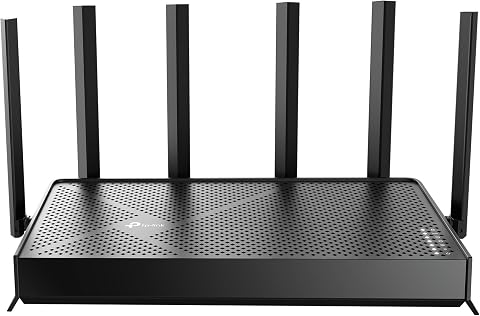 TP-Link Archer BE400 BE6500 Dual-Band Wi-Fi 7 RouterView on Amazon →
- 8
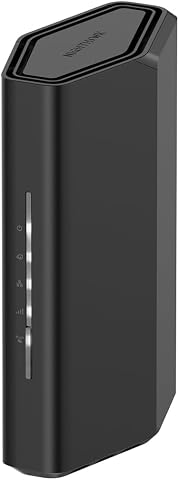 NETGEAR Nighthawk RS90 WiFi 7 Dual-Band RouterView on Amazon →
- 9
 TP-Link Archer BE230 Dual-Band Wi-Fi 7 RouterView on Amazon →
Choosing Capacity for Your Home
The comparison matters because a router purchase affects more than wireless standards: it can determine whether a household has enough band flexibility and wired ports for its actual mix of devices. A household with many simultaneous connections or wired equipment may value the BE550’s balanced feature set or compare tri-band alternatives. A smaller network may have little reason to pay for a more complex design.
It also cautions against treating more bands or a newer standard as an automatic fix for slow service or poor coverage. A router cannot raise the internet plan’s speed, make older clients use features they lack, or remove walls and other obstacles. The relevant choice is the model that fits the bottleneck a home actually has.
Products Worth Considering

Samsung 27-Inch Odyssey OLED G5 QHD Gaming Monitor

Samsung 27-inch Odyssey G5 QHD Gaming Monitor (G51F)

Canon PIXMA PRO-200S Wireless Professional Inkjet Photo Printer
As an affiliate, we earn on qualifying purchases.
How the Nine Models Differ
The source organizes its recommendations around how households might use a network, rather than claiming one router is right for everyone. Its overall pick, the Archer BE550, is positioned as a broad-use tri-band option. The GT-BE98 Pro is presented as a specialist device: its quad-band design and gaming-focused controls may suit more involved setups, but the source says most homes will not need that scale.
The other named options broaden the comparison: the BE9300 and BE600 are tri-band alternatives, while the BE230, BE400, RT-BE82U, RS90 and RS140 are described as dual-band routers. The source says the selection process considered practical fit and the cost of added complexity, but it supplies no publication date. The “for 2027” framing should not be read as evidence of a newly announced 2027 lineup.
“The Archer BE550 earns the overall lead by pairing tri-band Wi-Fi 7 with a practical feature mix.”
— ThorstenMeyerAI.com comparison
What the Comparison Does Not Show
The supplied source material does not state when the comparison was published, list current prices, or report controlled speed, range or latency tests. It also does not provide enough model-specific port detail to verify which router suits a particular modem, switch, storage device or wired internet plan. Its “best” labels should be understood as recommendations based on the source’s stated selection criteria, not independently verified rankings.
Real performance remains dependent on router placement, building materials, nearby networks, client hardware and service speed. The source also does not establish which products will remain available or unchanged in 2027. Buyers should check current specifications and local availability before making a decision.
Checks Before You Buy
Before choosing, list the Wi-Fi standards supported by the devices you use most, sketch the rooms where coverage is weak, and count the wired connections you need. Then compare the router’s current port types, bands and expansion options with that list. If coverage is the main problem, check mesh or access-point compatibility instead of assuming a higher-capacity router will solve it.
Any decision framed around 2027 will need updated product specifications, prices and availability as that period approaches. Until those details are supplied, this comparison is best treated as a selection guide, not a current market audit or guarantee of results.
Key Questions
Which Wi-Fi 7 router does the comparison rank first?
ThorstenMeyerAI.com names the TP-Link Archer BE550 its overall pick, citing its tri-band design and practical mix of features and wired connections.
Which model is aimed at gaming-focused setups?
The source positions the ASUS ROG Rapture GT-BE98 Pro as the premium specialist, citing quad-band capacity and gaming-oriented controls. It also says many homes may not need that level of complexity.
Do older devices benefit from a Wi-Fi 7 router?
Older wireless clients can connect, according to the source, but they do not gain every Wi-Fi 7 capability. The immediate benefit depends on the standards supported by the devices you use.
Does a tri-band router guarantee faster Wi-Fi?
No. The comparison treats extra bands as a way to distribute wireless traffic, not as a direct speed guarantee. Results depend on client load, placement, interference, device support and internet service.
Source: ThorstenMeyerAI.com