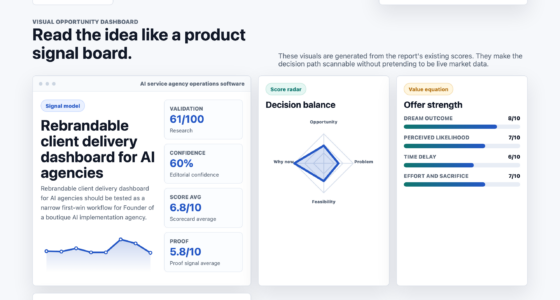
📊 Full opportunity report: Mobilised, Not Spent: What’s Left Of Europe’s €200 Billion AI Offensive on ThorstenMeyerAI.com — validation score, market gap, and execution plan.
TL;DR
The European Commission has announced a plan to mobilise €200 billion for AI development, but only a small part is actually committed or available. The bulk relies on private investment that Europe struggles to attract, and the timeline is years away.
The European Commission has announced a plan to mobilise €200 billion for artificial intelligence, but only a small portion of this sum is actually committed or available now. The initiative relies heavily on private investment that remains uncertain, raising questions about its immediate impact and feasibility. This development is significant because it highlights Europe’s limited current capacity to compete with US tech giants in AI development.
The €200 billion figure, widely cited as Europe’s AI funding goal, is based on the idea of “mobilising” private capital alongside €50 billion of public funds. In reality, only about €20 billion of public money is firmly committed, primarily for building AI gigafactories and supercomputing facilities. Of this, less than €10 billion is dedicated to core compute infrastructure, with the rest requiring co-investment from member states and private backers. The actual flow of funds is years away, with formal calls for tenders not opening until July 2026 and facilities expected to be operational only in 2027 or 2028. Meanwhile, US tech giants are investing hundreds of billions annually, dwarfing Europe’s efforts. The initiative’s reliance on private capital is based on optimistic leverage assumptions, which are challenged by Europe’s fragmented markets, high energy costs, and talent drain to the US. The broader policy package, including laws and frameworks, does not address these structural issues, and the actual financial commitment remains minimal compared to the scale of US investments.Mobilised, not spent
The EU is selling a €200 billion AI offensive. But the decisive word is “mobilised” — not “spent.” Work through the number and the headline shrinks dramatically before it reaches any effect.
2027–28 data centres expected to run
1 SITE under construction so far (Norway)
Late, slow, and not yet built.
A small, late, partly hypothetical cheque — without touching expensive energy, fragmented capital markets, slow permits, or the talent drain. The EU mistakes a funding pot for a strategy.
Implications of Europe’s Limited AI Funding Commitment
This situation underscores Europe’s challenge in catching up with US tech giants in AI development. The announced funds are largely aspirational, with only a small fraction currently available or likely to be effective in addressing Europe’s structural weaknesses—such as energy costs, market fragmentation, and talent retention. The reliance on private investment that has yet to materialize raises questions about whether Europe can achieve its AI ambitions within the proposed timelines or at all. The discrepancy between headline figures and actual commitments highlights the gap between political rhetoric and practical progress, affecting Europe’s competitiveness in the global AI race.

SQL Server 2025 Unveiled: The AI-Ready Enterprise Database with Microsoft Fabric Integration
As an affiliate, we earn on qualifying purchases.
As an affiliate, we earn on qualifying purchases.
Europe’s AI Funding Ambitions Versus US Investment Scale
The headline €200 billion figure was presented as Europe’s answer to the US’s massive tech investments, which reach hundreds of billions annually. US companies like Amazon, Microsoft, and Meta are spending around $700 billion in 2026 alone, with individual investments exceeding Europe’s entire multi-year budget for AI infrastructure. The European initiative aims to leverage €50 billion in public funds, but only about €20 billion is truly committed, and even less is dedicated to core compute infrastructure. Meanwhile, US firms are building data centers and deploying AI at a scale that Europe’s current plans cannot match. Europe’s funding is delayed, with no major facilities operational before 2027, and existing infrastructure remains limited. Structural issues like high energy prices, slow permitting, and talent migration continue to hamper progress, making the announced funds a symbolic gesture rather than a transformative force.
“Our goal is to leverage public funds to catalyze private investment in AI infrastructure and research.”
— European Commission spokesperson

Supercomputing for Artificial Intelligence: Foundations, Architectures, and Scaling Deep Learning Workloads
As an affiliate, we earn on qualifying purchases.
As an affiliate, we earn on qualifying purchases.
Uncertain Private Investment and Implementation Timeline
It remains unclear whether the projected private investment of €150 billion will materialize as planned, given Europe’s structural challenges. The timeline for the gigafactories and supercomputers is also uncertain, with facilities not expected to be operational until 2027–2028. Additionally, the actual impact of these investments on Europe’s AI competitiveness is still to be seen, and the effectiveness of the policy frameworks remains untested.
As an affiliate, we earn on qualifying purchases.
Next Steps for Europe’s AI Funding and Infrastructure
The formal call for tenders for AI gigafactories is scheduled for July 2026, with construction expected to begin shortly thereafter. Progress will depend on private sector participation, regulatory approvals, and addressing structural barriers such as energy costs and talent retention. Monitoring the actual commitments and development of infrastructure over the coming years will determine whether Europe’s AI ambitions can be realized within the proposed timelines.

AI Innovation Labs: AI Lab Equipment Needs | AI Ethics and Policies | Case Studies in AI | Emerging AI Technologies | AI in Finance Innovations
As an affiliate, we earn on qualifying purchases.
As an affiliate, we earn on qualifying purchases.
Key Questions
Is Europe actually spending €200 billion on AI?
No, the €200 billion figure refers to the amount Europe aims to mobilise, mostly through private investment, not actual spending. Only a small part is currently committed or allocated.
When will the AI gigafactories be operational?
The first facilities are expected to come online in 2027–2028, with formal tenders opening in July 2026.
Can Europe compete with US tech giants in AI?
Based on current investments and infrastructure, Europe faces significant challenges. US companies are investing hundreds of billions annually, dwarfing Europe’s planned efforts.
What are the main obstacles Europe faces in AI development?
High energy costs, slow permitting processes, fragmented markets, talent migration, and dependence on US cloud providers are key barriers.
Source: ThorstenMeyerAI.com