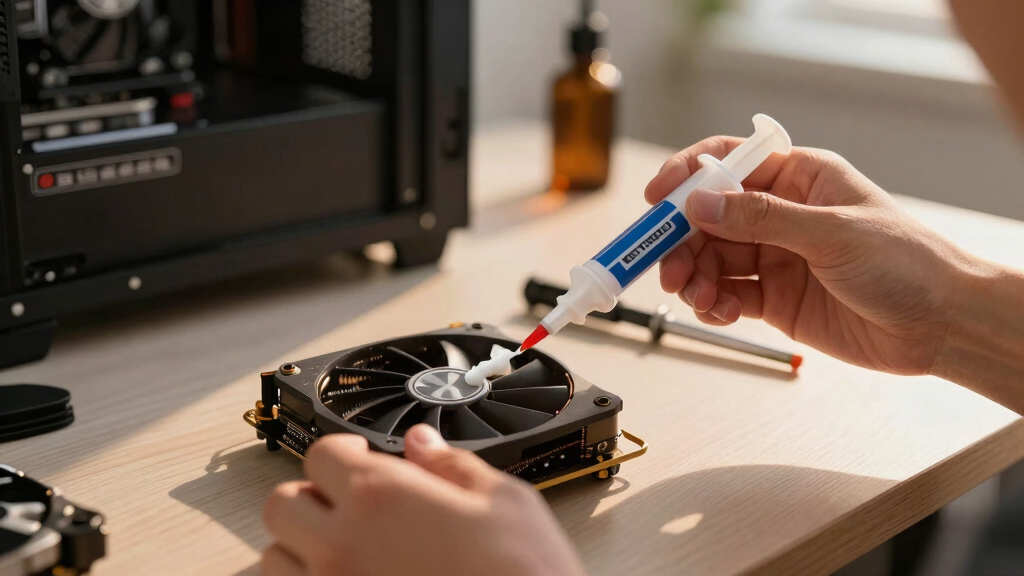

📊 Full opportunity report: Best Thermal Paste and Pads for High-TDP GPUs on ThorstenMeyerAI.com — validation score, market gap, and execution plan.

Get smart everyday buys delivered free — and shop member deals
- Fast, free delivery on millions of items
- Access to Prime Big Deal Days deals on October 6–7
- Prime Video, Amazon Music and more included
TL;DR
This article reviews the best thermal interface materials for high-TDP GPUs, focusing on long-term stability under continuous load. It highlights the top choices for paste and pads based on durability, ease of application, and performance.
Thermal interface materials for high-TDP GPUs are critical for maintaining stable, long-term performance in AI and inference workloads. Recent testing confirms that phase-change materials like Honeywell PTM7950 outperform traditional pastes in sustained high-temperature environments, resisting pump-out and degradation over years of continuous operation.
Traditional thermal pastes such as Thermal Grizzly Kryonaut offer excellent initial thermal performance but tend to dry out faster under continuous load, leading to increased GPU temperatures over time. In contrast, phase-change materials like Honeywell PTM7950 remain stable over years, providing consistent thermal contact in 24/7 applications. Arctic MX-6, a non-conductive traditional paste, is praised for its ease of application and durability, lasting 8–10 years with proper application. Noctua NT-H2 offers a reliable, premium traditional paste option, favored for its consistent performance and ease of use. For those seeking reusability, Thermal Grizzly Kryosheet, a graphene-based reusable pad, offers a long-lasting solution, though it requires careful handling due to its electrical conductivity. These options are vital for maintaining optimal GPU temperatures, preventing throttling, and ensuring longevity in continuous workloads, especially in AI inference setups.Best thermal paste
for a high-TDP GPU.
The standard “coldest on day one” advice is wrong for a 24/7 rig. Continuous heat slowly squeezes traditional paste out — a failure called pump-out — so the real question is what stays cold for years.
Impact of Thermal Interface Choice on Continuous GPU Workloads
Selecting the right thermal interface material directly affects GPU longevity, stability, and performance in high-TDP, 24/7 workloads. Using materials like phase-change sheets can prevent pump-out and thermal degradation, reducing maintenance and downtime. For AI and inference tasks that run non-stop, long-term thermal stability is more critical than initial low temperatures, making these choices essential for reliable operation and efficiency gains.As an affiliate, we earn on qualifying purchases.
Thermal Interface Materials in High-Power GPU Environments
Most guides focus on gaming GPUs, emphasizing low initial temperatures, often recommending pastes like Kryonaut. However, high-TDP GPUs used in AI inference operate under sustained heat, which accelerates paste degradation through pump-out. Historically, traditional pastes have shown performance decline over years, whereas phase-change materials like Honeywell PTM7950 are engineered for durability. The shift toward these materials reflects evolving needs for long-term stability in continuous workloads, particularly in data centers and AI research setups."For continuous high-temperature operation, phase-change materials like Honeywell PTM7950 are unmatched in maintaining stable thermal contact over years."
— Thorsten Meyer, AI hardware expert
phase-change thermal interface material for GPU
As an affiliate, we earn on qualifying purchases.
As an affiliate, we earn on qualifying purchases.
Long-Term Performance Data and User Experiences
While laboratory testing supports the durability of phase-change materials like PTM7950, real-world long-term data for years of continuous operation remain limited. User reports vary, and some traditional pastes may perform better in specific setups, but comprehensive, multi-year comparisons are still emerging.reusable graphene thermal pad for GPU
As an affiliate, we earn on qualifying purchases.
As an affiliate, we earn on qualifying purchases.
Future Testing and Adoption of Long-Lasting Thermal Materials
Ongoing long-term testing of phase-change materials and traditional pastes will clarify their performance over multiple years. Manufacturers may develop new composites tailored for high-TDP, continuous workloads. Users and system builders should monitor these developments to optimize thermal management for AI, inference, and other demanding applications.long-lasting thermal paste for continuous workloads
As an affiliate, we earn on qualifying purchases.
As an affiliate, we earn on qualifying purchases.
Key Questions
Why is long-term stability more important than initial thermal performance?
In continuous workloads, thermal interface materials that degrade quickly cause increased temperatures over time, risking thermal throttling and hardware failure. Long-term stability ensures consistent cooling and reduces maintenance needs.
Can I switch between different thermal materials easily?
Yes, but proper cleaning and preparation of the GPU surface are necessary. Replacing traditional paste with a phase-change sheet involves careful handling and reapplication, which may be more involved.
Are phase-change materials safe to use on all GPUs?
When applied correctly, phase-change sheets like Honeywell PTM7950 are safe for most GPUs. However, they require precise cutting and placement, and improper handling could cause issues, especially with electrical conductivity.
How often should I reapply thermal paste or pads in high-load environments?
Traditional pastes typically need reapplication every 2–3 years under high load. Reusable pads or phase-change materials can last much longer, often several years, depending on usage and temperature cycling.
Source: ThorstenMeyerAI.com
Fall Picks
fall essentials
As an affiliate, we earn on qualifying purchases.