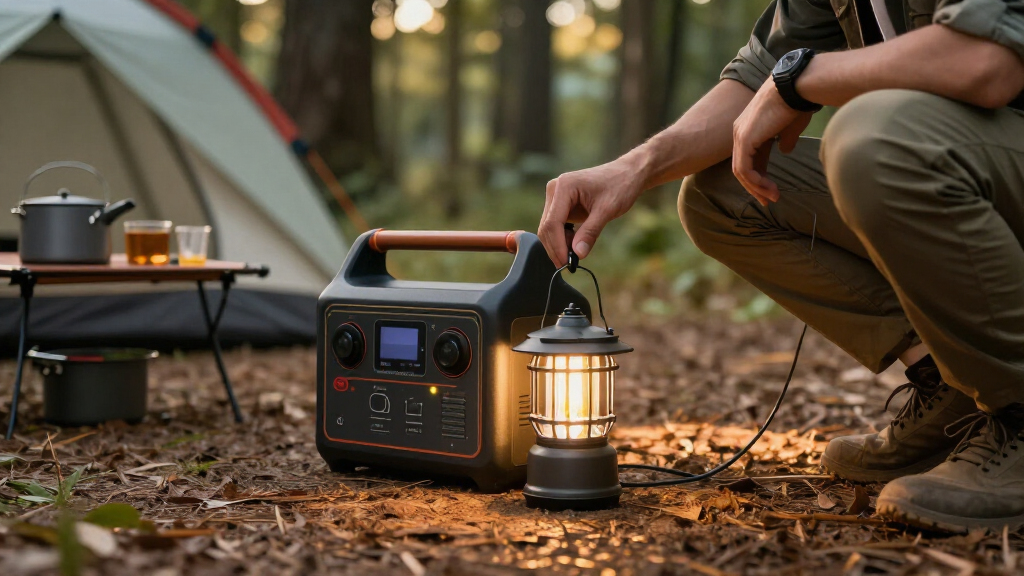

🔍 Read the full analysis: 15 Best Portable Power Stations For Camping Trips And Home Emergencies In 2027 on ThorstenMeyerAI.com

Get smart everyday buys delivered free with Prime
- Fast, free delivery on millions of items
- Prime Video, Amazon Music and more included
- Member-only deals all year
TL;DR
The supplied guide names the Anker SOLIX S2000 and two Jackery models, but does not identify the other 12 products in its promised list. It describes capacity, output, battery chemistry, charging and portability as key buying factors; product claims and recommendations are not independently verified in the source.
A guide titled “15 Best Portable Power Stations for Camping Trips and Home Emergencies in 2027” recommends the Anker SOLIX S2000 as its overall pick, but the supplied material names only three products and does not provide a complete 15-model list. That leaves readers without enough information to compare all of the promised choices or verify their current specifications.
The source describes the Anker SOLIX S2000 as a 2,010Wh unit with 1,500W output, and calls it suitable for off-grid use or home backup. It also recommends the Jackery Explorer 300 for day trips and lighter electronics, citing its compact size. No weight, runtime testing, price, warranty, or independent product data accompanies those recommendations in the supplied text.
A third named model, the Jackery HomePower 3600 Plus, is presented as a high-capacity option that could provide multiple days of backup, with transportability as a tradeoff. The guide also mentions the Jackery Explorer 2000 v2 as a model capable of extended refrigerator use, but gives no test conditions, appliance draw, or measured runtime. The remaining 11 of the promised 15 products are not identified.
The guide says its selection approach considers power-to-weight ratio, battery chemistry, inverter performance, solar input and expandability. It does not publish a ranked table, full scoring method, testing records, or product-by-product specifications. Its statements should therefore be read as the source’s recommendations, not as independently established comparative results.
The 15 picks
- 1
 Jackery HomePower 3600 Plus Power Station, 3584Wh, 3600W AC OutputView on Amazon →
- 2
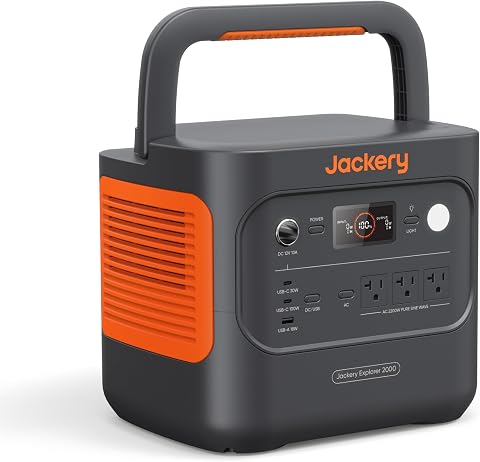 Jackery Explorer 2000 v2 Portable Power Station, 2042Wh, 2200W AC OutputView on Amazon →
- 3
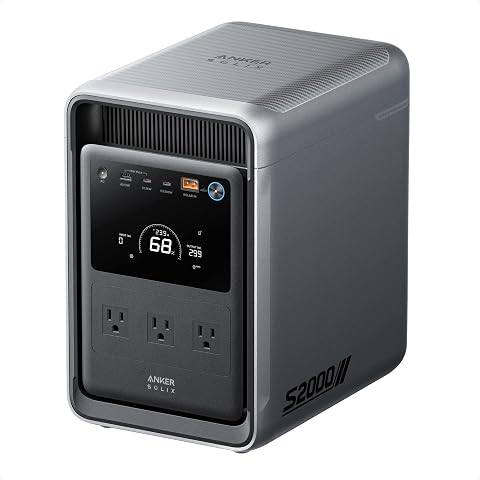 Anker SOLIX S2000 Portable Power Station, 2010Wh, 1500WView on Amazon →
- 4
 EcoFlow Delta 3 Portable Power Station, 1024Wh, 1800WView on Amazon →
- 5
 Jackery Explorer 1000 v2 Portable Power Station 1070Wh 1500WView on Amazon →
- 6
 BLUETTI Elite 100 V2 Portable Power Station for Camping 1024Wh 1800WView on Amazon →
- 7
 BLUETTI Portable Power Station AC180, 1152Wh LiFePO4 Battery Backup with 2 18…View on Amazon →
- 8
 BLUETTI Elite 30 V2 Portable Power Station 288Wh 600W LFP Solar GeneratorView on Amazon →
- 9
 Jackery Explorer 300 Portable Power Station, 293Wh Lithium Battery, Solar Gen…View on Amazon →
- 10
 Portable Power Station 500W, 519Wh Solar Generator BackupView on Amazon →
- 11
 Portable Solar Generator 300W with 60W Solar PanelView on Amazon →
- 12
 ALLWEI Portable Power Station 300W, 280Wh Solar Generator with Pure Sine Wave…View on Amazon →
- 13
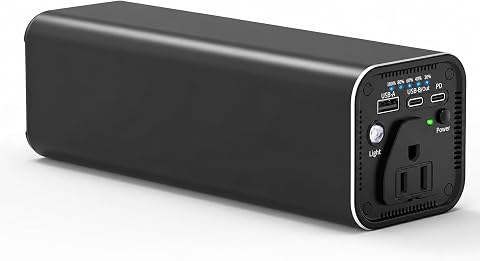 Zealott Portable Power Station 31200mAh 112.3Wh with 120W AC and 65W USB-C PDView on Amazon →
- 14
 MARBERO Portable Power Station 88Wh, 120W Surge, Solar Generator 24,000mAhView on Amazon →
- 15
 HOWEASY Portable Power Station, 120W (240W Peak) Solar GeneratorView on Amazon →
Choosing Backup Power by Use
Portable power stations can help campers charge electronics and can supply limited electricity during an outage, but a mismatch between a device’s needs and a station’s capacity or output can make the purchase ineffective. The guide’s central distinction is between watt-hours (Wh), which describe stored energy, and watts (W), which describe output. A station may hold substantial energy yet still be unable to start or run a high-wattage appliance.
That distinction matters for readers comparing a lightweight camping unit with a larger home-backup product. Weight, recharge speed, available ports and battery lifespan affect whether a model is practical in a vehicle, at a campsite or in a fixed home setup. Since the source does not supply the full list or comparable test results, readers cannot use it alone to determine which model fits a particular need.
Products Worth Considering

LG UltraGear 27G640A-B 27-Inch QHD IPS Gaming Monitor, 300Hz, 1ms, G-SYNC Compatible, FreeSync Premium, DisplayHDR 400, HDMI 2.1, USB-C, Adj

Apple MacBook Air 15-inch Laptop with M5 Chip, 16GB Memory, 512GB SSD, and Liquid Retina Display (Midnight)

Apple iPad 11-inch (A16), 128GB, Wi-Fi, Silver
As an affiliate, we earn on qualifying purchases.
What the Guide Says to Compare
The source advises checking both capacity and continuous output, along with surge requirements for appliances with motors. It says LiFePO4 batteries can offer longer cycle life than conventional lithium-ion batteries, while also being heavier; it cites 3,000-plus cycles for LiFePO4 and 500–800 for lithium-ion. These are general figures in the source, not verified specifications for each named product.
It also highlights AC recharge time and maximum solar input, noting that solar performance depends on available sunlight and compatible panels. The guide says some models accept 600W or more of solar input, but does not identify which products or set out testing conditions. Its advice to check pure sine wave output, USB-C ports and unit weight provides a comparison framework, not proof that every listed unit meets those standards.
“The primary tradeoff in this category is weight versus runtime.”
— ThorstenMeyerAI.com guide
Missing Picks and Test Details
The supplied material does not identify 12 of the 15 promised products, provide a complete ranking, or include prices and links that would let readers check availability. It also does not state when the guide was published, whether the products’ specifications were verified for 2027, or how any hands-on testing was conducted.
Claims about refrigerator runtime, recharge speeds, battery cycles and suitability for sensitive electronics are not accompanied by test data or model-specific conditions. Actual performance can depend on appliance power draw, starting surges, temperature, settings, conversion losses and solar conditions. The source does not establish that a station can power a household refrigerator for a particular duration or supply backup for an entire home.
What Readers Should Verify
Before relying on the guide to make a purchase, readers should look for a complete, dated list and check each manufacturer’s current specifications, warranty terms and safety information. They should compare continuous and surge output with the devices they plan to run, and confirm capacity, weight, ports, recharge options and compatible solar-panel limits.
For emergency use, buyers should estimate the combined power draw and intended runtime of essential devices rather than treating a broad “home backup” description as a guarantee. The source provides no update schedule or follow-up testing, so it remains unclear whether the missing product entries will be added.
Key Questions
Which power station does the guide recommend overall?
The source names the Anker SOLIX S2000 as its overall pick and lists a 2,010Wh capacity and 1,500W output. Those figures and the recommendation are attributed to the guide and are not independently verified here.
Does the source actually list all 15 models?
No. The supplied material names the Anker SOLIX S2000, Jackery Explorer 300, Jackery HomePower 3600 Plus and Jackery Explorer 2000 v2. It does not identify the other products needed to complete a 15-model list.
What is the difference between watt-hours and watts?
Watt-hours indicate stored energy and help estimate runtime; watts indicate the output a station can provide at a given time. Buyers also need to check surge output for appliances that require extra power when starting.
Can a portable power station run a refrigerator during an outage?
Some units may run a refrigerator, but runtime depends on the refrigerator’s energy use, startup surge, operating conditions and the station’s usable capacity. The source makes broad runtime claims but does not provide tests or enough details to predict a specific duration.
Source: ThorstenMeyerAI.com