
For most people seeking portable document scanners, I’d start with the Canon imageFORMULA R10 for its more capable document-feeding approach, while the Brother DS-940DW stands out for wireless scanning and the Epson ES-50 for simple, compact single-sheet jobs. The main tradeoff is between a scanner that travels easily and one that handles batches, double-sided pages, or photo work with less manual effort. This roundup also includes desktop-fed and flatbed models, which can suit a fixed workspace better than a bag. I compare all 15 options by portability, feeding style, connectivity, and the kinds of originals they can handle. Read on for the full breakdown and a guide to matching a scanner to your workflow.

Get smart everyday buys delivered free with Prime
- Fast, free delivery on millions of items
- Prime Video, Amazon Music and more included
- Member-only deals all year
Key Takeaways
- The R10 and DS-940DW address different kinds of work: the Canon is a document-focused feeder choice, while Brother adds wireless operation and duplex scanning for users who want fewer cable and page-flipping steps.
- Single-sheet scanners favor packability over batch speed: the Epson ES-50, ES-60W, DS-70, and Brother DS-640 make more sense for occasional receipts and forms than for stacks of paperwork.
- Wireless is a workflow feature, not just a convenience: the ES-60W and DS-940DW are the clearest candidates when a computer-free or less cable-dependent setup matters.
- Flatbed scanners solve a different problem: the Canon LiDE 300 and 400 and Epson Perfection V19 II are better suited to books, delicate originals, and photos than to feeding multi-page document batches.
- Several products are not truly travel-first: the DS-530X, R30, and DS-C330 are desktop-oriented options, so their feeding capacity may suit a home office better than a portable kit.
| Epson WorkForce ES-50 Portable Document Scanner (Refurbished) |  | Best Refurbished Pick | Scanner type: ID card | Connection: USB | Resolution: 1200 | VIEW LATEST PRICE | See Our Full Breakdown |
| Epson WorkForce ES-50 Mobile Document Scanner |  | Best for Searchable Files | Scanner type: Single-sheet-fed document scanner | Connectivity: USB 2.0 | Resolution: 1200 dpi | VIEW LATEST PRICE | See Our Full Breakdown |
| Epson DS-530X Duplex Desktop Document Scanner |  | Best for High-Volume Scanning | Scanner type: Color duplex desktop document scanner | Connection: USB | Scan speed: Up to 45 ppm / 90 ipm | VIEW LATEST PRICE | See Our Full Breakdown |
| Epson DS-70 Portable Single-Sheet Document Scanner |  | Best Portable Pick with Longer Warranty | Scanner type: Single-sheet-fed document scanner | Connection: USB | Resolution: 1200 | VIEW LATEST PRICE | See Our Full Breakdown |
| Brother DS-640 Mobile Document Scanner |  | Best for A4 Scanning | Scanner type: Document scanner | Connection: USB | Scanning speed: Up to 15 pages per minute | VIEW LATEST PRICE | See Our Full Breakdown |
| HPPS100 Portable USB Document and Photo Scanner |  | Best for Documents and Photos | Scanning: Single-sided (simplex) | Scan speed: Up to 15 pages per minute | Maximum resolution: Up to 1200 dpi | VIEW LATEST PRICE | See Our Full Breakdown |
| Canon CanoScan LiDE 300 Flatbed Scanner |  | Best for Flatbed Photo Scanning | Scanner type: Document and photo flatbed | Optical resolution: 2400 × 2400 dpi | Scan time: 10 seconds | VIEW LATEST PRICE | See Our Full Breakdown |
| Brother DS-940DW Duplex and Wireless Compact Mobile Document Scanner |  | Best for Wireless Duplex Scanning | Scanner type: Document and business-card mobile scanner | Scanning: Single-sided and duplex | Scan speed: Up to 16 pages per minute | VIEW LATEST PRICE | See Our Full Breakdown |
| Brother DS-640 Compact Mobile Document Scanner |  | Best Lightweight USB Pick | Scanner type: Business-card and document scanner | Connection: USB | Scan speed: Up to 16 pages per minute | VIEW LATEST PRICE | See Our Full Breakdown |
| Epson WorkForce ES-60W Wireless Compact Mobile Document Scanner |  | Best for Wireless Single-Page Scanning | Scanner type: Single-sheet-fed document scanner | Connectivity: Wi-Fi and USB | Power: USB or battery | VIEW LATEST PRICE | See Our Full Breakdown |
| Epson Perfection V19 II Flatbed Photo Scanner, 4800 dpi |  | Best for Photos and Bound Materials | Scanner type: Document and photo flatbed | Connection: USB | Optical resolution: 4800 dpi | VIEW LATEST PRICE | See Our Full Breakdown |
| Canon imageFORMULA R10 Portable Document Scanner | 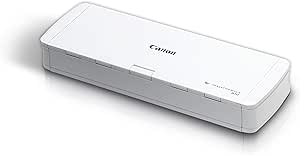 | Best Compact Feeder for Travel | Scanner type: Document scanner | Connection: USB | Scanning: Duplex | VIEW LATEST PRICE | See Our Full Breakdown |
| Canon imageFORMULA R30 Office Document Scanner |  | Best for Larger Document Batches | Scanner type: Office document scanner | Connection: USB | Scanning: Duplex | VIEW LATEST PRICE | See Our Full Breakdown |
| Canon CanoScan LiDE 400 Slim Document and Photo Scanner |  | Best Slim Flatbed for Mixed Media | Scanner type: Document and photo | Connection: USB Type-C cable (USB-A to Type-C) | Optical resolution: 4800 × 4800 dpi | VIEW LATEST PRICE | See Our Full Breakdown |
| Epson DS-C330 Compact Desktop Document Scanner with 20-Page Auto Feeder |  | Best Compact High-Speed Batch Scanner | Scanner type: Document and ID card | Connection: USB | Resolution: 300 dpi | VIEW LATEST PRICE | See Our Full Breakdown |
| portable document scanner | Scanner type | Connection | Scan speed | Weight |
|---|---|---|---|---|
| Epson WorkForce ES-50 Portable | ID card | USB | As fast as 5.5 seconds per page | — |
| Epson WorkForce ES-50 Mobile D | Single-sheet-fed document scanner | — | As fast as 5.5 seconds per page | 9.44 ounces |
| Epson DS-530X Duplex Desktop D | Color duplex desktop document scanner | USB | Up to 45 ppm / 90 ipm | — |
| Epson DS-70 Portable Single-Sh | Single-sheet-fed document scanner | USB | As fast as 5.5 seconds per page | — |
| Brother DS-640 Mobile Document | Document scanner | USB | — | — |
| HPPS100 Portable USB Document | — | — | Up to 15 pages per minute | — |
| Canon CanoScan LiDE 300 Flatbe | Document and photo flatbed | — | — | 3.6 pounds |
| Brother DS-940DW Duplex and Wi | Document and business-card mobile scanner | — | Up to 16 pages per minute | 1.5 pounds |
| Brother DS-640 Compact Mobile | Business-card and document scanner | USB | Up to 16 pages per minute | 1 pound |
| Epson WorkForce ES-60W Wireles | Single-sheet-fed document scanner | — | As fast as 4 seconds per page | 10.56 ounces |
| Epson Perfection V19 II Flatbe | Document and photo flatbed | USB | — | 3.1 lb |
| Canon imageFORMULA R10 Portabl | Document scanner | USB | — | 998 g |
| Canon imageFORMULA R30 Office | Office document scanner | USB | Up to 25 pages per minute | 6.6 lb |
| Canon CanoScan LiDE 400 Slim D | Document and photo | USB Type-C cable (USB-A to Type-C) | As fast as 8 seconds | 3.6 lb |
| Epson DS-C330 Compact Desktop | Document and ID card | USB | — | — |
More Details on Our Top Picks
Epson WorkForce ES-50 Portable Document Scanner (Refurbished)
The refurbished Epson WorkForce ES-50 keeps the appeal of a travel scanner simple: it weighs little, runs from USB, and can scan a page in as little as 5.5 seconds. Its support for receipts, ID cards, and documents up to 72 inches long suits people who need to capture varied paperwork away from a desk. Compared with the new ES-50, the listed hardware is much the same, but this version comes with a 90-day limited warranty, so the shorter coverage is a real part of the tradeoff. Like the DS-70, it feeds only one sheet at a time, which makes it a poor fit for stacks of forms. I’d choose it for occasional mobile use when the refurbished condition and limited warranty are acceptable.
Pros:- Lightweight design is suited to carrying between locations
- Scans a page in as little as 5.5 seconds
- Handles receipts, ID cards, and documents up to 72 inches long
- USB-powered, with no separate power supply or batteries required
Cons:- Single-sheet feeding makes multi-page jobs hands-on
- Refurbished condition comes with a 90-day limited warranty
Best for: Occasional travelers and field workers who want a lightweight USB scanner for receipts, IDs, and individual documents.
Not ideal for: People scanning batches of paperwork or buyers who want a longer warranty; it handles one sheet at a time and has only a 90-day limited warranty.
- Scanner type:ID card
- Connection:USB
- Resolution:1200
- Sheet capacity:1
- Optical sensor:CIS
- Supported media:Paper and receipts
- Maximum document size:8.5 × 72 inches
- Scan speed:As fast as 5.5 seconds per page
- Warranty and condition:90-day limited warranty; refurbished
Our verdict“Choose this refurbished ES-50 for occasional portable scanning if its short warranty and one-page-at-a-time feed suit your needs.”
Epson WorkForce ES-50 Mobile Document Scanner
The Epson WorkForce ES-50 pairs a compact, USB-powered scanner with software for OCR and multi-page file combining. That combination makes it more useful than a bare capture device for someone who needs to find text in scanned paperwork later. It scans a page in as little as 5.5 seconds and accepts long documents, receipts, and ID cards, much like the DS-70. Its main limitation is the shared one-sheet feed: for a large stack, the DS-530X’s 100-sheet feeder and duplex scanning are a better fit, though that model is a desktop unit rather than a lightweight travel scanner. The ES-50 also needs a connected computer for power, so it won’t work as a standalone handheld solution. I’d pick it for mobile, individual-page jobs where searchable digital files matter.
Pros:- OCR can create searchable PDFs and editable files
- Software can combine scans into multi-page files
- Scans long documents, receipts, and ID cards
- Lightweight at 9.44 ounces and powered through USB
Cons:- Single-sheet feeding slows down batch work
- Requires a connected computer for power
Best for: Mobile professionals who scan individual documents and want OCR to make their digital records searchable.
Not ideal for: People who need to scan large batches or work without a connected computer; it feeds one page at a time and draws power over USB.
- Scanner type:Single-sheet-fed document scanner
- Connectivity:USB 2.0
- Resolution:1200 dpi
- Scan speed:As fast as 5.5 seconds per page
- Maximum document size:8.5 × 72 inches
- Optical sensor:CIS
- Power:USB-powered; 2.1 watts
- Weight:9.44 ounces
- Compatibility:Windows and Mac
Our verdict“Pick the ES-50 if searchable scans and portability matter more than unattended batch feeding.”
Epson DS-530X Duplex Desktop Document Scanner
The Epson DS-530X is the clear choice here for moving through a stack: its 100-sheet feeder and single-pass duplex scanning can capture both sides of a page at up to 45 pages per minute. That puts it in a different class from the portable ES-50 and DS-70, which require each sheet to be fed individually. Double-feed detection and blank-page removal can also reduce interruptions when digitizing mixed paperwork. Its size and 8.2-pound weight, however, make it a desktop scanner rather than a grab-and-go travel model, and the listed connection is USB only. Extra-long pages, folded paper, and ID cards widen its office use, but buyers needing mobile simplicity should choose a single-sheet model instead. I’d rank it for offices that value throughput over portability.
Pros:- 100-sheet automatic document feeder supports batch jobs
- Single-pass duplex scanning captures both sides efficiently
- Up to 45 ppm / 90 ipm speed suits frequent office scanning
- Double-feed detection and blank-page removal help manage mixed stacks
Cons:- At 8.2 pounds, it is far less portable than the ES-50 or DS-70
- USB is the only listed connection; wireless connectivity is not specified
Best for: Small offices and records teams that regularly digitize two-sided stacks of mixed documents.
Not ideal for: Travelers who need a scanner to carry in a bag or buyers who require wireless connectivity; this is an 8.2-pound desktop model with USB listed.
- Scanner type:Color duplex desktop document scanner
- Connection:USB
- Scan speed:Up to 45 ppm / 90 ipm
- Automatic document feeder:100 sheets
- Optical resolution:600 dpi
- Daily duty cycle:Up to 7,000 sheets
- Media handling:Extra-long pages up to 240 inches, folded paper up to 11 × 17 inches, and ID cards
- Dimensions and weight:6.7 × 11.6 × 6.9 inches; 8.2 pounds
- Warranty:1-year limited warranty
Our verdict“Choose the DS-530X when batch speed and duplex scanning matter more than carrying the scanner between locations.”
Epson DS-70 Portable Single-Sheet Document Scanner
The Epson DS-70 is a straightforward travel scanner for people who need to capture individual pages, receipts, business cards, or IDs on the move. At 9.44 ounces, it is easy to carry, and USB power plus included OCR software means it can create searchable PDFs without a separate power supply. Its 5.5-second page speed is similar to the ES-50, so speed alone doesn’t separate them; the DS-70’s listed three-year limited warranty gives it a stronger coverage case than the refurbished ES-50’s 90 days. Like the Brother DS-640, it lacks a batch feeder, but the DS-70 handles documents up to 72 inches long. I’d choose it for varied one-off paperwork, while anyone scanning stacks should step up to a feeder-equipped desktop model.
Pros:- Lightweight at 9.44 ounces for portable use
- Scans a page in as fast as 5.5 seconds
- Handles business cards, IDs, receipts, and long documents
- Includes OCR and document management software
Cons:- One-sheet capacity makes batch scanning labor-intensive
- USB connection ties scanning to a computer
Best for: Traveling consultants and field staff who scan individual pages, cards, and receipts and want OCR with longer listed warranty coverage.
Not ideal for: People digitizing large piles of paperwork; its one-sheet capacity requires manual feeding.
- Scanner type:Single-sheet-fed document scanner
- Connection:USB
- Resolution:1200
- Power:2.5 watts
- Maximum document size:8.5 × 72 inches
- Scan speed:As fast as 5.5 seconds per page
- Supported media:Business cards, ID cards, and receipts
- Dimensions and weight:13 × 5.5 × 2.7 inches; 9.44 ounces
- Warranty:3-year limited warranty
Our verdict“Choose the DS-70 for portable, varied single-page scanning with OCR and a longer listed warranty than the refurbished ES-50.”
Brother DS-640 Mobile Document Scanner
The Brother DS-640 takes a different approach from Epson’s ES-50 and DS-70: it is rated for up to 15 pages per minute, giving buyers a per-minute speed benchmark for routine A4 paperwork. It also scans receipts and ID cards, draws power through USB, and works with Windows and macOS. Its 600 dpi optical resolution is lower than the 1200 listed for the Epson single-sheet models, while the product data does not specify a long-document size limit or OCR features. The lack of Wi-Fi means it remains tethered to a computer, much like the ES-50. At 390 g, it is still portable, though heavier than the 9.44-ounce Epson options. I’d favor it for straightforward A4 pages when compatibility and a two-year warranty matter more than OCR details or wireless use.
Pros:- Rated for up to 15 pages per minute
- Supports A4 documents, receipts, and ID cards
- USB-powered with no separate power supply
- Compatible with Windows and macOS
Cons:- No Wi-Fi support; scanning requires a USB connection
- At 390 g, it is heavier than the listed 9.44-ounce Epson ES-50 and DS-70
- Optical resolution is listed at 600 dpi, below the Epson single-sheet models’ 1200
Best for: Windows or Mac users who need a compact USB scanner for regular A4 documents, receipts, and ID cards.
Not ideal for: Buyers who need Wi-Fi, specified OCR tools, or a lightweight scanner for very long documents; those capabilities are not listed here.
- Scanner type:Document scanner
- Connection:USB
- Scanning speed:Up to 15 pages per minute
- Supported document types:A4 documents, receipts, and ID cards
- Compatibility:Windows and macOS
- Optical resolution:600 dpi
- Color depth:24-bit
- Power consumption:2.3 watts
- Weight and warranty:390 g; 2-year warranty
Our verdict“Choose the DS-640 for portable A4 scanning over USB when its listed speed and broad computer compatibility fit your workflow.”
HPPS100 Portable USB Document and Photo Scanner
The HPPS100 is a sensible pick if a portable scanner needs to handle snapshots as well as paperwork. Its 1200 dpi resolution gives it more detail headroom for photos than the Brother DS-640, which is aimed more squarely at everyday documents and cards. HP WorkScan adds automatic scanning, size detection, editing, and cropping, helping with mixed stacks that include different page sizes. It is USB-powered and works with Windows and macOS, so there is no separate battery or wireless setup to manage.
The tradeoff is its simplex feed: double-sided pages need a second pass, unlike the Brother DS-940DW. Its stated speed of up to 15 pages per minute is also better suited to small or medium batches than frequent, high-volume office work. Choose it for flexible document-and-photo scanning; skip it if wireless operation or automatic two-sided capture matters more.
Pros:- Scans both documents and photos in color or black and white
- Up to 1200 dpi resolution supports more detailed image scans
- WorkScan includes automatic scanning, size detection, editing, and cropping
- USB-powered and compatible with Windows and macOS
Cons:- Simplex scanning requires turning pages over to capture both sides
- Designed for small- to medium-batch use rather than heavy scanning workloads
Best for: Home users and mobile workers who want one compact scanner for color photos, receipts, and occasional document batches.
Not ideal for: People who regularly scan double-sided paperwork or need wireless, battery-powered operation.
- Scanning:Single-sided (simplex)
- Scan speed:Up to 15 pages per minute
- Maximum resolution:Up to 1200 dpi
- Supported paper sizes:2 × 2.9 inches to 8.5 × 14 inches
- Connectivity and power:USB 2.0; USB-powered
- Compatibility:Windows and macOS
- Output formats:PDF, JPG, and other formats
- Included software:HP WorkScan
Our verdict“Choose the HPPS100 if photo detail and flexible home scanning matter more than duplex or wireless convenience.”
Canon CanoScan LiDE 300 Flatbed Scanner
The Canon CanoScan LiDE 300 is the flatbed choice here: it suits fragile, bound, or irregular items that should not be fed through a sheet scanner. Its 2400 × 2400 dpi optical resolution is higher than the HPPS100’s stated maximum, making it the stronger fit for detailed photo scans. Auto Scan Mode detects the item type, while four EZ buttons put common tasks such as PDF creation within easy reach. The PDF button also supports OCR for searchable, editable documents.
This design prioritizes careful placement over batch convenience. Its one-sheet capacity means every item must be positioned manually, unlike the feed-through Brother DS-940DW, which can capture duplex pages in a single pass. The LiDE 300 also connects by USB rather than wireless and is heavier than the handheld Brother DS-640. I would pick it for a desk where photo and book scanning matter more than mobility.
Pros:- High 2400 × 2400 dpi optical resolution for detailed scans
- Flatbed surface handles photos and items that are awkward to feed
- Auto Scan Mode detects item types and adjusts settings
- PDF button supports OCR for searchable, editable files
Cons:- One item must be placed and scanned at a time
- USB connection limits use away from a computer
- At 3.6 pounds, it is less convenient to carry than the Brother DS-640
Best for: Home archivists and students who scan prints, book pages, receipts, and occasional paperwork on a desk.
Not ideal for: Traveling professionals or anyone who needs rapid batch scanning, duplex capture, or wireless use.
- Scanner type:Document and photo flatbed
- Optical resolution:2400 × 2400 dpi
- Scan time:10 seconds
- Connectivity:USB
- Color depth:48-bit
- Supported media:Photos, receipts, business cards, and paper
- Dimensions:14.5 × 9.9 × 1.7 inches
- Weight:3.6 pounds
- Warranty:1-year limited warranty
Our verdict“Choose the LiDE 300 for careful flatbed scanning of photos and bound materials, not mobile or high-volume document work.”
Brother DS-940DW Duplex and Wireless Compact Mobile Document Scanner
The Brother DS-940DW earns its place for combining duplex scanning and wireless mobility in a compact body. It captures both sides of a page in one pass at up to 16 pages per minute, unlike the simplex HPPS100 and the single-sheet Epson ES-60W. A built-in lithium-ion battery and microSD card support let it scan without a computer nearby; Wi-Fi and Brother’s mobile app add routes to phones and other destinations. It also handles long documents up to 72 inches, plus business and plastic ID cards.
Those options make it more self-sufficient than the USB-powered Brother DS-640, but they bring setup and workflow choices that may be unnecessary for someone who scans only now and then at a desk. The stated resolution is 300 dpi, aimed at practical records rather than high-detail photo work. A microSD card is an additional purchase, and some image features require a PC connection. Pick it for mobile, two-sided paperwork—not photo archiving.
Pros:- Captures both sides of a page in one pass at up to 16 pages per minute
- Built-in battery and Wi-Fi support scanning away from a computer
- MicroSD card can store scans and supports driverless retrieval
- Handles documents up to 72 inches and business or plastic ID cards
Cons:- 300 dpi resolution is geared toward records rather than detailed photo scans
- MicroSD card is sold separately
- Some image optimization features require a connected PC and applicable software
Best for: Field workers and small-office users who scan two-sided forms, long receipts, or ID cards away from a desk.
Not ideal for: Photo-focused buyers, or users who want a simple USB-only workflow without wireless and memory-card setup.
- Scanner type:Document and business-card mobile scanner
- Scanning:Single-sided and duplex
- Scan speed:Up to 16 pages per minute
- Resolution:300 dpi
- Connectivity:Wi-Fi and USB
- Power:Embedded lithium-ion battery
- Maximum document length:72 inches
- Dimensions:12.56 × 2.5 × 1.79 inches
- Weight:1.5 pounds
Our verdict“Choose the DS-940DW when cordless, two-sided scanning is worth more than a simpler USB-only setup.”
Brother DS-640 Compact Mobile Document Scanner
The Brother DS-640 is the straightforward carry-along option for people who can scan beside a laptop and do not need wireless features. At 1 pound, it is lighter than the battery-powered Brother DS-940DW, and its USB connection keeps the setup simple. Its up-to-16-pages-per-minute speed applies to color and monochrome scans alike, while support for business cards, receipts, plastic cards, and documents up to 72 inches gives it useful range beyond standard letter pages.
Compared with the Epson ES-60W, the DS-640 gives up battery and Wi-Fi operation in favor of a computer-tethered workflow. That keeps it practical for desk-side or travel-bag use, but not for scanning independently in the field. It scans at 300 dpi, suitable for everyday records rather than detailed photo reproduction, and duplex pages require separate passes. OCR and image enhancement help organize documents, though some functions depend on compatible software and connection to a computer.
Pros:- Lightweight 1-pound design is easy to pack
- Scans color and monochrome at up to 16 pages per minute
- Accepts business cards, receipts, plastic cards, and documents up to 72 inches
- Includes OCR and image-enhancement software
Cons:- Requires a computer connection and applicable software to scan
- USB-powered design does not offer the Epson ES-60W’s battery and wireless freedom
- 300 dpi resolution and single-sided feeding limit photo and duplex workflows
Best for: Laptop users who travel with paperwork and need a light USB scanner for receipts, cards, and standard documents.
Not ideal for: People who need standalone or wireless scanning, or regularly process double-sided stacks.
- Scanner type:Business-card and document scanner
- Connection:USB
- Scan speed:Up to 16 pages per minute
- Resolution:300 dpi
- Optical sensor:CIS
- Supported media:Business cards, ID cards, laminated cards, plastic cards, plain paper, and receipts
- Maximum document length:72 inches
- Dimensions:1.99 × 11.9 × 1.45 inches
- Weight:1 pound
Our verdict“Choose the DS-640 for light, computer-connected document scanning when low carry weight matters more than wireless use.”
Epson WorkForce ES-60W Wireless Compact Mobile Document Scanner
The Epson WorkForce ES-60W suits mobile users who want to scan a page directly to a computer or phone without relying on a USB connection. Its Wi-Fi and battery power make it more independent than the Brother DS-640, which is tethered to a computer. Epson lists a scan time as fast as four seconds per page, and the included software can create searchable PDFs and editable Word or Excel files. Support for documents up to 72 inches also helps with long forms and receipts.
The limit is its single-sheet feed: this is for scanning items one at a time, not processing a stack. The Brother DS-940DW is a better match for two-sided pages because it captures both sides in one pass; the ES-60W keeps the workflow lighter and simpler but requires manual feeding. Wireless scanning and cloud features also depend on compatible software or an app. Choose it for occasional mobile scans, rather than frequent duplex batches.
Pros:- Battery and Wi-Fi support scanning without a wired computer connection
- Scans a single page in as fast as four seconds
- OCR software creates searchable PDFs and editable Word or Excel files
- Accepts paper and receipts up to 72 inches long
Cons:- Single-sheet feeding makes multi-page stacks a manual process
- Does not offer the Brother DS-940DW’s one-pass duplex scanning
- Wireless and cloud workflows depend on compatible software or an app
Best for: Consultants and field staff who need battery-powered, wireless scanning of individual receipts, ID cards, and long documents.
Not ideal for: Office users scanning frequent two-sided batches or anyone who prefers a feeder with higher-volume throughput.
- Scanner type:Single-sheet-fed document scanner
- Connectivity:Wi-Fi and USB
- Power:USB or battery
- Scan speed:As fast as 4 seconds per page
- Optical resolution:1200 dpi
- Supported media:Paper and receipts
- Maximum document size:8.5 × 72 inches
- Dimensions:1.8 × 10.7 × 1.3 inches
- Weight:10.56 ounces
Our verdict“Choose the ES-60W for quick wireless scans of individual documents when duplex batch handling is not a priority.”
Epson Perfection V19 II Flatbed Photo Scanner, 4800 dpi
The Epson Perfection V19 II is the strongest fit here for buyers who need a flatbed, not a feeder. Its 4800 dpi optical resolution and photo-restoration tools suit prints and artwork, while the removable lid makes books or thicker originals easier to place than they would be in a document feeder. Compared with the Canon imageFORMULA R10, it gives up duplex batch scanning and portability for more careful handling of individual pages and images. One-touch controls and OCR add useful document features, but searchable PDFs and editable Office files depend on ScanSmart running on a connected Windows PC or Mac. I would skip it for frequent stacks of paperwork: each original needs to be positioned on the glass, so it cannot match feeder models for throughput.
Pros:- 4800 dpi optical resolution supports detailed scans of photos and artwork
- USB power avoids a separate power adapter
- One-touch scanning and faded-photo color restoration simplify occasional photo work
- OCR supports searchable PDFs and editable Office files through ScanSmart
Cons:- Flatbed scanning requires placing originals individually rather than feeding a stack
- OCR and Office-file features require ScanSmart on a connected Windows PC or Mac
- Initial software download requires an internet connection
Best for: People digitizing family photos, artwork, book pages, and occasional documents who want high-resolution flatbed scans.
Not ideal for: Commuters or office workers who regularly scan stacks of double-sided paperwork and need an automatic document feeder.
- Scanner type:Document and photo flatbed
- Connection:USB
- Optical resolution:4800 dpi
- Power:USB powered; 2.5 W
- Color depth:48-bit internal; 24-bit external
- Dimensions:9.9 × 9.9 × 1.5 in
- Weight:3.1 lb
Our verdict“Choose the V19 II for high-resolution photos, artwork, and bound pages; choose a feeder scanner such as the Canon R10 for faster document batches.”
Canon imageFORMULA R10 Portable Document Scanner
The Canon imageFORMULA R10 brings a useful middle ground to this group: it is more capable with paperwork than a flatbed, yet more travel-friendly than the larger Canon imageFORMULA R30. Its single-pass duplex feeder scans both sides of a page, and the 20-sheet capacity is practical for receipts, cards, and modest document batches. Built-in software avoids a separate installation, which helps when setting it up on a Windows or Mac computer away from a main office. The tradeoff is speed and capacity: at up to 12 pages per minute and a suggested daily volume of 500 scans, it is not the right tool for sustained office batches. Unlike the Epson Perfection V19 II, it is not intended for photographic media, so choose it for documents rather than photo archiving.
Pros:- Duplex scanning captures both sides in one pass
- 20-sheet automatic feeder handles small batches
- Built-in software requires no installation
- Scans documents, receipts, business cards, and plastic cards
Cons:- Suggested daily volume is limited to 500 scans
- Up to 12 pages per minute is slower than the Canon R30 and Epson DS-C330
- Not designed for photographs on photo paper or other photographic media
Best for: Mobile professionals and home-office users who scan short batches of double-sided documents, receipts, and cards.
Not ideal for: Photo collectors or offices processing large daily volumes that need a faster scanner with a larger feeder.
- Scanner type:Document scanner
- Connection:USB
- Scanning:Duplex
- Maximum scan speed:Up to 12 pages per minute
- Automatic document feeder:20 sheets
- Optical resolution:600 dpi
- Weight:998 g
- Compatibility:Windows and Mac
Our verdict“Pick the R10 if you need a compact, USB-powered feeder for occasional double-sided document batches rather than high-volume or photo scanning.”
Canon imageFORMULA R30 Office Document Scanner
For readers who value batch capacity over a truly compact travel setup, the Canon imageFORMULA R30 is the more office-oriented choice. Its 60-sheet feeder and duplex speed of up to 25 pages per minute reduce the interruptions involved in digitizing paperwork, giving it a clear advantage over the R10’s 20-sheet feeder and 12-page-per-minute speed. Embedded software also avoids a separate installation. That convenience comes with a larger, heavier desktop footprint, so the R30 is less suited to carrying between work sites than the R10. It also lacks TWAIN and ISIS driver support, which may rule it out for workflows that depend on those drivers. Compared with the Epson DS-C330, it has a larger feeder but a lower stated duplex speed.
Pros:- 60-sheet automatic feeder reduces interruptions during larger batches
- Duplex scanning handles both sides of documents at once
- Up to 25 pages per minute suits regular office paperwork
- Embedded software requires no installation
Cons:- Larger and heavier than the portable Canon R10
- TWAIN and ISIS drivers are not supported
- Requires a Windows 7 minimum system environment according to the listed specification
Best for: Small-office users who scan recurring batches of double-sided paperwork and want a larger feeder with embedded software.
Not ideal for: Frequent travelers or buyers whose scanning setup depends on TWAIN or ISIS drivers.
- Scanner type:Office document scanner
- Connection:USB
- Scanning:Duplex
- Scan speed:Up to 25 pages per minute
- Automatic feeder capacity:60 sheets
- Resolution:600 dpi
- Dimensions:9.88 × 11.54 × 9.65 in
- Weight:6.6 lb
Our verdict“Choose the R30 for feeder capacity and office batch work, but favor the Canon R10 if you need a scanner that is easier to carry.”
Canon CanoScan LiDE 400 Slim Document and Photo Scanner
The Canon CanoScan LiDE 400 suits buyers who want a low-profile USB flatbed for occasional documents and photo detail, rather than the feeder-based workflow of the Canon imageFORMULA R10. It offers 4800 × 4800 dpi resolution, photo enhancements, searchable multi-page PDF support, and scans as fast as eight seconds, so individual originals can be handled quickly without giving up image-focused features. Its slim body and included vertical stand help it take up less space when stored. Still, a flatbed means feeding a stack is not an option, and USB is its only connection. The Epson Perfection V19 II is also a photo-capable flatbed; the LiDE 400’s listed speed and vertical stand may appeal to space-conscious users, while the V19 II lists a removable lid for bulky originals.
Pros:- 4800 × 4800 dpi optical resolution captures fine photo detail
- Scans can take as little as eight seconds
- USB cable provides both data and power
- Searchable PDF support and photo restoration features cover mixed home use
Cons:- Flatbed design requires placing originals individually
- USB connection limits use to a connected computer
- Listed minimum system requirement is Windows 7
Best for: Home users who want a slim USB flatbed for photo prints, artwork, and occasional letter-sized documents.
Not ideal for: Traveling document-heavy workers or anyone who needs wireless scanning, an automatic feeder, or frequent batch duplexing.
- Scanner type:Document and photo
- Connection:USB Type-C cable (USB-A to Type-C)
- Optical resolution:4800 × 4800 dpi
- Scan speed:As fast as 8 seconds
- Color depth:48-bit
- Maximum paper size:8.5 × 11.69 in
- Dimensions:7.7 × 14.5 × 0.4 in
- Weight:3.6 lb
Our verdict“Choose the LiDE 400 for a slim, photo-capable flatbed, not for mobile or high-volume document feeding.”
Epson DS-C330 Compact Desktop Document Scanner with 20-Page Auto Feeder
The Epson DS-C330 is the speed-focused pick for a desk where space is tight but paper batches are routine. Its vertical-feed design is described as saving up to 60% of desk space, while duplex scanning reaches up to 30 pages per minute and 60 images per minute. That is faster than the Canon imageFORMULA R30’s stated 25 pages per minute, though the R30 holds 60 sheets compared with the DS-C330’s 20-sheet feeder. The Epson also handles long documents up to 120 inches, cards, and passports with an optional carrier sheet. Its tradeoffs are the modest feeder capacity and a Windows-focused Document Capture Pro app; Mac users use Epson Document Capture instead. This is compact desktop equipment, not a pocketable scanner like the Canon R10.
Pros:- Vertical design saves up to 60% of desk space
- Duplex scanning reaches up to 30 ppm and 60 ipm
- 20-sheet feeder supports routine document batches
- Handles long documents, cards, and passports with an optional carrier sheet
Cons:- 20-sheet capacity is smaller than the Canon R30’s 60-sheet feeder
- Passport scanning requires an optional carrier sheet
- Epson Document Capture Pro is for Windows; Mac users need Epson Document Capture
Best for: Small offices and home businesses that need fast duplex batches, a space-saving desk layout, and support for varied document sizes.
Not ideal for: Travelers needing a scanner to carry in a bag, or buyers who require a large feeder or passport scanning without an optional carrier sheet.
- Scanner type:Document and ID card
- Connection:USB
- Resolution:300 dpi
- Sheet capacity:20 sheets
- Duplex scanning speed:Up to 30 ppm / 60 ipm
- Maximum scan size:8.5 × 120 in
- Peak daily duty cycle:5,000 pages
- Compatible operating systems:Windows and macOS
Our verdict“Choose the DS-C330 for fast, compact desktop batch scanning; choose the Canon R30 if a larger feeder matters more than speed.”

How We Picked
I ranked these scanners by how well they serve someone shopping for a portable document scanner: physical and workflow portability, page-feeding style, duplex capability, connectivity, and suitability for common originals such as forms, receipts, and photos. I also weighed setup complexity, whether the design is meant for a desk or a bag, and the value of added features against the extra bulk or steps they may bring. A compact scanner is not automatically a better pick if it makes regular paperwork slow, and a desktop feeder is not a top portable choice simply because it handles more pages.
The ranking favors devices that balance useful document handling with a manageable footprint. Portable single-sheet models rank well for light, mobile work but below more versatile feeders for mixed document loads. Wireless and duplex features earn credit when they reduce real workflow friction, while flatbeds and larger desktop scanners remain lower for the portable brief despite their strengths with photos or batches. The refurbished ES-50 is listed separately from the new version because condition and purchase channel can affect the buyer’s decision.
Factors to Consider When Choosing Portable Document Scanners
Before choosing, I’d match the scanner to the work you actually do rather than buying by the word “portable.” Feeding method, page volume, and where files need to go can matter more than a small difference in size. These points help clarify when a compact single-sheet model is enough and when a feeder, wireless connection, or flatbed is worth the added space.
Match the feeder to your page volume
A single-sheet scanner is easy to pack, but every page needs individual attention, so repeated multi-page jobs can become tedious. If you scan paperwork only now and then, that tradeoff may be sensible; frequent forms, invoices, or records favor a model with an automatic feeder. Check whether the feeder supports the page sizes and paper conditions you handle, not only its advertised capacity. A stack of mixed, curled, or delicate originals may still need hand-feeding even with a feeder. The common mistake is choosing the smallest device and later discovering that its workflow is the slow part. Think about your typical scan session, not just the number of pages in your largest one.
Decide whether duplex scanning saves enough effort
Duplex scanning captures both sides of a page in one pass, which can make a meaningful difference for double-sided forms or records. For mostly one-sided receipts and letters, the feature may add little practical value. Manual page turning is not merely slower; it can also make page order harder to track in a long file. Consider how often two-sided originals appear in your routine before paying for this capability. Also check whether the scanner’s software can combine sides and pages into the file format you need. A duplex feature is most useful when it removes a repeated task, not just when it looks impressive on a specification list.
Choose connectivity around where files need to go
USB models keep the setup direct and can be a good fit when you always scan to one laptop. Wireless connectivity is more useful when the scanner must move between work areas or connect without a computer cable, but it can involve setup and network compatibility checks. Before buying, verify supported devices and operating systems, then decide whether your destination is a computer, phone, or shared folder. A wireless label alone does not tell you how simple that path will be. If you work in places without reliable Wi-Fi, a cable-based model may be easier to depend on. Prioritize the connection that fits your actual handoff process.
Separate document scanning from photo and book scanning
Sheet-fed document scanners are built around loose pages, while a flatbed lets you place originals on glass. That makes a flatbed a better match for bound books, fragile papers, and photos that should not pass through rollers. It is usually less convenient for scanning a pile of ordinary pages because each original must be positioned separately. Photo-focused resolution can matter for image detail, but it does not automatically make a scanner better for organizing office paperwork. Buyers often assume one device will excel at both jobs; decide which task is primary and whether the secondary one is occasional. If you need both frequently, the best choice may be a two-device setup rather than a compromise.
Count the full travel setup, not only the scanner
A scanner’s body may be compact while its real travel kit still needs a cable, power source, laptop, or a clear surface. Check what the device requires to operate and whether those requirements fit your usual destination. A USB-powered model may reduce the number of items to pack, while a wireless model can help when cable placement is awkward. Neither advantage matters if the scanner depends on a device or network you cannot use on the road. Also think about how originals will be kept flat and protected before scanning. The practical portability question is whether the complete workflow is easy to carry and repeat.
Pay for features that reduce repeat work
Extra capacity, wireless access, or duplex handling earns its keep when it removes steps from a frequent task. For occasional scanning, a simpler model may be easier to store and operate without sacrificing much. Avoid paying for a desktop feeder if you rarely scan batches, but do not underestimate the time spent manually feeding pages when paperwork is routine. Software compatibility deserves attention too: a scanner is less useful if its workflow does not fit your file naming, storage, or operating system. Compare the burden each feature removes with the bulk and setup it adds. The right upgrade is the one that makes your recurring job simpler.
Frequently Asked Questions
Should I choose a single-sheet portable scanner or a model with an automatic feeder?
I’d choose a single-sheet model for occasional documents, travel, and situations where a small footprint matters more than speed. An automatic feeder is a better fit if you regularly scan packets, office records, or multiple forms in one sitting. Feeding each page by hand can make a compact scanner feel slow even when the scan itself is quick. Before choosing, estimate how often you scan a group of pages rather than focusing only on the size of the device. If those sessions happen weekly, a feeder may save more effort than a smaller body saves space.
Is wireless scanning worth choosing over USB?
Wireless is worthwhile when it lets you scan from different rooms or send files without connecting the scanner directly to a computer. It matters less when the scanner stays beside one laptop and a cable is no inconvenience. Check which devices and networks are supported, and consider whether your work location has dependable Wi-Fi. USB can be a simpler choice for a fixed setup or travel where network access is uncertain. I’d pay for wireless when it removes a real connection constraint, not just because it is available.
Can a portable document scanner scan photos and bound books well?
Some portable document scanners can capture loose photos, but a sheet feeder is not the best way to handle fragile prints or pages still attached to a book. A flatbed design holds originals on glass and avoids feeding them through rollers, which is useful for delicate or bound material. Flatbeds also require you to position each item manually, so they are less convenient for stacks of paperwork. If photos and books are your main work, look at the LiDE and Perfection flatbeds in this roundup rather than assuming a document feeder will cover every task. For frequent document batches and occasional photos, decide which job deserves priority.
Are the desktop scanners in this roundup suitable for carrying between locations?
The DS-530X, R30, and DS-C330 are more naturally suited to a desk than to a travel bag. Their larger, feeder-oriented designs can make sense if your main goal is scanning batches in a home office, but they do not fit the same portable brief as compact mobile models. If you need to move a scanner only between rooms, a desktop unit may still be manageable; frequent travel is a different requirement. Consider the footprint and the rest of the setup, including cables and power needs. Choose one of these only if feeding convenience outweighs packability for your routine.
Does a refurbished Epson ES-50 make more sense than the new ES-50?
The two listings share the same basic model identity, so the choice is less about a different scanning workflow and more about condition, warranty, and seller terms. I’d read the refurbishment details carefully and confirm what accessories are included before deciding. A new unit may be the simpler choice for buyers who value a straightforward purchase and clear support coverage. A refurbished option may suit someone comfortable checking those details and accepting that the unit has been previously owned or restored. Neither version changes the ES-50’s single-sheet role, so choose based on purchase confidence rather than expecting a different feature set.
Conclusion
For a broad mix of mobile document work, my best overall recommendation is the Canon imageFORMULA R10; it gives document-focused buyers a more capable alternative to manually feeding every page. For wireless and duplex needs, the Brother DS-940DW is the stronger fit, while the Epson ES-50 is my best value-style pick for simple, light scanning when a compact single-sheet workflow is enough. Beginners who want a straightforward, portable starting point should compare the Brother DS-640 and ES-50, choosing based on their preferred setup and page routine. For photos, books, or delicate originals, I’d choose a flatbed such as the Canon LiDE 400 or Epson Perfection V19 II; for a fixed office with regular batches, consider the DS-C330, R30, or DS-530X instead. The best choice depends on whether you most need portability, fewer manual steps, wireless access, or careful handling of nonstandard originals.