

📊 Full opportunity report: 2026 AI Predictions: 8 Things To Know on ThorstenMeyerAI.com — validation score, market gap, and execution plan.

Get smart everyday buys delivered free with Prime
- Fast, free delivery on millions of items
- Prime Video, Amazon Music and more included
- Member-only deals all year
TL;DR
AI experts predict eight major trends for 2026, including advancements in natural language processing, increased regulation, and broader industry adoption. While some developments are confirmed, others remain speculative, shaping the future of AI technology and policy.
Experts forecast that by 2026, artificial intelligence will see significant breakthroughs in natural language understanding, increased regulatory oversight, and broader integration across industries. These developments are based on current technological trajectories and policy discussions, making 2026 a pivotal year for AI’s evolution.
According to industry analysts, one confirmed trend is the continued improvement in natural language processing (NLP), with models becoming more context-aware and capable of nuanced understanding. Companies like OpenAI and Google are expected to release more advanced language models that surpass current capabilities.
Regulatory frameworks are also anticipated to tighten globally, with governments introducing new policies to address ethical concerns, data privacy, and AI safety. While specific regulations are still under discussion, the trend toward increased oversight is confirmed by recent legislative proposals in the EU and the US.
Broader adoption of AI in sectors such as healthcare, finance, and manufacturing is expected to accelerate, driven by proven efficiency gains and cost reductions. However, the pace and scope of industry integration remain partly uncertain, influenced by regulatory and technical challenges.
The 8 picks
- 1
 AULA F75 Pro Wireless Mechanical Keyboard, 75% Hot Swappable RGB Backlit Gami…View on Amazon →
- 2
 Logitech G413 SE Full-Size Mechanical Gaming Keyboard – BlackView on Amazon →
- 3
 AULA F75 75% Wireless Mechanical Keyboard, Hot Swappable, RGB Backlit, Multi-…View on Amazon →
- 4
 AULA F99 Wireless Mechanical Keyboard, Tri-Mode BT5.0/2.4GHz/USB-C, Hot Swapp…View on Amazon →
- 5
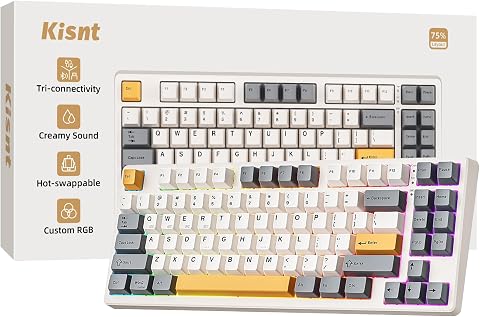 Kisnt KN85 Wireless Mechanical Keyboard, 75% Layout, Bluetooth/2.4GHz/USB-C,…View on Amazon →
- 6
 Redragon K668 108-Key Hot-Swap Wired RGB Gaming Keyboard with Extra HotkeysView on Amazon →
- 7
 Redragon Mechanical Gaming Keyboard Wired, 11 Backlit Modes, Hot-Swappable Re…View on Amazon →
- 8
 RisoPhy Mechanical Gaming Keyboard, RGB Backlit, 104 Keys, Blue Switch, USB W…View on Amazon →
Impacts of AI Advancements on Society and Industry
This forecasted evolution of AI in 2026 matters because it will influence economic productivity, ethical standards, and regulatory landscapes. Enhanced NLP models could transform communication tools and customer service, while stricter regulations aim to mitigate risks associated with AI misuse. Understanding these trends helps stakeholders prepare for both opportunities and challenges ahead.
Products Worth Considering

Logitech MX Mechanical Wireless Illuminated Keyboard, Tactile Quiet, Graphite

Logitech MX Keys S Combo Wireless Keyboard and Mouse, Graphite

LG UltraGear 32-inch QHD Curved Gaming Monitor, 180Hz, 1ms, AMD FreeSync
As an affiliate, we earn on qualifying purchases.
Current State of AI and Emerging Trends
As of 2023, AI technology has made significant strides in NLP, computer vision, and automation, with major companies investing heavily in research and development. Regulatory discussions are intensifying, especially around data privacy and AI safety, but comprehensive global frameworks are still in progress. Past forecasts have predicted rapid growth in AI capabilities, and current trends suggest these will continue into 2026, albeit with increased regulatory oversight.
“We are moving toward a comprehensive regulatory framework to ensure AI development aligns with ethical standards.”
— European Parliament Official
Unconfirmed Developments and Ongoing Debates
While technological progress in NLP and automation is well-anticipated, the exact timeline for regulatory implementation remains uncertain, with some countries moving faster than others. The extent of AI’s integration into everyday life and the potential for unforeseen ethical dilemmas are still under discussion. Additionally, breakthroughs in areas like general AI or autonomous decision-making are speculative and not guaranteed by 2026.
Next Steps for Industry and Policymakers
Stakeholders should monitor ongoing legislative proposals and technological developments over the coming months. Industry leaders are expected to continue refining AI models, while governments work toward establishing clear regulatory standards. Collaboration between tech companies and regulators will be crucial to shape a balanced AI ecosystem by 2026.
Key Questions
What are the most certain AI developments expected by 2026?
Improvements in natural language processing, broader industry adoption, and increased regulatory discussions are the most confirmed developments forecasted for 2026.
Will AI regulation be in place by 2026?
While some regulations are expected to be enacted, the full scope and effectiveness of AI regulation worldwide remain uncertain and will likely vary by region.
Could there be breakthroughs in general AI by 2026?
Breakthroughs in artificial general intelligence (AGI) are speculative and not confirmed; most forecasts suggest continued progress within narrow AI domains.
How might AI impact jobs and the economy in 2026?
AI is expected to increase efficiency and create new opportunities, but concerns about job displacement and economic shifts will persist, requiring careful policy management.
Source: ThorstenMeyerAI.com