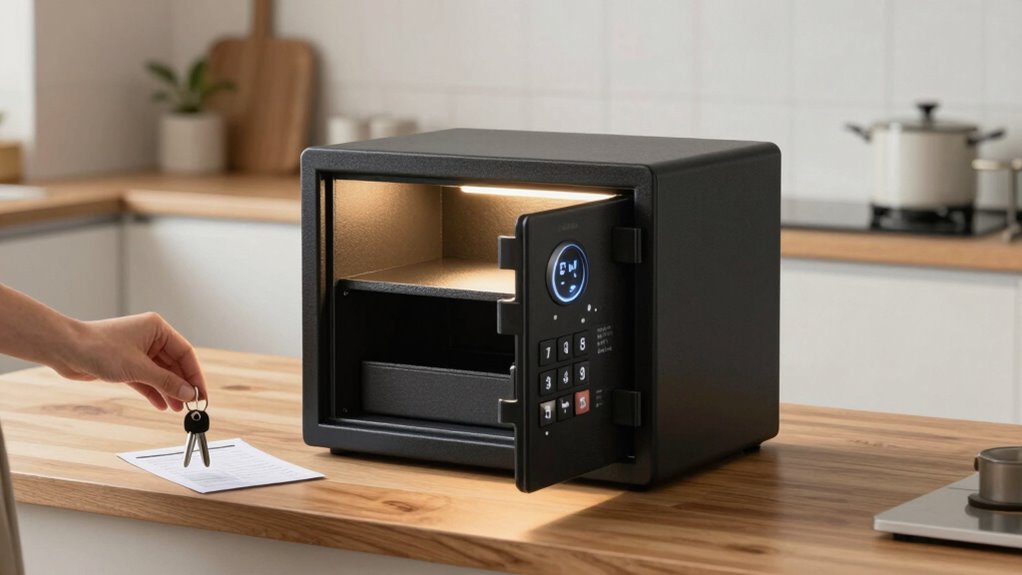

To choose a home safe without paying for features you’ll never use, focus on your valuables and how often you’ll access them. Prioritize sturdy locks and construction over unnecessary bells and whistles. Think about size and placement—smaller safes are easier to hide and install. Set a realistic budget and research models that emphasize real security benefits. If you want practical tips to narrow your options and get the best protection, keep exploring this guide.

Get smart everyday buys delivered free with Prime
- Fast, free delivery on millions of items
- Prime Video, Amazon Music and more included
- Member-only deals all year
Key Takeaways
- Identify your valuables and their security needs to focus on essential features rather than unnecessary extras.
- Choose simple lock mechanisms, like traditional key or combination locks, over costly biometric options if access frequency is low.
- Prioritize sturdy construction and pry-resistant features over high fireproof ratings unless protecting irreplaceable documents.
- Opt for appropriately sized safes that fit your space and concealment requirements, avoiding oversized, feature-heavy models.
- Set a clear budget and research models with proven security features, avoiding pay-for-perks that don’t serve your primary protection goals.
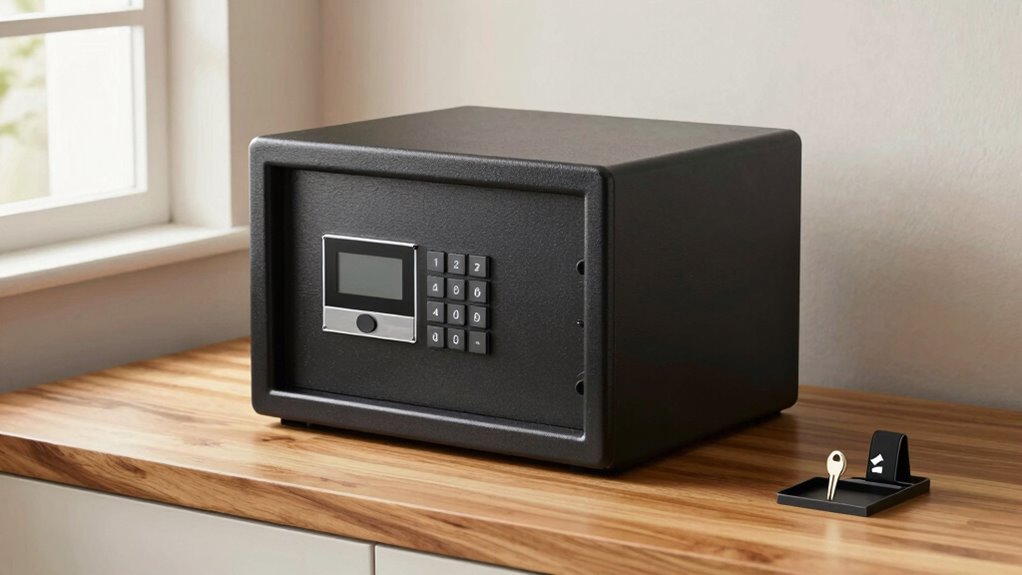
Choosing a home safe is an important step toward protecting your valuables and sensitive documents, but with so many options available, it can feel overwhelming. You might find yourself drawn to safes with all the bells and whistles, like biometric locks and high fireproof ratings. While these features can boost security, they also come with higher costs and potential complexities that you may not need. To avoid paying for features you won’t use, start by evaluating what you truly need in a safe. Think about the types of items you’re protecting—jewelry, passports, cash, or important documents—and how often you’ll access them.
Biometric locks are popular because they offer quick access and enhanced security through fingerprint recognition. However, if you rarely need to access your safe, or if you’re comfortable with traditional lock-and-key methods, paying extra for biometric technology might be unnecessary. Instead, focus on a sturdy lock mechanism that provides adequate security without the added expense. Similarly, fireproof ratings are essential if you’re storing irreplaceable documents or sensitive data. But not all safes with high fireproof ratings are necessary for every homeowner. If your primary concern is theft rather than fire damage, you might prioritize a safe with a strong locking system over one with an extremely high fireproof rating.
Prioritize sturdy locks over high fireproof ratings if theft protection is your main concern.
You should also consider the size and placement of the safe. Larger safes with advanced features tend to be more expensive and heavier, making installation and concealment more challenging. If you’re limited on space or want something discreet, a smaller, simpler safe could be more practical and cost-effective. It’s also worth checking the safe’s construction quality—thick steel walls and pry-resistant doors are more important than fancy features if you’re worried about break-ins. Additionally, understanding the contrast ratio of a safe’s construction can give insight into how well it resists visual or physical breaches. Researching models with sturdy construction can help ensure you get a safe that provides real security without unnecessary features. Moreover, considering community feedback can give you a better idea of how different safes perform in real-world scenarios.
Evaluating the security features can help you determine the overall protection level without overspending on unnecessary extras. Setting a clear budget and prioritizing essential features ensures that you get a safe that suits your needs without overpaying for additional gadgets. Remember, a safe’s value isn’t just in its features but in its ability to protect what you care about—without paying extra for gadgets you won’t use. Additionally, researching product warranties can provide peace of mind, ensuring long-term protection and support for your investment.
As an affiliate, we earn on qualifying purchases.
Frequently Asked Questions
What Is the Most Secure Type of Home Safe?
The most secure type of home safe offers fire-resistant protection and theft deterrent features. Look for safes with solid steel construction, pry-resistant doors, and thick walls, which prevent unauthorized access. Fire-resistant safes protect your valuables from heat and flames during a fire, while theft deterrent features like digital locks or biometric access make it harder for intruders to break in. Prioritize these features to guarantee maximum security for your belongings.
How Do I Determine the Right Size for My Safe?
Imagine storing irreplaceable documents and valuables in a safe, but choosing the wrong size leaves you overwhelmed. To determine the right size, assess what you’ll store now and anticipate future needs, considering fire resistance. Also, think about weight considerations; a heavier safe offers more security, but make certain your space can support it. Opt for a size that balances capacity, fire protection, and your available space for long-term peace of mind.
Are Biometric Safes Worth the Extra Cost?
Biometric safes can be worth the extra cost if you want quick, secure access and don’t want to remember passwords. They often come with password protection options too, providing layered security. Consider fire resistance features, especially if you’re storing valuable or sensitive items. If convenience and advanced security are priorities for you, investing in a biometric safe is worthwhile; otherwise, a sturdy password-protected safe might suffice.
Can I Install a Safe Myself or Need Professional Help?
You can definitely handle a DIY installation if you’re comfortable with basic tools and follow the safe’s instructions carefully. However, for added security and peace of mind, hiring a professional locksmith can guarantee proper installation, especially for heavier or more complex safes. They have the expertise to do it efficiently, reducing the risk of mistakes. Assess your skills first, then decide if DIY is suitable or if professional help is better.
What Warranty Options Are Available for Home Safes?
Think of warranty policies as a safety net for your investment. Most home safes come with manufacturer warranties that cover defects and malfunctions, often ranging from one to five years. Reliable customer support is essential, helping you navigate issues if they arise. When choosing a safe, check the warranty details and support options, ensuring you get peace of mind and prompt assistance, just like a sturdy safety net catches you when you fall.
As an affiliate, we earn on qualifying purchases.
Conclusion
Choosing the right home safe is like finding the perfect key for your unique lock — it needs to fit just right. By focusing on what truly matters to you, you avoid getting caught in a maze of unnecessary features. Keep your priorities clear, and you’ll navigate the selection process smoothly. Remember, a safe that matches your needs is like a steady heartbeat — reliable and always there when you need it most.
fireproof security safe for documents
As an affiliate, we earn on qualifying purchases.
As an affiliate, we earn on qualifying purchases.
As an affiliate, we earn on qualifying purchases.
Halloween Picks
halloween
As an affiliate, we earn on qualifying purchases.