
The best personal finance books for beginners make money topics easier to act on, whether you need a budget, a debt plan, or a first lesson in investing. I’d choose Personal Finance for Beginners: A Simple Guide to Taking Control of Your Financial Situation as the best overall starting point for its broad, beginner-focused scope. The Total Money Makeover is a stronger fit for readers who want a structured debt-payoff approach, while The Infographic Guide to Personal Finance suits visual learners. The main tradeoff is between a simple, focused plan and a broader reference that covers more topics but may feel less direct. Read on for how all 15 options differ and which one fits your goals.

Get smart everyday buys delivered free with Prime
- Fast, free delivery on millions of items
- Prime Video, Amazon Music and more included
- Member-only deals all year
Key Takeaways
- Broad beginner guides make the strongest starting point when you want budgeting, saving, and money management in one place; their breadth can mean less depth on any one topic.
- The Total Money Makeover is the clearest fit for readers focused on following a debt-payoff plan, while it is less suited to buyers who want a neutral survey of many financial strategies.
- The Simple Path to Wealth stands apart for readers whose main question is how to approach investing and financial independence, rather than how to build a budget from scratch.
- Teen and young-adult titles connect money lessons to earlier life stages, but may not suit adults looking for detailed guidance on complex financial decisions.
- Visual and reference formats serve different learning habits: The Infographic Guide favors quick visual explanations, while For Dummies titles are more suited to readers who want a wider topic reference.
| Personal Finance for Beginners: A Simple Guide to Taking Control of Your Financial Situation |  | Best Overall for a Broad Starting Point | Format: Not specified | Audience: Beginners | Topics: Personal finance, money management, and investing basics | VIEW LATEST PRICE | See Our Full Breakdown |
| Money Skills for Young Adults: A Beginner’s Guide to Smart Financial Habits |  | Best for Young Adults Building Independence | Format: Guide | Audience: Young adults and beginners | Topics: Budgeting, saving for goals, investing, and financial planning | VIEW LATEST PRICE | See Our Full Breakdown |
| Personal Finance QuickStart Guide: A Beginner’s Guide to Building Wealth and Financial Freedom |  | Best for a Wealth-Building Mindset | Format: Not specified | Audience: Beginners | Topics: Personal finance and wealth building | VIEW LATEST PRICE | See Our Full Breakdown |
| Personal Finance for Beginners: A Simple Guide to Budgeting, Saving Money, and Building Better Financial Habits |  | Best for Budgeting and Saving Basics | Format: Not specified | Audience: Beginners | Topics: Budgeting, saving money, and financial habits | VIEW LATEST PRICE | See Our Full Breakdown |
| Finance for Beginners: 101 Concepts for Personal Finance, Investing, and Money Management |  | Best for Topic-by-Topic Browsing | Format: Not specified | Audience: Beginners | Structure: 101 concepts | VIEW LATEST PRICE | See Our Full Breakdown |
| The Total Money Makeover: Updated and Expanded |  | Best for a Step-by-Step Debt Plan | Title: The Total Money Makeover: Updated and Expanded | ASIN: 140034252X | Format: Book | VIEW LATEST PRICE | See Our Full Breakdown |
| Financial Literacy Essentials For Dummies |  | Best for a Broad Fundamentals Overview | Title: Financial Literacy Essentials For Dummies | ASIN: 1394326165 | Product category: Personal finance book | VIEW LATEST PRICE | See Our Full Breakdown |
| The Simple Path to Wealth: Your Road Map to Financial Independence and a Rich, Free Life |  | Best for Long-Term Investing and Financial Independence | Title: The Simple Path to Wealth: Your Road Map to Financial Independence and a Rich, Free Life | ASIN: B0DQJMVM59 | Product category: Personal finance book | VIEW LATEST PRICE | See Our Full Breakdown |
| Personal Finance for Beginners: A Guide to Budgeting and Managing Money |  | Best for Everyday Budgeting Basics | Title: Personal Finance for Beginners: A Guide to Budgeting and Managing Money | ASIN: B0CYC4TMCT | Product category: Personal finance book | VIEW LATEST PRICE | See Our Full Breakdown |
| Money Skills for Teens: A Beginner’s Guide to Budgeting, Saving, and Investing |  | Best for Teen Learners | Title: Money Skills for Teens: A Beginner’s Guide to Budgeting, Saving, and Investing | ASIN: 1915833094 | Product category: Personal finance book | VIEW LATEST PRICE | See Our Full Breakdown |
| Personal Finance for Beginners: The Complete Guide to Budgeting, Saving, Investing & Getting Out of Debt (Digital Income System Book 1) |  | Best for Broad Topic Coverage | Format: Digital book | Series: Digital Income System | Series position: Book 1 | VIEW LATEST PRICE | See Our Full Breakdown |
| Personal Finance For Dummies |  | Best for a Familiar Reference Format | Title: Personal Finance For Dummies | Series or brand: For Dummies | Subject: Personal finance | VIEW LATEST PRICE | See Our Full Breakdown |
| Personal Finance for Teens and Young Adults: Budgeting, Saving, and Investing |  | Best for Teen and Young Adult Starters | Topics: Budgeting, saving, and investing | Intended audience: Teens and young adults | Stated aim: Practical money skills for pursuing financial independence | VIEW LATEST PRICE | See Our Full Breakdown |
| The Infographic Guide to Personal Finance: A Visual Reference for Everything You Need to Know | 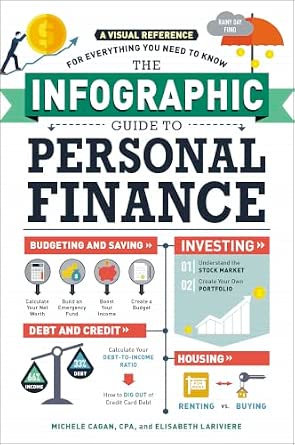 | Best Visual Reference | Format: Infographic guide | Series: Infographic Guide | Subject: Personal finance | VIEW LATEST PRICE | See Our Full Breakdown |
| How to Adult: Personal Finance for the Real World |  | Best for Practical Life-Stage Framing | Title: How to Adult: Personal Finance for the Real World | Subject: Personal finance | Stated framing: Personal finance for the real world | VIEW LATEST PRICE | See Our Full Breakdown |
| personal finance books for beginner | Format | ASIN |
|---|---|---|
| Personal Finance for Beginners | Not specified | — |
| Money Skills for Young Adults: | Guide | — |
| Personal Finance QuickStart Gu | Not specified | — |
| Personal Finance for Beginners | Not specified | — |
| Finance for Beginners: 101 Con | Not specified | — |
| The Total Money Makeover: Upda | Book | 140034252X |
| Financial Literacy Essentials | Not specified in supplied product data | 1394326165 |
| The Simple Path to Wealth: You | Not specified in supplied product data | B0DQJMVM59 |
| Personal Finance for Beginners | Not specified in supplied product data | B0CYC4TMCT |
| Money Skills for Teens: A Begi | — | 1915833094 |
| Personal Finance for Beginners | Digital book | B0H6K9FTMZ |
| Personal Finance For Dummies | Not specified | 1394207549 |
| Personal Finance for Teens and | Not specified | B0GRJ2Q36X |
| The Infographic Guide to Perso | Infographic guide | 1507204663 |
| How to Adult: Personal Finance | Not specified | B08ZVZKD2H |
More Details on Our Top Picks
Personal Finance for Beginners: A Simple Guide to Taking Control of Your Financial Situation
This is the broadest entry point in this group: its description pairs money management with investing basics, giving a new reader a chance to see how day-to-day choices connect with longer-term planning. That makes it a more balanced starting point than Personal Finance for Beginners: A Simple Guide to Budgeting, Saving Money, and Building Better Financial Habits, which is described with a narrower budgeting-and-saving focus. The tradeoff is that the supplied details do not identify chapters, exercises, or specific methods, so I can’t judge how deeply it explains either subject. Choose it if you want a general orientation before focusing on one money goal; skip it if you need a clearly documented step-by-step plan or detailed investing instruction.
Pros:- Covers both money management and investing basics
- Explicitly aimed at beginners
- Broad scope can help readers connect daily decisions with longer-term financial goals
Cons:- The supplied description does not specify chapters, exercises, or practical tools
- The depth of its investing coverage is unclear
- The broad subject range may offer less focus than a budgeting-specific introduction
Best for: New readers who want one introductory resource spanning everyday money management and basic investing.
Not ideal for: Readers seeking a detailed workbook, a defined chapter-by-chapter plan, or evidence of in-depth coverage of a specific financial topic.
- Format:Not specified
- Audience:Beginners
- Topics:Personal finance, money management, and investing basics
- Stated aim:Taking control of your financial situation
- Budgeting coverage:Not specified
- Saving coverage:Not specified
Our verdict“Choose this for a general beginner overview that joins money management with investing basics, but not for a documented step-by-step course.”
Money Skills for Young Adults: A Beginner’s Guide to Smart Financial Habits
Unlike the broadly framed Personal Finance QuickStart Guide, this book is aimed at a distinct life stage: young adults preparing for financial independence. Its stated topics—budgeting, saving for goals, investing, and planning—connect everyday habits with the move toward managing money on your own. That focus can make it more relevant to a reader starting work, setting personal goals, or learning to handle independent finances. The limitation is that the supplied description gives no chapter list, exercises, or specific tools, so the label alone can’t tell me how much guidance it offers on each subject. Choose it for its age-specific framing; readers who want a general reference or detailed, clearly documented methods may prefer a more fully specified resource.
Pros:- Designed specifically for young adults and beginners
- Includes budgeting, goal-based saving, and investing in its stated scope
- Connects financial habits with planning for independence
- Offers a distinct life-stage focus compared with general beginner guides
Cons:- The supplied description does not list specific tools or exercises
- The depth and order of topic coverage are not provided
- Its young-adult framing may be less relevant to readers at other life stages
Best for: Young adults learning to budget, save toward personal goals, and prepare to manage their finances independently.
Not ideal for: Readers outside the young-adult audience or anyone who needs a clearly described workbook, detailed tools, or an established step-by-step framework.
- Format:Guide
- Audience:Young adults and beginners
- Topics:Budgeting, saving for goals, investing, and financial planning
- Stated focus:Building smart financial habits
- Financial goal:Planning for an independent financial future
- Tools or exercises:Not specified
Our verdict“Pick this if you are a young adult building independent money habits and want budgeting, saving, and investing introduced together.”
Personal Finance QuickStart Guide: A Beginner’s Guide to Building Wealth and Financial Freedom
Where Personal Finance for Beginners: A Simple Guide to Taking Control of Your Financial Situation is described as a broad introduction to money management and investing basics, this guide foregrounds reducing financial stress and building wealth. That emphasis may suit a beginner who wants a motivating long-range frame rather than a book presented chiefly as a set of budgeting or saving lessons. Its stated aim of working toward financial freedom also gives the subject a clear destination. The tradeoff is that the available description does not name specific techniques, chapters, or tools, so the practical route from stress reduction to wealth building remains unclear. I’d choose it for its goal-oriented framing, but look elsewhere if you need concrete, documented steps for a near-term money problem.
Pros:- Written for beginners
- Connects financial stress reduction with wealth-building goals
- States a clear long-term aim of financial freedom
Cons:- The supplied description does not identify specific methods or tools
- The balance among budgeting, saving, and investing is unclear
- May be less directly useful for readers focused on an immediate, defined money task
Best for: Beginners who want personal finance framed around lowering money stress and working toward long-term wealth.
Not ideal for: Readers who need clearly listed budgeting steps, hands-on exercises, or detailed coverage of a specific financial decision.
- Format:Not specified
- Audience:Beginners
- Topics:Personal finance and wealth building
- Stated focus:Reducing financial stress
- Long-term aim:Financial freedom
- Specific tools or methods:Not specified
Our verdict“Choose this for a beginner introduction centered on wealth-building goals, but not if you need a clearly documented practical plan.”
Personal Finance for Beginners: A Simple Guide to Budgeting, Saving Money, and Building Better Financial Habits
This is the most clearly focused choice here for someone whose first task is getting a handle on everyday spending. The description names budgeting, saving money, and better financial habits, while Personal Finance for Beginners: A Simple Guide to Taking Control of Your Financial Situation also mentions investing basics and takes a broader approach. That narrower scope can help a beginner concentrate on routines before branching into investing. It also leaves a gap: investing and other parts of personal finance are not identified in the supplied description. Since no chapters, examples, or tools are provided, I can’t tell how hands-on the guidance is. Pick it for a practical-sounding starting focus; skip it if you want a single guide that explicitly spans more financial topics.
Pros:- Clearly names budgeting and saving money as core subjects
- Focuses on building financial habits, not just defining money terms
- Aimed at readers new to personal finance
Cons:- The supplied description does not specify investing coverage
- No chapter details, exercises, or tools are provided
- Its narrow stated scope may not serve readers seeking a broad personal finance overview
Best for: First-time budgeters who want an introductory focus on saving money and forming steady financial habits.
Not ideal for: Beginners looking for a guide that explicitly includes investing or a broad overview of personal finance beyond budgeting and saving.
- Format:Not specified
- Audience:Beginners
- Topics:Budgeting, saving money, and financial habits
- Stated focus:Building better financial habits
- Investing coverage:Not specified
- Tools or exercises:Not specified
Our verdict“Choose this if budgeting, saving, and habit-building are your immediate priorities; choose a broader guide if you also want stated investing coverage.”
Finance for Beginners: 101 Concepts for Personal Finance, Investing, and Money Management
The defining difference here is its 101-concept structure: rather than promising a single journey toward a specific goal, it presents a broad set of topics across personal finance, investing, and money management. That may suit a reader who wants to browse individual concepts and find areas to explore. Compared with Money Skills for Young Adults, it is not framed around a particular age group or the transition to independent finances. But the supplied information does not say how the concepts are organized, how much explanation each receives, or whether the book includes examples. A large topic count is not a guarantee of depth. Choose it if breadth and a concept-based format appeal to you; skip it if you need a clear sequence or detailed instruction on one subject.
Pros:- Organized around 101 concepts for a beginner audience
- Names personal finance, investing, and money management as covered topics
- Offers broader stated topic coverage than budgeting-only introductions
Cons:- The supplied data does not specify the format or depth of coverage
- The sequence and organization of the concepts are not described
- A concept-by-concept approach may provide less guidance for readers who want one continuous plan
Best for: Beginners who prefer exploring a range of personal finance and investing topics one concept at a time.
Not ideal for: Readers who need a step-by-step course or substantial, clearly documented explanations of a particular financial topic.
- Format:Not specified
- Audience:Beginners
- Structure:101 concepts
- Topics:Personal finance, investing, and money management
- Coverage depth:Not specified
- Organization:Concept-based; further details not specified
Our verdict“Pick this if you want a broad, concept-based introduction to personal finance and investing, but not if you need a clearly sequenced course.”
The Total Money Makeover: Updated and Expanded
The Total Money Makeover is the pick here for beginners who want a firm sequence for tackling debt and organizing their finances, rather than a broad introduction to every money topic. Its named focus and “updated and expanded” edition make it distinct from Financial Literacy Essentials For Dummies, which sounds better suited to surveying a wider range of fundamentals. The tradeoff is that a strongly directed plan may fit readers who want clear rules better than those who prefer to compare approaches or adapt advice to a complicated situation. The supplied product details confirm only the title and book format, so I can’t verify specific chapters, exercises, or edition changes. Choose it for a focused, plan-oriented starting point; skip it if you want a confirmed, topic-by-topic reference.
Pros:- The title signals a focused money-management makeover rather than a narrow investing-only guide.
- The updated-and-expanded edition may appeal to readers seeking a revised edition.
- Book format suits readers who prefer a sustained guide over a short-format overview.
Cons:- The supplied data does not confirm its methods, chapter topics, or practical exercises.
- A strongly directed makeover approach may not suit readers who want to weigh several strategies.
Best for: Beginners who want a focused, step-by-step framework for addressing debt and building money habits.
Not ideal for: Readers seeking a verified, broad reference covering many personal-finance topics or flexible options for different financial situations.
- Title:The Total Money Makeover: Updated and Expanded
- ASIN:140034252X
- Format:Book
- Edition description:Updated and Expanded
- Product category:Personal finance book
- Intended audience:Not specified in supplied product data
Our verdict“Choose it if you want a focused, plan-led starting point, but pick Financial Literacy Essentials For Dummies for a broader introductory reference.”
Financial Literacy Essentials For Dummies
Financial Literacy Essentials For Dummies is the strongest fit in this group for a beginner who wants an introductory survey rather than a single-method money plan. Its title positions it against more focused choices such as The Total Money Makeover: Updated and Expanded, which suggests a defined financial reset, and The Simple Path to Wealth, which centers on financial independence. That breadth can help a newcomer identify which topics need more attention, but it may not provide the sustained, step-by-step direction a reader needs to change a specific habit. The supplied information confirms the title but not its chapters, format, or teaching tools, so I would not assume particular subjects are covered. It makes most sense as a starting reference, not as a tailored financial plan.
Pros:- The title clearly targets foundational financial literacy.
- An essentials-style overview can help beginners identify topics they need to learn next.
- Its broad positioning contrasts with more narrowly framed books in this roundup.
Cons:- The supplied product data does not verify which topics or tools the book includes.
- A general overview may offer less focused guidance than The Total Money Makeover.
- No format details are provided to help readers judge whether it suits their preferred learning style.
Best for: First-time learners who want an introductory overview before choosing a more focused book on budgeting, debt, or investing.
Not ideal for: Readers who already know their main money challenge and want a detailed action plan or a verified chapter-by-chapter topic list.
- Title:Financial Literacy Essentials For Dummies
- ASIN:1394326165
- Product category:Personal finance book
- Stated focus:Financial literacy essentials
- Edition:Not specified in supplied product data
- Format:Not specified in supplied product data
Our verdict“Pick this for a broad introduction to money basics; choose The Total Money Makeover if you want a more focused plan.”
The Simple Path to Wealth: Your Road Map to Financial Independence and a Rich, Free Life
The Simple Path to Wealth stands apart from the budgeting-first titles here by centering its promise on financial independence and greater freedom. That makes it a more targeted choice than Personal Finance for Beginners: A Guide to Budgeting and Managing Money for a reader whose main interest is building a long-range wealth plan, rather than getting an introductory handle on everyday money management. The title’s road-map framing may appeal to beginners who want a clear destination, but the supplied description does not confirm which investing topics, examples, or steps the book actually covers. It may also be a less suitable first pick for someone dealing with immediate budgeting needs. I’d choose it for a long-term independence focus, while treating the exact scope and format as unverified.
Pros:- The title gives the book a clear financial-independence focus.
- Its long-range framing differs from budgeting-centered beginner guides.
- The road-map concept may appeal to readers who want their money goals tied to a broader life aim.
Cons:- The supplied description does not confirm specific investing guidance or chapter coverage.
- The emphasis may be less useful to readers who first need help with everyday budgeting.
- The book’s format is not provided.
Best for: Beginners primarily interested in long-term wealth building and the idea of financial independence.
Not ideal for: Readers whose immediate priority is budgeting day to day, or who need confirmed details about the book’s investing content and format.
- Title:The Simple Path to Wealth: Your Road Map to Financial Independence and a Rich, Free Life
- ASIN:B0DQJMVM59
- Product category:Personal finance book
- Stated focus:Financial independence
- Description framing:A road map toward greater financial freedom
- Format:Not specified in supplied product data
Our verdict“Choose it if financial independence is your main learning goal; start with Personal Finance for Beginners: A Guide to Budgeting and Managing Money if daily money management comes first.”
Personal Finance for Beginners: A Guide to Budgeting and Managing Money
Personal Finance for Beginners: A Guide to Budgeting and Managing Money has the most direct match for a newcomer whose first challenge is handling everyday money. Its stated emphasis on budgeting and money management makes its purpose clearer than The Simple Path to Wealth, which points toward financial independence, and more practical for an immediate budgeting need. That focus is also its limit: the supplied details do not establish whether it covers investing, debt, saving strategies, or specific exercises, so readers should not treat the title as proof of comprehensive coverage. Compared with Financial Literacy Essentials For Dummies, this looks more targeted, but the available product data offers less information about its scope. It is a sensible shortlist candidate for budgeting learners who can accept that uncertainty.
Pros:- The title explicitly targets beginners.
- Budgeting and money management are stated areas of focus.
- Its practical everyday-money framing differs from The Simple Path to Wealth’s independence-oriented positioning.
Cons:- The supplied data does not identify specific chapters, exercises, or money-management methods.
- No format details are provided.
- The available description does not confirm coverage beyond budgeting and general money management.
Best for: New budgeters who want a guide explicitly framed around budgeting and managing everyday money.
Not ideal for: Readers seeking confirmed coverage of investing, debt strategies, or a detailed list of topics before choosing a book.
- Title:Personal Finance for Beginners: A Guide to Budgeting and Managing Money
- ASIN:B0CYC4TMCT
- Product category:Personal finance book
- Stated audience:Beginners
- Stated focus:Budgeting
- Additional stated focus:Managing money
- Format:Not specified in supplied product data
Our verdict“Choose this if budgeting is your immediate priority; opt for The Simple Path to Wealth if your main interest is long-term financial independence.”
Money Skills for Teens: A Beginner’s Guide to Budgeting, Saving, and Investing
Money Skills for Teens is the clearest audience-specific choice in this batch: it is described as a beginner’s guide for teenagers and covers budgeting, saving, and investing. That makes it a better age fit for teen learners than Personal Finance for Beginners: A Guide to Budgeting and Managing Money, whose audience is described only as beginners and whose stated focus is narrower. The range of topics also gives a teen a chance to encounter several money basics in one book, but the supplied information does not establish how deeply each subject is treated or how the material is taught. Adults looking for a general personal-finance reference may find the teen framing less suitable. Its stated place in the Life Skills for Tweens, Teens & Young Adults series adds useful audience context, not a guarantee of a particular teaching style.
Pros:- Explicitly written for teenagers and beginner learners.
- The description names budgeting, saving, and investing as covered subjects.
- Part of the Life Skills for Tweens, Teens & Young Adults series.
Cons:- The supplied data does not show how deeply the three subjects are covered.
- Its teen-specific framing may not suit adults seeking a general guide.
- No format or teaching-method details are provided.
Best for: Teenagers starting to learn budgeting, saving, and investing, along with adults choosing a finance guide for a teen learner.
Not ideal for: Adults seeking an age-neutral personal-finance reference or readers who need details about the book’s lessons, exercises, or format.
- Title:Money Skills for Teens: A Beginner’s Guide to Budgeting, Saving, and Investing
- ASIN:1915833094
- Product category:Personal finance book
- Stated audience:Teenagers and beginner learners
- Stated topic:Budgeting
- Stated topic:Saving
- Stated topic:Investing
- Series:Life Skills for Tweens, Teens & Young Adults
Our verdict“Choose this for a teen learning several money basics; adults seeking a general guide should compare it with Financial Literacy Essentials For Dummies.”
Personal Finance for Beginners: The Complete Guide to Budgeting, Saving, Investing & Getting Out of Debt (Digital Income System Book 1)
This title earns its place for beginners who want one book to touch on budgeting, saving, investing, and debt reduction. That breadth makes it a more direct starting point for readers seeking a general money overview than The Infographic Guide to Personal Finance, which presents information visually. Its position as Book 1 in the Digital Income System series also identifies it as part of a larger sequence, though the supplied details do not explain what later books add. The main tradeoff is limited information about its teaching style, depth, or specific advice, so I can’t judge how clearly it explains each subject or how practical its guidance is. Choose it for the stated range of topics, but readers who need a documented format or more detail should compare alternatives with clearer descriptions.
Pros:- Covers four central beginner money topics: budgeting, saving, investing, and debt reduction.
- Explicitly designed for beginners.
- Digital format may suit readers who prefer an electronic book.
- Identified as the first book in the Digital Income System series.
Cons:- The available description does not explain the depth or order of its guidance.
- No information is provided about examples, exercises, or the author’s approach.
Best for: New readers who want a single digital book covering budgeting, saving, investing, and getting out of debt.
Not ideal for: Readers who want verified details about the book’s teaching approach, depth, or practical exercises before choosing.
- Format:Digital book
- Series:Digital Income System
- Series position:Book 1
- Topics:Budgeting, saving, investing, and getting out of debt
- Intended level:Beginners
- ASIN:B0H6K9FTMZ
Our verdict“Choose this digital guide if you want broad beginner coverage in one book and are comfortable with limited detail about its teaching style.”
Personal Finance For Dummies
The title points to a broad personal-finance reference, making this a plausible pick for beginners who want to consult money topics as questions arise rather than follow a narrowly defined program. Compared with Personal Finance for Beginners: The Complete Guide to Budgeting, Saving, Investing & Getting Out of Debt, its title does not specify a particular set of topics or a digital format; the available product information gives no description or specifications to clarify its coverage. That leaves a meaningful tradeoff: the familiar reference-style branding may appeal to readers looking for accessible explanations, but I can’t verify which subjects it covers, how it is organized, or whether it includes exercises. I would choose it over a more focused title only if a broad reference is the goal and you can confirm the edition’s contents before buying.
Pros:- The title signals a broad personal-finance focus rather than a single money topic.
- The Dummies branding may be familiar to readers seeking an accessible reference format.
- Could suit readers who want to consult topics individually instead of following a narrow theme.
Cons:- No description or feature details were provided to verify its coverage.
- Format, edition details, and teaching approach are unspecified.
- The available information does not establish whether it includes practical exercises or a structured plan.
Best for: Beginners seeking a general personal-finance reference who are willing to check the edition details and contents before purchase.
Not ideal for: Readers who need confirmed topic coverage, a stated format, or a clearly described step-by-step learning plan.
- Title:Personal Finance For Dummies
- Series or brand:For Dummies
- Subject:Personal finance
- Intended level:Not specified
- Format:Not specified
- Edition:Not specified
- ASIN:1394207549
Our verdict“Consider this as a broad reference only after confirming that the edition covers the beginner topics you need.”
Personal Finance for Teens and Young Adults: Budgeting, Saving, and Investing
This book’s clearest advantage is its specific audience: teens and young adults learning budgeting, saving, and investing as they work toward financial independence. That makes it a closer age fit than the broad, general-audience coverage promised by Personal Finance for Beginners: The Complete Guide to Budgeting, Saving, Investing & Getting Out of Debt. It may suit a first money book for someone building basic habits, but the supplied description does not say how it handles debt, credit, taxes, or the shift from school to work. That missing detail matters for young readers facing those decisions. I’d pick it for its audience and core topics, not as a confirmed all-in-one guide to adult finances; readers outside the intended age group may prefer a less age-specific reference.
Pros:- Clearly aimed at teens and young adults.
- Covers budgeting, saving, and investing.
- Connects basic money skills with the goal of financial independence.
Cons:- The description does not confirm coverage of debt, credit, or taxes.
- No details are provided about teaching style, examples, or exercises.
- Its age-specific focus may be less suitable for older first-time learners.
Best for: Teens and young adults who want an introduction to budgeting, saving, and investing while building toward financial independence.
Not ideal for: Older beginners seeking confirmed guidance on debt, credit, taxes, or other adult financial decisions.
- Topics:Budgeting, saving, and investing
- Intended audience:Teens and young adults
- Stated aim:Practical money skills for pursuing financial independence
- Format:Not specified
- Series:Not specified
- ASIN:B0GRJ2Q36X
Our verdict“Choose this for a teen or young adult beginning with budgeting, saving, and investing, but look elsewhere for confirmed broader adult-finance coverage.”
The Infographic Guide to Personal Finance: A Visual Reference for Everything You Need to Know
For beginners who find dense explanations hard to absorb, this book’s infographic format gives it a distinct role: a visual reference across personal-finance topics. That makes it a different kind of starting point from Personal Finance for Beginners: The Complete Guide to Budgeting, Saving, Investing & Getting Out of Debt, whose title promises a conventional, topic-by-topic guide. Visual presentation can help readers scan and connect ideas, but it may leave less room for extended explanations or careful treatment of decisions. The available description does not identify specific topics, so I can’t confirm whether it gives enough guidance on an area such as debt repayment or investing. I’d choose it for visual learning and quick reference, not as the sole source for readers who need detailed instructions.
Pros:- Uses infographics to present personal-finance information visually.
- Described as covering a range of personal-finance topics.
- Functions as a visual reference rather than only a single-topic guide.
- Part of the Infographic Guide series.
Cons:- The description does not list the specific topics covered.
- A visual reference may not provide the depth beginners need for complex decisions.
- No details are provided about exercises or step-by-step instruction.
Best for: Visual learners who want a scannable reference to personal-finance topics rather than a text-heavy introduction.
Not ideal for: Readers who need detailed, step-by-step explanations or verified coverage of a particular financial subject.
- Format:Infographic guide
- Series:Infographic Guide
- Subject:Personal finance
- Presentation:Visual, infographic-based reference
- Coverage:A range of personal-finance topics
- Intended level:Not specified
- ASIN:1507204663
Our verdict“Pick this visual guide if diagrams help you learn, but pair it with a detailed book when you need instructions for specific money decisions.”
How to Adult: Personal Finance for the Real World
The phrase “for the real world” sets this title apart as a potential choice for readers who want personal finance framed around everyday adult responsibilities. Compared with Personal Finance for Teens and Young Adults: Budgeting, Saving, and Investing, it appears less tightly aimed at a particular age group and more focused on practical adult life. That positioning may appeal to someone moving into independent living, but the supplied information does not describe its actual topics, structure, or exercises, so the title alone can’t confirm how much useful instruction it offers. It also cannot be compared on specific coverage with the detailed topic list in Personal Finance for Beginners: The Complete Guide to Budgeting, Saving, Investing & Getting Out of Debt. I’d shortlist it for its practical framing, while checking the contents before relying on it as a complete beginner guide.
Pros:- Frames personal finance around practical, real-world adult life.
- May appeal to readers seeking an adult-life angle rather than a teen-focused guide.
- The title clearly identifies personal finance as its subject.
Cons:- No description was provided to verify its specific topics or advice.
- Format and teaching approach are unspecified.
- The available information does not establish whether it includes exercises or a structured learning path.
Best for: Newly independent adults who want a personal-finance book framed around everyday adult responsibilities.
Not ideal for: Readers who need confirmed coverage of budgeting, investing, debt, or other specific topics before choosing.
- Title:How to Adult: Personal Finance for the Real World
- Subject:Personal finance
- Stated framing:Personal finance for the real world
- Intended audience:Not specified
- Format:Not specified
- Series:Not specified
- ASIN:B08ZVZKD2H
Our verdict“Consider this for an everyday-adult framing, but verify its contents if you need a beginner guide with confirmed topic coverage.”

How We Picked
I ranked these books by how well their stated focus matches a beginner’s first practical questions: how to manage everyday spending, build saving habits, understand debt, and begin learning about investing. I gave priority to titles with an accessible entry point and a clear use case, rather than treating the broadest subject list as an automatic advantage. Audience fit mattered too: books written for teens or young adults can be especially relevant at that stage, but they are not universal picks.
The order reflects differences in scope, focus, and learning format. A broad, beginner-directed guide earns a higher place as a general starting point; a focused title ranks higher for readers whose immediate need matches its subject, such as debt repayment or investing. Visual guides and general reference books can be useful, but their fit depends more on how a reader prefers to learn. Since titles and descriptions alone cannot establish every book’s depth or suitability, I avoid treating any one approach as right for every reader.
| personal finance books for beginner | Format |
|---|---|
| Personal Finance for Beginners | Not specified |
| Money Skills for Young Adults: | Guide |
| Personal Finance QuickStart Gu | Not specified |
| Personal Finance for Beginners | Not specified |
| Finance for Beginners: 101 Con | Not specified |
| The Total Money Makeover: Upda | Book |
| Financial Literacy Essentials | Not specified in supplied product data |
| The Simple Path to Wealth: You | Not specified in supplied product data |
| Personal Finance for Beginners | Not specified in supplied product data |
| Money Skills for Teens: A Begi | — |
| Personal Finance for Beginners | Digital book |
| Personal Finance For Dummies | Not specified |
| Personal Finance for Teens and | Not specified |
| The Infographic Guide to Perso | Infographic guide |
| How to Adult: Personal Finance | Not specified |
Factors to Consider When Choosing Personal Finance Books For Beginners
Before choosing a title, I’d decide what job you want the book to do. A first money book should make your next step clearer, not simply introduce the most financial terms. These factors can help you match a book’s scope and style to your needs.
Start With the Money Problem You Want to Solve
Choose a book based on the decision you need to make next, such as setting a spending plan, paying down debt, or learning basic investing concepts. A wide-ranging guide can establish a useful foundation, but its coverage may stay introductory on each subject. A focused book may give you a clearer route through one problem while leaving other questions unanswered. A common mistake is buying an investing book when high-interest debt or inconsistent cash flow is the immediate concern. Write down one practical question before you choose, then check whether the book’s stated scope addresses it.
Match the Book to Your Life Stage
Books aimed at teens or young adults may use examples and assumptions that suit first jobs, school, or learning to manage money independently. Adults with established bills, dependents, or long-term financial commitments may need examples that reflect those responsibilities. Age labels are a clue, not a complete test of usefulness: a younger reader may prefer a general guide, and an adult may value a youth-focused book’s plain explanations. The tradeoff is relevance versus breadth. Look for a title whose audience and subject matter match your current decisions, rather than assuming a more advanced-sounding book will teach more.
Choose a Learning Format You Will Keep Using
Some beginners learn best from short, visual explanations; others prefer a continuous guide or a reference they can revisit by topic. Visual layouts can make unfamiliar ideas easier to scan, though they may not provide the detail a reader wants for a complicated decision. A reference-style book can cover many areas but may be less satisfying if you want one guided sequence. Consider how you actually return to learning materials: a chapter at a time, quick lookups, or concise illustrations. Avoid choosing a format only because it seems easy; it should also give enough explanation to support the next action.
Check Whether the Advice Is a Framework or a Full Survey
Some personal finance books organize advice around a distinct plan, while others introduce several topics or present themselves as broad guides. A clear framework can reduce indecision when you need structure, but it may not cover competing approaches in equal depth. A survey can help you learn the vocabulary and see how money topics connect, yet leave you to choose among options yourself. Beginners sometimes mistake confidence for consensus and follow a single method without checking whether its assumptions fit their income, obligations, or goals. Read the book’s description for its central approach and decide whether you want direction, comparison, or both.
Separate a Beginner Foundation From Specialized Guidance
An introductory book can help you understand core concepts, but it may not answer detailed questions about taxes, retirement accounts, insurance, or local rules. Treat a general finance title as a foundation rather than personalized advice for every financial decision. If a specific topic drives your purchase, check that it receives more than a passing mention. Paying attention to scope can prevent a mismatch: a broad beginner book may be too basic for a defined investing question, while a focused investment title may skip everyday budgeting. Choose one book for your current need and add a specialized source only when a real question remains.
Frequently Asked Questions
Should I start with a general money guide or a book focused on debt?
If debt repayment is your most urgent goal, a focused plan may help you act sooner than a general introduction. A broad guide is a better first choice if you are unsure how budgeting, saving, debt, and investing fit together. You can also pair them: start with the book that addresses your current pressure, then use a broader guide to fill in gaps. Check that a debt-focused approach fits your circumstances rather than assuming every reader needs the same sequence. The right starting point is the one that helps you make a practical next decision.
Can a teen-focused personal finance book still work for an adult beginner?
It can, especially if you want clear explanations of budgeting, saving, or basic investing without assuming prior knowledge. The potential mismatch is in examples and the financial situations covered; a book written for teens may not address adult responsibilities in much depth. Check the stated audience and subject areas before choosing it as your only resource. If you need guidance for household finances, debt, or retirement planning, a broader adult-focused title may be a better fit. Plain language matters, but so does relevance to your decisions.
Is a book about investing a good first personal finance book?
It can be a good first choice if investing is the specific subject you want to understand and your everyday money habits are already in reasonable order. Many beginners benefit from learning how cash flow, emergency savings, and debt relate to investing before acting on investment ideas. A focused investing book may not cover those foundations in enough detail. Consider whether you want a first lesson in one subject or a broad map of personal finance. If you choose an investing-focused title, treat it as education rather than a substitute for advice tailored to your situation.
How do I choose between a visual guide and a reference-style book?
Pick a visual guide if diagrams and short explanations make unfamiliar topics easier for you to absorb. A reference-style book may suit you better if you want to look up different subjects over time rather than follow one visual overview. The tradeoff is often quick accessibility versus the amount of explanation you want for each topic. Look at the book’s described format and range before buying, especially if you want guidance on a specific issue. Neither format is automatically easier; the better choice is the one you will return to when a real money question comes up.
Should I buy one broad book or several focused books?
One broad book is usually a simpler start if you are still learning which parts of personal finance matter most to you. Several focused books can make sense when you already have clear questions, such as how to manage debt or understand investing. Buying multiple titles at once can create more reading than action, so it may be wiser to start with one and note the questions it leaves unanswered. A broad guide can supply vocabulary and context; a focused book can then add detail. Choose depth only where you need it rather than trying to master every topic at once.
Conclusion
For a single first purchase, I recommend Personal Finance for Beginners: A Simple Guide to Taking Control of Your Financial Situation as the best overall starting point for readers seeking a general introduction. For the best value in practical focus, consider Personal Finance for Beginners: A Simple Guide to Budgeting, Saving Money, and Building Better Financial Habits if daily money habits are your priority. Financial Literacy Essentials For Dummies is my best premium-style reference pick for readers who want a broader topic resource, while Personal Finance for Beginners: A Guide to Budgeting and Managing Money is a direct choice for first-time learners who want to start with everyday money management. For specific needs, choose The Total Money Makeover for a debt-payoff framework, The Simple Path to Wealth for an investing and financial-independence focus, The Infographic Guide to Personal Finance for visual learning, or a teen-focused title for a younger reader. Match the book to the financial question you need to answer now, then use a second title only if you need more depth.