
The best personal finance book for beginners depends on where you’re starting: Personal Finance 101 earns my top spot for covering every core topic — saving, investing, taxes, credit, and loans — in plain language without assuming prior knowledge. I Will Teach You to Be Rich stands out if you want an action-driven six-week program rather than a reference manual, while The Infographic Guide to Personal Finance is the fastest read for visual learners who freeze at dense text. The main tradeoff in this category is breadth versus depth: broad primer books get you conversational in everything but masterful at nothing, while narrower books push you further on one goal like investing or financial independence. Age fit matters too — several books are written specifically for teens or young adults and will feel patronizing to readers in their thirties. Keep reading for the full breakdown of all 15 titles and which one matches your situation.

Get smart everyday buys delivered free with Prime
- Fast, free delivery on millions of items
- Prime Video, Amazon Music and more included
- Member-only deals all year
Key Takeaways
- money-20&ascsubtag=dc-1113365″ target=”_blank” rel=”nofollow sponsored noopener”>money-20&ascsubtag=dc-1113365″ target=”_blank” rel=”nofollow sponsored noopener”>Personal Finance 101 won the top spot because it covers the widest range of fundamentals in one volume — most competitors force you to buy multiple books to get the same ground covered.
- Two books in this lineup share the Personal Finance For Dummies branding; the full edition suits long-term reference while Financial Literacy Essentials For Dummies is a faster, thinner entry point.
- Program-style books like I Will Teach You to Be Rich outperform reference-style books for readers who procrastinate, but only if you actually complete the weekly steps.
- The teen and young-adult titles (Money Skills for Teens, Money Skills for Young Adults, How to Adult) overlap heavily — the real differentiator is tone and reading level, not content coverage.
- The Simple Path to Wealth is the only pick built around financial independence and index investing, making it the wrong first book for someone who still needs budgeting basics.
- Visual formats like The Infographic Guide trade depth for speed — great for momentum, weak for readers who want to understand the reasoning behind each recommendation.
| Personal Finance 101: From Saving and Investing to Taxes and Loans |  | Best Reference Primer | Series: Adams 101 Series | Format: Print book | Audience Level: Beginner | VIEW LATEST PRICE | See Our Full Breakdown |
| How to Adult: Personal Finance for the Real World |  | Best for Absolute Beginners | Format: Print book | Audience Level: Absolute beginner | Focus: Everyday money management for new adults | VIEW LATEST PRICE | See Our Full Breakdown |
| Money Skills for Young Adults: A Beginner’s Guide to Smart Financial Habits |  | Best for Habit Building | Format: Print book | Audience Level: Beginner / young adult | Core Topics: Budgeting, goal-based saving, investing, financial independence | VIEW LATEST PRICE | See Our Full Breakdown |
| Get a Financial Life: Personal Finance in Your Twenties and Thirties |  | Best for Career-Stage Planning | Format: Print book | Target Age Range: Twenties and thirties | Core Topics: Salary, retirement accounts, insurance, debt, saving | VIEW LATEST PRICE | See Our Full Breakdown |
| I Will Teach You to Be Rich: No Guilt, No Excuses, Just a 6-Week Program That Works (Second Edition) |  | Best Overall | Edition: Second Edition | Format: Print book | Program Length: 6 weeks | VIEW LATEST PRICE | See Our Full Breakdown |
| QuickStart Guide: The Simplified Beginner’s Guide to Eliminating Financial Stress, Building Wealth, and Achieving Financial Freedom |  | Best Quick-Start Guide | Format: Paperback beginner’s handbook | Focus: Financial stress, debt reduction, wealth building | Audience: Adult beginners | VIEW LATEST PRICE | See Our Full Breakdown |
| Money Skills for Teens: A Beginner’s Guide to Budgeting, Saving, and Investing |  | Best for Teen Readers | Format: Paperback guide | Topics: Budgeting, saving, and investing | Audience: Tweens and teens | VIEW LATEST PRICE | See Our Full Breakdown |
| Personal Finance For Dummies |  | Best Reference Format | Format: Paperback reference book | Series: For Dummies | Coverage: Broad personal finance topics | VIEW LATEST PRICE | See Our Full Breakdown |
| The Infographic Guide to Personal Finance: A Visual Reference for Everything You Need to Know | 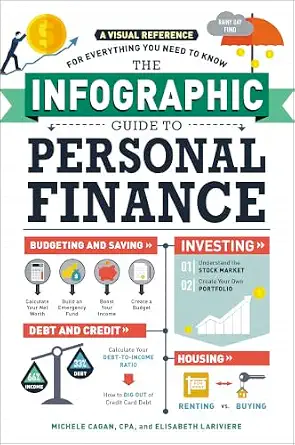 | Best Visual Learner Pick | Format: Illustrated paperback | Series: Infographic Guide series | Coverage: Core personal finance topics, visual reference | VIEW LATEST PRICE | See Our Full Breakdown |
| Financial Literacy for Young Adults Simplified |  | Best for New Graduates | Format: Paperback guide | Topics: Managing, saving, and investing | Audience: Young adults | VIEW LATEST PRICE | See Our Full Breakdown |
| Personal Finance For Dummies |  | Best Reference-Style Starter | Format: Paperback / ebook | Series: For Dummies | Category: Personal finance reference | VIEW LATEST PRICE | See Our Full Breakdown |
| Personal Finance for Teens and Young Adults – Learn Money Skills Not Taught in School |  | Best for the Youngest Beginners | Format: Paperback / ebook | Category: Personal finance for young readers | Audience Level: Teens and young adults | VIEW LATEST PRICE | See Our Full Breakdown |
| Finance for Beginners: 101 Concepts |  | Best Vocabulary Builder | Format: Paperback / ebook | Category: Introductory personal finance | Structure: 101 concept entries | VIEW LATEST PRICE | See Our Full Breakdown |
| The Simple Path to Wealth: Your Road Map to Financial Independence and a Rich, Free Life |  | Best Long-Term Wealth Philosophy | Format: Paperback / ebook / audiobook | Category: Financial independence | Audience Level: Beginner to intermediate | VIEW LATEST PRICE | See Our Full Breakdown |
| Financial Literacy Essentials For Dummies |  | Best Quick-Start Primer | Format: Paperback / ebook | Series: For Dummies (Essentials) | Category: Financial literacy primer | VIEW LATEST PRICE | See Our Full Breakdown |
| personal finance books for beginner | Format | Structure | Audience Level |
|---|---|---|---|
| Personal Finance 101: From Sav | Print book | Topic-by-topic reference chapters | Beginner |
| How to Adult: Personal Finance | Print book | Practical real-world topics | Absolute beginner |
| Money Skills for Young Adults: | Print book | Goal-driven guidance, not a fixed program | Beginner / young adult |
| Get a Financial Life: Personal | Print book | — | — |
| I Will Teach You to Be Rich: N | Print book | Week-by-week action program | — |
| QuickStart Guide: The Simplifi | Paperback beginner’s handbook | Concise step-by-step guide | — |
| Money Skills for Teens: A Begi | Paperback guide | Topic-by-topic beginner guide | — |
| Personal Finance For Dummies | Paperback reference book | Modular, chapter-per-topic | — |
| The Infographic Guide to Perso | Illustrated paperback | Graphics and charts per topic | — |
| Financial Literacy for Young A | Paperback guide | Simplified beginner guide | — |
| Personal Finance For Dummies | Paperback / ebook | Topic-by-topic chapters | Beginner |
| Personal Finance for Teens and | Paperback / ebook | — | Teens and young adults |
| Finance for Beginners: 101 Con | Paperback / ebook | 101 concept entries | Beginner |
| The Simple Path to Wealth: You | Paperback / ebook / audiobook | Roadmap-style narrative with parts and essays | Beginner to intermediate |
| Financial Literacy Essentials | Paperback / ebook | Short-topic chapters covering core fundamentals | Absolute beginner |
More Details on Our Top Picks
Personal Finance 101: From Saving and Investing to Taxes and Loans
Personal Finance 101 earns its place as the best reference primer in this lineup because it behaves like a textbook you can dip into rather than a program you must finish. Unlike I Will Teach You to Be Rich, which pushes you through a six-week plan, this Adams 101 title treats saving, investing, taxes, and loans as separate chapters you can consult as needed — which matters if your first question is “how do student loans actually work?” rather than “what should I do this week?” The breadth is real: few beginner books bother with taxes at all, and this one does. The tradeoff is that breadth costs depth and momentum. There is no roadmap, no habit-building arc, and readers who want a push to act will finish informed but not necessarily moved.
Pros:- Covers an unusually broad set of core topics, including taxes and loans
- Chapter structure makes it easy to jump straight to a specific question
- Approachable, jargon-light tone appropriate for true first-timers
- Compact format suits short reading sessions
Cons:- No action plan or progression — you finish knowing more, not necessarily doing more
- Shallow treatment of investing compared with wealth-focused titles like The Simple Path to Wealth
Best for: Beginners who want a topic-by-topic desk reference they can consult when specific questions come up
Not ideal for: Readers who need structure and motivation — this is a lookup book, not a step-by-step program like I Will Teach You to Be Rich
- Series:Adams 101 Series
- Format:Print book
- Audience Level:Beginner
- Core Topics:Saving, investing, taxes, loans
- Structure:Topic-by-topic reference chapters
- ASIN:1507214359
Our verdict“Buy this if you want a well-organized reference for financial basics rather than a guided program.”
How to Adult: Personal Finance for the Real World
This pick makes the most sense as the best for absolute beginners — the reader who has never budgeted, never opened a brokerage account, and finds even the vocabulary of money intimidating. Where Personal Finance 101 assumes you at least know what a credit score is, How to Adult starts at ground zero and frames money management as a life skill rather than a technical subject. Compared with Money Skills for Young Adults, which is habit-oriented and goal-driven, this one leans toward practical survival skills — paychecks, rent, bills, first credit cards. The drawback is the flip side of that gentleness: readers a year or two into their financial lives will find the early chapters too elementary, and there is little here on serious investing strategy.
Pros:- Starts from zero with no assumed financial knowledge
- Covers real-world firsts like paychecks, renting, and first credit
- Conversational tone lowers the intimidation factor
- Well matched to readers skipping between high school and first jobs
Cons:- Too elementary for anyone already budgeting and investing
- Thin on long-term wealth-building compared with The Simple Path to Wealth
Best for: Recent graduates and first-time earners who need money basics explained from square one
Not ideal for: Readers past the basics who want deeper investing content — the coverage skews toward everyday money management
- Format:Print book
- Audience Level:Absolute beginner
- Focus:Everyday money management for new adults
- Tone:Conversational, life-skills oriented
- Structure:Practical real-world topics
- ASIN:B08ZVZKD2H
Our verdict“Choose this if the phrase ‘personal finance’ itself feels overwhelming and you need the true starting line.”
Money Skills for Young Adults: A Beginner’s Guide to Smart Financial Habits
Money Skills for Young Adults stands out for habit formation, which is where it diverges from both How to Adult and Personal Finance 101. Those books teach you what things are; this one is organized around getting you to do them repeatedly — budgeting routines, saving toward named goals, and steady investing as a default behavior. That emphasis on financial independence gives it a purposefulness that younger readers respond to, especially anyone who wants their money tied to specific life goals rather than abstract advice. Compared with I Will Teach You to Be Rich, the program is less rigid and less week-by-week, which some will find freeing and others will find directionless. The main tradeoff: the investing section is an on-ramp, not a curriculum, so ambitious readers will outgrow it quickly.
Pros:- Frames finance around repeatable habits rather than one-time knowledge
- Connects budgeting and saving to concrete personal goals
- Directly targets the young-adult stage of life
- Builds toward financial independence as a motivating endpoint
Cons:- Less structured than a week-by-week program like I Will Teach You to Be Rich
- Investing coverage is introductory and quickly outgrown
Best for: Young adults who know the basics conceptually but struggle to build consistent money routines
Not ideal for: Detail-hungry readers who want substantial investing strategy — pair this with a deeper investing title instead
- Format:Print book
- Audience Level:Beginner / young adult
- Core Topics:Budgeting, goal-based saving, investing, financial independence
- Approach:Habit and behavior focused
- Structure:Goal-driven guidance, not a fixed program
- ASIN:B0FPG8KCQX
Our verdict“Pick this if your problem is consistency rather than knowledge — it is the habit coach of the lineup.”
Get a Financial Life: Personal Finance in Your Twenties and Thirties
Get a Financial Life is the best for career-stage planning because it maps money decisions to the specific decade when the biggest ones land: first salaries, retirement accounts, insurance, debt repayment, and the first serious savings targets. This option differs from Money Skills for Young Adults in its scope — less about daily habits, more about the structural decisions that compound over a decade, like how to prioritize retirement contributions against student loans. It also goes further than How to Adult on topics such as insurance and workplace benefits that most entry-level books ignore. The tradeoff is tone and pace: this is a denser, more journalistic read, and readers wanting quick wins or visual summaries may prefer The Infographic Guide to Personal Finance instead.
Pros:- Covers workplace benefits and insurance rarely found in beginner books
- Organized around decade-specific decisions, not generic advice
- Addresses debt repayment and retirement saving side by side
- Updated for modern realities like gig income and online banking
Cons:- Denser and longer than lighter picks like The Infographic Guide to Personal Finance
- Too far ahead for teens or students with no income yet
Best for: Professionals in their twenties and thirties facing benefits, insurance, and retirement decisions for the first time
Not ideal for: Teens or readers who want a fast, visual, or habit-based approach — the density will feel like homework
- Format:Print book
- Target Age Range:Twenties and thirties
- Core Topics:Salary, retirement accounts, insurance, debt, saving
- Approach:Life-stage decision framework
- Tone:Journalistic and practical
- ASIN:1668095351
Our verdict“This is the pick for twenty- and thirty-somethings who want the decade’s big money decisions handled in one book.”
I Will Teach You to Be Rich: No Guilt, No Excuses, Just a 6-Week Program That Works (Second Edition)
As Best Overall, I Will Teach You to Be Rich earns the top slot for one reason: it is the only book here that turns everything — accounts, automation, credit, investing — into a time-boxed six-week program you actually finish. Every other pick in this roundup explains personal finance; this one sequences it. Compared with Personal Finance 101, the difference is momentum: instead of reading about automating savings, you set it up by week two. The second edition also modernizes the material for the current banking and investing landscape. The tradeoffs are personality and pace — the voice is irreverent and unapologetically opinionated, and the prescriptive advice (specific account structures, a defined automation order) will irritate readers who want neutral information. Total beginners with zero vocabulary may also want How to Adult alongside it.
Pros:- Six-week structure converts reading into completed actions
- Covers the full system: banking, credit, automation, and investing
- Second edition reflects current accounts, apps, and investing options
- Direct guidance on what to do first, second, and third
Cons:- Bold, prescriptive tone will not suit readers wanting neutral information
- Assumes some baseline comfort with money basics that true novices lack
Best for: Motivated beginners who want a structured plan with clear weekly actions rather than another book to skim
Not ideal for: Readers who dislike opinionated, prescriptive advice or want a neutral, encyclopedic reference like Personal Finance For Dummies
- Edition:Second Edition
- Format:Print book
- Program Length:6 weeks
- Core Topics:Banking, credit, automation, investing
- Structure:Week-by-week action program
- Tone:Direct and opinionated
- ASIN:1523505745
Our verdict“If you only buy one beginner finance book and intend to act on it, this is the one — structure beats theory.”
QuickStart Guide: The Simplified Beginner’s Guide to Eliminating Financial Stress, Building Wealth, and Achieving Financial Freedom
Not every beginner wants a 400-page reference before opening a savings account. QuickStart Guide earns its spot by treating personal finance like a checklist rather than a college course, moving from debt reduction straight into wealth building without detours. Compared with Personal Finance For Dummies, which works better as a shelf reference you consult in pieces, this book is built to be read cover to cover in a weekend and acted on Monday morning. The plain language is a genuine strength for anxious first-timers, though the brevity that makes it approachable also means topics like investing strategy get shallow treatment — I Will Teach You to Be Rich goes far deeper on implementation. Readers who already budget and save will find little new here.
Pros:- Plain, jargon-free language suited to absolute beginners
- Step-by-step structure you can act on right away
- Covers both debt payoff and wealth building in one arc
- Short enough to finish in a weekend
Cons:- Too basic for anyone with existing financial knowledge
- Lacks depth on investing compared with longer guides
Best for: Complete beginners who feel overwhelmed by money and want one short, sequential plan they can start immediately
Not ideal for: Readers with a working budget and retirement account — the content is too foundational to add much value
- Format:Paperback beginner’s handbook
- Focus:Financial stress, debt reduction, wealth building
- Audience:Adult beginners
- Structure:Concise step-by-step guide
- Reading level:Plain language, non-technical
- Series:QuickStart Guides series
Our verdict“This pick makes the most sense for someone who wants momentum fast, not an encyclopedia.”
Money Skills for Teens: A Beginner’s Guide to Budgeting, Saving, and Investing
Most beginner finance books assume a paycheck, rent, and a 401(k) — none of which a 15-year-old has. Money Skills for Teens is the rare title that starts from a teenager’s actual reality: allowance, first jobs, and a phone. It covers the core trio of budgeting, saving, and investing at a level young readers can absorb, and it fits the Life Skills for Tweens & Teens series format, which keeps chapters digestible. Compared with Personal Finance for Teens and Young Adults – Learn Money Skills Not Taught in School, this one leans simpler and younger, trading depth for approachability. Adults should look elsewhere — Get a Financial Life is far better suited to twenty-somethings with real bills. The tradeoff is that a motivated older teen may outgrow it within a year.
Pros:- Content matched to teen income and spending realities
- Covers budgeting, saving, and investing in one book
- Part of a familiar life-skills series teens may already know
- Accessible tone that avoids intimidating jargon
Cons:- Depth is limited; motivated teens may need a follow-up book
- Younger-pitched tone can feel basic to 17–18 year olds
Best for: Parents buying a first money book for a 12–16 year old, or teens with a first job and a savings account
Not ideal for: College grads and working adults — the examples and scope are pitched well below their stage of life
- Format:Paperback guide
- Topics:Budgeting, saving, and investing
- Audience:Tweens and teens
- Series:Life Skills for Tweens & Teens
- Reading level:Beginner, teen-friendly
- Structure:Topic-by-topic beginner guide
Our verdict“This option stands out as a first money book for middle and high schoolers, not anyone older.”
Personal Finance For Dummies
When a reader wants one book that can answer a question at any stage — buying a car, choosing insurance, weighing a mortgage — Personal Finance For Dummies is the safer bet than a single-plan title like QuickStart Guide. The modular, reference-style structure means you can jump to the chapter you need without reading everything before it, and the brand’s plain-English conventions make intimidating topics feel manageable. The tradeoff is real, though: this is not a program. Readers who crave a sequenced plan with momentum will stall halfway, where I Will Teach You to Be Rich delivers a defined six-week path. Its breadth also means no single topic gets master-class treatment, and the sheer page count can discourage beginners who just want a starting point.
Pros:- Broad topic coverage from banking to insurance to investing
- Modular chapters work as a lookup reference
- Plain-English explanations of intimidating subjects
- Useful across many life stages, not just one
Cons:- No sequenced action plan, so momentum-focused readers may stall
- Length and breadth can overwhelm true first-timers
- Individual topics get shallower treatment than specialized books
Best for: Beginners who prefer a dip-in-and-out reference covering many topics rather than one linear plan
Not ideal for: Readers who feel paralyzed by choice and want one short, ordered program to follow start to finish
- Format:Paperback reference book
- Series:For Dummies
- Coverage:Broad personal finance topics
- Structure:Modular, chapter-per-topic
- Audience:Adult beginners
- Use case:Reference and self-education
Our verdict“This pick makes the most sense as a shelf reference you consult over years, not a book you finish in a weekend.”
The Infographic Guide to Personal Finance: A Visual Reference for Everything You Need to Know
Some readers simply do not retain information from walls of text, and The Infographic Guide to Personal Finance solves that by making the visual layout carry the teaching. Charts, icons, and page designs explain concepts like compound interest and credit scores at a glance, which no paragraph-based competitor — including Personal Finance For Dummies — attempts. For visual learners and reluctant readers, that difference is decisive: a concept that takes three dense pages elsewhere appears as one clear graphic here. The compromise is depth. Compared with The Simple Path to Wealth, this book stays at survey level on investing, and readers who want reasoning, nuance, or behavioral coaching will find the format thin. It works best as a first touchpoint that builds confidence before graduating to a fuller guide.
Pros:- Infographic format makes concepts graspable at a glance
- Lower reading burden than text-heavy guides
- Broad coverage of core personal finance topics
- Engaging for readers who abandon traditional finance books
Cons:- Depth is limited compared with text-based guides
- Less effective for readers who prefer detailed narrative explanation
Best for: Visual learners, reluctant readers, and anyone who wants money concepts explained through charts and graphics
Not ideal for: Readers who want detailed reasoning, strategy depth, or behavioral coaching beyond surface explanations
- Format:Illustrated paperback
- Series:Infographic Guide series
- Coverage:Core personal finance topics, visual reference
- Audience:Beginners and visual learners
- Structure:Graphics and charts per topic
- Use case:Quick visual reference and first introduction
Our verdict“This model is better suited to visual learners building confidence than to anyone seeking a complete strategy.”
Financial Literacy for Young Adults Simplified
Fresh graduates occupy an awkward middle ground — too old for Money Skills for Teens, not yet deep enough into careers for Get a Financial Life. Financial Literacy for Young Adults Simplified targets that gap, covering managing, saving, and investing with an explicit emphasis on financial independence rather than just avoiding mistakes. The “simplified” framing keeps first-apartment, first-paycheck scenarios approachable, and compared with Financial Literacy Essentials For Dummies, it feels more directly aimed at the 18–25 experience instead of a general adult audience. The drawback is ambition: promising managing, saving, and investing in a simplified package means each topic gets compressed, and readers past their first real job may find the material repeats what they already learned by trial and error.
Pros:- Directly aimed at the young-adult stage of life
- Covers managing, saving, and investing in one volume
- Frames goals around financial independence, not just avoiding debt
- Simplified presentation suits time-poor readers
Cons:- Breadth compresses each topic; investing coverage is shallow
- Experienced readers will find it repetitive
Best for: 18–25 year olds navigating their first paycheck, first apartment, and first savings goal
Not ideal for: Readers a few years into stable careers — the material covers ground they likely know already
- Format:Paperback guide
- Topics:Managing, saving, and investing
- Audience:Young adults
- Focus:Financial independence and security
- Structure:Simplified beginner guide
- Reading level:Beginner, non-technical
Our verdict“This pick makes the most sense for a new graduate who wants one simplified book covering the first years of independent money management.”
Personal Finance For Dummies
Personal Finance For Dummies earns its place as the reference-style starter because it works like a financial encyclopedia you can dip into, rather than a program you follow cover to cover. Where I Will Teach You to Be Rich pushes a six-week action plan, this book takes a broader, topic-by-topic approach — credit, insurance, taxes, saving — letting a reader jump straight to whatever problem they’re facing today. That flexibility is its main appeal for someone who wants answers, not a curriculum.
The tradeoff is real, though: breadth dilutes momentum. A complete beginner who wants a step-by-step path will likely finish The Simple Path to Wealth feeling more directed, while this one can feel like homework. Still, as a first shelf purchase that stays useful for years, this pick makes sense for readers who value coverage over coaching.
Pros:- Covers a very wide range of everyday money topics in one volume
- Encyclopedia format lets readers skip to the chapter they need
- Plain-language explanations assume zero prior financial knowledge
- Long-running series with a consistent, approachable editorial voice
Cons:- Breadth over depth means most topics get only surface-level treatment
- No built-in action plan, so unmotivated readers may stall
Best for: First-time finance readers who want one broad reference book they can consult as questions come up
Not ideal for: Readers who need a structured week-by-week plan and motivational push — a program-style book will serve them better
- Format:Paperback / ebook
- Series:For Dummies
- Category:Personal finance reference
- Audience Level:Beginner
- Structure:Topic-by-topic chapters
- Topics Covered:Budgeting, credit, saving, investing, insurance, taxes
Our verdict“Buy this if you want a single broad-coverage money reference rather than a coaching program.”
Personal Finance for Teens and Young Adults – Learn Money Skills Not Taught in School
This book claims the youngest-reader slot in the lineup, and it holds that spot by meeting teenagers where they are: first paychecks, first bank accounts, first budgeting mistakes. Compared with Get a Financial Life, which speaks to readers already in their twenties and thirties juggling rent and student loans, this one starts further upstream with relatable, school-aged examples and step-by-step explanations of budgeting, saving, and investing basics.
The strength here is accessibility — concepts a teen can actually apply, written without jargon or lectures. The weakness is ceiling. Anyone past the basics will outgrow it within months, and it offers little depth on advanced investing or complex topics like taxes or real estate. Compared with Money Skills for Young Adults, it skews younger and simpler, which is exactly the point.
Pros:- Written specifically for teens with age-appropriate, relatable examples
- Clear step-by-step explanations of budgeting, saving, and investing
- Emphasizes real-world application over abstract theory
- Frames money skills around achieving early financial independence
Cons:- Too basic for readers wanting advanced investment strategies
- Limited depth on complex topics like taxes, insurance, or debt management
Best for: High school students and older teens getting their first job or bank account
Not ideal for: Readers in their late twenties or beyond — the tone and examples will feel too elementary
- Format:Paperback / ebook
- Category:Personal finance for young readers
- Audience Level:Teens and young adults
- Core Topics:Budgeting, saving, investing
- Teaching Style:Real-world examples, step-by-step
- Goal Focus:Financial independence
Our verdict“This is the right first money book for a teenager, and the wrong one for anyone who already knows the basics.”
Finance for Beginners: 101 Concepts
Finance for Beginners: 101 Concepts fills a niche none of the other picks target: it’s a concept-by-concept glossary-style primer that teaches the language of money before the strategy of money. Where Personal Finance For Dummies explains topics in flowing chapters, this one chops personal finance, investing, and money management into 101 digestible concept entries — a format that suits readers who learn best in short bursts or want something to keep beside them while reading denser books.
The flip side is that vocabulary isn’t a plan. Unlike The Simple Path to Wealth, it won’t tell you what to actually do with your money, and readers seeking a narrative or motivational push may find the format dry. This option stands out as a companion volume — the one you buy alongside a strategy book, not instead of one.
Pros:- Breaks finance into 101 short, self-contained concept entries
- Spans personal finance, investing, and money management in one volume
- Quick-reference format works well for short reading sessions
- Low intimidation factor for absolute beginners
Cons:- List format lacks narrative flow and a cohesive action plan
- Concepts are necessarily brief, leaving advanced readers wanting more
Best for: Readers who feel intimidated by financial jargon and want short, self-contained explanations
Not ideal for: Anyone looking for a step-by-step wealth-building plan — this builds vocabulary, not a strategy
- Format:Paperback / ebook
- Category:Introductory personal finance
- Structure:101 concept entries
- Audience Level:Beginner
- Topics Covered:Personal finance, investing, money management
- Reading Style:Short, reference-friendly units
Our verdict“Pick this as a jargon-busting companion guide rather than your only finance book.”
The Simple Path to Wealth: Your Road Map to Financial Independence and a Rich, Free Life
The Simple Path to Wealth takes the most opinionated position in this roundup, and that’s exactly why it earns the long-term wealth philosophy slot. Rather than surveying every topic like Personal Finance For Dummies, it argues one clear thesis: financial independence through a simple, low-effort investing approach, delivered with a warm, conversational tone that reads more like advice from a mentor than a textbook.
For a beginner, that clarity is a gift — a single roadmap beats ten options when you don’t yet know enough to choose. The tradeoff is that its scope narrows fast: readers dealing with immediate problems like credit card debt, taxes, or insurance won’t find much here, and its market philosophy is presented as settled fact rather than one approach among several. Still, compared with Finance for Beginners: 101 Concepts, this book offers direction where that one offers definitions.
Pros:- Presents one coherent, easy-to-follow roadmap to financial independence
- Conversational mentor-style tone keeps beginners engaged
- Simplifies investing decisions instead of overwhelming with options
- Strong emphasis on the ‘why’ behind money choices, not just mechanics
Cons:- Narrow scope skips practical basics like taxes, insurance, and debt management
- Presents its investing philosophy confidently, with little discussion of alternatives
Best for: Beginners who want one clear philosophy for building wealth over decades, not a survey of every topic
Not ideal for: Readers needing help with immediate basics like budgeting, debt payoff, or insurance — the focus is long-horizon investing
- Format:Paperback / ebook / audiobook
- Category:Financial independence
- Audience Level:Beginner to intermediate
- Core Focus:Long-term investing and financial freedom
- Structure:Roadmap-style narrative with parts and essays
- Tone:Conversational, mentor-like
Our verdict“Choose this if you want a single persuasive philosophy for lifelong wealth rather than an all-purpose handbook.”
Financial Literacy Essentials For Dummies
Financial Literacy Essentials For Dummies is the condensed sibling of Personal Finance For Dummies, and that compression is its whole value proposition. Where the full For Dummies volume serves as a keep-on-the-shelf reference, this shorter essentials edition trims the topic list to the core literacy fundamentals, making it the lightest on-ramp in the lineup for someone who wants to finish a finance book — start to end — rather than own one.
That brevity cuts both ways. A reader who finishes this in a weekend will come away conversant but not equipped; there simply isn’t room for depth, and compared with Get a Financial Life it offers far less hand-holding through big life decisions like buying a home or choosing benefits. Where this pick makes the most sense is as a confidence builder for anxious beginners — or a gift — before graduating to a fuller guide.
Pros:- Short format lets a true beginner finish the whole book quickly
- Covers only the core fundamentals, reducing overwhelm
- Carries the familiar For Dummies plain-language approach
- Inexpensive way to sample the series before committing to the full volume
Cons:- Condensed coverage leaves little room for depth on any single topic
- Most readers will need a follow-up book almost immediately
Best for: Anxious or time-pressed beginners who want a short, finishable first book on money basics
Not ideal for: Readers ready for detail — they’ll finish quickly and need a fuller guide like the complete For Dummies edition anyway
- Format:Paperback / ebook
- Series:For Dummies (Essentials)
- Category:Financial literacy primer
- Audience Level:Absolute beginner
- Length:Condensed essentials edition
- Structure:Short-topic chapters covering core fundamentals
Our verdict“This is a fast, low-commitment confidence builder — buy it to get started, not to get finished learning.”

How We Picked
Since a beginner’s first finance book often determines whether they stick with the subject, I weighted accessibility above all: plain-language explanations, minimal jargon, and whether a reader with zero background could finish it without Googling every third page. The second criterion was scope matched to audience — a book aimed at teens shouldn’t assume a salary and 401(k), while a book for twenty-somethings should address debt and credit, not just saving. I also judged actionability: does the book tell you what to do next, or only describe concepts? Books with worksheets, step-by-step programs, or concrete checklists scored higher for beginners who tend to read and then do nothing.
Finally, I evaluated durability of advice. Several books lean on tactics that age poorly — specific apps, promotional strategies, or trendy side hustles — while others teach principles that hold up for decades. Where two books covered the same ground, the tiebreaker was reading experience: length, structure, and whether the tone respects the reader. That’s why program-driven and visual books rank highly despite covering less material — a book someone finishes beats a thorough one they abandon by chapter three.
| personal finance books for beginner | Audience Level |
|---|---|
| Personal Finance 101: From Sav | Beginner |
| How to Adult: Personal Finance | Absolute beginner |
| Money Skills for Young Adults: | Beginner / young adult |
| Get a Financial Life: Personal | — |
| I Will Teach You to Be Rich: N | — |
| QuickStart Guide: The Simplifi | — |
| Money Skills for Teens: A Begi | — |
| Personal Finance For Dummies | — |
| The Infographic Guide to Perso | — |
| Financial Literacy for Young A | — |
| Personal Finance For Dummies | Beginner |
| Personal Finance for Teens and | Teens and young adults |
| Finance for Beginners: 101 Con | Beginner |
| The Simple Path to Wealth: You | Beginner to intermediate |
| Financial Literacy Essentials | Absolute beginner |
Factors to Consider When Choosing Personal Finance Books For Beginners
Before picking a title, match the book to your actual starting point. The most common mistake beginners make is buying a book written for someone two stages ahead of them — a first-job reader buying an early-retirement manual, or a teen picking up a book about mortgage strategies. Here are the factors that matter most.Match the Book to Your Life Stage
A book’s target reader matters more than its topic list. Teen-focused titles assume no income, cover part-time job money and first bank accounts, and skip taxes almost entirely — which makes them useless but friendly for a 30-year-old, and vice versa. Books aimed at twentysomethings assume a first salary, employer retirement accounts, and likely student debt. If you’re past that stage, a general primer like a 101-style or Dummies title covers more of your reality than an age-targeted book ever will. My advice: read the table of contents before buying and check whether the examples sound like your life. When a book’s scenarios don’t match yours, the advice silently stops applying, and most readers don’t notice until they’ve acted on something irrelevant.
Choose a Format That Matches How You Actually Read
Format is a legitimate decision factor, not a gimmick. Dense reference books sit unfinished on shelves; infographic guides and short-chapter books get consumed. If you’ve abandoned money books before, choose the shortest viable option and graduate upward later — a 200-page visual guide you finish teaches more than a 400-page manual you quit. Program-style books with weekly steps work well for readers who like external structure but fail for people who won’t do homework. Audio versions suit commutes but make budgeting worksheets and charts useless, so check whether the exercises matter before choosing audio alone. The honest tradeoff: friendlier formats almost always sacrifice depth, so plan a second book rather than expecting one to do everything.
Breadth First, Depth Second
Beginners consistently overestimate how much they need a specialist book. Starting with a niche title on index investing or real estate before understanding credit, emergency funds, and debt interest rates is like taking calculus before arithmetic. A broad beginner book will feel basic in places — that’s normal and temporary. The right sequence is one general foundations book, then a targeted one on whichever topic actually moves your situation: debt payoff, investing, or income growth. Beware of books promising to cover everything in extreme depth; they either run 600 pages or gloss over the mechanics you actually need. Budgeting and cash-flow management should appear early in whatever book you choose, because every other skill depends on them.
Watch for Outdated or Agenda-Driven Advice
Personal finance publishing has a recency problem. Books mentioning specific apps, interest rates, tax brackets, or account names can be wrong within a couple of years, so favor newer editions — this is why the second edition of I Will Teach You to Be Rich ranks above older originals in the category. Also check the author’s business model: some books exist to funnel readers toward paid courses, coaching programs, or the author’s preferred financial products. A book selling a system isn’t automatically bad, but advice attached to an upsell deserves extra scrutiny. Principle-based books that explain the reasoning behind each recommendation age far better than tactic-based ones. If a book can’t explain why a strategy works, only that it works, treat it skeptically.
Don’t Overbuy — One or Two Books Is Enough
The biggest waste in this category isn’t a bad book; it’s a stack of five overlapping books, all covering budgeting and compound interest with slightly different vocabulary. Beginners often buy multiple titles for confidence, then get confused by conflicting rules — one author says pay off debt before investing, another says invest while paying down. Pick one primary book, apply it, and only add a second when you hit a specific question it doesn’t answer. Libraries and ebook samples let you test tone before committing. And remember that a book you reread beats three books you skim once: application, not accumulation, is what changes your finances. If you must own several, space the purchases months apart rather than buying a curriculum on day one.
Frequently Asked Questions
Should I start with a general personal finance book or one focused only on investing?
Start general, even if investing feels like the exciting part. Investing advice assumes you already have an emergency fund, manageable debt, and stable cash flow — without those foundations, an investing book’s recommendations can actually set you back, like putting money into the market while carrying high-interest credit card debt. A general beginner book spends a chapter or two on investing anyway, which is enough to get started with index funds. Move to a dedicated investing title like The Simple Path to Wealth only after your budget and debt situation are under control. The exception is readers with no debt and savings already sitting idle — for that narrow case, an investing-first book works fine.
Is an older personal finance book still worth reading?
It depends on what has aged. Books built on principles — spend less than you earn, automate savings, avoid high-interest debt — hold up for decades, and several classics in this genre are worth reading regardless of publication date. What ages badly is anything with specific numbers: tax thresholds, app names, interest rate assumptions, or references to financial products that no longer exist. Check the copyright page and skim a chapter on taxes or retirement accounts; if those sections feel stale, the rest probably is too. When a book exists in a newer edition, like the second edition of I Will Teach You to Be Rich, the updated version is almost always the better purchase, since authors typically revise stale numbers and drop discontinued tools.
Are the teen and young adult money books too basic if I’m in my twenties?
Partially, and that’s a fair concern. Titles like Money Skills for Teens assume no income history and spend significant space on first bank accounts and allowances, which a working twenty-something can skip. However, the young adult titles — Get a Financial Life and Money Skills for Young Adults — are written specifically for readers in their twenties and thirties, covering student loans, first salaries, and employer retirement accounts. The practical test: if you already understand compound interest and have a budget you follow monthly, skip the teen category entirely. If you’ve never budgeted and feel anxious about money basics, a slightly-too-basic book builds confidence faster than a properly-leveled one that intimidates you into quitting.
Do I need multiple books, or will one good beginner book cover everything?
One well-chosen general book covers roughly 80% of what a beginner needs, and that’s genuinely enough to act on for a year or more. Where single books fall short is depth on specific situations — buying a house, self-employment taxes, aggressive debt payoff, or early retirement math. The efficient approach is one broad foundation book now, then a targeted book later when a real situation demands it. Stacking several beginner titles at once mostly produces conflicting rules and analysis paralysis, since authors disagree on details like debt payoff order. Treat the first book as a foundation course, not a reference library, and you’ll get more value from a single $20 purchase than from a shelf of half-read titles.
What’s the difference between the different Personal Finance For Dummies books?
There are two distinct Dummies titles in this category, and they serve different readers. The full Personal Finance For Dummies is a thick, wide-ranging reference meant to sit on your shelf and be consulted by topic — insurance, taxes, estate planning, all of it. Financial Literacy Essentials For Dummies is a short primer covering only the core concepts, designed to be read straight through in a few sittings. If you want one book to answer questions as life events come up, the full edition earns its bulk. If you just want to stop feeling lost in money conversations and build basic habits first, the Essentials version gets you there faster and costs less. Reading both is redundant — pick based on whether you need a reference or a starting line.
Conclusion
For most beginners, Personal Finance 101 is the best overall choice — it covers every foundational topic without assuming prior knowledge, and it works whether you’re 18 or 48. For best value, Financial Literacy Essentials For Dummies delivers the core concepts in a short, inexpensive package that’s perfect for a first dip into the subject. The best premium-style pick is I Will Teach You to Be Rich — not because it costs more, but because its six-week program demands more from you and returns more if you follow through. For true beginners who feel intimidated, The Infographic Guide to Personal Finance removes the reading barrier entirely and builds momentum fast.
For specific needs: teens should start with Money Skills for Teens, twentysomethings with first salaries will get the most from Get a Financial Life, and readers already past the basics who want financial independence should go straight to The Simple Path to Wealth. Whichever you choose, the deciding factor isn’t the book — it’s whether you finish it and act on what you read. Pick the one that matches your life stage and reading style, and start there.
Halloween Picks
halloween
As an affiliate, we earn on qualifying purchases.