

Choosing the right first investment book matters because the wrong one can either bore you out of investing entirely or push you into strategies you don’t understand. After comparing 14 popular titles, The Psychology of Money stands out as my best overall pick for beginners — it teaches the mindset and behavior that determine long-term results before any technical strategy matters. For readers who want a step-by-step, do-this-now plan instead, The Simple Path to Wealth and A Beginner’s Guide to Investing offer more concrete instruction at similarly accessible prices. The main tradeoff in this category is between inspiration-first books that build motivation but skip mechanics and mechanics-first books that explain exactly how to buy an ETF but can feel dry. Price differences are small here, so the real decision is about your learning style and how quickly you want to act. Keep reading for the full breakdown of all 14 titles and which one fits your situation.

Get smart everyday buys delivered free with Prime
- Fast, free delivery on millions of items
- Prime Video, Amazon Music and more included
- Member-only deals all year
Key Takeaways
- Mindset books like The Psychology of Money and The Simple Path to Wealth ranked highest because beginner failure is usually behavioral, not technical — but they won’t teach you how to actually place a trade.
- The Dummies franchise (Investing All-in-One and Investing For Dummies) offers the most reference value per dollar, yet both are too long and dense for a true first book.
- Books aimed at teens and small-dollar investors fill specific niches well, but general readers will outgrow them within months.
- Only three titles in this lineup (The Simple Path to Wealth, How to Invest $50-$5,000, and Investing for Beginners Made Simple) include actionable starting plans for someone with under $500 to invest.
- The Motley Fool Investment Guide is the only pick with genuine stock-picking instruction, which makes it the riskiest choice for a first-time investor despite being the most detailed.
| Investing All-in-One For Dummies | 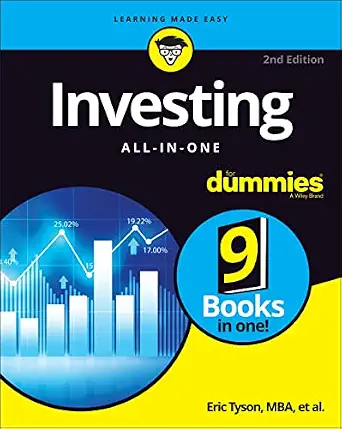 | Best Overall | Format: Paperback / eBook | Publisher: For Dummies (Wiley) | Audience Level: Beginner to intermediate | VIEW LATEST PRICE | See Our Full Breakdown |
| The Psychology of Money: Timeless Lessons on Wealth, Greed, and Happiness |  | Best for Money Mindset | Format: Hardcover / Paperback / eBook / Audiobook | Author: Morgan Housel | Genre: Behavioral finance / personal essays | VIEW LATEST PRICE | See Our Full Breakdown |
| A Beginner’s Guide to Investing: How to Grow Your Money the Smart and Easy Way |  | Best Value Quick Start | Format: Kindle eBook / Paperback | Audience Level: Absolute beginner | Topics Covered: Basic strategies, funds, diversification, compounding | VIEW LATEST PRICE | See Our Full Breakdown |
| Investing 101: From Stocks and Bonds to ETFs and IPOs, an Essential Primer on Building a Profitable Portfolio |  | Best Vocabulary Builder | Format: Paperback / eBook | Publisher: Adams Media | Audience Level: Beginner | VIEW LATEST PRICE | See Our Full Breakdown |
| Investing For Dummies |  | Best Structured Learning Path | Format: Paperback / eBook | Publisher: For Dummies (Wiley) | Author: Eric Tyson | VIEW LATEST PRICE | See Our Full Breakdown |
| Investing 101 for Teens and Young Adults: Start Investing Early, Build Lifelong Wealth, and Avoid Costly Mistakes |  | Best for Teen Investors | Target Audience: Teens and young adults | Experience Level: Absolute beginner | Core Focus: Early investing, lifelong wealth, mistake avoidance | VIEW LATEST PRICE | See Our Full Breakdown |
| The Little Book of Common Sense Investing: The Only Way to Guarantee Your Fair Share of Stock Market Returns |  | Best Long-Term Philosophy | Author: John C. Bogle | Core Thesis: Low-cost index fund investing | Experience Level: Beginner to intermediate | VIEW LATEST PRICE | See Our Full Breakdown |
| Learn to Earn: A Beginner’s Guide to the Basics of Investing and Business |  | Best for Context and Fundamentals | Authors: Peter Lynch and John Rothchild | Scope: Investing and business fundamentals | Experience Level: Absolute beginner | VIEW LATEST PRICE | See Our Full Breakdown |
| A Beginner’s Guide to the Stock Market: Everything You Need to Start Making Money Today |  | Best Quick-Start Guide | Focus: Stock market basics and first trades | Experience Level: Absolute beginner | Pace: Fast, action-oriented | VIEW LATEST PRICE | See Our Full Breakdown |
| How to Invest $50-$5,000: The Small Investor’s Step-by-Step Plan for Low-Risk Investing in Today’s Economy | 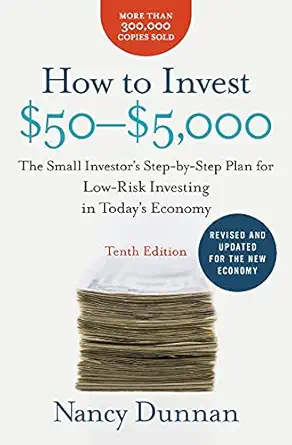 | Best for Small Budgets | Target Capital Range: $50 – $5,000 | Risk Approach: Low-risk strategies | Format: Step-by-step plan | VIEW LATEST PRICE | See Our Full Breakdown |
| Investing for Beginners Made Simple |  | Best for Small Budgets | Format: Paperback / eBook | Primary Topics: Stocks, ETFs, wealth building | Experience Level: Beginner | VIEW LATEST PRICE | See Our Full Breakdown |
| Stock Investing for Beginners: How to Buy Your First Stock and Grow Your Money |  | Best for Buying Your First Stock | Format: Paperback / eBook | Primary Topics: Stock buying, portfolio growth | Experience Level: Beginner | VIEW LATEST PRICE | See Our Full Breakdown |
| The Simple Path to Wealth |  | Best for Financial Independence | Format: Paperback / eBook / Audiobook | Primary Topics: Financial independence, index investing, money management | Experience Level: Beginner to intermediate | VIEW LATEST PRICE | See Our Full Breakdown |
| The Motley Fool Investment Guide: Third Edition |  | Best for Stock-Picking Beginners | Format: Hardcover / Paperback / eBook | Edition: Third Edition | Primary Topics: Stock picking, company research, Fool methodology | VIEW LATEST PRICE | See Our Full Breakdown |
| investment books for beginner | Format | Experience Level |
|---|---|---|
| Investing All-in-One For Dummi | Paperback / eBook | — |
| The Psychology of Money: Timel | Hardcover / Paperback / eBook / Audiobook | — |
| A Beginner’s Guide to Investin | Kindle eBook / Paperback | — |
| Investing 101: From Stocks and | Paperback / eBook | — |
| Investing For Dummies | Paperback / eBook | — |
| Investing 101 for Teens and Yo | Paperback / eBook | Absolute beginner |
| The Little Book of Common Sens | — | Beginner to intermediate |
| Learn to Earn: A Beginner’s Gu | — | Absolute beginner |
| A Beginner’s Guide to the Stoc | Paperback | Absolute beginner |
| How to Invest $50-$5,000: The | Step-by-step plan | Absolute beginner |
| Investing for Beginners Made S | Paperback / eBook | Beginner |
| Stock Investing for Beginners: | Paperback / eBook | Beginner |
| The Simple Path to Wealth | Paperback / eBook / Audiobook | Beginner to intermediate |
| The Motley Fool Investment Gui | Hardcover / Paperback / eBook | Beginner to intermediate |
More Details on Our Top Picks
Investing All-in-One For Dummies
Investing All-in-One For Dummies earns the top spot because it bundles multiple investing disciplines into a single reference that a complete beginner can grow with for years. Compared with A Beginner’s Guide to Investing, which moves fast but stays shallow, this all-in-one format covers financial planning, portfolio construction, and market analysis in enough depth that you won’t outgrow it after your first brokerage account. The tradeoff is weight: this is a reference-style read, not a weekend page-turner, and readers who want a linear, motivational path will stall halfway through. It also skimps on technical analysis, so chart-minded readers will need a second book. But if you want one purchase that answers most questions across a decade of investing decisions, this is the strongest value in the lineup.
Pros:- Broadest topic coverage of any book in this roundup
- Scales with you from first investment to portfolio management
- Practical, jargon-free advice consistent with the Dummies brand
- Written by a recognized team of finance authors
Cons:- Reference format can feel disjointed read cover to cover
- Too basic for advanced or active traders
- Minimal coverage of technical analysis
Best for: Beginners who want a single, long-lasting reference covering investing, planning, and portfolio strategy
Not ideal for: Readers who want a short, motivational starter book — the sheer scope makes it a slow first read
- Format:Paperback / eBook
- Publisher:For Dummies (Wiley)
- Audience Level:Beginner to intermediate
- Topics Covered:Stocks, bonds, funds, real estate, retirement planning, market analysis
- Reading Style:Reference / modular chapters
- Length:Long-form (~750+ pages)
Our verdict“Buy this if you want one comprehensive investing book that stays useful well beyond your first year.”
The Psychology of Money: Timeless Lessons on Wealth, Greed, and Happiness
The Psychology of Money takes a completely different angle from every other pick here: instead of explaining what an ETF is, it explains why smart people make bad financial decisions. Where Investing 101 teaches mechanics, Morgan Housel teaches behavior — patience, risk perception, and the role of luck — through short, story-driven essays that read like magazine features. That storytelling is exactly why it’s a bestseller, and exactly its limitation: you’ll finish it motivated but not instructed, with no idea how to actually place a trade. This pick makes the most sense for readers who already grasp the basics or plan to pair it with a mechanical guide like Investing For Dummies. Read alone, it’s the best mindset primer available; read as your only investing book, it leaves a gap.
Pros:- Exceptionally readable, story-driven short essays
- Timeless behavioral lessons that don’t expire with market trends
- Reframes risk, luck, and patience in a way technical books never address
- Widely recommended by financial professionals
Cons:- Contains no practical how-to-invest instruction
- Concepts may feel obvious to readers already versed in behavioral finance
Best for: Readers who understand the mechanics but sabotage themselves emotionally and want behavioral finance explained through stories
Not ideal for: Complete beginners who need step-by-step instruction on opening accounts and buying assets — this book teaches none of that
- Format:Hardcover / Paperback / eBook / Audiobook
- Author:Morgan Housel
- Genre:Behavioral finance / personal essays
- Reading Style:Short, standalone chapters
- Audience Level:All levels
- Core Focus:Wealth psychology, greed, happiness, decision-making
Our verdict“Pair this with a mechanics-focused guide — it’s the mindset half of a beginner’s education, not the whole thing.”
A Beginner’s Guide to Investing: How to Grow Your Money the Smart and Easy Way
For readers who find Investing All-in-One For Dummies intimidating, A Beginner’s Guide to Investing is the antidote: a short, cheap, straight-to-the-point primer you can finish in a weekend. It covers the fundamental strategies — index funds, diversification, compounding — without the encyclopedic detours, and its low price makes it the lowest-risk purchase in this roundup. The flip side is longevity. Compared with Investing 101, which walks through a wider menu of asset types like bonds and IPOs, this book keeps its blinders on, and it offers nothing for readers beyond month one of their investing journey. Still, for a hesitant first-timer who wants to understand enough to open an account and stop stalling, this stands out as the fastest on-ramp money can buy.
Pros:- Extremely affordable and low-commitment
- Clear, jargon-free language for total novices
- Quick read that removes analysis paralysis
- Focuses on simple, proven strategies like index investing
Cons:- Depth ends almost as soon as it begins
- Skips entire asset classes and advanced topics
- Sparse supporting detail compared with fuller guides
Best for: Hesitant first-timers who want a fast, inexpensive read that gets them from zero to opening an account
Not ideal for: Readers who already know what a mutual fund is — they’ll finish it in an hour and retain little
- Format:Kindle eBook / Paperback
- Audience Level:Absolute beginner
- Topics Covered:Basic strategies, funds, diversification, compounding
- Reading Style:Short, direct primer
- Length:Concise (~100 pages)
- Price Tier:Budget
Our verdict“The cheapest possible way to stop procrastinating on investing — just don’t expect it to be your last book.”
Investing 101: From Stocks and Bonds to ETFs and IPOs, an Essential Primer on Building a Profitable Portfolio
Investing 101 fills the middle ground between the brevity of A Beginner’s Guide to Investing and the bulk of Investing All-in-One For Dummies. Its defining strength is terminology coverage: stocks, bonds, ETFs, mutual funds, and even IPOs are each explained in plain language, so readers leave with the ability to decode financial news and fund prospectuses. That makes it the best pre-read before tackling denser books like The Motley Fool Investment Guide, which assumes comfort with market vocabulary. The tradeoff is that its breadth comes at the cost of depth — every topic gets a chapter, few get mastery, and there’s no meaningful technical analysis for readers headed toward active trading. Think of it as a dictionary-plus-primer hybrid rather than a strategy manual.
Pros:- Covers the widest range of asset types in a compact format
- Translates complex financial concepts into plain English
- Well-organized for jumping to specific topics
- Useful as a pre-read before more advanced guides
Cons:- Shallow treatment of each individual asset class
- Little guidance on building an actual personalized plan
- No technical analysis or market-timing discussion
Best for: Readers who feel lost in financial jargon and want a structured tour of every major investment type
Not ideal for: Strategy-seekers who want a specific action plan — this book explains the landscape more than it prescribes moves
- Format:Paperback / eBook
- Publisher:Adams Media
- Audience Level:Beginner
- Topics Covered:Stocks, bonds, ETFs, mutual funds, IPOs, portfolio basics
- Reading Style:Structured primer, topic-by-topic
- Length:Mid-length (~250 pages)
- Core Focus:Investment vocabulary and portfolio fundamentals
Our verdict“The best pick if your main gap is vocabulary — read it first, then graduate to a strategy-focused book.”
Investing For Dummies
The classic Investing For Dummies differs from its sibling Investing All-in-One For Dummies by being tighter and more pedagogically sequenced — it reads like a course with a beginning, middle, and end rather than a stack of mini-books. Compared with The Simple Path to Wealth, which champions one philosophy forcefully, this guide presents multiple approaches and lets you choose, which matters if you don’t yet know whether you’re an index investor or a stock-picker. Eric Tyson’s no-nonsense, anti-hype tone is a genuine asset for beginners surrounded by get-rich-quick noise. The honest drawback: like most Dummies titles, it plateaus early, so intermediate investors will find the second half repetitive, and its specific numbers age faster than the timeless lessons in The Psychology of Money.
Pros:- Logical, chapter-by-chapter learning progression
- Presents multiple investing philosophies without dogma
- Trustworthy, hype-free author voice
- Benchmarks and checklists make concepts actionable
Cons:- Intermediate readers will outgrow it quickly
- Market-specific figures and examples date over time
Best for: Learners who want a structured, course-like progression through investing fundamentals with balanced viewpoints
Not ideal for: Intermediate investors or philosophy-seekers — the multi-approach neutrality reads as indecisive if you already know your style
- Format:Paperback / eBook
- Publisher:For Dummies (Wiley)
- Author:Eric Tyson
- Audience Level:Beginner
- Topics Covered:Financial markets, asset classes, portfolio building, wealth planning
- Reading Style:Sequential course-like guide
- Length:Mid-to-long (~450 pages)
Our verdict“The best choice if you want a balanced, classroom-style introduction rather than one author’s investing gospel.”
Investing 101 for Teens and Young Adults: Start Investing Early, Build Lifelong Wealth, and Avoid Costly Mistakes
Most beginner investing books assume a thirty-something reader with a paycheck and a 401(k). This one flips that assumption by writing directly to teens and young adults, which changes everything from tone to pacing. Where A Beginner’s Guide to Investing explains compounding as a concept, this title frames it as a head start the reader already owns — a far more motivating angle for someone who can’t yet open a brokerage account without a parent. The emphasis on avoiding costly mistakes early is genuinely useful, since the most expensive errors happen in the first few years. The tradeoff is depth: compared with Investing 101: From Stocks and Bonds to ETFs and IPOs, it stays surface-level and won’t carry a reader past the basics into specific strategy.
Pros:- Written specifically for a young audience with relatable framing
- Strong emphasis on early compounding as a lifelong advantage
- Practical warnings against common first-time mistakes
- Accessible language that assumes zero prior knowledge
Cons:- Too shallow to serve as a lasting reference after the basics click
- Little guidance on specific investment vehicles or account types
Best for: Teens and college students who want to understand investing before earning their first real paycheck
Not ideal for: Readers in their late twenties or older with existing accounts and money to deploy now — the framing will feel juvenile
- Target Audience:Teens and young adults
- Experience Level:Absolute beginner
- Core Focus:Early investing, lifelong wealth, mistake avoidance
- Format:Paperback / eBook
- Strategy Depth:Introductory
- Best Use:First-ever investing book for a young reader
Our verdict“Buy this for a teenager or young adult you want to hook on investing early; skip it if you already have money invested.”
The Little Book of Common Sense Investing: The Only Way to Guarantee Your Fair Share of Stock Market Returns
Written by Vanguard founder John Bogle, this is less a how-to manual and more a convincing argument for index funds that happens to teach you how to invest along the way. Compared with Learn to Earn, which meanders through business history, this book is ruthlessly focused on one thesis: low-cost index funds beat almost every alternative over time. That single-mindedness is its greatest strength and its main limitation. A reader who wants checklists and step-by-step account setup will find How to Invest $50-$5,000 far more actionable. But for building the discipline to stay invested for decades, nothing in this roundup argues its case more persuasively. Just don’t expect technical analysis — Bogle considers it a distraction, and the book reflects that bias.
Pros:- Authoritative authorship from the creator of the index fund
- Compelling long-term evidence for low-cost investing
- Short and readable despite covering a big argument
- Timeless advice that won’t feel dated in ten years
Cons:- No step-by-step instructions for actually opening accounts or buying funds
- Repetitive if you’re already convinced by the index-fund thesis
Best for: Beginners who want a deeply reasoned philosophy they can hold onto for decades, not just a starting checklist
Not ideal for: Hands-on readers who want stock-picking techniques or active trading strategies — Bogle dismisses both
- Author:John C. Bogle
- Core Thesis:Low-cost index fund investing
- Experience Level:Beginner to intermediate
- Focus:Investment philosophy and long-term strategy
- Technical Analysis Coverage:None
- Best Use:Building conviction in passive investing
Our verdict“The right pick if you want to understand why you’re investing a certain way, not just how to click the buy button.”
Learn to Earn: A Beginner’s Guide to the Basics of Investing and Business
This one takes the widest-angle view in the batch, teaching not just investing but how businesses and markets actually work — the context most beginner books skip entirely. Where A Beginner’s Guide to the Stock Market rushes toward buying your first stock, this book spends real time explaining why companies exist, how capitalism functions, and where stock markets came from. That foundation pays off later, because readers understand what they own rather than just how to buy it. The cost is pace: anyone eager to open an account this week will find it slower and more narrative-driven than Investing for Beginners Made Simple, and it offers essentially no actionable strategy sections. It’s the book to read before the how-to book, not instead of one.
Pros:- Explains the ‘why’ behind markets, not just the mechanics
- Builds durable foundational knowledge that supports later learning
- Engaging narrative style from a well-known author team
- Great primer on business fundamentals alongside investing
Cons:- Dated in sections, with examples that predate modern fintech and apps
- Minimal practical guidance on actually starting a portfolio
Best for: Curious beginners who want to understand how businesses and markets work before learning specific investing tactics
Not ideal for: Readers who want immediate, actionable steps — the historical and conceptual detours will feel like stalling
- Authors:Peter Lynch and John Rothchild
- Scope:Investing and business fundamentals
- Experience Level:Absolute beginner
- Style:Narrative and explanatory
- Actionable Strategy:Limited
- Best Use:Foundational education before tactical books
Our verdict“Read this first if you want context and understanding; pair it with a tactical guide to actually get started.”
A Beginner’s Guide to the Stock Market: Everything You Need to Start Making Money Today
If the goal is getting money into the market this week, this is the most direct route in the lineup. It covers stock market mechanics, order types, and basic strategies with the urgency its subtitle promises — a sharp contrast to The Little Book of Common Sense Investing, which spends its pages arguing philosophy rather than explaining execution. Compared with Learn to Earn, it skips the history lesson entirely and goes straight to practical steps, which makes it faster but shallower. The ‘start making money today’ framing is also the honest drawback: it can encourage impatience, and the book offers little protection against the behavioral mistakes that The Psychology of Money addresses so well. Treat it as an execution manual, not a complete education.
Pros:- Direct, execution-focused instructions for getting started quickly
- Clear explanations of stock market mechanics and order types
- Short and digestible for readers with limited time
- Cheerful, motivational tone that lowers the intimidation factor
Cons:- Little coverage of risk management or investor psychology
- Title oversells results; ‘making money today’ is not a realistic promise
Best for: Beginners who already have a small amount of money ready and want clear instructions for buying their first stocks
Not ideal for: Readers prone to impatience or chasing quick returns — the fast-paced framing rewards exactly the wrong instincts
- Focus:Stock market basics and first trades
- Experience Level:Absolute beginner
- Pace:Fast, action-oriented
- Strategy Depth:Basic
- Format:Paperback
- Best Use:Executing a first investment quickly
Our verdict“A solid execution guide for your first stock purchase, as long as you read something on risk and behavior alongside it.”
How to Invest $50-$5,000: The Small Investor’s Step-by-Step Plan for Low-Risk Investing in Today’s Economy
Most investing books quietly assume you have meaningful capital to deploy. This one is built for the reader who has $50 to $5,000 and feels embarrassed to even ask where to start — a genuinely underserved audience. Where Investing for Beginners Made Simple covers broad strategy, this book gets granular about what you can actually do with small amounts, including where fractional dollars make sense and how to keep risk contained. Its low-risk orientation makes it more conservative than A Beginner’s Guide to the Stock Market, which is the right tradeoff for someone whose first losses could scare them away permanently. The downside is narrowness: once your portfolio grows past five figures, you’ll outgrow this book and need something with more strategic range.
Pros:- Structured specifically around small starting amounts
- Step-by-step format that removes guesswork
- Low-risk focus suits cautious first-time investors
- Addresses the emotional hurdle of starting with very little money
Cons:- Limited usefulness once your investable balance grows beyond a few thousand dollars
- Light on specifics about which investment types it recommends
Best for: First-time investors with modest savings who want a concrete plan matched to a small starting balance
Not ideal for: Investors with larger portfolios or appetite for growth — the conservative, small-scale approach will feel restrictive
- Target Capital Range:$50 – $5,000
- Risk Approach:Low-risk strategies
- Format:Step-by-step plan
- Experience Level:Absolute beginner
- Era Relevance:Written for the current economic environment
- Best Use:First plan for a small investor
Our verdict“The most practical entry point if a small budget is your biggest obstacle — just plan to graduate to a bigger book later.”
Investing for Beginners Made Simple
Among books in this roundup, this one stands out for a question most beginner guides dodge: what if you only have a little money to start? Compared with The Motley Fool Investment Guide, which leans toward picking individual stocks, this pick orients readers toward ETF-first investing, which makes far more sense when you’re starting with $100 rather than $10,000. The step-by-step structure means a reader can move from opening an account to making a first purchase without consulting other sources. The tradeoff is depth — it oversimplifies valuation and analysis, so anyone wanting to evaluate individual companies will outgrow it quickly. Compared with How to Invest $50-$5,000, it covers similar small-dollar territory but with a broader wealth-building framing rather than a strict low-risk playbook. This pick makes the most sense as a first book, not a last one.
Pros:- Genuinely accessible to readers with zero investing background
- Structured as actionable steps rather than theory
- Directly addresses starting with minimal money
- ETF focus suits small portfolios well
Cons:- Oversimplifies complex topics like valuation and risk
- Lacks detailed investment analysis for deeper study
Best for: Complete beginners with small starting amounts who want an ETF-centered, step-by-step path
Not ideal for: Readers who want to analyze individual stocks — the analysis sections are thin
- Format:Paperback / eBook
- Primary Topics:Stocks, ETFs, wealth building
- Experience Level:Beginner
- Approach:Step-by-step practical guide
- Minimum Starting Capital Focus:Small amounts
- Depth:Introductory
Our verdict“Buy this if you want a low-friction, small-budget entry point; skip it if you already understand index funds.”
Stock Investing for Beginners: How to Buy Your First Stock and Grow Your Money
This is the rare beginner book that zooms in on a single moment of friction: actually executing your first trade. Where The Simple Path to Wealth tells you why to invest and mostly points you toward index funds, this option walks through the mechanics — choosing a broker, placing an order, and thinking about what happens after you own shares. Compared with A Beginner’s Guide to the Stock Market, it is narrower in scope but more concrete about the purchase process itself, which matters for readers paralyzed by the practical details. The drawback is that it stops at the foundation: there is little on advanced strategy, and its guidance on market conditions reflects the era it was written in, so current-market specifics should not be expected. This pick makes the most sense for doers, not theorists.
Pros:- Concrete walkthrough of buying your first shares
- Covers foundational concepts without jargon
- Practical growth tips for a first portfolio
- Short and focused rather than sprawling
Cons:- No advanced strategies once you’ve bought your first stock
- Dated when it comes to current market conditions
Best for: Hands-on beginners who understand investing basics but feel stuck on making their first actual purchase
Not ideal for: Readers seeking a complete investing philosophy or advanced portfolio strategy
- Format:Paperback / eBook
- Primary Topics:Stock buying, portfolio growth
- Experience Level:Beginner
- Approach:Practical, transaction-focused
- Scope:Foundational only
- Currency of Content:Does not reflect current market conditions
Our verdict“Pick this up if your obstacle is executing a first trade, not deciding whether to invest.”
The Simple Path to Wealth
This option stands out because it treats investing as one part of a bigger project: reaching financial independence. Compared with Investing for Beginners Made Simple, which is a how-to manual, this book is closer to a life framework — it spends as much time on mindset, savings rate, and the psychology of money management as on choosing investments. The voice is direct and plainspoken, making it more accessible than denser primers like Investing 101. The tradeoff is real, though: it offers no detailed technical strategies and no specific investment plans. Readers who want model portfolios or stock analysis should look elsewhere in this roundup. But for someone who wants to understand why simple index investing beats cleverness — and how it connects to a rich, free life — this pick makes the most sense. It pairs well with a mechanics-focused book rather than replacing one.
Pros:- Connects investing to a clear financial independence roadmap
- Highly accessible, conversational writing
- Strong long-term wealth-building perspective
- Reassuring for anxious first-time investors
Cons:- No specific investment plans or model portfolios
- Limited coverage of advanced financial topics
Best for: Readers chasing FIRE or early retirement who want a philosophy plus simple index strategy
Not ideal for: Readers wanting concrete portfolios, specific plans, or technical depth
- Format:Paperback / eBook / Audiobook
- Primary Topics:Financial independence, index investing, money management
- Experience Level:Beginner to intermediate
- Approach:Philosophy-driven, long-term focus
- Technical Depth:Low — strategy over tactics
- Best Pairing:A step-by-step mechanics guide
Our verdict“Choose this for the why and the roadmap; supplement it with a mechanics book for the how.”
The Motley Fool Investment Guide: Third Edition
Most books in this lineup steer beginners toward index funds; this one makes the opposite case — that ordinary investors can beat the market by picking individual stocks. That alone gives it a distinct role. Compared with The Simple Path to Wealth, which argues you shouldn’t try, this guide teaches how to research companies, evaluate businesses, and act on the Fool’s rules-based approach. The credibility of a reputable, established investing brand and a fully updated third edition add practical value that older beginner guides lack. The tradeoffs deserve honesty: actively picking stocks carries more risk than the index approach other picks here recommend, and the Fool’s methodology has its critics, so readers should treat it as one framework, not gospel. Still, for beginners who find pure index investing uninspiring and want to learn to evaluate businesses, this is the strongest option in this roundup.
Pros:- Teaches a specific, repeatable stock-picking framework
- Updated third edition with current examples
- Backed by a well-known investing organization
- More engaging than formulaic beginner primers
Cons:- Stock-picking carries higher risk than the index strategies other picks favor
- Too basic for experienced investors
Best for: Motivated beginners who want to research and pick individual stocks rather than only index
Not ideal for: Passive investors happy with index funds, or advanced investors who’ll find it too basic
- Format:Hardcover / Paperback / eBook
- Edition:Third Edition
- Primary Topics:Stock picking, company research, Fool methodology
- Experience Level:Beginner to intermediate
- Approach:Active investing, rules-based
- Risk Profile:Higher than index-based alternatives
Our verdict“If you want to pick stocks rather than just own the market, this is the beginner guide that will actually teach you how.”

How We Picked
I evaluated each book against four criteria that matter most to a first-time investor: accessibility (can someone with zero finance background finish it without giving up), actionability (does it translate into concrete next steps), accuracy and philosophy (does it teach sound, evidence-based principles rather than get-rich-quick hype), and longevity (will the content still be useful a year from now, or is it tied to a passing market moment). Books that scored well on accessibility but taught speculation-heavy strategies ranked below books with duller prose but sounder foundations.
The ranking order also reflects a deliberate philosophy: behavior before mechanics before tactics. Books that build durable money habits sit at the top, broad primers fill the middle, and narrowly tactical books (stock picking, teen-specific guides) sit lower because they serve smaller slices of readers. Length worked against some titles — a 700-page reference is a poor first book no matter how good the content is.
| investment books for beginner | Experience Level |
|---|---|
| Investing All-in-One For Dummi | — |
| The Psychology of Money: Timel | — |
| A Beginner’s Guide to Investin | — |
| Investing 101: From Stocks and | — |
| Investing For Dummies | — |
| Investing 101 for Teens and Yo | Absolute beginner |
| The Little Book of Common Sens | Beginner to intermediate |
| Learn to Earn: A Beginner’s Gu | Absolute beginner |
| A Beginner’s Guide to the Stoc | Absolute beginner |
| How to Invest $50-$5,000: The | Absolute beginner |
| Investing for Beginners Made S | Beginner |
| Stock Investing for Beginners: | Beginner |
| The Simple Path to Wealth | Beginner to intermediate |
| The Motley Fool Investment Gui | Beginner to intermediate |
Factors to Consider When Choosing Investment Books For Beginners
Beyond individual titles, a few broader patterns determine whether an investment book actually helps you or just decorates a shelf. These are the factors I’d weigh before clicking buy on any beginner investing title.Mindset Book or Mechanics Book — Know Which You Need First
Beginner investing books split into two camps: books about why and how to behave (Psychology of Money, Simple Path to Wealth) and books about what to actually do (A Beginner’s Guide to the Stock Market, Investing 101). Many buyers grab a mechanics book when their real obstacle is fear or inconsistent habits, then abandon it by chapter three. If you’ve never invested because it feels intimidating or risky, start with a mindset book — you’ll finish it and be primed for the technical one. If you’re already motivated and just need instructions, skip the philosophy and buy a step-by-step guide. The most common mistake in this category is buying both types at once and reading neither.
Watch for Outdated Market Data and Strategies
Investing books age badly. Titles written before 2010 often recommend practices that have changed — higher-fee mutual funds, no mention of commission-free trading, or assumptions about savings account interest rates that no longer hold. Always check the publication or revision date before buying; a third edition from 2026 will serve you far better than a 1998 original with the same title. The exception is books explicitly framed as timeless, where examples are illustrative rather than prescriptive. A good rule: if a book quotes specific fund names, expense ratios, or tax rules, it needs to be recent. If it talks in principles, age matters less.
Beware of Books That Sell a Gurus’ Strategy
Some beginner books exist primarily to funnel readers toward a paid course, newsletter, or coaching program. Warning signs include promises of beating the market consistently, dense name-dropping of the author’s other products, and coverage of complex products like options in a book labeled ‘for beginners.’ Index-fund-centered books aren’t flashy, but decades of data support their approach for novices. A book that makes you feel behind unless you buy something else is a marketing asset, not education. The strongest picks in this lineup teach you to be skeptical of exactly that pitch.
Length and Format Affect Whether You’ll Finish
A book you don’t finish has zero value, regardless of its content quality. Reference-style tomes like the Dummies titles can run 500+ pages — excellent on the shelf, terrible as a starting point. Shorter books of 200-300 pages with clear chapter structure have much higher completion rates among new investors. Audiobook and Kindle editions also matter here: psychology-focused books translate well to audio, while anything with tables, charts, or worksheets works better in print or e-reader. Match the format to how you actually consume information, not how you wish you did.
Your Starting Capital Should Shape Your Choice
Books that assume you have $50,000 to deploy are nearly useless if you’re starting with $200. Some titles, like How to Invest $50-$5,000, are built entirely around small-dollar strategies, covering fractional shares, low-minimum brokerages, and fee traps that eat small accounts alive. General primers tend to gloss over these friction points. Before buying, skim the table of contents for any mention of small accounts or getting started with little money. If it’s absent and you’re starting small, choose accordingly — the principles of investing scale, but the practical logistics don’t.
Price Rarely Predicts Quality in This Category
Unlike gear or software, the price gap between the best and worst beginner investing books is small — typically $10 to $25. A cheaper book is not a compromise, and an expensive hardcover is not an upgrade; some of the soundest advice sits in $12 paperbacks. Where price does matter is with updated editions, where paying a few dollars more for the latest revision buys you current tax rules and fund examples. Used copies of timeless titles are perfectly fine. Save your budget deliberation for your actual investments, not the book that teaches you about them.
Frequently Asked Questions
Should my first investment book teach index funds or stock picking?
For almost all beginners, index fund investing is the better first education. The evidence is consistent that most professionals underperform low-cost index funds over long periods, and a novice picking individual stocks is starting with an even bigger handicap. Stock-picking books like The Motley Fool Investment Guide can be valuable later, once you understand diversification, risk, and your own tolerance for losses. Reading a stock-picking book first often convinces new investors that active trading is the default path, which leads to costly early mistakes. Learn the boring, proven approach first; graduate to tactics if you still want to after a year or two.
Do I need more than one investment book as a beginner?
Most beginners need exactly two: one mindset book and one mechanics book. The mindset title gets you past fear and teaches you not to panic-sell; the mechanics title shows you how to open an account and buy your first fund. Buying five or six at once is a common trap — the pile becomes a procrastination device. A good pairing from this roundup would be The Psychology of Money followed by Investing for Beginners Made Simple. If you only buy one, choose based on your bigger obstacle: if you don’t know what to do, get the mechanics book; if you know but keep stalling, get the mindset book.
Are the Dummies books still worth buying in 2026?
Yes, but with a specific expectation: they’re reference books, not first reads. The Dummies franchise has kept its editions current, and the breadth — covering stocks, bonds, ETFs, real estate, and retirement accounts in one place — is genuinely useful once you know what questions to ask. The problem is that a complete beginner faces 600 pages of material with no prioritization, which is why they rank in the middle of this lineup rather than the top. The smart play is to buy a short primer first, start investing, then pick up a Dummies title when you hit topics the primer skipped. If you’re a reader who genuinely likes working through long textbooks, they can absolutely be a starting point.
What if I only have a small amount of money — is a book still worth it?
A $15 book is arguably the highest-return investment you can make when your portfolio is small, because mistakes are relative to what you have. A bad fund choice that costs 1% in fees matters proportionally whether you hold $300 or $300,000, but the fee trap that eats a small account — like inactivity fees or minimums — only shows up in books written for small-dollar investors. Titles like How to Invest $50-$5,000 address these logistics directly, while general primers often don’t. The other reason to read before investing small amounts: building the habit of learning first prevents you from treating a small account as play money to gamble with. Just make sure the book you choose acknowledges fractional shares and commission-free brokers, both of which changed small-account math entirely.
Can I rely on free online content instead of buying a beginner book?
Free content works as a supplement, but it has three weaknesses a good book avoids: it’s fragmented (you learn terms out of order, with gaps you can’t see), it’s often commercially motivated (blog posts pushing specific brokers or courses), and it lacks an author’s reputation riding on accuracy. A book forces a writer to build a complete, internally consistent argument, and publishers put it through editing that a YouTube video never gets. That said, free content is excellent for current specifics — today’s interest rates, this year’s broker fee structures — which books can’t keep current. The practical split: buy a book for the framework, use free sources for time-sensitive details.
Conclusion
The right pick depends less on price — these books all cost within a few dollars of each other — and more on where you are in your investing journey. For the best overall choice, I’d point most readers to The Psychology of Money: it’s the book beginners actually finish, and behavior is what determines outcomes in the first five years. For the best value, The Simple Path to Wealth delivers both philosophy and a concrete plan in one inexpensive package, making it the strongest single-purchase decision in the lineup. If you want the most thorough education money can buy in this category, Investing All-in-One For Dummies is the premium reference choice — just treat it as a second book, not a first. True beginners who want their hand held through the first transaction should grab Investing for Beginners Made Simple or A Beginner’s Guide to the Stock Market. Specific needs round out the map: How to Invest $50-$5,000 for small-dollar starters, Investing 101 for Teens and Young Adults for young readers, and The Motley Fool Investment Guide for those determined to learn stock picking once the basics are solid. Whichever you choose, buy one, finish it, and act on it — an unread book is the only guaranteed losing investment on this list.
Fall Picks
fall essentials
As an affiliate, we earn on qualifying purchases.