Saving for a house down payment can seem tough, but setting clear goals helps. Use high-yield savings accounts and track your progress with budgeting apps to stay motivated. Explore assistance programs that can reduce your upfront costs, and focus on building your savings gradually. Remember, many buyers find ways to overcome rising prices by leveraging resources and planning ahead. Keep exploring options—you’ll find practical tips to help you move closer to homeownership.
Key Takeaways
- Set clear savings goals and use high-yield accounts to grow your funds faster.
- Create and stick to a detailed budget to track expenses and boost savings efficiency.
- Explore assistance programs and grants to reduce the amount needed for your down payment.
- Prioritize saving over non-essential expenses like travel and luxury purchases.
- Stay informed about market trends and consider options like larger down payments or assistance to overcome rising home prices.
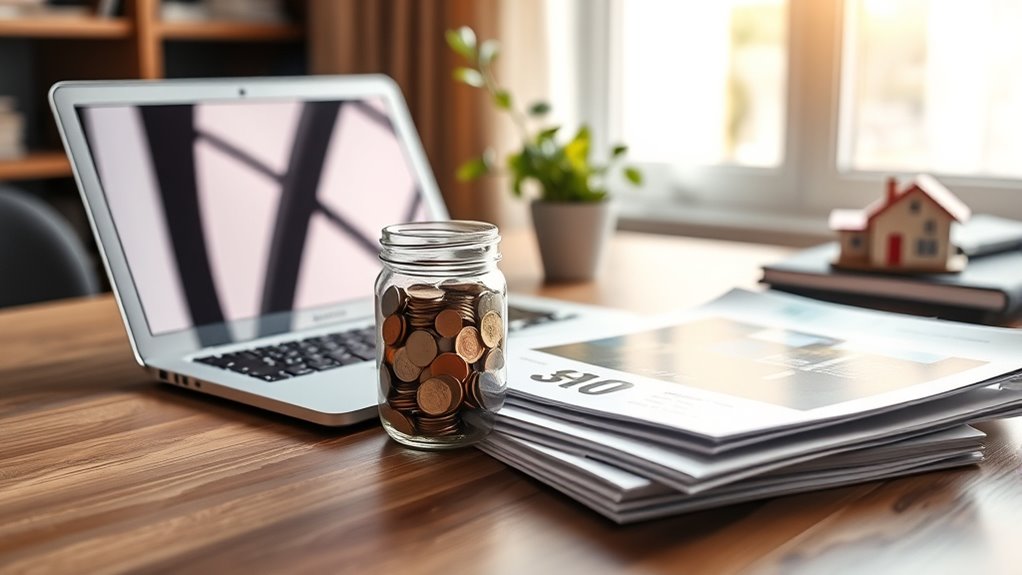
Are you feeling overwhelmed by the thought of saving enough for a house down payment? You’re not alone. The current landscape shows that the average down payment for first-time buyers is between 8% and 13% of the home’s price. With median home prices reaching around $438,700 nationwide and down payment amounts more than doubling since before the pandemic—now averaging over $30,250—it’s understandable to feel discouraged. Many Americans believe they’ll never save enough, and only about 8% are actively putting aside money specifically for a home. Instead, most are saving for emergencies or travel, which makes reaching that goal more difficult.
Despite these challenges, there are strategies you can adopt. Over half of Americans set a savings goal for 2025, and some are targeting a home purchase. Opening a high-yield savings account can help your savings grow *considerably* faster than a traditional account. Using budgeting apps can make tracking your progress easier, helping you stay consistent and motivated. Additionally, exploring assistance programs can *substantially* reduce the amount you need to save. The Down Payment Resource lists over 2,600 programs, some reducing your loan-to-value ratio by around 6%. There are also programs supporting multi-family home purchases and grants or loans for first-time buyers, which many have utilized successfully.
However, barriers persist. Increased expenses and decreased income are common obstacles, with 78% of Americans facing some sort of challenge in reaching their savings goals. The personal savings rate has dipped to 4.6%, making it even tougher to set aside money. Also, many believe that good credit and high mortgage rates are necessary to buy a home, which can discourage some from even trying. The pandemic initially boosted personal savings rates above 30%, but those savings have largely been spent, leaving fewer resources for home buying. Still, some buyers benefit from the pandemic-era savings, and rising home equity can help fund larger down payments for those looking to move up. In 2024, the average down payment was 14.4% of the purchase price, with a median dollar amount of $30,250.
Understanding the home affordability landscape can also motivate you to adjust your savings plan accordingly, as rising home prices impact how much you need to save. Affordability remains a major hurdle. The typical monthly mortgage payment for a first-time buyer is around $3,400, based on a 9% down payment. Home prices continue to rise in many markets, with some seeing increases over 10% year-over-year. Renting still feels cheaper for many, with 18% believing it’s the smarter financial move. Despite these hurdles, staying focused on your goal, exploring assistance options, and adjusting your savings plan can help you move closer to that first home. It’s a tough market, but with persistence and smart strategies, you can turn your homeownership dreams into reality.
high-yield savings account for home down payment
As an affiliate, we earn on qualifying purchases.
As an affiliate, we earn on qualifying purchases.
Frequently Asked Questions
How Long Does It Typically Take to Save for a Down Payment?
It usually takes about 3 to 5 years to save enough for a down payment, depending on your income, expenses, and savings rate. If you set a clear goal and consistently save a portion of your income, you can speed up the process. Consider cutting unnecessary expenses, increasing your income, or exploring down payment assistance programs to reach your goal sooner. Stay disciplined, and you’ll be in your new home faster than you think.
What Are the Best Savings Accounts for First-Time Homebuyers?
Think of savings accounts as your financial garden—nurture them to grow your down payment. High-yield savings accounts are your best bet, offering better interest rates than regular accounts. Look for those with no fees, easy access, and FDIC insurance for safety. Online banks like Ally, Marcus, or Discover often provide top rates, helping your money blossom faster on your journey to homeownership.
Should I Prioritize Saving or Paying off Debt First?
You should prioritize paying off high-interest debt first, as it can drain your finances and hinder your savings progress. Once you’ve managed those debts, focus on building your down payment savings. Balancing both is ideal, but tackling expensive debt first helps improve your credit score and reduces interest costs, making it easier to secure a mortgage later. Keep a steady plan, and you’ll be ready to buy sooner.
Are There Any Government Programs to Assist With Down Payments?
Did you know that nearly 40% of first-time homebuyers receive some form of government assistance? Yes, programs like FHA loans, which require as little as 3.5% down, can help you get started. You might also explore local down payment assistance programs or grants designed specifically for first-timers. Check your state or city’s housing authority website to find options tailored to your area and eligibility.
How Can I Boost My Credit Score During Savings?
You can boost your credit score while saving by paying your bills on time, reducing your credit card balances, and avoiding new debt. Check your credit report regularly for errors and dispute any inaccuracies. Keep old accounts open to improve your credit history length. Limit new credit inquiries, and consider consolidating debt if it helps lower your interest rates. These steps can help raise your score faster.
budgeting app for saving for a house
As an affiliate, we earn on qualifying purchases.
As an affiliate, we earn on qualifying purchases.
Conclusion
Think of your savings journey as tending a garden. With patience, consistent watering, and careful pruning, your tiny seed of savings will grow into a sturdy sapling, ready to support your dream home. Keep nurturing your funds, stay disciplined, and watch your efforts blossom over time. Before you know it, you’ll stand in a lush landscape of opportunity, ready to harvest the keys to your new home and step into your future with confidence.
first-time homebuyer assistance programs
As an affiliate, we earn on qualifying purchases.
As an affiliate, we earn on qualifying purchases.
down payment grants for first-time buyers
As an affiliate, we earn on qualifying purchases.
As an affiliate, we earn on qualifying purchases.