TL;DR
Siemens revealed a strategic partnership with NVIDIA at CES 2026 to create an Industrial AI Operating System, integrating AI into manufacturing processes. The initiative aims to leverage Siemens’ industrial data and expertise to revolutionize factory automation and simulation.
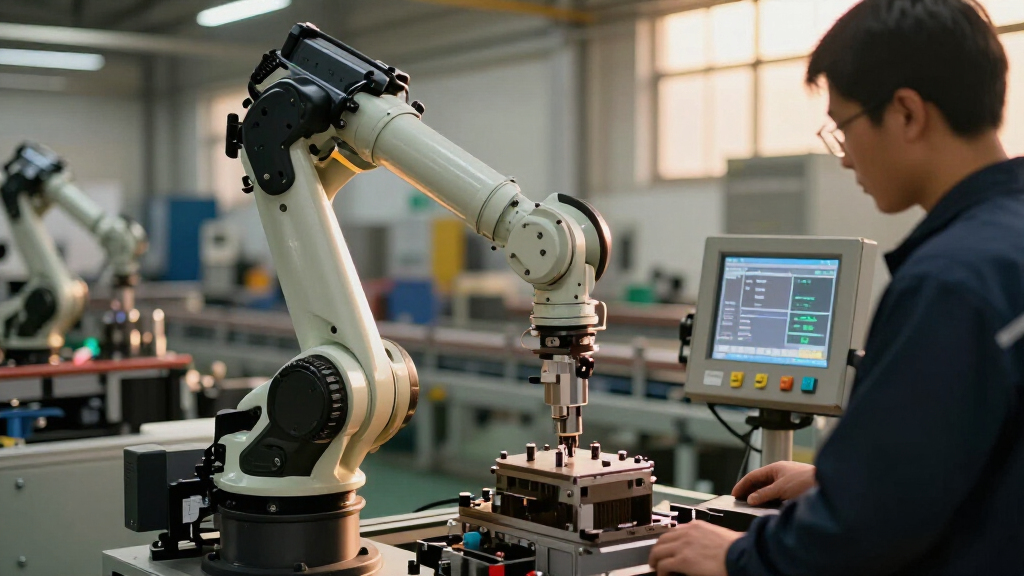
Siemens and NVIDIA have announced a partnership to develop an Industrial AI Operating System that aims to embed AI across all stages of manufacturing, including design, engineering, and operations. This initiative marks a significant shift towards AI-driven factory automation, leveraging Siemens’ extensive industrial data and domain expertise. The first fully AI-driven manufacturing site is scheduled to launch in 2026 at Siemens’ Electronics Factory in Erlangen, Germany.
At CES 2026, Siemens CEO Roland Busch highlighted the company’s focus on physical AI, emphasizing that the next frontier in artificial intelligence lies in the physical world of factories and infrastructure, not just chatbots or language models. Siemens’ Industrial Foundation Model (IFM), first announced at Hannover Messe 2025, is designed to process 3D models, 2D drawings, and industrial data, providing contextual insights to optimize engineering and automation processes.
The partnership with NVIDIA aims to create an Industrial AI Operating System, a platform that integrates GPU-accelerated simulation, generative digital twins, and autonomous optimization tools. Siemens plans to support GPU acceleration across its simulation software suite and expand support for NVIDIA’s CUDA-X libraries, enabling faster and more accurate simulations.
One of the flagship projects is the lighthouse factory in Erlangen, which will serve as a model for AI-driven manufacturing globally. Early applications include digital twins used for simulating facility upgrades, with PepsiCo cited as an early user. Siemens also plans to introduce Digital Twin Composer in mid-2026, facilitating the creation of complex digital twins and industrial copilots across supply chains.
Why Siemens’ AI Factory Strategy Matters
This development signals a major shift in manufacturing, where AI is expected to move from supporting roles to core operational functions. Siemens’ focus on physical AI and domain-specific models leverages its long-standing industrial data advantage, potentially setting a new standard for factory automation. The partnership with NVIDIA underscores the importance of high-performance computing and simulation in realizing this vision. If successful, Siemens could reshape industrial productivity, reduce downtime, and enable more agile supply chains, impacting global manufacturing competitiveness.
As an affiliate, we earn on qualifying purchases.
Background on Siemens’ Industrial AI Initiatives
Siemens has been investing in automation and digital twin technologies for years, with its Hannover Messe announcements in 2025 introducing the Industrial Foundation Model (IFM) as a tailored AI solution for industrial data. The company’s strategy aligns with broader industry trends towards integrating AI into manufacturing, but it emphasizes the importance of proprietary, domain-specific data and expertise. The partnership with NVIDIA builds on Siemens’ existing software portfolio and aims to accelerate its move into AI-driven factory automation. The broader industrial AI landscape is becoming increasingly competitive, with players like Palantir and Qualcomm also entering the space, but Siemens maintains a strong domain moat rooted in its industrial legacy.
“Industrial AI is no longer a feature; it’s a force that will reshape the next century.”
— Roland Busch, Siemens CEO
GPU-accelerated manufacturing simulation tools
As an affiliate, we earn on qualifying purchases.
As an affiliate, we earn on qualifying purchases.
Unverified Performance and Deployment Timelines
While Siemens announced the plan for a lighthouse factory and new AI tools, specific hardware configurations, detailed deployment timelines, and validated performance metrics remain undisclosed. The success of the platform and its scalability across different manufacturing sites are still unproven at this stage, with the timeline for widespread adoption uncertain.
AI-powered factory automation systems
As an affiliate, we earn on qualifying purchases.
As an affiliate, we earn on qualifying purchases.
Next Steps for Siemens and Industrial AI Development
Siemens plans to launch its first fully AI-driven factory in Erlangen in 2026, serving as a blueprint for global expansion. The company will also roll out Digital Twin Composer in mid-2026, enabling other customers to build advanced digital twins. Industry observers will watch for performance results, customer adoption rates, and further details on hardware and software integration during this period.
digital twin creator for manufacturing
As an affiliate, we earn on qualifying purchases.
As an affiliate, we earn on qualifying purchases.
Key Questions
What is the Industrial AI Operating System?
The Industrial AI Operating System is a platform being developed by Siemens and NVIDIA to embed AI across manufacturing processes, supporting simulation, digital twins, and autonomous optimization.
Why is Siemens focusing on physical AI instead of chatbots?
Siemens believes that the most valuable AI applications in manufacturing are in understanding and optimizing physical systems, which require models trained on industrial data like CAD models, sensor telemetry, and physics, not language data.
What are the benefits of the lighthouse factory?
The lighthouse factory in Erlangen will demonstrate a fully AI-driven, adaptive manufacturing process, serving as a model for Siemens’ global rollout of AI-enabled factories.
How does Siemens’ partnership with NVIDIA influence its independence?
The partnership relies heavily on NVIDIA’s AI infrastructure and libraries, which raises questions about Siemens’ sovereignty over its AI solutions and reliance on American silicon technology.
When will we see concrete results from Siemens’ AI initiatives?
While the 2026 lighthouse factory is a key milestone, detailed performance metrics and broader deployment results are still to be announced, making the timeline for tangible outcomes uncertain.
Source: ThorstenMeyerAI.com