
Print-on-demand lets you sell customized products online without holding inventory. When someone orders from your store, a third-party service prints, packages, and ships the item directly to your customer. This model reduces upfront costs and inventory risks while allowing you to test different designs and markets easily. It’s a flexible way to create a scalable business around your artwork or ideas. Stick around to discover how to get started and optimize your POD journey.

Get smart everyday buys delivered free with Prime
- Fast, free delivery on millions of items
- Prime Video, Amazon Music and more included
- Member-only deals all year
Key Takeaways
- Print-on-Demand enables selling customized products online without holding inventory, reducing upfront costs and inventory risks.
- Integrate your online store with POD platforms like Shopify or Amazon for seamless product listing and order fulfillment.
- Upload unique designs to create personalized merchandise such as apparel, mugs, and accessories for diverse customer markets.
- Automated printing, packaging, and shipping streamline operations, allowing quick scaling and testing of new product ideas.
- Strategic pricing, branding, and quality management are essential to ensure profitability and customer satisfaction.
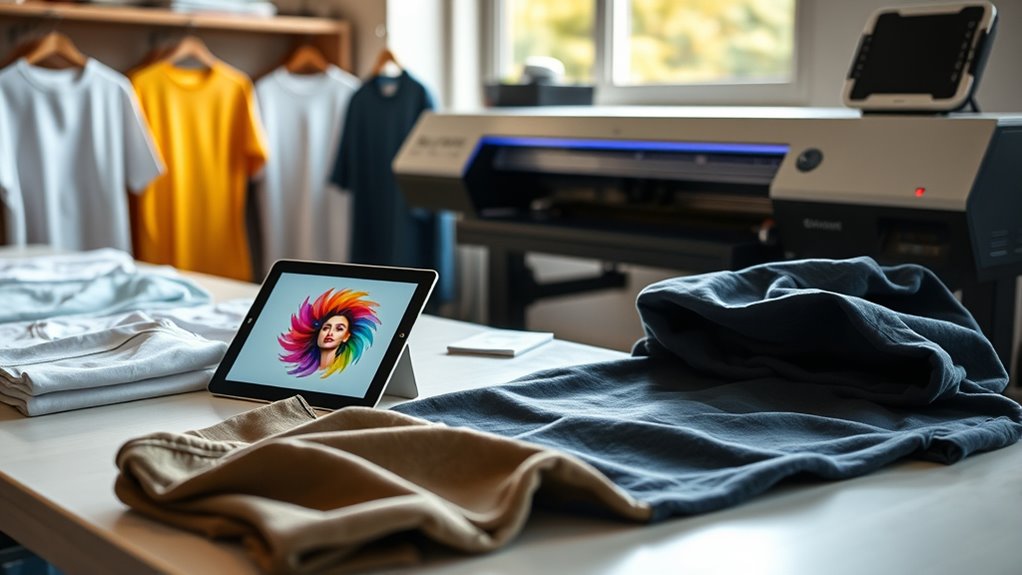
Have you ever wondered how entrepreneurs create customized products without holding inventory? The secret lies in the print-on-demand (POD) business model, which allows you to turn your unique designs into a variety of products only after a customer places an order. This approach eliminates the need to invest heavily in stock upfront, so you can focus on creating and marketing your designs without the risk of unsold inventory. When someone orders a product—be it a t-shirt, mug, poster, or even a book—the order gets sent to a POD supplier. They print the item with your design, package it, and ship it directly to your customer. This seamless process is made possible through white-label services, meaning the products carry your brand’s identity but are produced by third-party providers who handle fulfillment.
Print-on-demand allows entrepreneurs to sell customized products without holding inventory or large upfront investments.
This model offers incredible benefits for entrepreneurs and creative minds alike. Because you’re not tied down by large investments in inventory, it’s easier to start and experiment with different product lines or designs. You can quickly test new ideas, seasonal themes, or niche markets—like fitness enthusiasts or holiday shoppers—without risking excess stock. Artists and designers love this flexibility, as they can monetize their artwork on a wide range of merchandise without needing a printing press or warehouse. Plus, the low initial costs mean you can launch your online store with minimal capital, making it accessible to beginners and small startups. The technological advances in printing have made high-quality on-demand production possible at scale.
The market for POD products is vast and rapidly growing. Common items include clothing, mugs, posters, bags, and accessories—all customizable with personal or trending designs. As consumers increasingly seek personalized, one-of-a-kind products, the global POD market is projected to reach around $59.4 billion by 2033. Many entrepreneurs have turned this opportunity into a source of passive income, some earning thousands of dollars each month. Major e-commerce platforms like Amazon and Shopify have integrated POD services, making it easier than ever to reach a broad audience and streamline sales.
Operationally, you simply connect your online store to a POD platform, upload your designs, and publish your products. Once orders come in, they automatically go to the supplier, who manages printing, packaging, and shipping, freeing you from logistical headaches. Integration with online marketplaces helps automate inventory management, so you can focus on marketing and growing your brand. Advanced printing technologies, like digital and direct-to-garment printing, ensure high-quality results on demand. Understanding the technological advances in printing has been crucial in maintaining high standards and quick turnaround times.
While POD offers exciting opportunities, it’s essential to think about costs and quality. Production per item can be more expensive than bulk manufacturing, so strategic pricing and branding are fundamental for profitability. Managing customer expectations around shipping times and the quality of products is also key to maintain satisfaction and build your reputation. Overall, print-on-demand provides a flexible, scalable way to sell custom products online without the risks and expenses of traditional inventory models.
As an affiliate, we earn on qualifying purchases.
Frequently Asked Questions
What Are the Best Niches for Print-On-Demand Success?
You should focus on niches like pets, hobbies, fitness, and humor, as they have passionate audiences enthusiastic for personalized products. Target specific interests, such as particular sports or fandoms, to stand out. Use trending themes and current events to boost sales. Remember, your success depends on understanding your audience’s preferences and creating designs that resonate deeply with them. Stay authentic and responsive to market demands for the best results.
How Do I Handle Copyright Issues With Custom Designs?
You should always create original designs or obtain proper licenses to avoid copyright issues. Use public domain or royalty-free images, and modify existing artwork enough to make it transformative. When in doubt, seek permission from the original creator. Regularly review copyright laws and platform policies to stay compliant. By being proactive, you protect yourself from legal trouble and ensure your designs are unique and legally sound.
What Are the Initial Costs to Start a Print-On-Demand Store?
Starting a print-on-demand store costs like planting a seed—you’ll need around $50 to $100 for a domain name and branding. Expect to spend $29-$49 monthly on your e-commerce platform, like Shopify or WooCommerce. You might also invest in design tools or sample products, totaling roughly $50-$200 initially. These costs cover essentials, so you’re ready to launch your store without a huge upfront investment.
Which Platforms Are Most Effective for Selling Print-On-Demand Products?
You should consider platforms like Shopify, Etsy, and Redbubble for selling print-on-demand products. Shopify offers extensive customization and integrations, making it ideal for building a dedicated store. Etsy attracts customers seeking unique, handcrafted items, perfect for niche designs. Redbubble handles much of the logistics, giving you a simple way to reach a broad audience. Evaluate each platform’s fees, audience, and tools to determine which aligns best with your goals.
How Can I Scale My Print-On-Demand Business Beyond Basics?
To scale your print-on-demand business beyond basics, focus on diversifying your product range and expanding your marketing efforts. Use targeted ads on social media to reach new audiences, collaborate with influencers, and optimize your website for conversions. Consider exploring new niches or trending designs to attract different customer segments. Consistently analyze your sales data, refine your strategies, and reinvest profits to grow steadily and sustainably.
As an affiliate, we earn on qualifying purchases.
Conclusion
With print-on-demand, you can turn your creative ideas into profit easily. Did you know that the print-on-demand industry is projected to reach $10 billion by 2025? This growing market offers endless opportunities to sell custom products without upfront costs. So, if you’re ready to start your online business, now’s the perfect time to jump in and turn your designs into a sustainable income stream. The future of personalized shopping is yours to seize!
As an affiliate, we earn on qualifying purchases.
As an affiliate, we earn on qualifying purchases.
Halloween Picks
halloween
As an affiliate, we earn on qualifying purchases.