TL;DR

Get smart everyday buys delivered free with Prime
- Fast, free delivery on millions of items
- Prime Video, Amazon Music and more included
- Member-only deals all year
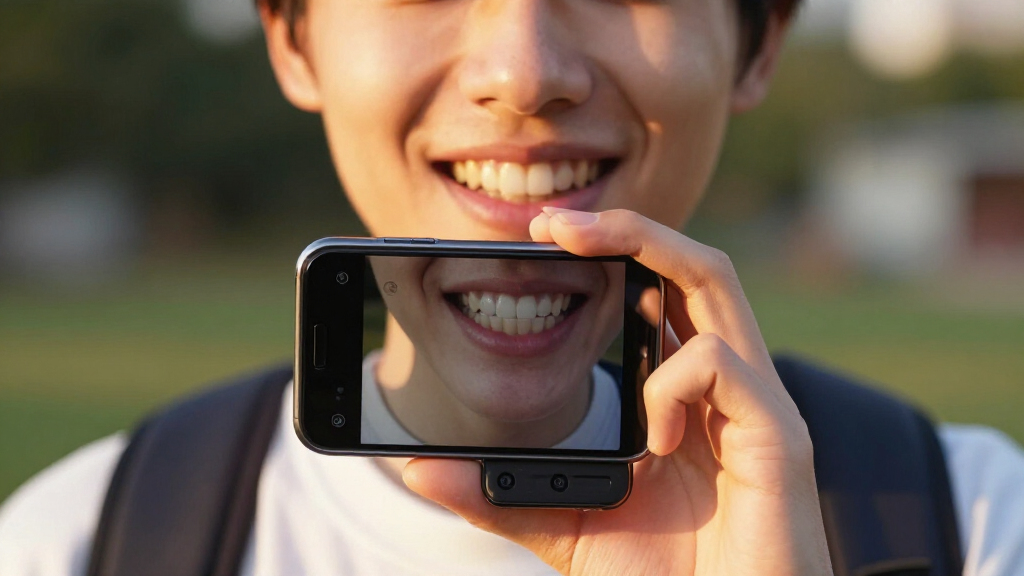
More consumers are using phone cameras to measure teeth shade during home whitening. This shift is driven by advances in guided-lighting and app technology, promising more accurate, objective results outside dental offices.
Phone cameras are increasingly being relied upon for objective teeth shade measurement during home whitening routines, replacing traditional guesswork in front of bathroom mirrors. This shift is driven by technological advances that enable consumers to obtain more accurate, consistent results, which could influence the future of the oral-care industry and consumer behavior.
Recent innovations in guided-lighting and app-based shade scoring systems have made it possible for users to capture images of their teeth that can be objectively compared against calibrated dental shade scales. These tools are designed to track changes over time, helping consumers determine which whitening products are effective and how much their teeth have whitened.
According to sources familiar with the development, companies are testing minimum viable products that include guided-lighting photo flows, which allow users to take standardized photos of their teeth, and algorithms that analyze the images to produce a shade score. These scores can be plotted over weeks to show progress, with the system recommending products that have proven effective for similar starting shades.
The market for this technology is primarily consumer oral care and beauty tech, with potential revenue streams from subscriptions and affiliate sales of whitening products. Validation efforts involve benchmarking app scores against dentist-standard VITA shade readings to ensure accuracy, with early tests showing promising correlation.
Implications for Home Whitening Effectiveness
This development could significantly improve the accuracy and transparency of at-home teeth whitening. Consumers often rely on subjective visual assessments, which can be unreliable and lead to over- or under-treatment. Phone-camera shade scoring offers an objective measure, potentially reducing product waste and increasing consumer confidence in their results.
For the industry, integrating objective measurement tools could lead to more personalized product recommendations and better tracking of product efficacy, ultimately fostering trust and loyalty. It also opens new revenue opportunities for companies offering subscription-based services and targeted product suggestions based on measurable progress.
As an affiliate, we earn on qualifying purchases.
Technological Advances Enable Objective Shade Measurement
Until recently, teeth shade assessment at home relied heavily on visual comparison in bathroom mirrors, which is subjective and inconsistent. The dental industry has long used calibrated shade guides like VITA for professional assessments, but replicating this accuracy at home has been challenging.
Recent advances in smartphone camera technology, combined with guided-lighting and image analysis algorithms, have made it feasible to approximate professional shade readings. Early-stage apps and devices are now being tested to provide consumers with reliable, repeatable measurements, marking a significant step forward in DIY oral care.
This shift coincides with the growing size of the home whitening market, which currently sees consumers cycling through multiple products without clear feedback on their effectiveness. The new technology aims to fill this gap by providing objective, ongoing progress tracking.
“The integration of guided-lighting and smartphone image analysis can approximate professional shade readings, making home whitening more precise.”
— an anonymous researcher
As an affiliate, we earn on qualifying purchases.
Unconfirmed Aspects of Technology Validation
While early tests show promising correlation between app-based shade scores and dentist-standard measurements, it is not yet clear how consistent these results will be across diverse users and lighting conditions. Larger validation studies are ongoing, but definitive accuracy benchmarks are still pending.
It remains uncertain how quickly these tools will be adopted widely and whether regulatory or industry standards will emerge to standardize their use.
smartphone teeth whitening monitor
As an affiliate, we earn on qualifying purchases.
As an affiliate, we earn on qualifying purchases.
Next Steps in Development and Adoption
Further validation studies involving larger user samples are planned to confirm the accuracy and reliability of phone-camera shade scoring. Companies are also working on refining algorithms and guided-lighting systems to improve consistency.
Industry adoption may accelerate if validation results support widespread use, leading to integration into commercial whitening apps and possibly influencing consumer behavior and product marketing strategies.
guided-lighting teeth whitening device
As an affiliate, we earn on qualifying purchases.
As an affiliate, we earn on qualifying purchases.
Key Questions
How accurate are phone cameras for teeth shade measurement?
Early validation studies suggest a promising correlation with professional dental shade guides, but more extensive testing is needed to confirm accuracy across diverse conditions and users.
Will this technology replace dental professional shade assessments?
While it may improve at-home measurement, it is unlikely to fully replace professional assessments, especially for complex cases. It aims to supplement, not substitute, dental expertise.
How can consumers benefit from phone-camera shade scoring?
It provides an objective, consistent way to track whitening progress, helping users avoid over- or under-treating and making more informed product choices.
When will this technology be available for general use?
Commercially available apps and devices are in early testing phases. Broader release depends on validation results, regulatory approval, and industry adoption, which could take several months to years.
Are there any risks or limitations to using phone cameras for shade measurement?
Potential limitations include lighting variability, camera quality differences, and user error. Standardized guided-lighting aims to mitigate some of these issues, but full reliability is still being tested.
Source: IdeaNavigator AI
Columbus Day / Indigenous Peoples' Day Picks
long weekend sales
As an affiliate, we earn on qualifying purchases.