
📊 Full opportunity report: Webcam Solutions For Eye Strain: Monitor Your Blinks For Better Health on IdeaNavigator AI — validation score, market gap, and execution plan.
TL;DR
A webcam-based solution that tracks blink rate and recommends breaks is being tested to combat eye strain among remote workers. The app aims to improve eye comfort and break adherence without sending video data externally.
A new webcam application that estimates blink rate and encourages regular breaks is set to be tested among remote workers to reduce eye strain. This development responds to increased screen time due to remote and hybrid work arrangements, offering an objective tool to monitor eye health without transmitting video data externally.
The proposed webcam app uses on-device computer vision to track blink rate and screen distance, aiming to provide real-time nudges for 20-20-20 breaks when blinking drops below healthy levels. The initial plan involves a two-week pilot with twenty remote workers, who will use the app to log their eye comfort and break adherence. The goal is to determine whether this intervention improves self-reported eye health and whether users find the tool practical enough for ongoing use.
According to an anonymous researcher involved in the project, the app will log daily eye comfort scores and provide personalized nudges to promote healthier screen habits. The solution is designed to run entirely on the user’s device, avoiding privacy concerns related to video data transmission. Revenue models include per-seat subscriptions targeted at individuals and small remote teams, with validation relying on pilot results.
Potential Impact on Remote Work Eye Health
This development could offer a practical, data-driven method to address digital eye strain among remote workers, a group increasingly affected by prolonged screen exposure. If successful, it may lead to widespread adoption of objective eye health monitoring tools, reducing symptoms like dry eyes, headaches, and fatigue. The approach also aligns with growing demand for screen wellness solutions that do not compromise user privacy, as all processing is on-device.
As an affiliate, we earn on qualifying purchases.
Growing Need for Eye Health Solutions in Remote Work
Remote work has significantly increased daily screen time, heightening the risk of digital eye strain. Current solutions largely rely on self-awareness or generic break reminders, which often prove insufficient. The idea of using webcams for objective, continuous eye health monitoring has gained interest, especially as advances in on-device computer vision enable privacy-preserving tracking. Pilot testing of such solutions is emerging as a promising step to improve worker well-being and productivity.
“The goal is to provide remote workers with an objective signal of their eye health status, encouraging healthier habits without privacy concerns.”
— an anonymous researcher

JOYUSING FlexCam10 4K Eye Contact Webcam for PC, 4 Modes in 1 Webcam with Microphone, PDAF Autofocus, 2 Noise-Cancelling Mics, 79° FOV, for Conference, Streaming, Facetime Zoom/Teams/Google Meet
- 4-in-1 Webcam Modes: High-def, eye contact, desk view, privacy flip
- Precise Autofocus: Fast, accurate PDAF within 0.65-10 ft
- Balanced Framing: Fixed 79° FOV for clear shots
As an affiliate, we earn on qualifying purchases.
As an affiliate, we earn on qualifying purchases.
Uncertainties Around Effectiveness and Adoption
It is not yet clear how effective the blink-rate tracking and break nudges will be in real-world settings. The pilot results will determine whether users experience meaningful improvements in eye comfort and whether they adopt the tool long-term. Additionally, questions remain about the accuracy of on-device blink detection and the potential for false positives or user fatigue.

NexiGo N60 1080P Webcam with Microphone, Software Control & Privacy Cover, USB HD Computer Web Camera, Plug and Play, for Zoom/Skype/Teams, Conferencing and Video Calling
- Resolution: Full HD 1080P at 30fps
- Lens: 3.6mm glass lens for crisp images
- Compatibility: Works with USB 2.0/3.0 devices
As an affiliate, we earn on qualifying purchases.
As an affiliate, we earn on qualifying purchases.
Upcoming Pilot Testing and Evaluation Phases
The next step involves conducting the planned two-week pilot with twenty remote workers, during which data on eye comfort, break adherence, and user feedback will be collected. If results are positive, developers may refine the app and prepare for broader rollout. Further research will explore integration with existing digital wellness platforms and potential enhancements such as adaptive break timing.
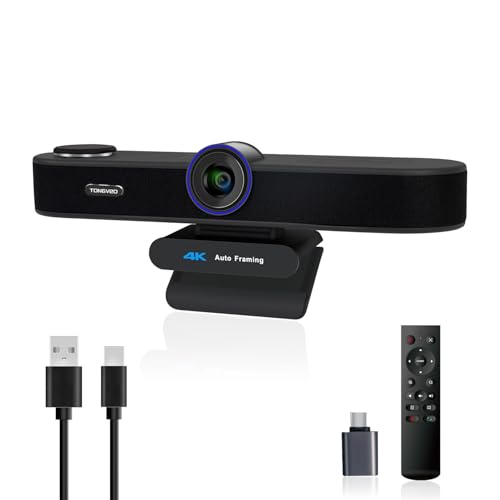
TONGVEO 3-in-1 4K Webcam with Microphones and Speaker, AI Auto-Tracking 5X Digital Zoom Webcam 4K Adjustable Field of View Remote Control Works with Microsoft Teams, Zoom, Google Meet, PC Mac Laptop
- 4K Ultra HD Video: Crisp 3840×2160 resolution at 30fps
- Built-in Microphones and Speakers: Enhanced audio for clear communication
- AI Auto Framing: Automatically centers all attendees
As an affiliate, we earn on qualifying purchases.
As an affiliate, we earn on qualifying purchases.
Key Questions
How does the webcam app detect blink rate without sending video data externally?
The app performs all analysis locally on the user’s device using on-device computer vision algorithms, ensuring user privacy is maintained.
Will this solution work with any webcam or only specific models?
The initial design aims for compatibility with standard webcams commonly used by remote workers, but specifics depend on hardware and software requirements that are still being finalized.
How accurate is blink detection using this method?
While the technology is promising, the accuracy of on-device blink detection is still under validation during pilot testing, and results will inform future improvements.
What are the potential privacy concerns with this app?
The app is designed to analyze video data locally on the user’s device, with no video data transmitted or stored externally, addressing most privacy concerns.
When will the app be available for wider use?
Following successful pilot testing and validation, a broader rollout could occur within the next several months, depending on development progress and user feedback.
Source: IdeaNavigator AI