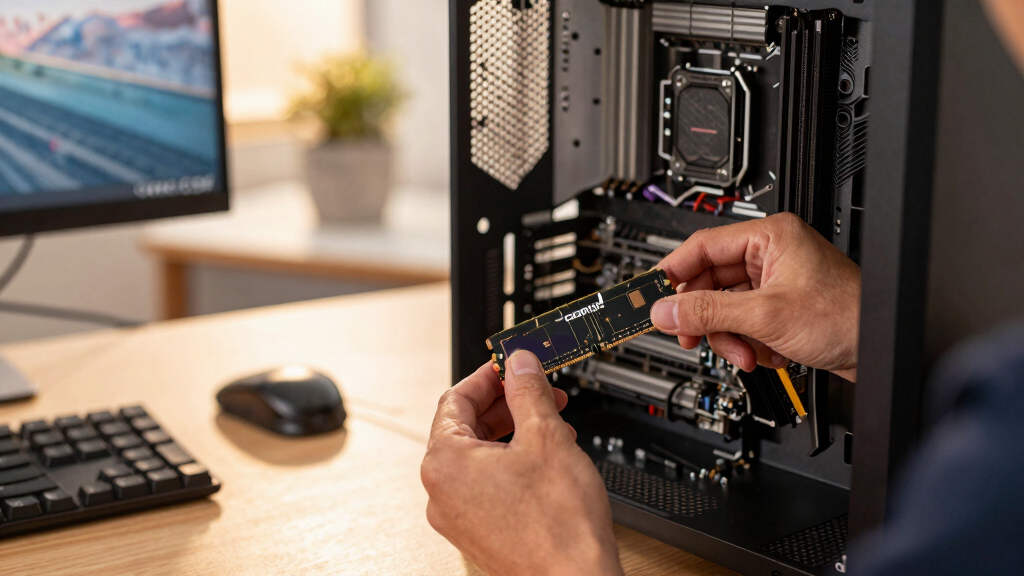

📊 Full opportunity report: DDR5 Now, DDR6 Soon: A Buyer’s Field Guide on ThorstenMeyerAI.com — validation score, market gap, and execution plan.

Get smart everyday buys delivered free with Prime
- Fast, free delivery on millions of items
- Prime Video, Amazon Music and more included
- Member-only deals all year
TL;DR
In 2026, DDR5 remains the recommended memory choice for most users, as DDR6 is still in development and unlikely to be affordable or compatible until 2027 or later. Waiting for DDR6 may delay upgrades without significant benefit.
DDR5 memory remains the recommended choice for most PC builds in 2026, with DDR6 still in development and not expected to be mainstream until 2027. Experts advise against waiting for DDR6, as its arrival will be delayed and it will come at a premium, making DDR5 the practical option for now.
Market forecasts indicate that **DDR5 memory prices are unlikely to fall significantly before 2028**, with some predicting relief only by then. Meanwhile, DDR6, which promises higher bandwidth through architectural improvements, is not yet available for consumer platforms. It will require new CPUs, chipsets, and modules, with rollout stages starting in enterprise and AI servers in 2026–27, and only reaching mainstream desktops around 2027 or later.
Current best practices recommend purchasing DDR5-6000 with CL30 timings for mainstream builds, as this configuration offers optimal performance-to-price ratio. Higher speeds like DDR5-8000 are generally unnecessary for gaming or typical workloads and do not justify the extra cost. Capacity-wise, 32GB is sufficient for most users, while 64GB suits content creators and heavy multitaskers; buying 128GB now is discouraged due to high prices and uncertain future demand.
Manufacturers are phasing out DDR4, and its cost per gigabyte now matches or exceeds DDR5, making DDR4 a poor choice for new builds. DDR6, with its advanced architecture and higher speeds, will not be backward compatible and will require entirely new platforms, which adds to its cost and complexity.
DDR5 now, DDR6 soon
A buyer’s field guide. The 20-year instinct — wait for prices to drop, or wait for the next generation — is broken this cycle. Buy the DDR5 you actually need now; don’t wait for DDR6. Here’s the reasoning.
Driven to end-of-life, production slashed. Same money, dead-end socket. Leave a working DDR4 box alone — but never start a new build on DDR4 to “save.”
A framework, not a gamble. Buy the DDR5 you need now, at the sweet spot, in the capacity you’ll actually use — don’t buy DDR4, don’t wait for DDR6. The two costliest mistakes in this market are the ones that feel prudent: waiting for a price drop that isn’t coming, and waiting for a next-gen part that launches dearer than what’s on the shelf. Next: The SSD Squeeze.
Why Buying DDR5 Now Is the Smarter Choice
For most consumers, purchasing DDR5 now avoids the higher costs and limited capacities associated with early DDR6 adoption. Waiting for DDR6 could mean delaying platform upgrades by two or more years, during which users miss out on CPU, GPU, and platform improvements. Additionally, DDR6’s higher prices and initial limited availability make it unsuitable for cost-conscious buyers or those needing reliable performance today.
Building on DDR5 ensures compatibility with current and upcoming platforms, providing a better balance of performance, cost, and future-proofing. Only specific users, such as long-term workstation builders or AI/ML professionals, should consider waiting for DDR6, given their need for maximum bandwidth and the ability to absorb early adoption risks.
As an affiliate, we earn on qualifying purchases.
The 2026 Memory Market and Future Outlook
The memory industry is facing a sustained shortage and price surge, which started around 2022 and continues into 2026. Historically, new memory standards like DDR4 and DDR5 took several years to become affordable and widely adopted. DDR6, announced as a successor to DDR5, introduces a significant architectural leap, with wider channels and much higher speeds, but remains in the early stages of development for consumer platforms.
Manufacturers are staging the rollout of DDR6, initially targeting enterprise and AI markets, with broad consumer adoption expected around 2027–30. Meanwhile, DDR4 is being phased out, and current prices do not favor its use in new builds. Market forecasts suggest that the first mainstream DDR6-compatible platforms will be costly and limited in capacity, making DDR5 the sensible choice for most users in 2026.
“DDR6 is not backward compatible and will require new platforms, with rollout phased over several years.”
— Manufacturers’ statements
As an affiliate, we earn on qualifying purchases.
Uncertainties Surrounding DDR6 Adoption and Pricing
While DDR6’s specifications and potential performance benefits are clear, its actual availability, pricing, and platform compatibility remain uncertain. The first consumer-compatible DDR6 modules and motherboards are expected no earlier than 2027, but early models may be costly and limited in capacity. The full impact of DDR6 on the market and whether prices will decrease faster than anticipated is still unknown.
As an affiliate, we earn on qualifying purchases.
Key Milestones for DDR5 and DDR6 Development
In the near term, consumers should focus on upgrading with DDR5-6000 kits for optimal value. Monitoring JEDEC standards and motherboard compatibility lists will be crucial as DDR6 modules and compatible CPUs become available, likely starting around mid-2027. Industry analysts advise watching for early adoption signs, such as validated DDR6 standards and compatible hardware on major motherboard QVLs, before considering an upgrade.
As an affiliate, we earn on qualifying purchases.
Key Questions
Should I buy DDR5 now or wait for DDR6?
Most users should buy DDR5 now, as DDR6 is still in development, will be more expensive initially, and offers limited benefits for gaming and standard workloads in the near term.
When will DDR6 be available for mainstream desktops?
DDR6 is expected to reach mainstream desktops around 2027, but early models will likely be costly and limited in capacity.
Is DDR4 still a good option in 2026?
No. DDR4 is being phased out and now costs as much as DDR5, making it unsuitable for new builds.
What are the main advantages of DDR6 over DDR5?
DDR6 offers significantly higher speeds and bandwidth through architectural improvements, but these benefits are mainly relevant for specialized workloads like AI and scientific computing.
What should I look for when upgrading to DDR5?
Focus on DDR5-6000 CL30 kits for best value, and buy capacity based on your workload—32GB for general use, 64GB for heavy multitasking or content creation.
Source: ThorstenMeyerAI.com
Halloween Picks
halloween
As an affiliate, we earn on qualifying purchases.