
📊 Full opportunity report: Acoustic Dampening, Placement, and the “Rig in the Closet” Setup on ThorstenMeyerAI.com — validation score, market gap, and execution plan.
TL;DR
This article explores proven methods to reduce noise from AI workstations, emphasizing placement strategies like moving rigs to separate rooms and using ventilated enclosures. It highlights the importance of soundproofing and heat management for quieter, more efficient setups.
Putting high-power AI workstations in separate rooms or enclosed cabinets significantly reduces noise levels at the user’s workspace, a confirmed and highly effective approach according to recent expert guidance.
Experts emphasize that the most effective way to minimize noise from powerful AI rigs is to increase the distance between the machine and the user. Moving the rig into another room, such as a closet or basement, can eliminate most airborne and structure-borne noise, making additional acoustic treatments less necessary. This approach leverages network-based workflows, where the machine’s physical location is decoupled from the user’s workspace.
Placing a rig in a closet or enclosed space requires careful ventilation. Sealing the space without proper airflow causes heat buildup, which can throttle performance and damage hardware. Active ventilation, such as quiet exhaust fans and ducted airflow, is essential to maintain safe temperatures. Purpose-built soundproof cabinets combine acoustic dampening with temperature control, providing a balanced solution for noise and heat management.
Additional measures include mechanical decoupling—using rubber feet or grommets—to address structure-borne noise, which foam alone cannot mitigate. These combined strategies can significantly reduce both airborne and structure-borne noise, allowing for a quieter workspace without sacrificing hardware performance.
Acoustic dampening
& the rig in the closet.
The most powerful noise fix isn’t a material — it’s a floor plan. A rig you can’t hear because it’s in another room beats any amount of foam. Tap the approaches in Part 1 to see what actually works.
(another room)
(levers 1–4)
(door / barrier)
(acoustic foam)
Contain the noise, not the heat
Why Placement and Ventilation Are Critical for Quiet AI Rigs
Effective placement and proper ventilation are crucial for maintaining a quiet, efficient AI workstation. Moving the rig away from the workspace minimizes noise transmission, improving comfort and productivity. Proper airflow prevents overheating, ensuring hardware longevity and consistent performance. These strategies are especially relevant for remote work, where noise can be disruptive and hardware needs to operate continuously without thermal issues.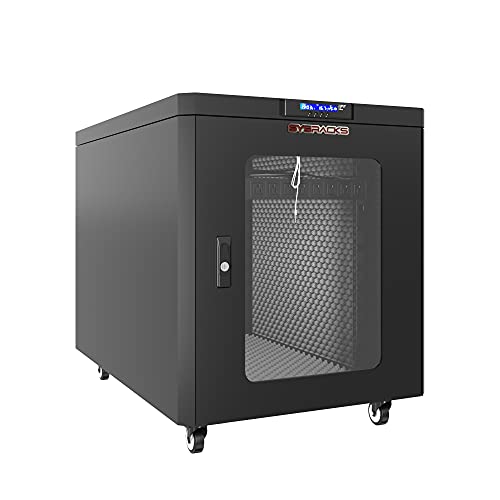
Sysracks Soundproof Server Rack Quiet - Acoustic Sound Proof Cabinet for Servers - Up to 36% Noise Reduction - Locking Server Enclosure - Silent Networking Cabinet - Noise Sound Dampening Box (15U)
- Rack Size: 15U Soundproof Cabinet (26x35x36 inches)
- Air Control System: LED screen with 2 fans for temperature and energy saving
- Adjustable Installation: U-Mark rails and shelf for varied equipment depths
As an affiliate, we earn on qualifying purchases.
As an affiliate, we earn on qualifying purchases.
The Evolution of Noise Management in High-Power Workstations
Traditionally, noise mitigation relied heavily on acoustic foam and soundproofing materials. However, experts now emphasize the importance of physical separation—placing the rig in another room—as the most effective method. This shift aligns with the increasing power and heat output of modern AI hardware, which makes heat management in enclosed spaces more critical. The concept of 'rig in the closet' has gained popularity among remote users and professionals seeking quieter work environments, provided that proper ventilation is implemented to prevent heat buildup."The most effective way to reduce noise isn't just soundproofing; it's moving the machine out of your immediate workspace. Distance is the best sound barrier."
— Thorsten Meyer, AI hardware expert

Easy Cloud Computer Fan with AC Plug, 120mm Variable Speed Axial Muffin PC Fan with Controller 120V 110V 220V Small 12V Case Cooling for PC Server Cabinet DVR TV Router Receiver Xbox Greenhouse
- Adjustable Speed Control: Customize fan speed for cooling or quiet operation
- AC Power Plug: Connects directly to AC outlet for power
- Long-lasting Bearings: Dual-ball bearings with 50,000-hour lifespan
As an affiliate, we earn on qualifying purchases.
As an affiliate, we earn on qualifying purchases.
Remaining Challenges in Noise and Heat Management
While placing rigs in separate rooms and using ventilated enclosures are proven strategies, the optimal design for DIY soundproof cabinets remains under development. The balance between noise suppression and effective heat dissipation can vary depending on hardware specifics and room conditions. Further research is needed to establish standardized solutions for different setups.
Additionally, the long-term reliability of passive cooling in sealed spaces for continuous high-load operation is still being evaluated, with some experts advising caution until more data is available.

Focusound 52 Pack Acoustic Foam Panels 1" x 12" x 12" Sound Proof Foam Panles Soundproofing Noise Cancelling Wedge Panels for Home Office Recoding Studio with 300PCS Double-Side Adhesive
- Soundproofing Design: Triangular grooves for noise absorption
- Includes Adhesive Tape: 300pcs double-sided adhesive for easy installation
- Easy Shape Recovery: Soak in water to restore shape within 48 hours
As an affiliate, we earn on qualifying purchases.
As an affiliate, we earn on qualifying purchases.
Next Steps for Optimizing Quiet AI Workstations
Hardware manufacturers and acoustic engineers are expected to develop more integrated solutions, combining soundproofing with advanced cooling systems. Users should monitor temperature and noise levels closely when implementing enclosed setups and consider active ventilation options. Future innovations may simplify the process, making quiet, high-performance AI workstations more accessible and reliable.

UNYKAch E-ATX Workstation AI Pro 1500 Enclosure Capable of Housing Motherboards with Dual CPU and Two Power Supplies. Supports up to 4 Graphics Cards and Space for 17 Hard Drives
- Motherboard Compatibility: Supports dual CPU E-ATX and various formats
- Dual Power Supplies: Supports 2 PSUs for redundancy and power
- Graphics Card Support: Fits up to 4 graphics cards
As an affiliate, we earn on qualifying purchases.
As an affiliate, we earn on qualifying purchases.
Key Questions
Is placing my AI rig in a closet effective for noise reduction?
Yes, moving the rig into a separate room or closet can significantly reduce noise at your workspace, provided proper ventilation is maintained to prevent overheating.
What are the main challenges of a 'rig in the closet' setup?
The primary challenge is managing heat. Adequate airflow and cooling are essential to prevent thermal throttling and hardware damage in enclosed spaces.
Can acoustic foam alone reduce noise from high-power AI hardware?
No, foam absorbs sound reflections but cannot block airborne or structure-borne noise or heat. Placement and barriers are more effective for noise reduction.
What is the best way to prevent overheating in an enclosed rig?
Implement active ventilation, such as exhaust fans and ducted airflow, to ensure heat escapes and the hardware remains within safe operating temperatures.
Are purpose-built soundproof cabinets worth the investment?
For high-power, continuous operation, soundproof cabinets with integrated cooling are effective but can be costly. They offer a balanced solution for noise and heat management.
Source: ThorstenMeyerAI.com