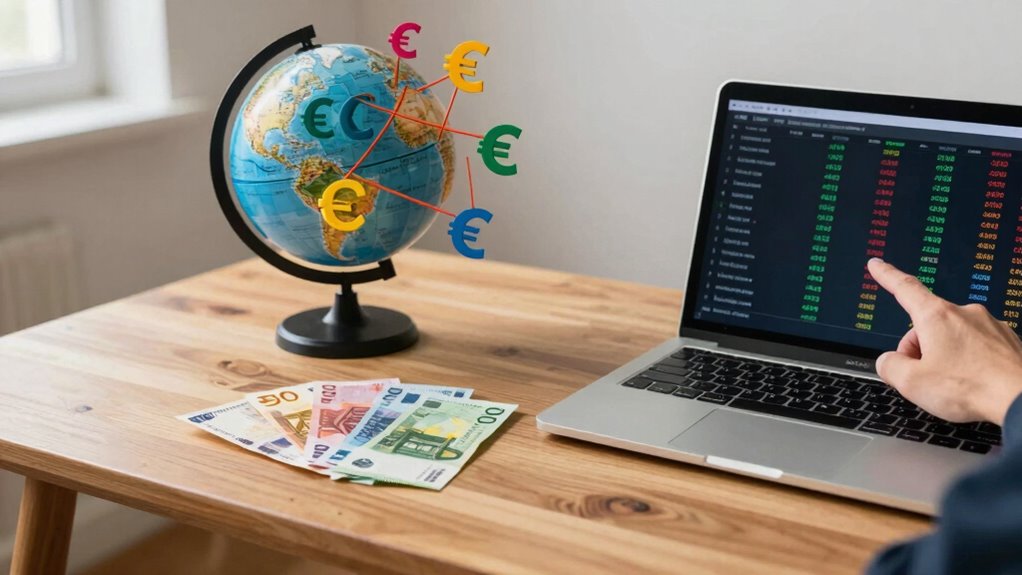
To time currency conversions without trying to beat the market, focus on understanding overall trends rather than predicting exact peaks. Keep an eye on economic data releases, political stability, and central bank policies, as they influence currency movements. Recognize seasonal patterns and monitor geopolitical events that can cause swings. By observing these broader signals, you can make smarter decisions and avoid unfavorable rates. Stay attentive, and you’ll discover more ways to optimize your currency exchanges.

Get smart everyday buys delivered free with Prime
- Fast, free delivery on millions of items
- Prime Video, Amazon Music and more included
- Member-only deals all year
Key Takeaways
- Monitor economic indicators and central bank policies to anticipate general currency trends.
- Recognize seasonal and political patterns that influence currency fluctuations over time.
- Use historical chart analysis to identify recurring cycles without attempting precise market timing.
- Stay informed about geopolitical events and their potential impact on currency stability.
- Focus on strategic timing based on broader environmental factors rather than trying to predict exact peaks.

When you’re dealing with international transactions, timing your currency conversions is vital to getting the best rates and minimizing losses. Understanding exchange rate trends helps you identify patterns in how currencies fluctuate over time. These trends aren’t random; they often follow cycles influenced by economic data releases, seasonal changes, or broader market sentiment. By observing these patterns, you can better anticipate when a currency might strengthen or weaken, giving you a strategic edge. Additionally, contrast ratio plays a role in how clearly you can interpret market data, especially when analyzing charts and graphs. However, it’s important to remember that trends aren’t guarantees—they can shift unexpectedly.
Timing currency conversions strategically can help you maximize rates and reduce losses amid fluctuating exchange trends.
Geopolitical influences play a significant role in how exchange rates move. Political stability, elections, trade negotiations, or international conflicts can cause sudden swings in currency values. For example, political turmoil in a country might lead to a rapid depreciation of its currency, while positive trade agreements could bolster it. Staying informed about geopolitical developments helps you avoid unfavorable conversions during turbulent times. It’s wise to follow reputable news sources and economic reports to gauge potential impacts on currency markets.
Timing your conversions isn’t about trying to predict exact peaks or troughs but rather about understanding the broader environment. You might notice that certain currencies tend to weaken during specific seasons or after major political events. For instance, some currencies experience seasonal dips due to tourism or agricultural cycles. Recognizing these recurring patterns can guide you to make more informed decisions, even if you don’t pinpoint the perfect moment. Monitoring economic data releases and central bank policies can also provide valuable clues about upcoming currency movements.
Products Worth Considering

Samsung 27-Inch Odyssey QD-OLED G8 4K 240Hz Gaming Monitor

LG 34GX90SA-W 34-inch Ultragear WQHD OLED Curved Gaming Monitor

Samsung 27 Odyssey OLED G5 (G50SF) QHD QD-OLED Gaming Monitor
As an affiliate, we earn on qualifying purchases.
Frequently Asked Questions
Can Currency Timing Strategies Guarantee Profits?
Currency timing strategies can’t guarantee profits because exchange rate forecasts are inherently uncertain. While you can use currency hedging to protect against adverse movements, it doesn’t guarantee gains. Timing the market involves risks, and even well-informed decisions may not lead to profits. Always consider the unpredictable nature of currency fluctuations, and use hedging as a risk management tool rather than a promise of profit.
How Do Geopolitical Events Impact Currency Timing?
Imagine a calm river suddenly stirred by a storm—geopolitical events shake currency markets like that turbulence. When geopolitical stability falters due to conflicts or economic sanctions, currencies can plummet or surge unpredictably. You need to stay alert, watching for signs of political unrest or sanctions, because these factors influence exchange rates. Timing your conversions around these events can help you avoid losses and capitalize on potential opportunities.
What Tools Are Best for Monitoring Currency Fluctuations?
You should use tools that analyze historical trends and economic indicators to monitor currency fluctuations effectively. Platforms like TradingView and Forex Factory provide real-time data, charts, and news updates, helping you spot patterns and economic shifts. These tools enable you to make informed decisions by observing how currencies have behaved historically and understanding current economic signals, reducing guesswork and improving your timing for conversions.
How Often Should I Check Exchange Rates?
You should check exchange rates daily if you’re actively managing currency conversions, especially during volatile periods. For less frequent needs, reviewing rates weekly or bi-weekly works well. Keep an eye on historical trends and economic indicators, as they influence rate movements. By tracking these regularly, you’ll better understand patterns and make more informed decisions, reducing the risk of unfavorable conversions without trying to beat the market.
Does Timing Currency Conversions Affect International Tax Liabilities?
Timing currency conversions influences your tax implications, as currency volatility can impact reported gains or losses. When you convert funds at different times, the fluctuations can alter your taxable income, especially if you’re dealing with cross-border transactions. By carefully choosing moments to convert, you may minimize unexpected tax liabilities, but remember, unpredictable currency swings can still create surprises, so stay informed about market trends and consult with a tax professional for tailored advice.
Conclusion
Remember, trying to perfectly time currency conversions is like chasing the horizon—you’ll never quite catch it. Instead, focus on understanding trends and planning ahead. For example, a traveler once waited to exchange currency, only to see rates drop just after. Like steering a boat through shifting tides, your best bet is to navigate wisely rather than fight the current. Keep patience in mind, and you’ll avoid unnecessary losses, making smarter, more confident conversions.