

To craft a resume that stands out, focus on clarity and brevity, highlighting your most relevant skills and achievements right away. Use a clean, simple layout with bullet points to make important details easy to scan within seconds. Tailor each resume to the job with keywords and quantifiable results, avoiding complex formatting that ATS software may miss. Paying attention to these essentials can make your application more compelling—keep going to discover how each step can boost your chances.

Get smart everyday buys delivered free with Prime
- Fast, free delivery on millions of items
- Prime Video, Amazon Music and more included
- Member-only deals all year
Key Takeaways
- Tailor your resume for each job using relevant keywords and focus on matching skills to the job description.
- Use a clean, minimalistic layout with bullet points to highlight achievements and make information easy to scan.
- Include quantifiable results and specific accomplishments to demonstrate your impact and stand out from other candidates.
- Incorporate digital elements like QR codes or online portfolios to showcase your digital presence and professionalism.
- Proofread meticulously and avoid errors to maintain a professional tone and ensure your resume passes ATS screening.
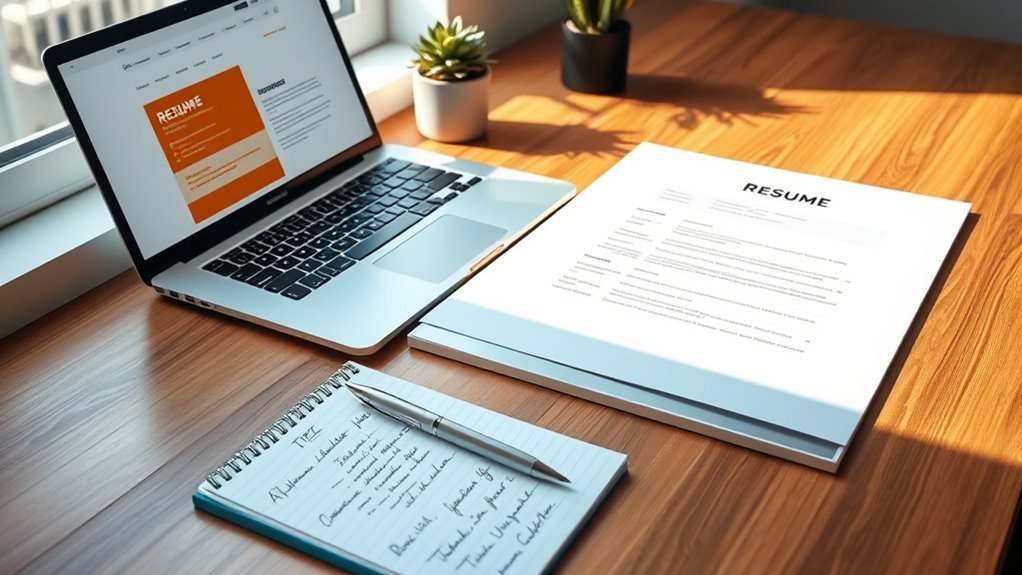
Are you struggling to craft a resume that stands out in today’s competitive job market? With the average resume clocking in around 489 words and a typical one-page resume being even shorter at about 380 words, you need to be strategic about every word you include. Hiring managers only spend 5 to 7 seconds scanning each resume, so clarity and brevity are your best friends. Focus on a clean, minimalistic layout that emphasizes white space and bullet points—these make your key points pop and make the document easier to process quickly.
Your resume should include essential sections: contact info, a compelling summary or profile, skills, experience, education, and certifications. Digital elements like QR codes and online portfolios are becoming more common, especially for tech roles, so consider adding these if relevant. To pass the increasingly prevalent Applicant Tracking Systems (ATS), you must optimize your resume for keywords. Over half of US employers use ATS to screen applications, and about 75% of resumes get rejected before a human ever reviews them. Avoid complex formatting like tables or graphics in the body text, which can confuse ATS software. Instead, use simple, industry-specific keywords that match the job description; lacking these can lead to immediate rejection. Additionally, understanding how ATS scans resumes can help you craft more effective keywords and formatting strategies.
Skills matter more than ever. Nearly half of hiring managers prioritize technical skills, with 41% looking for soft skills first, such as leadership, communication, and adaptability. Most job postings list over 20 skills, but resumes tend to include only about 13. Make sure your skills section highlights your core competencies, and don’t exaggerate—85% of recruiters believe candidates often inflate their abilities. Instead, showcase genuine expertise, especially those that align with the job.
Experience and education are important, but today, skills and proven results often outweigh formal education. Focus on measurable achievements—quantify your impact whenever possible—rather than just listing duties. If you have employment gaps, don’t ignore them, but be prepared to address them briefly if they’re sizable. Certifications and continuing education are increasingly valued, especially in technical fields. According to recent data, resumes with quantifiable achievements are up to 40% more likely to secure an interview. Developing a personal brand through your resume and online presence can further distinguish you from other candidates.
Competition is fierce—an average job posting attracts around 250 applicants, with only 2% invited for interviews. In hubs like San Jose, CA, the numbers are even higher, with more than 150 applicants per week. To stand out, tailor each application carefully and avoid generic resumes. Personal branding, through a concise summary and a digital presence like LinkedIn or online portfolios, is a growing trend. Cover letters are making a comeback, with many recruiters reading them before the resume.
Finally, avoid common mistakes: maintain a professional tone, proofread meticulously, and steer clear of typographical errors or inconsistent formatting. Using a professional resume writer can help ensure your document hits all these marks. When you craft your resume with these tips, you’ll profoundly increase your chances of catching a recruiter’s eye and landing that interview.
As an affiliate, we earn on qualifying purchases.
Frequently Asked Questions
How Long Should My Resume Be for Maximum Impact?
Your resume should ideally be one page if you’re early in your career or have less than 10 years of experience. For more seasoned professionals, two pages are acceptable, but only if the content is relevant and adds value. Keep it concise, focused, and easy to scan quickly. Avoid unnecessary details, and prioritize your most impressive achievements to make the biggest impact in a limited space.
Should I Include a Photo on My Resume?
You shouldn’t include a photo on your resume—unless you’re a model or a superhero. Recruiters prefer focusing on your skills and experience, not your mugshot. Including a photo might even hurt your chances, as it can introduce unconscious bias. Keep your resume professional and distraction-free. Save the glamour shots for social media. Your qualifications will shine brighter without a distracting picture stealing the spotlight.
How Do I Handle Employment Gaps?
You handle employment gaps by being honest and transparent. Explain the gap briefly in your resume or cover letter, highlighting any skills or experiences gained during that time, like volunteering or courses. Use a functional or combination resume format to focus on skills rather than dates. Stay positive, emphasize your readiness to contribute, and show how your experiences make you a strong candidate despite the gap.
Is It Necessary to Customize My Resume for Each Job?
Did you know that recruiters spend just six seconds reviewing each resume? That’s why customizing your resume for each job isn’t optional — it’s essential. You need to highlight your most relevant skills and experiences tailored to the specific role. This shows employers you understand their needs and are genuinely interested. So, take a few extra minutes to tweak your resume; it can markedly boost your chances of landing an interview.
What Font Style Is Most Professional for Resumes?
You should choose a clean, professional font like Arial, Calibri, or Times New Roman for your resume. These fonts are easy to read and widely accepted by employers. Keep font size between 10 and 12 points to guarantee clarity without overwhelming the page. Avoid decorative or overly stylized fonts, as they can distract from your content and appear unprofessional. Stick with classic styles to make a strong, polished impression.
As an affiliate, we earn on qualifying purchases.
Conclusion
Now that you know the essentials of crafting a standout resume, remember to tailor each one like a finely crafted Apple product—sleek, purposeful, and modern. Don’t get caught in the past with outdated formats; instead, embrace the present and make your resume shine brighter than a disco ball at Studio 54. Keep it concise, compelling, and true to your unique story. With these tips, you’re all set to land that dream gig—no time machine required!
As an affiliate, we earn on qualifying purchases.
As an affiliate, we earn on qualifying purchases.
Halloween Picks
halloween
As an affiliate, we earn on qualifying purchases.