📊 Full opportunity report: AI Trends: AMD Acquires Taalas To Advance Inference Hardware on IdeaNavigator AI — validation score, market gap, and execution plan.

Get smart everyday buys delivered free with Prime
- Fast, free delivery on millions of items
- Prime Video, Amazon Music and more included
- Member-only deals all year
TL;DR
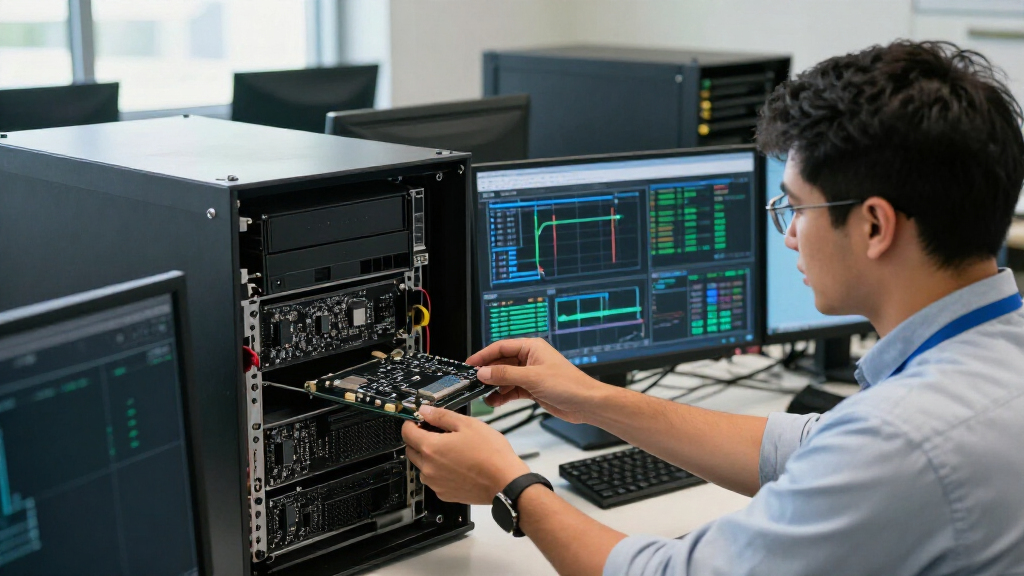
IdeaNavigator AI describes AMD as acquiring Taalas to advance inference hardware by embedding models in silicon, but the material provides no announcement, deal terms, or independent confirmation. The reported transaction and its technical and commercial implications remain unverified.
IdeaNavigator AI says AMD acquired Taalas in a move aimed at improving AI inference performance by putting models into silicon, but the material provided for this report includes no company announcement, deal terms, or independent corroboration. The reported acquisition therefore cannot be treated as confirmed, and its timing, financial terms and technical scope remain unknown.
The report describes the proposed approach as etching models in silicon, a phrase that suggests hardware designed around a model or workload rather than relying only on general-purpose processors. It links the alleged deal to AI inference—the computing used to generate responses or predictions after a model has been trained. No product, chip specification, performance result or deployment plan is identified.
The material does not say when the acquisition supposedly took place, whether AMD or Taalas announced it, or whether the transaction is completed, pending or under discussion. It also provides no purchase price, ownership details, leadership information or regulatory status. Those omissions leave the central claim—the acquisition itself—unverified on the information available here.
IdeaNavigator AI’s item is framed as a signal for an operations lead introducing AI tools to a small team. Its suggested response is to track the development and assess whether it could affect future AI capabilities or policies. That is a proposed monitoring workflow, not evidence that the transaction occurred or that a particular product change is imminent.
AMD and Taalas inference claim
IdeaNavigator AI reports an acquisition aimed at advancing AI inference hardware. The material offers no confirmation, deal terms, or product evidence.
What the report claims
It links the alleged deal to model-specific silicon for running AI after training.
Inference hardware
The proposed approach could tailor chips to AI workloads, but no design or performance results are given.
No immediate basis to act
Businesses have no confirmed product, pricing, or availability to guide vendor or rollout decisions.
Claim versus evidence
The supplied material does not establish that a transaction took place.
- AMD acquired Taalas
- Models could be embedded in silicon
- Company announcement or independent confirmation
- Deal terms, timing, technical scope, or benchmarks
The signal score
IdeaNavigator AI says Hacker News surfaced the item with an 88/100 signal.
What to watch
Operations teams can track updates without changing plans based on an unverified report.
Look for statements from AMD or Taalas, or credible reporting supported by transaction records.
If confirmed, look for hardware details, measured performance, pricing, and customer timelines.
Potential Effects on Inference Hardware
If confirmed, an AMD acquisition of Taalas could matter because it would connect a major chip supplier with a company associated in the report with model-specific silicon. Hardware tailored to inference workloads could, in principle, affect the speed, cost or energy demands of running AI systems. The material offers no benchmarks, however, so it does not establish that this approach would outperform existing processors or produce savings for customers.
For businesses adopting AI, the near-term relevance is limited: an unverified deal is not a basis for changing vendors, budgets or rollout plans. Operations teams can note the claim and watch for verifiable product announcements, but any decision about AI deployment should rely on confirmed availability, performance evidence and pricing, none of which is supplied here.
The report also reflects a broader procurement issue: infrastructure news can influence expectations about the future cost and capability of AI services. But the distinction between a reported corporate transaction and an available product is important. Even a confirmed acquisition would not, by itself, establish that customers will soon see faster inference or lower costs.
Products Worth Considering

Dell UltraSharp U2424H 24-Inch FHD Monitor

Apple MacBook Air 15-inch (2025) with M4 Chip, 24GB Memory, 512GB SSD, Midnight
Apple iMac (24-inch, 2024) with M4 Chip, 16GB Unified Memory, 256GB SSD, Silver
As an affiliate, we earn on qualifying purchases.
From Acquisition Claim to Evidence
The item appears in an IdeaNavigator AI concept for an AI operations signal monitor. The proposed tool would watch Hacker News and similar feeds, filter developments for operations leads rolling out AI tools, and turn selected items into short briefs describing what changed, why it matters and what to do. The AMD-Taalas claim is presented as an example of the kind of development such a monitor might flag.
The material says Hacker News surfaced the item with an 88/100 signal. It does not explain the scoring method, the time window, what the score measures or how it compares with other items. The figure should be read only as a score reported in the concept, not as evidence that the acquisition has been verified or that the story has a particular level of credibility.
IdeaNavigator AI proposes testing the monitoring service by delivering this brief and two other AI capability or policy items to five people matching its target audience, then measuring whether a recipient changes a decision or forwards a brief. That is a suggested product-validation test; the material does not report that the test has happened or provide results.
Deal Details Still Unverified
The provided material does not include a statement from AMD or Taalas, a transaction filing, or reporting that independently confirms an acquisition. It is therefore unclear whether a deal occurred at all. No date, terms, assets involved or transaction status are supplied, and there is no information about what “etching models in silicon” means in technical or product terms.
There are also no performance measurements, customer plans or timelines showing that any inference hardware is ready for sale. The 88/100 Hacker News signal is not explained and cannot fill those gaps. Until companies or reliable independent reporting provide supporting details, the acquisition and its expected effects should be treated as claims rather than established facts.
Watch for Company Confirmation
The next step is confirmation from AMD or Taalas, or credible reporting supported by transaction records. Any such update would need to clarify whether an acquisition took place, when it happened, what technology or business it covers and whether the parties disclosed financial terms.
If the deal is confirmed, useful follow-up details would include the intended hardware design, evidence for inference-performance claims, product and customer timelines, and how the technology fits AMD’s existing offerings. For operations teams, the practical point to watch is not the headline alone but whether commercial products, measurable results or changes to available AI services follow. IdeaNavigator AI’s proposed audience test and subscription model remain ideas in the supplied material, not reported outcomes.
Source: IdeaNavigator AI
Key Questions
Did AMD acquire Taalas?
The provided material says AMD acquired Taalas, but it includes no company announcement or independent confirmation. The transaction is unverified based on the information available here.
What does the reported deal have to do with AI inference?
The report links the alleged acquisition to putting models into silicon to improve inference performance. It gives no technical explanation, product details or test results to show how that approach would work.
Are deal terms or a completion date available?
No. The material gives no date, purchase price, transaction status or other deal terms.
What is the 88/100 signal score?
IdeaNavigator AI says Hacker News surfaced the item with an 88/100 signal. It does not explain what the score measures, its time window or its comparison baseline, so it should not be treated as confirmation.
Should AI operations teams change plans based on this report?
The material does not establish a confirmed acquisition or a product change. Teams can monitor for verifiable updates, but decisions about vendors or deployment should wait for confirmed product information and performance evidence.
Source: IdeaNavigator AI