
📊 Full opportunity report: Mastering AI Depth Exploration With Abyssal Station’s Scroll Technology on ThorstenMeyerAI.com — validation score, market gap, and execution plan.
TL;DR
Abyssal Station has launched a groundbreaking web experience that simulates a 3,800-meter ocean descent through scroll-driven technology. This development demonstrates a new approach to immersive digital storytelling, combining precise visual synchronization with interactive elements. The project exemplifies technical mastery in web design and AI-inspired creativity.
Abyssal Station has unveiled a pioneering web experience that simulates a descent into the ocean’s depths using a novel scroll-driven depth engine. This immersive journey, accessible via a browser, employs advanced CSS and JavaScript techniques to mimic sinking into the ocean, offering a new benchmark for interactive storytelling and digital art.
The experience is built with pure HTML, CSS, and JavaScript, without external frameworks or assets, ensuring a self-contained, high-performance environment. It features a carefully curated color palette inspired by ocean layers, from surface teal to hadal black, with bioluminescent accents. The core technique involves a custom depth engine that measures scroll position and dynamically adjusts background colors, lighting, particle movement, and creature animations, creating a cohesive sense of immersion.
This project followed a rigorous three-phase process: initial build, critique for visual and interaction refinement, and final validation by an art director. The result is a fluid, visually harmonious experience that responds precisely to user input, simulating a real underwater descent to 3,800 meters depth. The site also emphasizes accessibility, with self-hosted fonts, reduced-motion options, and keyboard navigation.
Implications of the Depth Simulation Technology
This development marks a significant step forward in web-based immersive experiences, demonstrating how advanced scroll-driven mechanics can create highly realistic and emotionally engaging virtual environments. It showcases the potential for combining AI-inspired design principles with precise technical execution to craft experiences that are both artistic and technically robust. For digital storytelling, this approach opens new avenues for educational, artistic, and entertainment applications, pushing the boundaries of what can be achieved within standard web technologies.

Ultimate Tailwind CSS Handbook: Build sleek and modern websites with immersive UIs using Tailwind CSS (English Edition) (Frontend Designer — Tools & CMS)
As an affiliate, we earn on qualifying purchases.
As an affiliate, we earn on qualifying purchases.
Evolution of Scroll-Driven Web Immersive Experiences
The concept of scroll-based storytelling has evolved significantly over the past decade, with early experiments focusing on parallax effects and simple animations. Recent advances have integrated complex interactions, such as particle physics and dynamic lighting, but few have achieved the seamless depth simulation demonstrated by Abyssal Station. This project builds on prior work in webGL, CSS animations, and interactive storytelling, representing a culmination of these trends into a cohesive, immersive experience. Its development aligns with broader efforts to leverage AI and web technologies for artistic expression and user engagement.
“Abyssal Station exemplifies how precise scroll-driven mechanics can create a convincing, emotionally resonant underwater journey, blending technical mastery with artistic vision.”
— Thorsten Meyer
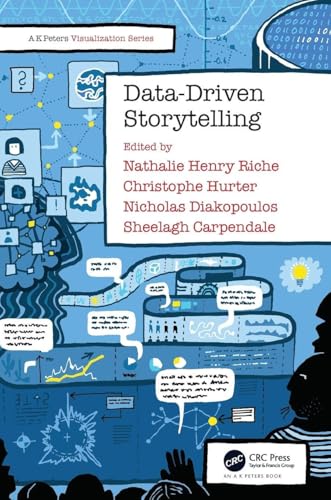
Data-Driven Storytelling (AK Peters Visualization Series)
As an affiliate, we earn on qualifying purchases.
As an affiliate, we earn on qualifying purchases.
Unresolved Aspects of the Technology’s Scalability
While the experience demonstrates impressive technical execution, it remains unclear how scalable or adaptable this scroll-driven depth engine is for broader applications beyond this specific project. Questions about performance on lower-end devices, integration with other interactive systems, and potential for real-time data incorporation are still open. Additionally, the long-term accessibility and usability of such complex interactions warrant further testing and refinement.

Technologies for E-Learning and Digital Entertainment: Second International Conference, Edutainment 2007, Hong Kong, China, June 11-13, 2007, Proceedings (Lecture Notes in Computer Science, 4469)
As an affiliate, we earn on qualifying purchases.
As an affiliate, we earn on qualifying purchases.
Future Developments and Broader Applications
Moving forward, developers and artists may explore adapting this scroll-driven depth technique for educational content, virtual tours, or artistic installations. Further research is expected to focus on optimizing performance across devices, expanding interaction complexity, and integrating AI-generated content to enhance immersion. The team behind Abyssal Station plans to publish detailed technical documentation and share insights to encourage adoption and innovation within the web development community.
underwater simulation VR experiences
As an affiliate, we earn on qualifying purchases.
As an affiliate, we earn on qualifying purchases.
Key Questions
How does Abyssal Station create the illusion of sinking into the ocean?
The experience uses a custom scroll-driven depth engine that interpolates background colors, lighting, particle movement, and creature animations based on scroll position, simulating a realistic descent into the ocean’s depths.
Is this experience accessible on all devices?
It is optimized for modern browsers and high-performance devices. Accessibility features such as reduced-motion and keyboard navigation are included, but performance may vary on lower-end hardware.
Can this technology be used for other types of immersive experiences?
Yes, the underlying principles of scroll-driven depth simulation can be adapted for various immersive applications, including virtual tours, educational content, and artistic projects, with further development.
What are the technical requirements to build a similar experience?
Building such an experience requires proficiency in HTML, CSS, JavaScript, and WebGL or Canvas API, along with an understanding of animation interpolation and user interaction design.
Source: ThorstenMeyerAI.com