
📊 Full opportunity report: Avengers Labs: How Ukraine Turned Its Front Line Into the World’s Scarcest AI Dataset on ThorstenMeyerAI.com — validation score, market gap, and execution plan.
TL;DR
Ukraine has developed Avengers Labs, a platform that converts combat drone footage into AI training datasets, making Ukraine’s battlefield data a scarce and valuable resource. This shift emphasizes data ownership as key to future military AI dominance.
Ukraine has established Avengers Labs, a platform that transforms real combat drone footage into AI training data, making it a critical and scarce resource in modern defense technology. This initiative signals a shift toward data ownership as a strategic advantage in warfare, with Ukraine leveraging its extensive battlefield footage to develop and license AI models to domestic and international defense firms.
Avengers Labs, operated by Ukraine’s Ministry of Defense within the Brave1 defense-innovation cluster, allows defense companies worldwide to train AI models using millions of annotated frames captured during tens of thousands of real combat drone missions. Unlike typical data sharing, Ukraine retains ownership of the improved models created through this process, effectively turning battlefield data into a sovereign export asset.
The platform provides access to a secure environment called the Brave1 Dataroom, where companies can train and validate their models without accessing raw combat footage. This setup ensures sensitive information remains protected while enabling the development of advanced computer vision systems capable of identifying and tracking targets in complex battlefield conditions. To date, over 100 Ukrainian firms and international developers have participated, with the goal of enhancing Ukraine’s autonomous drone capabilities against electronic warfare tactics such as GPS jamming.
One of the key applications is the automation of drone interception systems. Ukrainian-made AI-powered interceptors, integrated with the national radar network, can autonomously track and destroy Russian Shahed attack drones, with approximately 95% of the kill chain automated. The broader aim is to equip all Ukrainian frontline drones with onboard AI to counter jamming and electronic warfare, a move that has already shown measurable success in increasing interception rates.
Avengers Labs
Ukraine’s Ministry of Defense is renting access to the world’s only large-scale, real-war computer-vision dataset. The terms: train your model inside the protected Dataroom — Ukraine keeps the finished AI.
Inside the Dataroom
- Structured visual & thermal imagery of aerial and ground targets
- Hard cases: camouflaged armor, night, fog, rain, multiple sensors
- Feeds the Avengers platform inside the DELTA / VEZHA system
- Focus track: automatic detection & interception of enemy drones
The goal
- 100% of frontline drones with onboard machine vision
- Autonomous navigation in GPS-denied / jammed (EW) skies
- Autonomous Shahed interception — human keeps the trigger
- Scaling vs. Shahed launches rising ~35% / month
Strategic Shift in Defense Data Ownership
This development signifies a major change in military AI strategy, emphasizing the importance of owning and controlling battlefield data. Ukraine’s approach transforms combat footage into a valuable exportable resource, potentially influencing global defense AI development. The ability to train models on real combat scenarios enhances operational effectiveness and could set a new standard in autonomous warfare technology, where data ownership outpaces model sophistication.
AI drone footage annotation software
As an affiliate, we earn on qualifying purchases.
As an affiliate, we earn on qualifying purchases.
Ukraine’s Battlefield Data Advantage and AI Development
Ukraine has accumulated an unparalleled volume of battlefield data through extensive drone operations, capturing diverse scenarios such as camouflage, weather variations, and electronic warfare interference. Defense Minister Mykhailo Fedorov highlighted that Ukraine’s dataset includes millions of annotated frames from tens of thousands of combat sorties, making it a unique resource in global defense AI efforts. Previously, AI development relied heavily on synthetic or limited datasets; Ukraine’s real-world data provides a critical edge for training robust models capable of operating in complex combat environments.
This initiative is part of Ukraine’s broader strategy to modernize its military and develop autonomous systems capable of countering Russian tactics, especially electronic jamming. The platform’s launch coincides with increased drone interception success and the push for fully autonomous frontline drones, underscoring the importance of high-quality, verified data in advancing AI capabilities.
"Ukraine holds a body of battlefield data unmatched anywhere in the world: millions of annotated frames gathered across tens of thousands of combat drone sorties."
— Mykhailo Fedorov
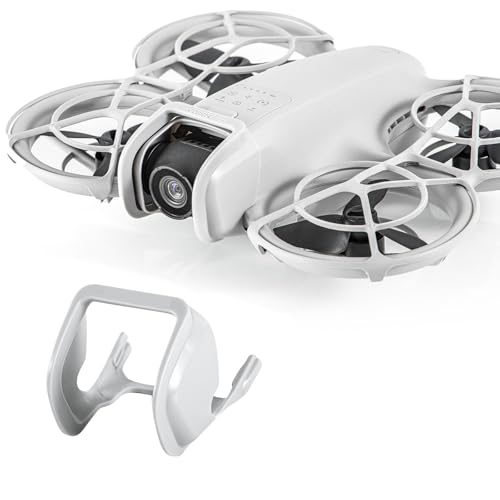
DJI Gimbal Camera Guard for Neo Drone, U-Shape Open Front Design Lens Protection Bumper, Anti-Crash & Scratch Resistant, Easy Snap-On
【Ultimate Gimbal & Lens Protection】Designed exclusively for the DJI Neo, this guard acts as a primary bumper, shielding...
As an affiliate, we earn on qualifying purchases.
As an affiliate, we earn on qualifying purchases.
Unconfirmed Aspects of Data Sharing and Model Ownership
It remains unclear how widely international defense firms will adopt and succeed with the platform, and whether Ukraine’s model ownership approach will face legal or geopolitical challenges. Details about the long-term commercial and strategic implications of this data-as-asset approach are still emerging, as are specifics on the scale of AI deployment in frontline drones.

Autonomous Drones II: Robotic, Computer Vision, AI
As an affiliate, we earn on qualifying purchases.
As an affiliate, we earn on qualifying purchases.
Upcoming Deployment and Global Defense AI Impact
Ukraine plans to expand the use of AI in its battlefield operations, aiming for full automation of drone targeting and interception systems. International defense companies are expected to continue training and refining models using Avengers Labs data, potentially influencing global defense AI standards. Monitoring how these models perform in ongoing combat will be crucial to assessing the platform’s impact.

Rebooting the Machines: A New Human Vision for Artificial Intelligence
As an affiliate, we earn on qualifying purchases.
As an affiliate, we earn on qualifying purchases.
Key Questions
How does Ukraine’s Avengers Labs platform protect sensitive data?
The platform operates within a secure environment called the Brave1 Dataroom, which exposes only structured, annotated datasets. Raw combat footage remains protected, and only trained models and capabilities are shared outside the environment.
What makes Ukraine’s battlefield data unique?
Ukraine’s data includes millions of annotated frames from tens of thousands of combat drone sorties, capturing diverse conditions like camouflage, weather, and electronic warfare interference, making it highly valuable for training robust AI models.
Could this approach give Ukraine a long-term military advantage?
Yes, owning and controlling battlefield data and the resulting AI models could provide Ukraine with a significant strategic edge in autonomous warfare and electronic countermeasures, influencing future global defense AI development.
Are there risks associated with exporting battlefield AI models?
Potential risks include geopolitical tensions, intellectual property concerns, and the possibility of adversaries developing countermeasures. The long-term impact depends on how the technology is adopted and regulated internationally.
Source: ThorstenMeyerAI.com