

Index funds are investment options that mirror the performance of a specific market index, like the S&P 500. They help you diversify your portfolio by investing in many companies at once, often with low costs. Since they’re passively managed, they tend to have lower fees and steady growth aligned with the market. If you want to understand how they can fit into your financial plans, discover more about their benefits and how they work.
Key Takeaways
- Index funds are investment funds that mimic the performance of a specific market index, like the S&P 500.
- They are passively managed, with minimal buying and selling, resulting in lower costs for investors.
- Index funds offer broad diversification by investing in many companies simultaneously.
- They typically have low expense ratios, generally ranging from 0.03% to 0.25%.
- Their main goal is to match the market’s overall performance, not beat it, making them suitable for long-term investing.

Are you looking for a simple way to grow your investments without constantly monitoring the market? If so, index funds might be just what you need. These investment funds aim to replicate the performance of a specific market index, like the S&P 500 or Russell 2000. They can be structured as mutual funds or exchange-traded funds (ETFs), making them versatile options for different investors. Essentially, index funds invest in the same securities as the tracked index, holding them in roughly the same proportions to mirror its returns. This approach gives you exposure to many companies at once, providing built-in diversification that helps spread out your risk.
Because index funds are passively managed, fund managers make only a few trades to keep pace with the index, which keeps management costs low. This passive management contrasts with actively managed funds, where managers frequently buy and sell securities to try to outperform the market. The lower costs associated with index funds mean more of your money stays invested, and over time, this can considerably boost your returns. Additionally, because the fund’s holdings closely follow the index, you get predictable performance aligned with the overall market trends.
Many popular indexes are tracked by index funds. The S&P 500, for example, includes about 500 of the largest U.S. companies and is one of the most widely followed benchmarks. The Dow Jones Industrial Average tracks just 30 large companies, while the Nasdaq Composite and Nasdaq 100 focus heavily on technology firms, with the latter including 100 major tech companies. For smaller companies, the Russell 2000 covers approximately 2,000 small-cap stocks, offering exposure to emerging businesses. The Russell 3000 goes even broader, tracking roughly 96% of the entire U.S. investable stock market.
Investing in index funds offers several benefits. They provide broad diversification across many stocks or bonds, which helps reduce the risk tied to any single asset. Because they are passively managed, they tend to have lower expense ratios and fees than actively managed funds. This makes them accessible even with smaller amounts of capital and easier to manage over the long term. The potential for steady, market-linked growth is another advantage, as index funds aim to match the overall market’s performance. Plus, their tax efficiency results from lower turnover, leading to fewer taxable events compared to actively managed options. Understanding fund management styles can help investors choose the right approach for their financial goals.
While index funds are generally low-cost, it’s important to weigh associated fees, such as brokerage commissions for ETFs and bid-ask spreads. Expense ratios typically range from 0.03% to 0.25%, much lower than actively managed funds. The main difference between index funds and active funds is their goal: index funds aim to match the market, while active funds try to beat it through stock-picking. Active funds involve more frequent trades, higher costs, and unpredictable results, whereas index funds offer a more predictable, cost-effective way to participate in the overall market’s growth.

THE INDEX OF AMERICA: HOW THE S&P 500 WORKS & WHY YOU SHOULD INVEST IN IT
As an affiliate, we earn on qualifying purchases.
As an affiliate, we earn on qualifying purchases.
Frequently Asked Questions
Are Index Funds Suitable for All Investment Types?
Index funds aren’t suitable for all investment types, especially if you’re seeking high-risk, high-reward strategies. They work well for passive investing, offering diversification and low costs, but may not meet your needs if you want individual stock picks or aggressive growth. Consider your goals, risk tolerance, and investment timeline. For some, blending index funds with other assets creates a balanced portfolio aligned with their financial objectives.
How Do Index Funds Compare to Actively Managed Funds?
Ever wondered how index funds stack up against actively managed funds? You’ll find that index funds usually have lower fees, making them more cost-effective over time. They aim to match the market’s performance rather than beat it, which often results in steadier returns. Active funds try to outperform the market but come with higher costs and greater risks. So, if you prefer simplicity and lower expenses, index funds are a smart choice.
What Are the Tax Implications of Investing in Index Funds?
Investing in index funds generally leads to lower taxes because of their passive management, which results in fewer taxable events. You’ll mostly pay capital gains when you sell shares, not regularly through dividends or trading. Additionally, holding index funds in tax-advantaged accounts like IRAs or 401(k)s can defer or eliminate taxes altogether. Keep in mind, tax laws vary by country and situation, so consulting a tax advisor is always a good idea.
Can Index Funds Be Used for Short-Term Investing?
Yes, index funds can be used for short-term investing, but they’re like a steady ship in choppy waters. If you need quick access or plan to sell within a year, they might not be ideal due to potential market fluctuations and tax implications. For short-term goals, consider more liquid investments, but if you’re comfortable with market ups and downs, index funds offer a simple, diversified option.
How Often Should I Review My Index Fund Investments?
You should review your index fund investments at least once a year to guarantee they align with your financial goals. If the market experiences substantial changes or your personal circumstances shift, consider checking more frequently, like quarterly. However, avoid overreacting to short-term market fluctuations. Maintain a long-term perspective, and only make adjustments if your investment strategy or risk tolerance changes considerably. This approach helps keep your portfolio on track.
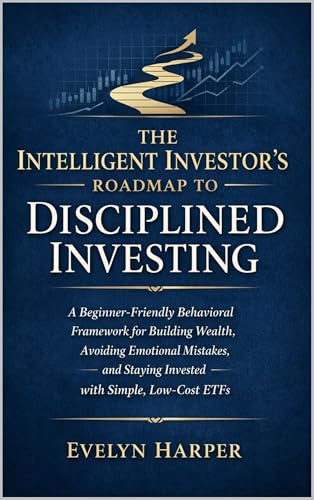
The Intelligent Investor’s Roadmap to Disciplined Investing: A Beginner-Friendly Behavioral Framework for Building Wealth, Avoiding Emotional Mistakes, and Staying Invested with Simple, Low-Cost ETFs
As an affiliate, we earn on qualifying purchases.
As an affiliate, we earn on qualifying purchases.
Conclusion
Now that you understand index funds, imagine your investments as a steady stream flowing through a peaceful landscape. With each passing day, your money grows quietly yet surely, guided by the broad market’s gentle currents. You don’t need to chase every wave or stress over wild swings. Instead, you sit back, watch the landscape evolve, and let your diversified portfolio work tirelessly in the background—building your financial future one calm, steady step at a time.

The Bogleheads' Guide to the Three-Fund Portfolio: How a Simple Portfolio of Three Total Market Index Funds Outperforms Most Investors with Less Risk
As an affiliate, we earn on qualifying purchases.
As an affiliate, we earn on qualifying purchases.
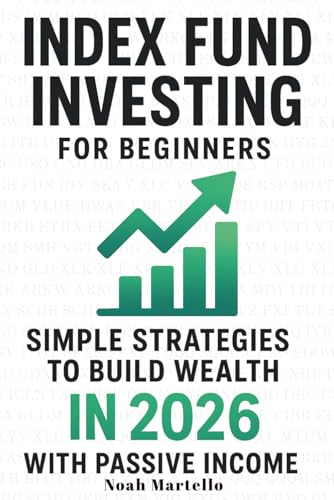
Index Fund Investing for Beginners: Simple Strategies to Build Wealth in 2026 with Passive Income (VOO, VTI, ETF Guide for Retirement Planning and Financial Freedom)
As an affiliate, we earn on qualifying purchases.
As an affiliate, we earn on qualifying purchases.