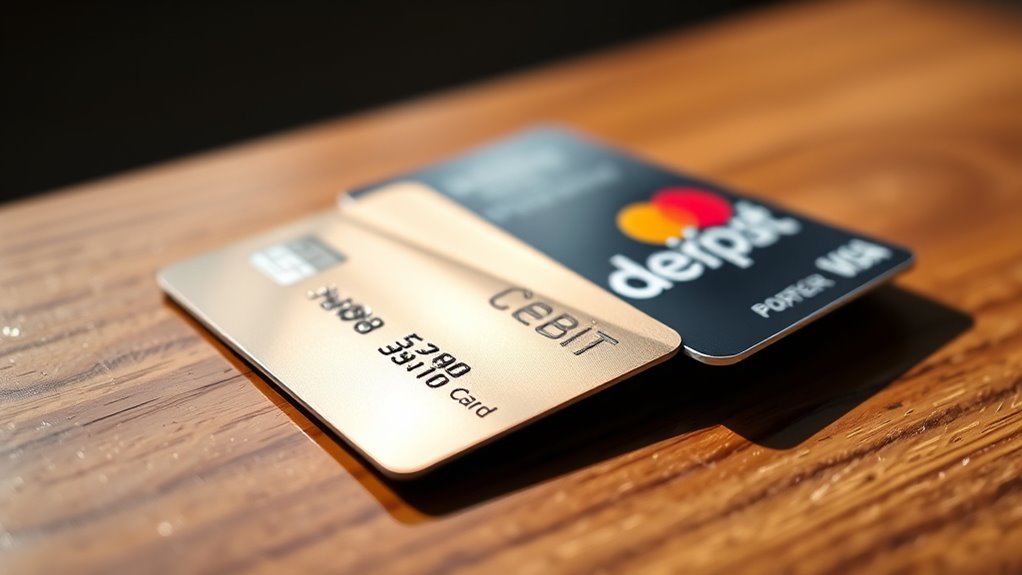

If you’re choosing between credit and debit cards, consider their pros and cons. Credit cards offer rewards, purchase protection, and help build your credit score, but they can lead to debt if not managed responsibly. Debit cards are great for budget control, spending only what’s in your account, and usually have lower fees. However, they don’t build credit or offer as many rewards. For a clearer picture of which fits your needs, keep exploring the details ahead.
Key Takeaways
- Debit cards help control spending by limiting transactions to available funds, while credit cards allow borrowing and potential debt accumulation.
- Credit cards often offer rewards and purchase protections, which debit cards typically lack.
- Debit cards do not involve interest charges, making them more cost-effective for routine expenses; credit cards may incur high interest if balances are carried.
- Using credit cards responsibly can build credit scores; debit cards have no impact on credit history.
- Both offer security features, but credit cards generally provide stronger fraud protection and dispute resolution options.
Debit cards are widely adopted in the U.S., with about 85% of consumers using them, often for everyday transactions. They are convenient for managing your budget because spending is directly linked to your checking account, helping you avoid overspending. On average, users make around 35 transactions per month, spending roughly $1,600, which indicates frequent use for routine purchases like groceries, bills, or small online transactions. Since debit cards do not involve credit, you won’t incur interest charges, making them a cost-effective choice for daily expenses. They also help keep your debt in check since you’re limited to the funds available in your account. Security measures like chip technology and encryption protect your transactions, and fraud rates for debit cards have decreased by 18% over the past five years, reflecting ongoing improvements in digital security. Digital payment methods are transforming consumer spending habits rapidly, further enhancing the security and convenience of debit transactions. Additionally, financial regulations have strengthened protections for debit card users, giving consumers more confidence in their security.
Debit cards are popular for routine purchases, offering budget control and enhanced security with chip technology and encryption.
Credit cards, on the other hand, are used less frequently but tend to involve larger spending, with average monthly expenditures around $3,500. They’re favored for their rewards—cashback, travel points, or other benefits—which can add value to your purchases. Many consumers use credit cards to build their credit score, as responsible usage demonstrates your ability to manage debt and pay bills on time. They also offer purchase protections, extended warranties, and often better fraud detection technology. However, credit cards come with an average interest rate of about 21.3%, so carry a balance and miss payments, and the costs can add up quickly. Despite this, credit cards account for nearly a third of all U.S. payment transactions, driven by the convenience of immediate purchase financing and the growing digital payments ecosystem.

Anker Laptop Docking Station Dual Monitor, 8-in-1 USB C Hub, 4K Dual Monitor with 2 HDMI, 1 Gbps Ethernet Hub, 85W Power Delivery, SD Card Reader, for XPS and More (Charger not Included)
The Anker Advantage: Join the 50 million+ powered by our leading technology.
As an affiliate, we earn on qualifying purchases.
Frequently Asked Questions
How Does Credit Card Fraud Protection Differ From Debit Card Protection?
Credit card fraud protection usually offers better safeguards because your liability is limited if you report the fraud promptly, often up to $50 or even zero. Debit card protection can be more restrictive; your liability depends on how quickly you report the issue, and funds are directly withdrawn from your account, making recovery harder. With a credit card, you’re generally more protected and less financially impacted.
Can Using a Debit Card Impact My Credit Score?
Using a debit card won’t tank your credit score—no worries there! Your credit score only reacts to your borrowing habits, like credit card use and loan payments. Debit cards are linked directly to your bank account, so they don’t report to credit bureaus. Focus on paying bills on time and managing credit accounts, and your score stays safe and steady. Debit cards won’t cause your credit to plummet.
Are There Specific Benefits for Students or Seniors With Credit or Debit Cards?
As a student or senior, you can benefit from credit cards through building credit history, earning rewards, and accessing special discounts or cashback offers. Seniors might enjoy added security features, fraud protection, and easier access to emergency funds. Students benefit from lower interest rates and educational resources. Using either card responsibly helps you develop financial habits, while tailored options ensure you get the perks suited to your age and financial needs.
What Are the Long-Term Financial Implications of Choosing One Over the Other?
Choosing a credit card can help build your credit score over time, but it might tempt you to overspend, leading to debt. Debit cards keep your spending in check and prevent debt, but they don’t boost your credit. Long-term, credit cards can offer better financial opportunities if used responsibly, while debit cards help you avoid debt but won’t improve your credit profile. Your choice impacts your financial health over years.
How Do International Transaction Fees Compare Between Credit and Debit Cards?
International transaction fees are often higher with credit cards, typically around 1-3% of the purchase amount, while debit cards may charge similar or slightly lower fees. Your bank’s policies also matter, so check your card’s terms. Credit cards might offer better fraud protection, but debit cards usually provide quicker access to your funds. Be aware of these differences to avoid unexpected charges when traveling abroad.

13 in 1 USB C Docking Station - Dual Monitor, Triple Display, 8 USB C/A Ports, Ethernet, Audio - LIONWEI USB C Hub for MacBook,Dell,HP,Lenovo,Surface
【13 in 1 Laptop Docking Station】Plug and play. With this usb c hub multiple adapter, you get 2*4K...
As an affiliate, we earn on qualifying purchases.
Conclusion
Think of credit cards as a trusted friend who offers you a helping hand when needed, while debit cards are like your loyal compass, guiding your spending within your means. Both have their place on your financial journey, each symbolizing different paths to your goals. By understanding their roles, you can navigate your financial future with confidence. Remember, whether you choose the guiding compass or the helpful friend, it’s your choices that steer your success.

OPXYL 11-in-1 USB C Hub Multiport Adapter, USB C Docking Station with 4K HDMI, VGA 1080P, 100W PD, Ethernet, SD/TF, Audio, USB 3.0 Port, Laptop Dock for MacBook Pro/Air, iPad, Windows
【11-in-1 USB C Hub Multiport Adapter】Expand your laptop’s USB-C port into 11 essential connections: 1×HDMI 4K@60Hz, 1×VGA 1080P,...
As an affiliate, we earn on qualifying purchases.

ASUS V500 Home & Business Desktop Computer Intel Core i7 (Up to 4.9GHz), 16GB RAM, 512GB PCIe + 500GB External, Display Port, WiFi 6, HDMI, Keyboard & Mouse, 2-Monitor Support 4K, Windows 11
【Processor】Intel Core i7-13620H Processor – Boasting 10 cores and 16 threads, 24MB Intel Smart Cache, a 2.4 GHz...
As an affiliate, we earn on qualifying purchases.