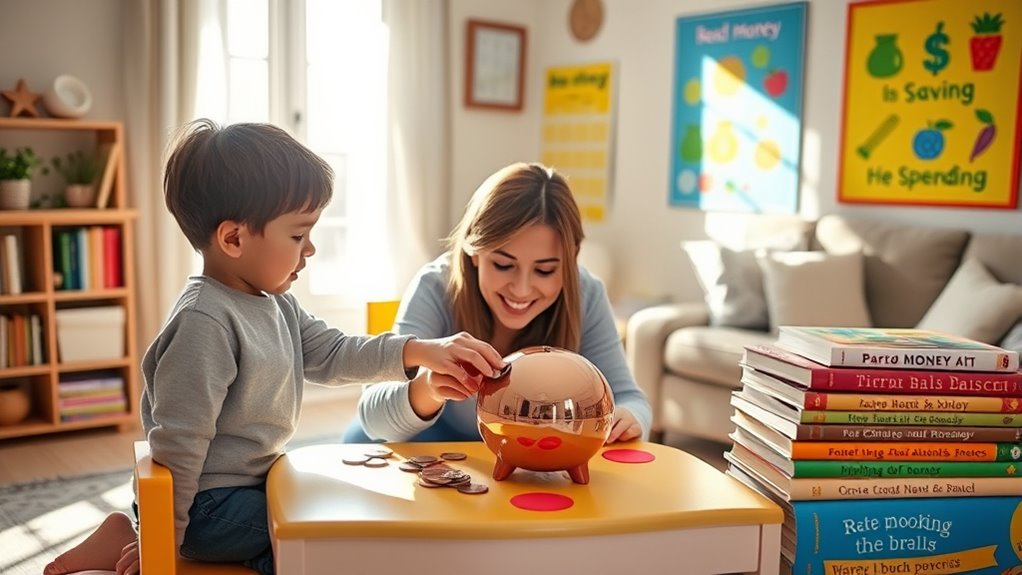

To teach your kids about money, start early by introducing savings and spending concepts through simple conversations and modeling good habits yourself. Encourage goal-setting and open a savings account to give practical experience. Focus on honest discussions and demonstrate healthy financial behaviors, as parental influence shapes their attitudes. Most importantly, stay engaged and consistent—your guidance builds a strong foundation for their financial independence. Keep going, and you’ll discover more effective tips to help them succeed.
Key Takeaways
- Start early by introducing basic concepts like saving, spending, and budgeting through simple conversations.
- Model healthy financial behaviors and be honest about your own money habits.
- Encourage children to set savings goals and open savings accounts for hands-on experience.
- Use practical activities, such as budgeting allowances or chores, to teach real-world money skills.
- Discuss broader financial topics over time to build understanding of family finances and long-term planning.
Teaching kids about money is essential because early financial education sets the foundation for their future independence and stability. When you start conversations about saving, spending, and planning early on, you give your children the tools they need to make smart financial choices as adults. Many parents recognize this importance; in fact, 93% of parents with children under 18 have taken steps to teach their kids about saving money. However, only 37% discuss family finances directly to teach broader money concepts. This gap suggests that while many parents encourage saving, fewer are having open discussions about how money works in everyday life.
Most parents teach kids about saving, but fewer discuss broader money concepts openly.
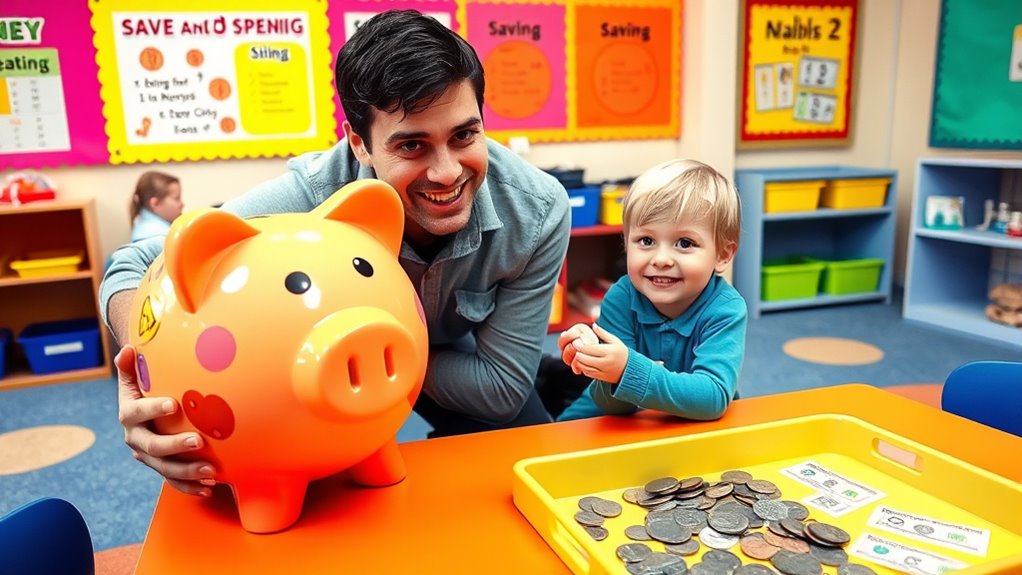
You can help bridge that gap by modeling healthy financial behaviors and having honest conversations about money. For example, encouraging your children to set savings goals can teach them discipline and purpose. Nearly half of parents do this, which is a great start. Opening savings accounts for your kids is another effective way to give them hands-on experience with managing money, with 41% of parents already doing this. These actions help children see saving as a habit and prepare them for future financial independence.
Despite these efforts, many young people still lack a solid financial foundation. Studies show that youth often graduate with inadequate financial knowledge, leading to struggles after high school or college. A significant reason is that most schools don’t prioritize financial literacy, leaving students unprepared for real-world money decisions. Although 87% of adults believe that financial concepts should be taught in high school, only 23 states required a personal finance course for graduation as of 2022. The positive impact of school-based financial education is evident, as lessons on budgeting and saving can influence behaviors for more than a decade after graduation.
Attitudes toward financial education are overwhelmingly positive. Nearly 90% of adults agree that kids should learn about money in school, and most teenagers see value in taking personal finance classes. Yet, many rely primarily on family for their money lessons, with only 15% citing school as their main source. Parental modeling plays a critical role here; children tend to adopt their parents’ habits and attitudes about money. When you practice budgeting, monitor expenses, and discuss financial challenges openly, you set a powerful example that shapes your children’s future behaviors.
Starting early with financial education benefits your kids well into adulthood. Those who learn about money early tend to be more independent, less prone to debt, and better at managing their finances overall. The habits formed during childhood—saving regularly, budgeting, and making informed decisions—become the foundation for their financial success later in life. By taking an active role in teaching and modeling money management, you help ensure your children grow into financially responsible adults capable of handling life’s financial challenges confidently. In fact, 41% of parents open savings accounts for children under 18 to teach saving, which further reinforces the importance of early, practical financial lessons. Additionally, integrating financial literacy into everyday life can significantly boost your child’s understanding of money management.
Frequently Asked Questions
When Should I Start Teaching My Child About Money?
You should start teaching your child about money as early as age three. At this age, they can grasp basic concepts like sharing and saving. As they grow, introduce more complex ideas like spending wisely and setting savings goals. Keep lessons simple and age-appropriate, using everyday situations to reinforce financial habits. The earlier you start, the better prepared they’ll be to manage money responsibly in the future.
How Can I Make Money Lessons Fun for Kids?
Remember when you used to trade Pokémon cards? Turn money lessons into a game by creating fun activities like pretend shopping or a lemonade stand. Use real coins or play money to make it tangible and exciting. Incorporate stories or challenges that relate to their interests, making learning feel like an adventure. With a little creativity, you’ll help your kids grasp money concepts while they enjoy every moment.
What’s the Best Way to Handle Allowances?
You should set clear rules for allowances, like tying them to chores or responsibilities, so your kids understand the value of earning money. Keep the amount consistent and discuss how they can save, spend, or donate it. Encourage your children to manage their allowance themselves, maybe with a simple budget or savings jar. This hands-on approach helps them learn financial responsibility while giving them a sense of independence.
How Do I Teach Kids About Saving and Spending Wisely?
You can teach your kids about saving and spending wisely by giving them a clear allowance and encouraging them to divide it into categories like saving, spending, and giving. Show them how to set savings goals and discuss the importance of budgeting. Use real-life examples to demonstrate wise spending choices, and praise their efforts to reinforce good habits. This hands-on approach helps them develop financial responsibility early on.
Should I Give My Child an Allowance for Chores?
Yes, giving your child an allowance for chores can teach responsibility and money management. When you tie allowance to chores, your child learns the value of earning and how effort equals reward. Set clear expectations and encourage them to save, spend, and even donate part of their allowance. This hands-on approach helps them understand financial basics and develop good habits early on.
Conclusion
Remember, teaching kids about money now sets them up for a secure future. By showing them the value of saving, sharing, and spending wisely, you’re giving them lifelong skills. Keep in mind the saying, “A penny saved is a penny earned.” With patience and consistency, you’ll help your children develop healthy financial habits that will serve them well into adulthood. Your efforts today truly shape their financial success tomorrow.