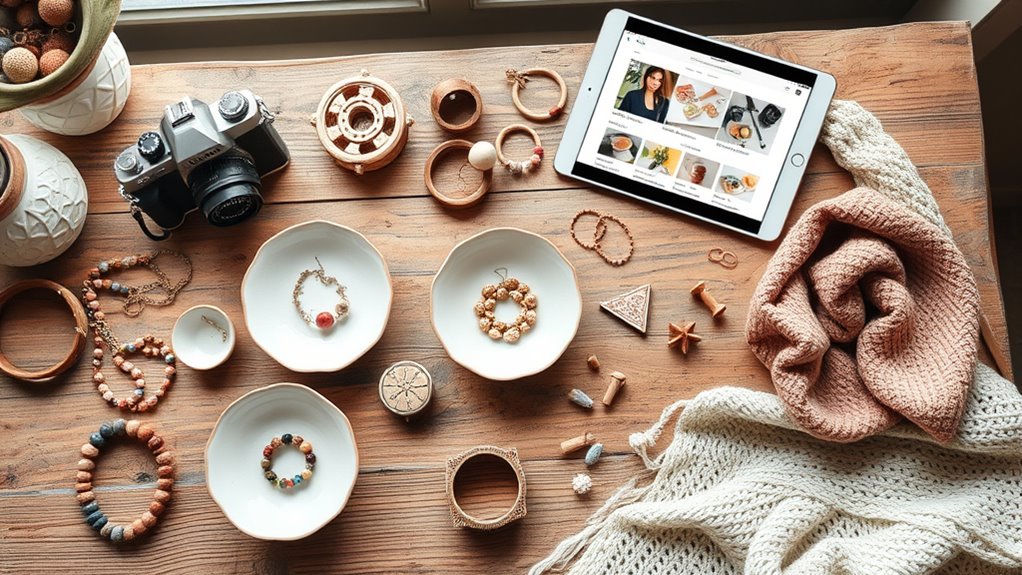

To sell handmade goods online, start by creating a compelling shop on Etsy, highlighting your unique, personalized, and eco-friendly products. Focus on high-quality photos, clear descriptions, and SEO to attract buyers. Engage customers through social media, tell your story, and emphasize your commitment to sustainability and ethics. With the right marketing and consistent branding, you can turn your craft into a successful business—keep going to discover more tips and strategies to grow your shop.
Key Takeaways
- Optimize your Etsy shop with high-quality photos, detailed descriptions, and relevant keywords to increase visibility.
- Highlight the uniqueness, sustainability, and personalization of your handmade products to attract eco-conscious buyers.
- Price your items competitively while emphasizing craftsmanship and eco-friendly aspects to justify premium pricing.
- Use social media and storytelling to build brand recognition and drive traffic to your Etsy storefront.
- Stay updated on trending products and leverage SEO strategies to enhance search rankings and sales.
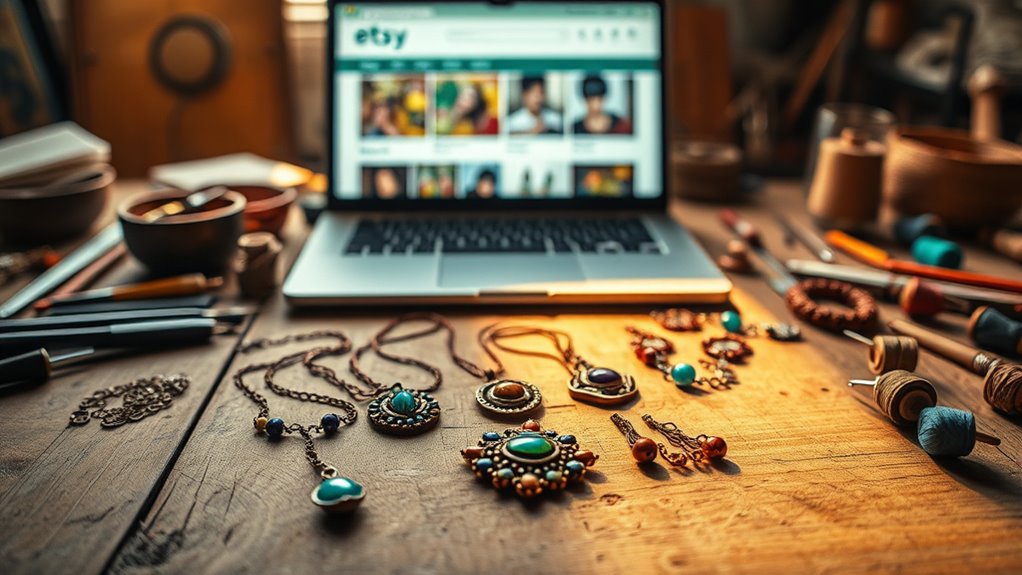
Are you looking to turn your handmade creations into a thriving online business? The global handmade and crafts market is booming, projected to surpass $906 billion in 2025 and potentially reaching nearly $1.94 trillion by 2033. This growth is driven by increasing consumer interest in unique, sustainable products. As an artisan, you have a fantastic opportunity to tap into this expanding market. Understanding current trends, platform options, and consumer preferences will give you a competitive edge.
Sustainability is at the forefront of consumer demand. Buyers are enthusiastic for eco-friendly home goods, clothing, and upcycled decor, making it essential for you to highlight the eco-conscious aspects of your products. The worldwide handmade market value is estimated to exceed $906 billion in 2025, which underscores the significant economic potential for handmade sellers. Incorporating sustainable practices can enhance your brand reputation and appeal to environmentally conscious customers. Personalization is another major trend; custom jewelry, pet accessories, and engraved items fetch higher prices because buyers value the uniqueness and emotional connection they offer. Additionally, hybrid living trends, like products for home offices and wellness, are gaining popularity, providing you with more niche markets to explore.
E-commerce platforms are your gateway to reaching a broad audience. Etsy remains the leading marketplace for handmade goods, with over 5.4 million sellers and 88.5 million buyers in 2025. Its focus on handmade and unique items makes it ideal for artisans. Shopify offers tools to create your own online storefront, giving you more control and avoiding marketplace fees. Amazon Handmade leverages Amazon’s vast reach, while Poshmark is popular for clothing and accessories. Using these platforms, you can manage your business efficiently, showcase your products professionally, and build a loyal customer base.
Product categories like jewelry, home decor, clothing, and art remain top sellers. Consumers are willing to pay premiums for high-quality, distinctive items, especially those that are personalized or sustainably made. To succeed, focus on high-quality product photography that captures the details and craftsmanship of your items. Engage your audience through social media marketing, share your story, and build a recognizable brand that resonates with buyers. SEO optimization on platforms like Etsy is essential for increasing your visibility and attracting organic traffic.
Consumers today prefer products that align with their values—sustainable, personalized, and ethically produced. By emphasizing these qualities in your offerings and marketing, you can meet their expectations and stand out. Keep an eye on evolving trends and leverage technological tools to expand your reach. While challenges like fierce competition and the need for consistent branding exist, the opportunities to grow and succeed as a handmade seller online are significant. With dedication, strategic marketing, and a keen understanding of your audience, you can turn your craft into a profitable online business.

ShowMaven Photography Lighting Kit, Softbox Lighting Kit with Photo Backdrop for Product Photography, Portrait photography, Video Shooting Photography
This photo shoot lights and background kit includes almost everything you need. Photo studio photography equipment includes: 1…
As an affiliate, we earn on qualifying purchases.
As an affiliate, we earn on qualifying purchases.
Frequently Asked Questions
How Do I Price My Handmade Items Competitively?
To price your handmade items competitively, research similar products on Etsy to see what others charge. Factor in your material costs, time spent, and overhead expenses to guarantee you make a profit. Set a price that reflects your craftsmanship but also appeals to buyers. Consider offering discounts or bundle deals to attract more customers without undervaluing your work. Regularly review your prices to stay competitive and adjust as needed.
What Are the Best Ways to Attract Repeat Customers?
You can attract repeat customers by offering excellent customer service, responding promptly to inquiries, and personalizing your interactions. Consistently update your shop with new, quality products and send follow-up messages to thank buyers. Use loyalty discounts or special offers to encourage repeat business. Share engaging content on social media and build an email list to keep customers informed about new items and promotions. Make them feel valued, and they’ll keep coming back.
How Do I Handle International Shipping and Customs?
You handle international shipping and customs by researching each destination’s regulations, ensuring your packaging is sturdy and clearly labeled, and including accurate customs forms. Use tracking services to monitor shipments and communicate with customers about expected delivery times. Consider offering shipping options with insurance and delivery confirmation. Stay updated on customs policies to prevent delays, and always be transparent about potential extra fees to keep your buyers informed and satisfied.
What Legal Requirements Do I Need to Start Selling?
You need to register your business, obtain any necessary licenses or permits, and understand tax obligations in your area. Don’t skip researching local laws, as rules vary by location and product type. You might think it’s complicated, but starting small and consulting local authorities or legal experts makes it manageable. Staying compliant protects your shop and builds customer trust, so take these steps seriously from the start.
How Can I Protect My Designs From Being Copied?
You can protect your designs by registering copyrights or trademarks, which give you legal rights and deter copying. Keep detailed records of your creation process and original work to prove ownership. Consider adding watermarks or unique branding to your images. You might also include clear copyright notices on your listings. Stay vigilant by monitoring online platforms for unauthorized use and take action if you find your designs copied.

STMT Personalized Jewelry Studio, Create Over 50 Premium Pieces, Trendy Bracelet Making Kit, Includes Metal Bracelet Charms, Removable Beading Tray & Jewelry Making Supplies, Great Teen Girl Gifts
CREATE 50+ PREMIUM PIECES: From friendship bracelets to toggle bracelets, this jewelry making kit has all the essentials…
As an affiliate, we earn on qualifying purchases.
As an affiliate, we earn on qualifying purchases.
Conclusion
Selling handmade goods online is like nurturing a delicate garden—you’ll face weeds and storms, but with patience and care, your unique creations will bloom. Remember Sarah, who started with a small Etsy shop and grew her business to reach customers worldwide, proving that persistence and passion turn tiny seeds into thriving blossoms. Keep tending your shop, adapt along the way, and watch your handmade dreams flourish into a beautiful, sustainable reality.

Hemptique Natural Hemp Twine Ball #HMP2 – Made with Love – Eco Friendly – Gardening – Macrame – Home Décor – Plant Hanger – Great for Jewelry Making, Crafts & More – #20~1mm (Single Pack)
💝 THE CRAFTER’S CHOICE: Our Hemp Cord is ideal for any of your crafting needs. This can be…
As an affiliate, we earn on qualifying purchases.
As an affiliate, we earn on qualifying purchases.

Craft with Recycling: A Kid's Guide to Creating with Upcycled Materials (2) (Easy Crafts for Kids)
As an affiliate, we earn on qualifying purchases.
As an affiliate, we earn on qualifying purchases.