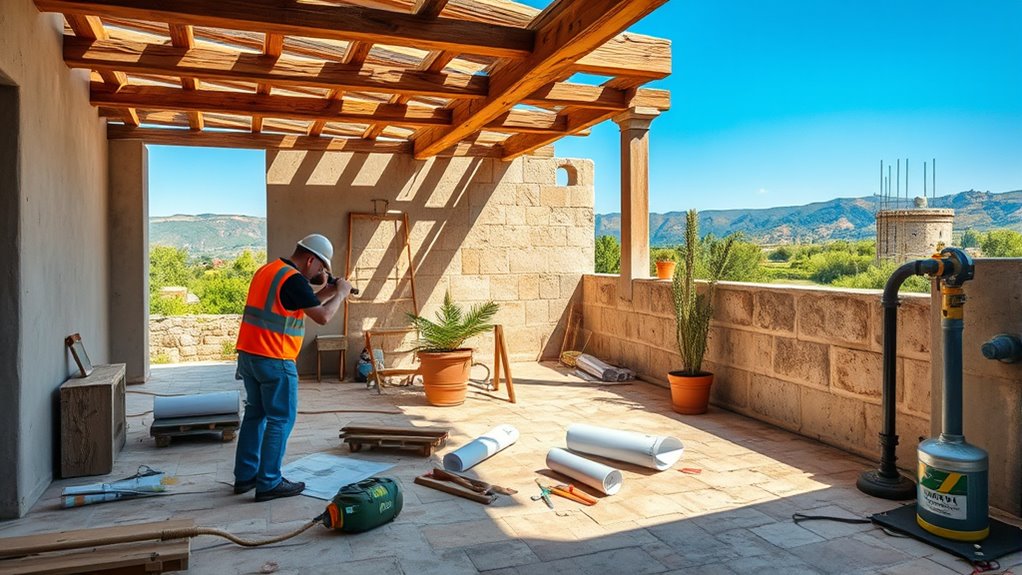

Renovating a home abroad can be rewarding but challenging. You’ll face logistical hurdles like language barriers, cultural differences, and managing remote communication. Understanding local regulations, permits, and building codes is vital to avoid costly mistakes. Financial planning must account for currency fluctuations, extra costs, and regional lender practices. To succeed, you’ll need local experts, careful budgeting, and respect for local styles. If you continue, you’ll discover more practical tips to navigate these complexities smoothly.
Key Takeaways
- Understand local regulations, permits, and incentives to ensure compliance and optimize renovation costs.
- Communicate effectively across language and time zone differences to prevent misunderstandings and delays.
- Budget for currency fluctuations, import duties, and unexpected costs associated with international procurement.
- Respect local architectural styles and cultural preferences to enhance home value and community acceptance.
- Leverage technology and remote management tools for efficient oversight and coordination of the renovation process.
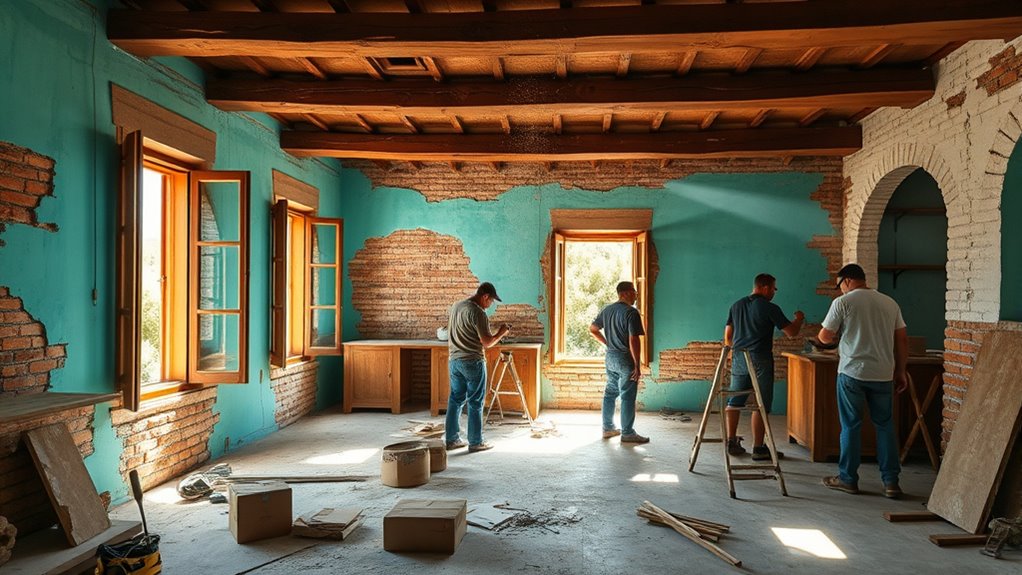
Renovating a home abroad can be a rewarding venture, but it requires careful planning and awareness of multiple factors. The global home renovation market is expanding, projected to grow from around $2 trillion in 2025 to over $2.6 trillion by 2032, with a steady annual growth rate of nearly 4%. This growth is driven by the aging housing stock and increasing home equity, which motivate homeowners worldwide to invest in upgrades. Asia Pacific leads this trend with rapid growth, followed by Europe and North America, where demand remains strong despite economic uncertainties. Even during challenging times, remodeling spending stays near peak levels, indicating resilience in the market.
The global home renovation market is projected to grow over $2.6 trillion by 2032, driven by aging housing and rising home equity.
However, charting this landscape isn’t straightforward. Many countries now offer government incentives and rebates to promote energy-efficient renovations, but these programs vary widely. You’ll need to understand local regulations and eligibility requirements, which often involve complex permits and compliance with sustainable building codes. Eco-friendly materials and energy-saving technologies are encouraged, but they can also introduce new compliance hurdles. Tax incentives, subsidies, and rebates may differ significantly depending on the region, affecting the overall feasibility of your project. To avoid pitfalls, engaging local legal and construction experts familiar with the specific standards is highly advisable. Understanding these incentives can significantly reduce overall costs and improve project feasibility.
Logistical challenges can be just as daunting. Language barriers may cause misunderstandings when coordinating with contractors, suppliers, or government officials. Time zone differences can hinder real-time communication, delaying decision-making and problem-solving. Procuring materials from abroad often takes longer due to customs, import duties, and shipping delays, which can impact your schedule and budget. Remote project management relies heavily on technology, clear communication workflows, and detailed documentation to keep everything on track. Without on-site supervision, there’s a higher risk of miscommunication, potentially affecting quality and timelines. Additionally, familiarity with local customs and standards can facilitate smoother operations and compliance.
Financial considerations are equally important. Financing renovations abroad isn’t as straightforward as at home. You might face unfamiliar banking practices, currency fluctuations, and varying lending standards. Material and labor costs are rising globally, so accurate budgeting requires factoring in potential overruns. Fluctuating interest rates and local mortgage conditions can influence your willingness to invest heavily. Home equity loans are common, but their terms and rates vary by country. Always include import duties, tariffs, and local labor standards in your cost estimates to avoid unexpected expenses.
Lastly, design and cultural adaptation play a vital role. Your renovation should respect local architectural styles, climate conditions, and cultural preferences to guarantee harmony. Incorporating smart home technologies is increasingly popular, especially among younger clients, while wellness-focused and multi-generational spaces are trending. Striking the right balance between modern comforts and cultural authenticity guarantees your home not only looks beautiful but also functions well within its environment. Tailoring your design to local tastes can enhance the home’s value and acceptance within the community.

Humidifier Large Room Bedroom with Night Light, 2.1Gal(8L) Humidifiers for Home with Essential Oil Diffuser, Top Fill Whole House Cool Mist Humidifiers for Plants Baby Kids Adults(Black)
[𝗟𝗮𝗿𝗴𝗲 𝗖𝗮𝗽𝗮𝗰𝗶𝘁𝘆 & 𝗟𝗲𝗮𝗸𝗮𝗴𝗲 & 𝗧𝗼𝗽 𝗙𝗶𝗹𝗹𝗶𝗻𝗴 𝗗𝗲𝘀𝗶𝗴𝗻] Our humidifier boasts a removable 8L (2.1Gal) large capacity tank,...
As an affiliate, we earn on qualifying purchases.
Frequently Asked Questions
How Do I Find Reliable Local Contractors Abroad?
To find reliable local contractors abroad, start by asking for recommendations from friends or expats who’ve done similar projects. Research online reviews and check local trade associations or licensing boards for verified professionals. Meet potential contractors in person, ask for references, and view their previous work. Trust your instincts and choose someone who communicates clearly and shows professionalism. Doing thorough homework guarantees you hire trustworthy folks for your renovation.
What Are Common Legal Restrictions on Renovations Overseas?
While dreaming of a perfect home abroad, you must also navigate legal restrictions. You’ll find that some countries have strict building codes, zoning laws, or require special permits, which can feel overwhelming. Ignoring these rules risks fines or demolition. To avoid this, research local regulations early, consult legal experts, and always secure necessary permits. Staying informed guarantees your renovation progresses smoothly, transforming your vision into reality without legal setbacks.
How Can I Manage Language Barriers During Renovation?
You can manage language barriers during renovation by hiring bilingual contractors or interpreters who understand local terminology. Use clear, simple language and confirm understanding by asking for feedback. Visual aids like sketches or photos help clarify instructions. Learning basic phrases related to construction can also be beneficial. Regularly check in with your team to prevent misunderstandings, and consider utilizing translation apps for quick communication.
What Should I Budget for Unexpected Renovation Costs?
You should budget around 10-20% extra for unexpected renovation costs. Always set aside funds for surprises like hidden damages, permit delays, or material price hikes. It’s smart to have a contingency fund ready, especially when working abroad where costs can fluctuate. Planning for these surprises helps you avoid financial stress and keeps your project on track, ensuring you’re prepared for anything that comes up during the renovation.
How Do I Handle Permits and Inspections Internationally?
You should research local regulations and contact relevant authorities early in your project. Obtain all necessary permits before starting work to avoid fines or delays. Hire a knowledgeable local contractor or consultant who understands the permitting process. Keep copies of all documents, and schedule inspections as required. Staying proactive and organized guarantees you handle permits and inspections smoothly, minimizing surprises and keeping your renovation on track.

Pure Enrichment MistAire Ultrasonic Cool Mist Humidifier - Quiet Air Humidifier for Bedroom, Nursery, Office, & Indoor Plants - Lasts Up To 25 Hours
Instant Dry Air Relief: Ultrasonic cool mist technology safely and quickly moisturizes dry air for up to 25...
As an affiliate, we earn on qualifying purchases.
Conclusion
Renovating a home abroad can feel like a coincidence waiting to happen—unexpected challenges, yes, but also rewarding surprises. When you stay flexible and embrace the journey, you’ll find that every obstacle often leads to a better outcome than you imagined. Just like stumbling upon that perfect local craftsman or discovering a hidden gem for supplies, these moments make your renovation truly memorable. Keep an open mind, and you’ll enjoy the process as much as the final result.

MegaWise Topfill 7-colour Night light humidifier for Kid bedroom with 3.5L Large Capacity, No leakage Design Fine Mist Output Auto Shutoff, Essential Oil Safe Tank
💕Reliable💕Antileakage design with a flat water tank and sepearted from the electric part of the devices makes this...
As an affiliate, we earn on qualifying purchases.

Vicks Warm Mist Humidifier Filter‑Free 1 Gal Tank, Auto Shut‑Off, Night Light, VapoPad and VapoSteam Compatible
Breathe Better, Live Better: Maintain ideal humidity levels in your home (40-60%) with Vicks warm mist humidifier and...
As an affiliate, we earn on qualifying purchases.