
Tracking your net worth helps you get a clear picture of your financial health, showing how assets and liabilities shape your overall stability. It allows you to monitor progress, set realistic goals, and identify areas for improvement. By regularly updating your numbers, you can make smarter decisions and stay motivated. Using tools like apps can simplify the process and improve accuracy. Keep going to discover practical tips that make tracking easier and more effective.
Key Takeaways
- Tracking net worth provides a clear picture of your financial health by accounting for assets and liabilities.
- Regular updates help monitor progress, identify trends, and inform better financial decisions.
- Using tools and automation ensures accurate, real-time data collection and simplifies the tracking process.
- Comparing your net worth over time or with benchmarks motivates disciplined saving and debt management.
- Consistent tracking supports setting realistic financial goals and adjusting strategies for long-term stability.

Tracking your net worth is a powerful way to gain a clear and all-encompassing understanding of your financial health. It gives you a snapshot of where you stand at any given moment by accounting for all your assets and liabilities. This thorough view helps you see the big picture, making it easier to spot trends, measure progress, and identify areas that need improvement. When you regularly track your net worth, you can better understand how your financial decisions are impacting your overall stability and growth. A net worth tracker serves as a financial command center, providing real-time insights into your financial position. One of the key benefits of monitoring your net worth is that it enables you to measure your progress over time. By updating your numbers periodically—monthly, quarterly, or semi-annually—you can see how your assets grow and your debts shrink. This makes your financial goals more tangible, reinforcing positive habits like saving, investing, and paying down debt. When you see the direct results of your efforts, you’re more motivated to stay disciplined and keep pushing toward your objectives.
Monitoring your net worth offers a comprehensive view of your financial health, helping you track progress and make informed decisions.
Tracking your net worth also acts as an early warning system. If your liabilities start to increase faster than your assets, or if your net worth begins to decline, you’ll notice these signs early enough to take corrective action. This proactive approach can prevent small issues from becoming major financial setbacks. Additionally, comparing your net worth with age-based or peer benchmarks helps you gauge your relative financial position. Knowing where you stand in relation to others can inform your strategy and keep you motivated. Regularly reviewing your net worth also supports financial literacy, empowering you to make more informed decisions and better understand your financial landscape.
Another advantage is that it reduces money stress by providing clarity. Instead of feeling overwhelmed by income or account balances alone, you understand your actual financial position. This clarity encourages discipline in your financial planning, discourages impulsive spending, and helps you resist lifestyle inflation. Tracking your net worth makes it easier to set realistic long-term goals, like homeownership or retirement, and to adjust them as your circumstances change. It highlights your successes, such as paying off a significant debt, and pinpoints areas needing attention, like increasing your savings rate.
Modern tools and apps automate much of this process, saving you time and reducing errors. They can aggregate your accounts, categorize your assets and liabilities, and provide real-time snapshots of your net worth. However, accuracy depends on consistent, honest data entry. Regular updates ensure values reflect current market conditions, which fluctuate constantly. Remember, net worth is just one measure of financial well-being; it doesn’t reveal your cash flow or liquidity, so don’t rely solely on it to assess your overall financial health.

And Per Se Budget Planner, Budget Book with Expense Tracker Notebook, Undated Financial Planner & Monthly Bill Organizer to Manage Your Money - A5 Hardcover (Forest Green)
- Financial Goal Achievement: Track income, expenses, and savings
- Monitor Savings, Debt & Bills: Understand financial health clearly
- Undated 16-Month Planner: Includes calendar, budget, and expense tracker
As an affiliate, we earn on qualifying purchases.
Frequently Asked Questions
How Often Should I Update My Net Worth Calculations?
You should update your net worth calculations monthly or quarterly to stay on top of your financial progress. Regular updates help you identify trends, adjust your savings or investment strategies, and set realistic goals. If you experience major financial changes, like a new job or a large purchase, update immediately. Consistent tracking keeps you motivated and aware of your financial health, making it easier to make informed decisions and reach your goals.
What Are Common Mistakes to Avoid When Tracking Net Worth?
You should avoid common mistakes like forgetting to include all assets and liabilities, which skews your net worth. Don’t neglect to update your figures regularly, as outdated data can mislead your financial decisions. Also, steer clear of overestimating asset values or underestimating debts. Keep your tracking consistent and accurate to get a clear picture of your financial health and make informed choices for your future.
How Can I Improve My Net Worth Over Time?
Improving your net worth is like planting a tree; it takes patience and consistent effort. You can do this by saving more, reducing debt, and investing wisely. Track your progress regularly, set clear financial goals, and avoid unnecessary expenses. Automate savings and investments to stay disciplined. Over time, these habits grow your net worth steadily, turning small steps into significant financial stability and freedom.
Should I Include Retirement Accounts in My Net Worth?
Yes, you should include retirement accounts in your net worth. Doing so gives you a complete picture of your financial health, helping you track progress toward your goals. Remember, these accounts are assets that contribute to your overall wealth, even if they’re not immediately accessible. Incorporating them ensures you’re making informed decisions about saving, investing, and planning for your future. Keep your net worth updated regularly for better financial clarity.
How Do Debts Impact My Net Worth Calculation?
Debts lower your net worth because they represent money you owe, which reduces your total assets. When calculating, subtract your debts from your assets to get an accurate picture of your financial health. If your debts are high, your net worth might be negative, indicating you owe more than you own. Managing and reducing debts can improve your net worth over time, boosting your overall financial stability.
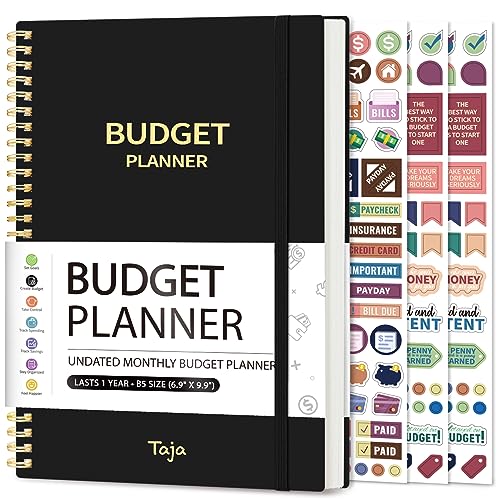
Taja Budget Planner, Undated Budget Book with Expense Tracker, 6.9" x 9.9"
- Effective Budget Planning: Track income, expenses, savings, goals
- User-Friendly Layout: Easy navigation with dedicated sections
- Undated Monthly Calendar: Flexible planning with customizable dates
As an affiliate, we earn on qualifying purchases.
Conclusion
Tracking your net worth helps you stay financially confident and motivated. Did you know that people who regularly monitor their finances are 3 times more likely to reach their financial goals? By keeping an eye on your assets and liabilities, you gain clarity and control over your financial future. So, start today—your smarter, more secure tomorrow depends on it. Stay consistent, and watch your net worth grow over time.

Budget Planner - Monthly Finance Organizer with Expense Tracker Notebook to Manage Your Money Effectively, Undated Finance Planner/Account Book, Start Anytimem,A5(8.6x5.9 inchs),100gsm Paper - Silvery
- Financial Management Sections: Goals, savings, debts, expenses, reviews
- High-Quality Paper: 100gsm, reduces ink bleed and shading
- Durable Cover & Binding: Sturdy cover, metal lay-flat twin-wire binding
As an affiliate, we earn on qualifying purchases.

Taja Budget Planner, Undated Budget Book with Expense Tracker, 6.9" x 9.9"
- Effective Budget Planning: Track income, expenses, savings, goals
- User-Friendly Layout: Easy navigation with dedicated sections
- Undated Monthly Calendar: Flexible planning with blank dates
As an affiliate, we earn on qualifying purchases.