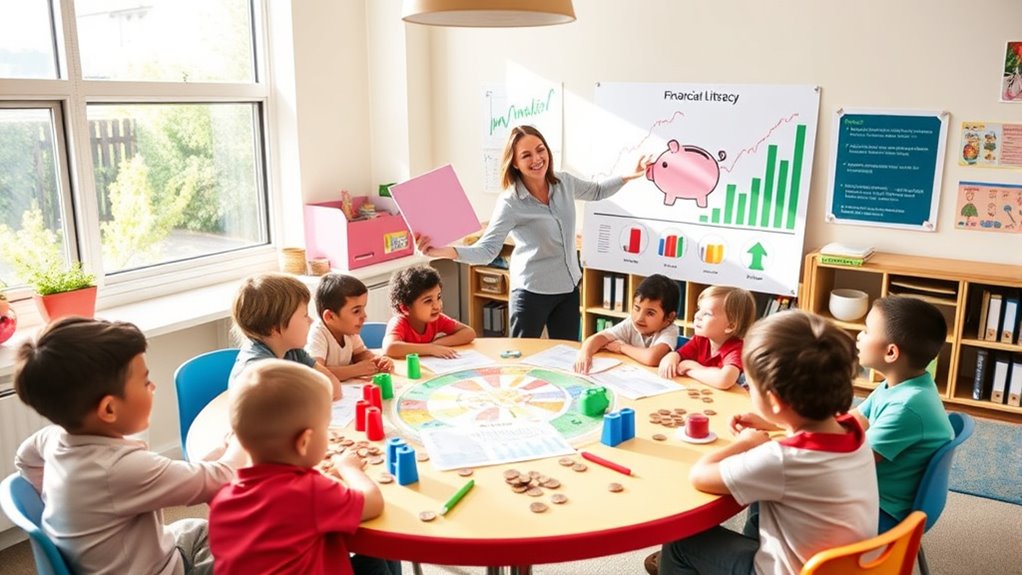

Starting early to teach kids about investing builds strong financial habits that last a lifetime. You can begin with simple concepts like saving with piggy banks or allowances, then introduce ideas like interest and asset appreciation as they grow. Using relatable examples and hands-on experiences helps children grasp how investments grow over time. By opening accounts or discussing investment principles early, you set the foundation for future financial security. Keep exploring these strategies to help your kids develop confident investing skills.

Get smart everyday buys delivered free with Prime
- Fast, free delivery on millions of items
- Prime Video, Amazon Music and more included
- Member-only deals all year
Key Takeaways
- Introduce basic saving concepts early with piggy banks or allowance-based chores to build a foundation for investing habits.
- Use relatable examples like collectibles or sports memorabilia to demonstrate asset appreciation over time.
- Teach the importance of long-term growth and diversification to help kids understand investment risks and rewards.
- Encourage open discussions about money, savings, and investing to reinforce continuous learning at home.
- Start with simple investments or small hands-on experiences to boost confidence and real-world understanding of wealth building.

Ever wondered when kids should start learning about investing? The answer is sooner than you might think. Financial habits start forming as early as age 7, so introducing basic investing concepts at a young age can set the foundation for a lifetime of smart money decisions. While many children learn about saving early on, many lack understanding of how investments grow wealth over time. In fact, 22% of teens still lack fundamental financial skills, which shows there’s a gap in early education efforts. As a parent, you have a strong influence—your teaching impacts your child’s financial literacy more than peers, media, or formal classes combined. Starting conversations about money early encourages responsible saving, spending, and giving behaviors that stick with kids into adulthood.
Early financial education builds lifelong money skills and confidence in investing for children.
Teaching investment concepts doesn’t have to be complicated. For preschoolers, simple ideas like saving gifts in piggy banks are enough to introduce the notion of setting money aside. Elementary children can benefit from allowances or rewards for chores, especially if you help them track their savings visually using charts. This not only makes the process tangible but also fosters discipline. As they grow older, encouraging middle and high schoolers to open bank accounts gives them a chance to see interest accumulate and understand how their savings grow over time. Explaining the Rule of 72 can help them grasp how long investments take to double at different interest rates, making the abstract concept of compound interest more concrete. Introducing these ideas early also increases their familiarity with investment growth and how wealth can build over time.
Introducing investing as buying assets expected to appreciate over time helps children see beyond immediate spending. Use relatable examples such as sports memorabilia or collectibles, which can increase in value and be resold for profit. Emphasize that investing is about long-term growth and planning, not quick wins. Basic concepts like stocks and bonds are good starting points, with a focus on how these investments can build wealth over the years. It’s also important to discuss the difference between stable investments and more speculative options, like startups or cryptocurrencies, to clarify risks involved. Teaching them about retirement accounts and the importance of starting early prepares kids for future financial security. Understanding that investments can fluctuate in value helps kids develop realistic expectations about market risks and the importance of diversification.
As a parent, you might feel unsure about teaching investing basics—only 22% of parents feel confident doing so. But open conversations at home, even if you’re not an expert, can substantially improve your child’s financial fluency. Regularly discussing budgeting, saving, and investing creates a continuous learning process tailored to your child’s age and interests. Combining these talks with hands-on experiences, like managing an allowance or small investments, makes the concepts real. Your intentional effort shapes their attitude towards money, helping them develop sound financial habits that last a lifetime. Starting early with investing education can empower your kids to make informed decisions as they grow into financially responsible adults.
As an affiliate, we earn on qualifying purchases.
Frequently Asked Questions
How Can I Make Investing Fun for Kids?
You can make investing fun for kids by turning it into a game. Use pretend money or real small investments to teach them about stocks and bonds. Create challenges or competitions where they can earn rewards for learning new concepts. Incorporate visual aids like charts and apps designed for kids. Celebrate their successes, and keep lessons light and engaging to foster their interest and confidence in investing.
What Age Is Best to Start Teaching Investing?
Ever wonder when’s the best time to teach kids about investing? The ideal age is around 8 to 10 years old, when they can grasp basic financial concepts and think more abstractly. You can start with simple ideas like saving, budgeting, and the concept of earning interest. By introducing these topics early, you’re helping them develop smart money habits that last a lifetime.
Are There Kid-Friendly Investment Apps Available?
Yes, there are kid-friendly investment apps available. Apps like Greenlight, Stockpile, and BusyKid are designed to help children learn about investing in a simple, engaging way. They often include features like custodial accounts, educational tools, and parental controls. You can introduce your kids to investing by setting up accounts with these apps, teaching them about money management, and encouraging responsible investing habits from a young age.
How Do I Explain Risk to Children?
You need to hit the nail on the head when explaining risk to children. Tell them that investing is like walking a tightrope—you might fall if you’re not careful. Use simple examples, like risking their allowance or trying a new sport. Emphasize that some investments can go up and down, but they can also learn to weigh the odds. Keep it fun and relatable to make the concept stick.
What Are Simple Investment Options for Beginners?
You can start with simple options like savings accounts, which are safe and easy to understand. Consider beginner-friendly investments like index funds or ETFs, which diversify your money across many companies. You might also explore robo-advisors that manage investments for you with low fees. These options are straightforward, require minimal experience, and help build confidence while learning how investing works. Remember, always do your research before investing.
As an affiliate, we earn on qualifying purchases.
Conclusion
Just like planting a seed and nurturing it, teaching kids about investing today helps their financial future grow strong. The earlier you start, the more time their money has to blossom into a sturdy tree of wealth. Remember, you’re guiding them on a journey where patience and knowledge are the sunlight and water. By planting these lessons early, you’re helping them build a forest of financial confidence that will shelter and support them for years to come.
As an affiliate, we earn on qualifying purchases.
educational investing books for kids
As an affiliate, we earn on qualifying purchases.
As an affiliate, we earn on qualifying purchases.
Fall Picks
fall essentials
As an affiliate, we earn on qualifying purchases.